Ikigai in Everyday Life: Small Steps Toward Greater Meaning
You don't even have to find your ikigai—you're already living it in small moments. Here's how to discover these sources of meaning in your everyday life.
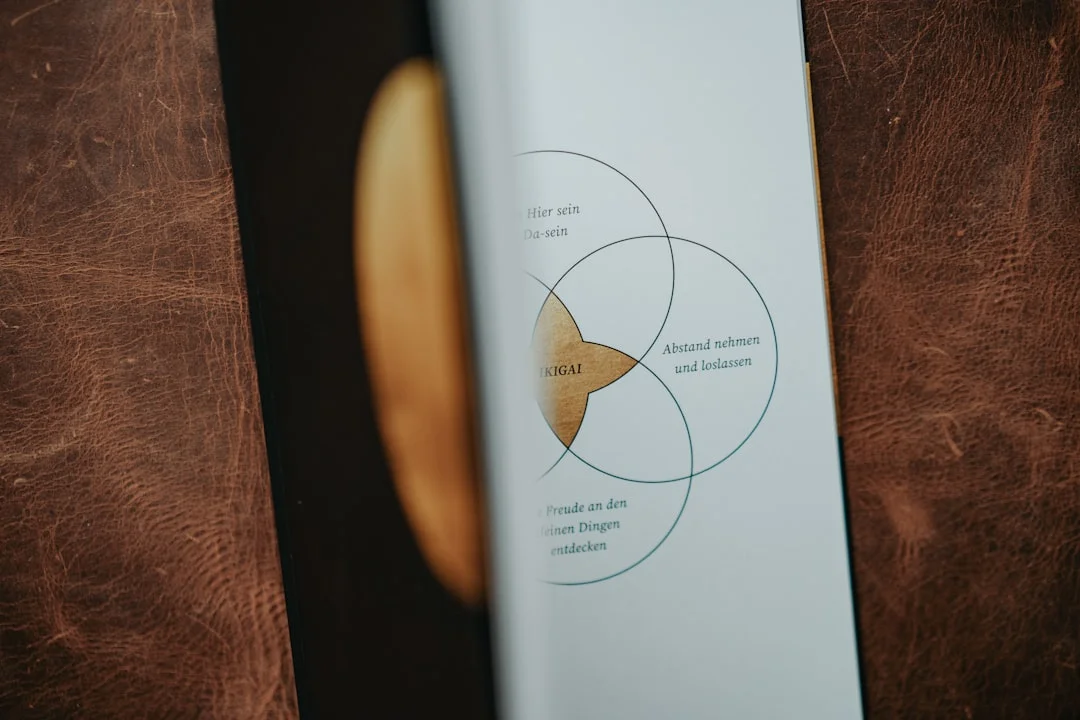
Maybe you’re familiar with this subtle feeling: You hear the word “ikigai,” and immediately a little inner voice speaks up, saying, “I really need to figure that out, too.” As if ikigai were a test you haven’t passed yet. As if everyone else already knows why they get up in the morning, while you’re still searching. This article begins with a bit of relief: You don’t have to find “the one purpose in life.” Not today. Not in a moment of great enlightenment. And probably not all at once.
Ikigai in everyday life means something much smaller and, at the same time, much more vibrant: it’s the many tiny sources of meaning that run through your day—if you notice them. A morning when you’re looking forward to your first cup of coffee and a particular conversation. A task that suddenly makes you lose track of time. The quiet knowledge that you’re doing exactly what you’re good at right now. These moments are ikigai. And you can learn to live in them more often.
What Ikigai Really Means—A Brief Review
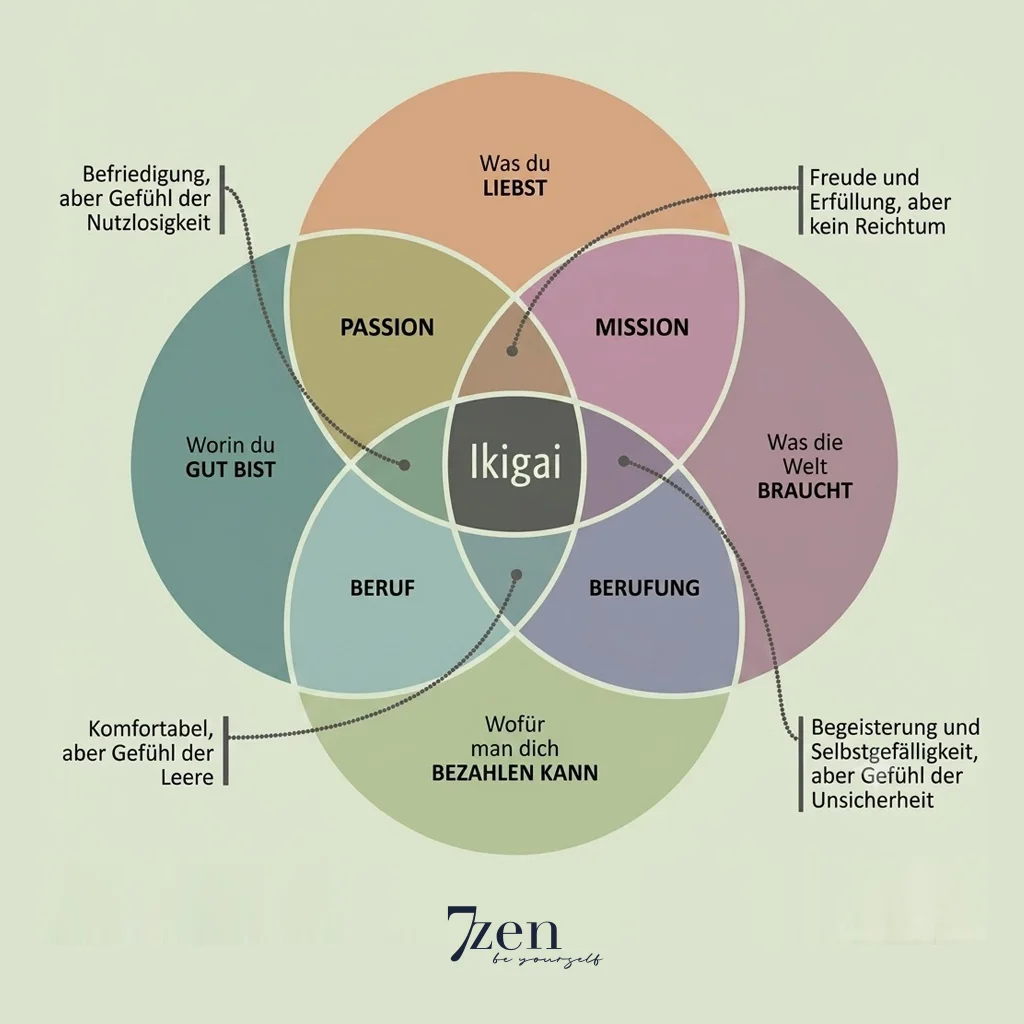
Before we dive into the practical aspects, it’s worth taking a brief look back at the basics—because the concept is often oversimplified in German-speaking countries. In the original Japanese, ikigai is not a complex four-circle diagram that you fill out analytically. It’s an everyday attitude toward life: the joy of being alive, the desire to get out of bed, and finding meaning in the most ordinary things. If you’d like to delve deeper into its origins and philosophy, the article “What Ikigai Really Means” provides a detailed foundation—it sheds light on why the concept is so much more nuanced than its Western reputation suggests.
For this article, we’re taking a different approach: We’re not asking, “What is my life’s purpose?” but rather, “What gives my life meaning today?” That’s a question you can ask yourself tomorrow morning. And again the day after tomorrow. And in doing so, you’ll realize that ikigai isn’t something you find—it grows.

The Morning Question: What am I looking forward to today?
One of the simplest and most effective Ikigai exercises is also the most unassuming: the morning question. Before you even pick up your phone, ask yourself a single question—What am I looking forward to today?
It doesn’t have to be anything big. A conversation with a friend. A walk during your lunch break. Working on a project that really interests you right now. Or quite simply: the moment you come home and enjoy the silence. Meaning in everyday life often doesn’t come from extraordinary events, but from the attention we give to very ordinary things.
Many people report that asking this one question in the morning noticeably shifts their perspective on the day—not because everything is suddenly different, but because their outlook changes. Try it for a week: Ask yourself the question, write down the answer in two sentences—and see what emerges.
Nutze die kostenfreie 7zen-App als deinen persönlichen Alltagshelfer. Mit der 7zen App erhältst du tägliche Coaching-Impulse, geführte Atemübungen und persönliche Reflexionen — basierend auf deinem individuellen Profil.
Noticing and Capturing Small Joys
There are moments in everyday life that are as fleeting as a breath: the scent of fresh air after the rain. A sentence in a book that resonates with you. The feeling of finally completing a difficult task. These micro-joys aren’t trivial—they’re the fabric from which meaning in everyday life is woven. And yet we usually overlook them because we’re waiting for something big.
Here’s a practical exercise you could try: Every evening, write down three of these moments. Not as a formulaic gratitude list, but as an honest observation. What made you feel alive today, even if just for a moment? What felt right? What made you lose track of time?
Over the course of weeks, a pattern emerges—and this pattern is more valuable than any ikigai workshop. It shows you where your ikigai truly lies: not in an abstract answer to a big question, but in the concrete, recurring moments of your everyday life. That is finding ikigai in its most honest form.
Food for thought "The meaning of life does not lie in some distant goal that you will one day reach. It lies in the way you live each and every day—with mindfulness, with joy, and true to yourself."
One activity a week—just for the fun of it
When was the last time you did something—not because it was productive, not because someone expected you to, but simply because it brought you joy? For many people, this question is harder to answer than it sounds. Our daily lives are tightly scheduled, filled with obligations, expectations, and the subtle pressure to always have to accomplish something more.
A powerful Ikigai practice involves consciously setting aside one activity per week—one that serves no other purpose than your own joy. Painting without having to show off the result. Cooking without trying to impress guests. Going for a walk without a podcast in your ears. Singing without having to be good at it.
These seemingly “useless” activities are anything but useless: they remind you of who you are when you don’t have to prove anything. And it is precisely there—in this joy without purpose—that an essential part of your personal ikigai is often hidden. Many people report that such moments become the most meaningful of their week, even though (or perhaps precisely because) they don’t produce anything.

Gratitude for What You Can Do
The fourth daily reflection is also the quietest: gratitude for your own abilities. Not self-praise, not self-adulation—but an honest look at the abilities that live within you and that you may have long since taken for granted.
Perhaps you’re someone who quickly gets to the heart of complex problems. Or someone who can listen to others like no one else. Perhaps you write with an ease that amazes others—but you yourself no longer even notice it. Or maybe you have a special way of designing spaces, calming children, organizing numbers, or helping plants grow.
These abilities are no coincidence. They’re part of what you bring to the world—and thus a foundation of your ikigai. Here’s a quick exercise: Write down what other people are especially grateful to you for. What do they ask you for help with? What do they praise you for, even if you can hardly believe it? This external perception can be a surprisingly clear mirror.
When you look at these four practices together—the morning question, noticing micro-joys, purpose-free activity, and gratitude for your abilities—a kind of ikigai practice emerges that doesn’t require a life plan. It only requires attention. And you can start practicing it today.

Ikigai and Your Inner Landscape: The Pillar of the Path
When we at 7zen speak of the inner landscape, we mean the various dimensions that make up a fulfilling life—from the body and stillness to connection and direction. Ikigai nourishes, above all, a pillar we call the Path: the sense of purpose and direction, the quiet certainty of why you get up in the morning.
It’s not about optimizing every area of life at once or building a perfect system. The pillar of the path is more of an inner compass than a to-do list. And ikigai in everyday life is one of the most honest ways to continually recalibrate this compass—not through big decisions, but through small, mindful actions.
If you’d like, you can use your inner landscape as a framework for orientation: Which areas feel alive right now? Where is meaning missing? And which of the four ikigai practices could serve as a first small step there? This isn’t a mandatory task—it’s an invitation to honest self-reflection.
Astrological Insight: Your Zodiac Sign as a Fun Exercise in Reflection
A small, playful thought to conclude this section—intended explicitly as an invitation to reflection, not as a claim: Your zodiac sign determines neither your ikigai nor your life path. But the themes traditionally associated with a zodiac sign can sometimes serve as a mirror—a gentle nudge to ask certain questions you might otherwise have overlooked.
A few examples, with a wink: Aries and Leo often find their sources of meaning in action, leadership, and visible expression—they might ask: Where can I boldly lead the way? Taurus and Virgo often draw meaning from consistency, craftsmanship, and quality in action—their question might be: What am I building right now with genuine skill? Gemini and Libra often thrive on exchange and connection—With whom am I truly engaging today? Cancer and Pisces often find meaning in caring and perception—Who needs my attention today? Scorpio and Capricorn often seek meaning in depth and creation—What do I truly want to create? And Sagittarius and Aquarius draw vitality from vision and ideas—What vision is guiding me right now?
Take these prompts lightly. Maybe one of them applies—maybe none do. But sometimes a single outside perspective is enough to awaken your own truth.
Capturing Your Ikigai Moments: The Workbook
In the 7zen Workbook, you can collect your little joys and sources of meaning—week after week.
The New Moon as a Ritual Anchor for Your Ikigai Practice
Regular rhythms can help keep good habits alive—and the new moon is one such natural anchor that many people experience as a powerful moment of reflection. Once a month, when the sky is dark and the beginning of a new cycle is palpable, you could treat yourself to a short ritual.
Not with grand declarations of intent or detailed plans, but with a few honest questions: What brought me joy last month—even in small moments? Which activities made me feel alive? What would I like to consciously incorporate into my daily life in the coming month?
This monthly pause gives your ikigai practice a depth that daily awareness alone cannot achieve. You begin to see patterns over time. You’ll recognize what truly endures—and what you’re just telling yourself. And you can gently refocus your attention without putting pressure on yourself. This way, the new moon doesn’t become an astrological obligation, but rather a friendly reunion with yourself.
Meaning in everyday life grows in small steps. It doesn’t come from one big decision, but from many small moments of awareness—from asking yourself a question in the morning, from jotting down something that brought you joy in the evening, from spending an hour without a specific purpose, from taking an honest look at what you can do and what you give. Finding your ikigai doesn’t mean arriving at a specific day. It means always looking a little more closely—at what brings you to life, today, in this life, in this everyday existence.
You don’t have to do everything at once. Choose one of these practices—the one that feels right to you right now—and incorporate it into your daily life for a week. Observe without judging. And let yourself be surprised by what emerges when you start to truly listen to the small sources of meaning.
Your call to action for today: Ask yourself this one question tonight—or first thing tomorrow morning when you wake up: What made me feel alive today, even if just for a moment? Write down the answer. Two sentences are enough. That’s your ikigai in everyday life—without any grand plan.
Small Daily Inspirations: The Coaching Cards
The 7zen Coaching Cards invite you to pause each day and explore your small sources of meaning.
Do I need to be able to clearly define my ikigai at some point?
No—and that is perhaps the most important relief. In the original Japanese, ikigai is not a precisely defined life goal, but rather a lived sense of meaning and joy. It doesn’t have to be expressed in a single sentence. Many people who experience a deep sense of meaning in their daily lives couldn’t even put their ikigai into exact words—they feel it in specific moments, activities, and encounters. Trying to name it can be a helpful process; it’s not an obligation.
How long does it take to start feeling ikigai in everyday life?
This varies greatly from person to person. Some people report that after a few weeks of regular self-observation—such as by jotting down small joys each evening—a clearer picture emerges of what truly gives them a sense of purpose. Others need more time. The important thing to remember is that ikigai isn’t a goal you reach one day and then check off your list. It’s an attitude and a practice that deepens over time—provided you remain mindful and patient with yourself.
What should I do if I can't find joy in anything?
If joy and meaning remain elusive over an extended period, this can be an important sign that goes beyond simple ikigai exercises. During such phases, professional guidance or therapeutic support may be more helpful than self-improvement. The practices presented here are intended as an invitation to self-reflection—they are not a substitute for professional counseling or therapy. If everyday life consistently feels devoid of meaning, it is both courageous and wise to seek support.
Can ikigai work in everyday life without taking up too much time?
Yes—and that’s one of the most wonderful aspects of this practice. The morning question takes less than a minute. Jotting down three moments in the evening might take five minutes. Even the weekly purpose-free activity doesn’t have to take a full hour—sometimes twenty minutes of mindful drawing, singing, or walking is enough. Ikigai in everyday life isn’t a time-consuming extra task, but a different way of experiencing the life you’re already living.
What is the difference between ikigai and finding meaning in life?
In the Western understanding, finding meaning in life is often seen as a grand, philosophical quest—for a higher purpose, for the one right career, for one’s calling. Ikigai is more modest and, at the same time, more accessible: it’s about the everyday, concrete sources of joy, meaning, and significance. It’s not about the big “why,” but rather the small “what for”—what do you get up for today? What makes this day a good one? In this sense, ikigai is a practice of finding meaning in life on a small scale, which can, over time, deepen into a more profound sense of purpose.
Can I combine ikigai exercises with other mindfulness practices?
Very well, in fact. Ikigai exercises naturally complement meditation, journaling, breathing exercises, or mindful morning practices. The morning question can be seamlessly incorporated into an existing morning routine. Writing things down in the evening can become part of a journaling ritual. And the monthly new moon reflection provides a lovely framework for deeper self-reflection. What matters isn’t the combination itself, but that the practice fits harmoniously and sustainably into your everyday life—not as a chore, but as an invitation.