Chaldean vs. Pythagorean numerology: a comparison of two systems
There is no "one" numerology. The two most important systems - Pythagorean and Chaldean - often come to different conclusions. A detailed comparison.
Anyone who delves deeper into numerology will quickly come across a surprising realization: there isn’t just one numerology system, but several—and they don’t always yield the same results. The two dominant traditions are Pythagorean and Chaldean numerology.
This article explains the differences, compares the two systems side by side, and provides an overview of other traditions.
The Pythagorean System
The most widely used system in the Western world dates back to the Greek philosopher Pythagoras (c. 570–495 B.C.) and was systematized in the 20th century by L. Dow Balliett and Juno Jordan.
Letter-number correspondence: Strictly alphabetical-sequential:
A=1, B=2, C=3, D=4, E=5, F=6, G=7, H=8, I=9
, J=1, K=2, L=3, M=4, N=5, O=6, P=7, Q=8, R=9
, S=1, T=2, U=3, V=4, W=5, X=6, Y=7, Z=8
Advantages: Easy to learn, consistent, all numbers 1–9 appear evenly. Large community and plenty of literature available.
Special feature: The Pythagorean system places great emphasis on the full birth name and uses it to calculate several core numbers (expression, heart’s desire, personality).
The Chaldean System
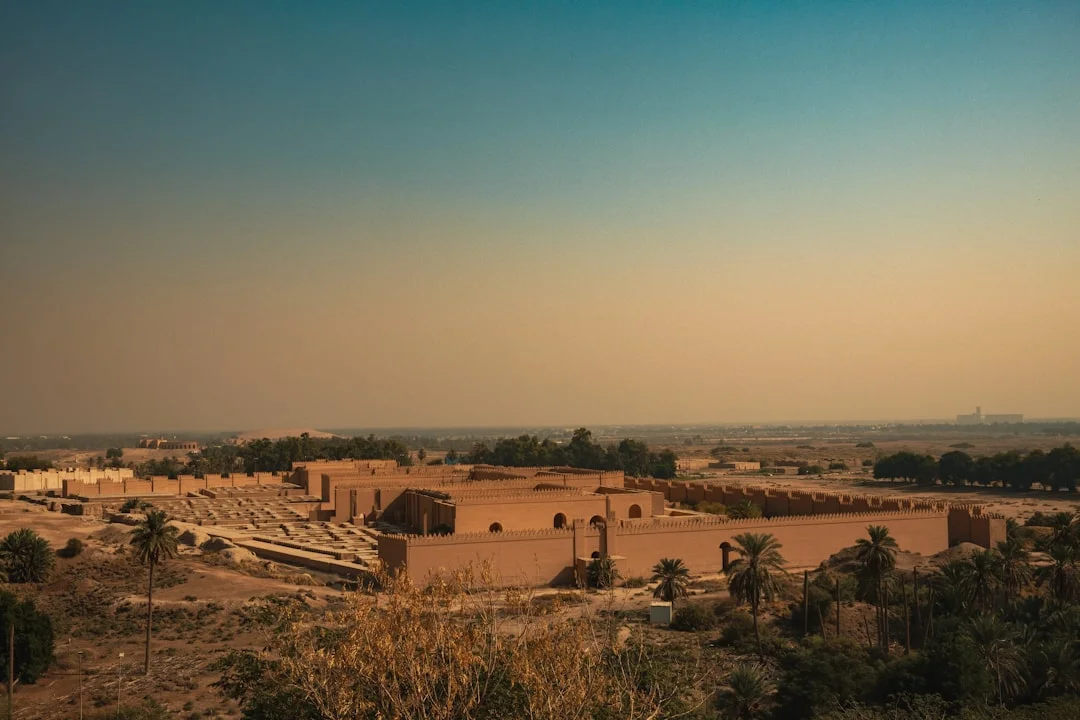
The Chaldean system is older than the Pythagorean system—it originated in ancient Babylon (ca. 4000 B.C.) and was developed by the Chaldeans, a people famous for their astronomical and mathematical knowledge.
Letter-Number Correspondence: Based on sound and vibration, not on alphabetical order:
1: A, I, J, Q, Y
2: B, K, R
3: C, G, L, S
4: D, M, T
5: E, H, N, X
6: U, V, W
7: O, Z
8: F, P
Noteworthy: The number 9 is missing from the basic table! The Chaldeans regarded 9 as sacred and divine—it could only appear as a result, never as an assigned value.
Further differences:
- The Chaldean system uses the everyday name (how one is addressed), not the birth name
- It distinguishes between simple and compound numbers (e.g., a 14 is not simply a 5, but a “14/5” with its own meaning)
- It is considered more “intuitive” and profound, but also more difficult to learn
Which system is better? There is no "right" or "wrong" system. Many experienced numerologists work with both and compare the results - the differences themselves are often revealing.
Practical Comparison
Let’s calculate the name number for the name ANNA SCHMIDT in both systems:
Pythagorean:
A(1)+N(5)+N(5)+A(1) + S(1)+C(3)+H(8)+M(4)+I(9)+D(4)+T(2) = 43 → 4+3 = 7
Chaldean:
A(1)+N(5)+N(5)+A(1) + S(3)+C(3)+H(5)+M(4)+I(1)+D(4)+T(4) = 36 → 3+6 = 9
The same name—two different results: 7 (the Seeker) vs. 9 (the Wise One). Both interpretations can provide valuable insights. The Pythagorean 7 emphasizes the analytical, inquiring side, while the Chaldean 9 emphasizes the compassionate, universal side.

Other Numerology Systems
Kabbalistic Numerology (Gematria): Based on the Hebrew alphabet (22 letters). Each letter has a fixed numerical value. Traditionally used to analyze sacred texts, but also for name interpretations.
Vedic/Indian Numerology: Uses the numbers 1–9, but assigns them to the nine planets of Vedic astrology. Distinguishes between the Psychic Number (birthday), Destiny Number (full date of birth), and Name Number.
Chinese numerology: In the Chinese tradition, even numbers are considered Yin (feminine) and odd numbers Yang (masculine). The number 8 is considered particularly auspicious (sounds like “wealth” in Mandarin), while 4 is considered unlucky (sounds like “death”).
Lo Shu Square: A magical 3×3 square based on a 4,000-year-old Chinese legend. It is used in Feng Shui and Chinese numerology to analyze birth dates.
Which system do most numerologists use?
In the western world, the Pythagorean system dominates. It is easier to learn and has more available literature. However, the Chaldean system has a loyal following that appreciates its greater depth.
Can I use both systems at the same time?
Yes, many advanced numerologists do this. The differences between the two results can provide additional insights - much like different chart systems (tropical vs. sidereal) in astrology.
Why is the 9 missing in the Chaldean system?
The Chaldeans regarded 9 as a sacred, divine number. It could appear as a sum, but could not be assigned directly to a letter. The 9 was regarded as the number of perfection, which stood above human classification.
Sources & Further Reading
- Cheiro (William John Warner): Cheiro's Book of Numbers. Herbert Jenkins, 1926. Digital copy available at archive.org
- Johari, Harish: Numerology: With Tantra, Ayurveda, and Astrology. Destiny Books, 1990. Inner Traditions
- Zoabi, Talal: Chaldean Numerology for Beginners. Llewellyn, 2011. Llewellyn
- Schimmel, Annemarie: The Mystery of Numbers. Oxford University Press, 1993. OUP