Encouragement Cards: Little Words of Encouragement for Tough Times
When words fail, encouragement cards can say exactly what your heart needs. What’s behind them—and how you can use them.

Sometimes a single sentence is enough to make a difference in someone’s life. A small piece of paper, a few carefully chosen words—and suddenly, the next step feels a little easier. That’s exactly the idea behind encouragement cards: small, tangible messages of encouragement that can offer support during difficult times, provide strength, and remind you that you’re not alone. Whether you design them yourself, give them as gifts, or buy them as a ready-made set—encouragement cards have inspired many people in recent years. But what’s really behind them? And why can words on paper sometimes have a greater impact than we’d expect? This article invites you to take a closer look—with an open mind—at what research and real-life experience have to say on the matter.
What Makes Encouragement Cards So Special
In the digital age, when messages usually arrive as fleeting text messages and immediately disappear into the stream of the next notification, encouragement cards seem almost anachronistic—and that may be precisely where their strength lies. A physical card has weight, texture, and color. You can hold it in your hand, slip it into your pocket, place it on your desk, or tuck it under your pillow. It doesn’t vanish with the swipe of a finger.
For many people, this tangibility can make a difference. Something you hold in your hand can have a different kind of presence than a message on a screen. Some people say they read their favorite encouraging quotes on cards over and over again—while on hold, before a difficult conversation, or simply when their inner voice gets particularly loud and critical.
This is neither a coincidence nor magic. Rather, various psychological approaches suggest that certain forms of self-care and positive self-messages can influence how we experience and cope with challenging situations—but more on that in a moment.

The Psychology Behind Encouragement
Why do words of encouragement have such a powerful effect on us? Psychology offers some interesting insights here. In 1997, Albert Bandura described the concept of self-efficacy—the inner conviction that one is capable of handling a particular situation. Research suggests that this belief can play a significant role in how we deal with challenges: People who believe they can succeed are more likely to try, stick with it longer, and recover more quickly from setbacks.
According to Bandura’s work, motivational quotes and words of encouragement could act as a kind of external stimulus that gently nudges one’s own self-efficacy. This does not mean that a single sentence on a card can dispel all doubts. But it could help reinforce an inner attitude that’s already there—and that sometimes just needs a little reminder.
In addition, Snyder and colleagues (2002) developed the so-called Hope Theory, which describes how hope consists of two components: the belief that there are ways forward (way-thinking) and the belief that one has the energy to pursue those paths (willpower). The reasoning is that words of encouragement could address precisely these two aspects—by reminding us both of the possibilities and of our own inner strength.
Positive Emotions as a Resource: What Research Suggests
Another perspective comes from psychologist Barbara Fredrickson, who introduced her influential Broaden-and-Build theory in 2001. Her research suggests that positive emotions—such as joy, gratitude, hope, or love—are not merely pleasant, but may also help broaden our thinking and build inner resources. In difficult moments, even brief bursts of positive emotions could help us see new courses of action that previously seemed hidden.
Applied to encouragement cards: According to Fredrickson’s model, a card that brings a genuine smile or warms the heart for a moment could be more than just a nice moment. It could—in the best-case scenario—flip a small switch that slightly broadens one’s perspective on their own situation. Of course, this is no panacea, and research findings can never be directly and reliably applied to individual cases. But there is a possible mechanism that explains why so many people find encouragement cards helpful.
Added to this is the work of Geoffrey Cohen and David Sherman (2014) on self-affirmation. Their research suggests that it can help people connect with their own values and strengths—especially when they feel threatened or overwhelmed. An encouragement card that reminds a person of something that is important to them or something they have already accomplished could act as a kind of gentle prompt for self-affirmation.
Scientific Background Research suggests that positive emotions can broaden our thinking and build up our inner resources—even brief moments of hope or warmth could help us see new possibilities for action (Fredrickson, 2001). Words of encouragement aren’t a solution to every challenge, but they can be a small, valuable building block during difficult times.
Encouragement Cards for Children: Encouragement as They Grow
Encouraging words play a particularly significant role in children’s lives. Encouragement cards for children are becoming increasingly common in educational settings—in schools, preschools, and families—and for good reason. Children are still actively developing their self-perception and confidence in their own abilities. Positive feedback, loving encouragement, and little reminders of their own strengths can play an important supporting role in this process.
Especially in challenging situations—the first day of school, an important test, a fight with a best friend, or a new hobby that feels difficult—encouragement cards for children can offer a tangible form of support. They simply say: I believe in you. You can do it. You’re not alone.
The language used is key: For children, words of encouragement should be concrete, simple, and warm. Messages that are too abstract can easily fall flat. Phrases like “You’ve already learned so much—you’ll learn this, too” or “It’s okay to make mistakes. You’ll learn from them” can be more effective than general praise. As a caregiver, you might also want to design a card like this together with a child—the act of creating it can become a small, empowering ritual.
Encouragement Card Sets: Buy Them Ready-Made or Design Them Yourself?
Anyone looking for encouragement cards today will find a wide variety of options: There are lovingly illustrated encouragement card sets in bookstores and online shops, digital collections to print out, one-of-a-kind handmade cards from small workshops, and, of course, the option to get creative yourself. Which option is right for you depends entirely on your personal needs and the situation at hand.
Ready-made encouragement card sets have the advantage of being ready to use right away—ideal if you want to give or send something quickly. Many of these sets are curated by theme, such as for times of grief, for people going through stressful life phases, or specifically for children. It’s worth paying attention to the quality of the text: Do the phrases feel genuine and human, or do they sound like clichés from a calendar? Good encouragement cards strike a personal tone without overdoing it or making empty promises.
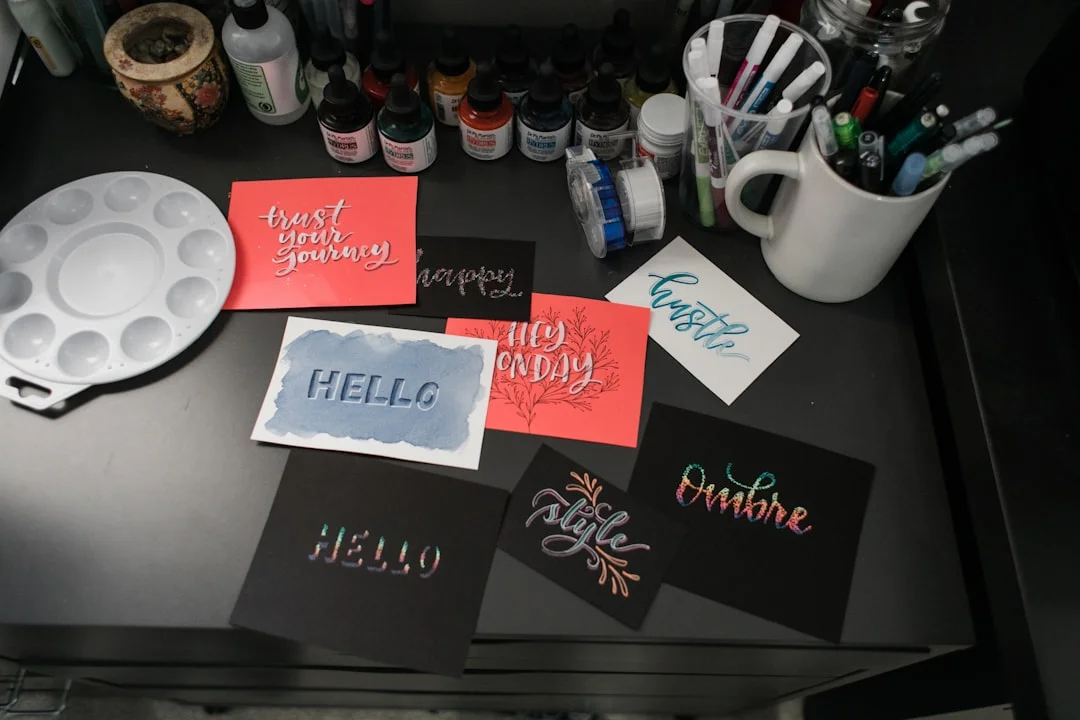
On the other hand, homemade cards designed to offer encouragement can have a special impact—both for the person creating them and for the recipient. The act of writing itself can be clarifying: What do I really want to say to this person? What do I sincerely believe about their strength? These questions can invite us to look more closely and express a deeper appreciation. Sometimes this results in a sentence that captures exactly what no pre-made card could have.
What Makes a Good Encouraging Quote
Not every encouraging phrase resonates in the same way. What makes words of encouragement truly effective—or at least more likely to be helpful? Here are a few thoughts that might help:
- Authenticity over perfection: Phrases that feel sincere can resonate more deeply than polished clichés. A slightly imperfect but genuine phrase often comes across as warmer than a smoothly worded phrase.
- Specificity: Words of encouragement that address a real strength or a specific situation can feel more personal than general statements. “I know how hard you’ve worked for this” resonates differently than “You’re great.”
- No false promises: Phrases like “Everything will be okay” can be comforting to some people, but to others they may sound hollow or even hurtful—especially when the situation is serious. More honest phrasing, such as “I’m here for you, no matter what,” can provide more support.
- Invitation Instead of Pressure: Good words of encouragement open doors rather than setting expectations. “You have to pull this off” can create pressure. “You have more strength than you might realize right now,” on the other hand, is an invitation.
- Tone and presentation: The outward appearance also plays a role. A lovingly designed card with handwritten text can convey a different kind of thoughtfulness than a standard printed message.
Maybe you’d like to keep these points in mind the next time you choose a card or write one yourself. There’s no one-size-fits-all formula—but there is a thoughtful consideration of what might be good for the other person.

Encouragement Cards in Everyday Life: Small Rituals with Great Potential
Many people who regularly use encouragement cards—whether for themselves or for others—report that the greatest impact doesn’t come from any single phrase, but rather from the consistency and mindfulness behind the practice. A card that is drawn weekly, read daily, or rediscovered time and again can become a kind of small ritual—a moment to pause in the midst of everyday life.
Such rituals can—regardless of their specific content—help create a moment of self-awareness. Pausing briefly, taking a breath, reading an encouraging phrase, and briefly reflecting on what it evokes: This in itself is a form of self-care that many people find soothing.
Here are some ideas for how you could incorporate encouraging cards into your daily routine:
- Hang a card on the bathroom mirror that you can read briefly each morning while brushing your teeth.
- Keep a small set in your desk drawer and pull out a card when you need one—almost like an inner compass.
- Use cards as bookmarks in the books you’re currently reading.
- Send a card to a friend out of the blue—just because, with no special occasion.
- Create cards together with children to capture their strengths and fond memories.
These are all invitations, not instructions. Maybe only one of these ideas resonates with you—or you’ll find a way that’s uniquely your own and feels just right.
Giving Encouragement Cards: When and How
Giving an encouraging card is a deeply human gesture—and at the same time, one that sometimes takes a little courage. It means saying, “I see that you’re struggling right now.” And I want you to know that I see it.” This kind of acknowledgment can mean a great deal to the recipient.
Encouragement cards can be a valuable gift, especially in the following situations:
- When someone is facing a difficult challenge or has just failed one.
- During times of grief, loss, or major life changes—in these cases, the card should be worded with particular care and without offering false reassurance.
- When facing health challenges—as a source of support, not a substitute for professional help.
- As a spontaneous gesture of love for people who are important to us, just because.
- For children embarking on a new chapter in their lives—their first day of school, a move, or a new challenge.
Sometimes it’s perfectly fine to give a card and say: “I don’t know exactly what the right words are—but I wanted you to know that.” This honesty often holds more power than a sentence that tries too hard to be perfect.
An important note: If someone is in the midst of a serious mental health or physical health crisis, an encouragement card is no substitute for professional counseling, support, or therapy. In such situations, it can still be a small sign of solidarity—but never the only one.
Your Personal Sources of Encouragement
The 7zen Coaching Cards translate your birth profile into empowering messages—cards that can give you courage exactly when you draw them.
Encouragement Cards for Yourself: Practicing Self-Encouragement
As wonderful as it is to receive encouragement from others—what about the encouragement we can give ourselves? Many people find it easier to be kind and understanding toward a friend than toward themselves. Our inner voice is often far more critical than anything anyone else might say.
This is where encouragement cards could also be helpful in a slightly more unusual role: as a tool for self-encouragement. Maybe you’d like to try writing yourself a card—a letter from your future self, who has made it through this difficult phase. Or a list of things you’ve already accomplished that felt impossible at the time. Or simply a sentence you’d say to yourself if a good friend were in the same situation.
Research in the field of self-affirmation (Cohen & Sherman, 2014) suggests that connecting with your own values and strengths during stressful moments can be helpful. A self-written encouragement card could be a concrete, tangible way to do that—without feeling like therapy, without being overwhelming, but simply as a small, personal moment of self-care.
It doesn’t have to be a perfect sentence, either. Sometimes all it takes is: “You’re trying. That’s what counts.”
Limits and an Honest Perspective
As valuable as encouragement cards may be—an honest article should also acknowledge what they cannot and should not do. Words on paper cannot replace genuine support, a sense of connection, or professional help. Anyone who feels overwhelmed, exhausted, or hopeless for an extended period of time shouldn’t try to get through it on their own with positive messages—but should turn to trusted people or seek professional support.
Encouragement cards can be a lovely part of life—as a complementary, loving gesture, a small ritual, or an expression of connection. They can make a small but genuine difference in certain moments. But they are not a panacea, not therapy, and not a substitute for what people really need during difficult times: connection, being heard, and sometimes professional support.
With this realistic perspective, encouragement cards can be what they do best: a small sign of humanity in a moment when it’s needed.
Your daily companion for personal growth
With the 7zen app, you'll receive daily coaching tips, guided breathing exercises, and personal reflections—all based on your individual profile.
Who are encouragement cards for?
Encouragement cards can be helpful for people of all ages—for children facing challenging situations as well as for adults going through stressful phases in their lives. They are particularly well-suited as a loving source of support during moments of uncertainty, grief, or new beginnings. Of course, everyone is different, and not every card strikes the right note with every person—that’s completely normal and doesn’t mean the idea is a failure.
What should a good get-well card say?
Good words of encouragement are sincere, specific, and don’t make false promises. Phrases that highlight real strengths, express a sense of connection, or simply say “I’m here for you” can be especially effective. It’s important that the tone fits the person and the situation—and that the message doesn’t come across as insincere or overly optimistic. Sometimes a simple, honest sentence is more valuable than a polished phrase.
Are there special encouragement cards for children?
Yes, there are many sets of encouraging cards designed specifically for children—with simple language, colorful illustrations, and age-appropriate messages. Alternatively, you can design cards together with your children, which can give the whole thing a particularly personal touch. For children, specific, encouraging phrases are especially valuable—such as those that remind them of their past achievements or frame mistakes as part of the learning process.
Can I write encouragement cards for myself, too?
Not only is this possible, but it can also be a very valuable exercise. Writing a letter to yourself, jotting down your own strengths, or saying to yourself the words you would say to a good friend—these can be forms of self-care that many people find helpful. Research on self-affirmation (Cohen & Sherman, 2014) suggests that connecting with one’s own values and strengths can be supportive during stressful moments.
What is the difference between a ready-made set of encouragement cards and cards you design yourself?
Ready-made encouragement card sets are convenient and ready to use right away—they make great gifts or are perfect when you’re short on time. Handmade cards, on the other hand, can have a more personal touch, since they’re tailored specifically to the recipient. Both options have their merits; which one is better depends on the situation, the relationship, and your own needs.
Can encouragement cards replace professional help?
No—and that’s an important point. Encouragement cards are a lovely, human gesture, but they are no substitute for professional counseling, support, or therapy. In cases of ongoing stress, severe emotional distress, or serious mental health challenges, it makes sense to seek professional help. Encouragement cards can be a small sign of solidarity in such moments—but they complement, not replace, real help.
If you’ve read this far, you might already have someone in mind whom you’d like to encourage—or maybe even yourself. Here’s a little prompt for today: Take five minutes and write a single card. It doesn’t have to be perfect. It doesn’t have to be special. It just has to be genuine. For someone you care about—or for yourself, as a gentle reminder that you’re trying. That’s enough.