Transform limiting beliefs: Realigning thinking
Why do our own thoughts sabotage us - and how can we change this? Scientifically sound, practically applicable.

Do you know that feeling of constantly hitting the same invisible walls? You want to make a change—in a relationship, your career, or your self-image—and yet something you can barely grasp holds you back. Most of the time, it’s not an external force at work, but something very personal: limiting beliefs. These deeply ingrained beliefs about ourselves and the world secretly determine what we think is possible, what we dare to do, and what we believe we’re capable of. The good news: The brain is malleable—and if you understand how beliefs form, you can also change them intentionally. This article shows you how this works scientifically and what you can do specifically to transform your thinking.
What are limiting beliefs—and where do they come from?
Limiting beliefs are internal assumptions that hold us back from reaching our full potential. They often sound like small, self-evident truths: “I’m not good enough.” “Success is only for others.” “I don’t know anything about money.” These statements don’t feel like beliefs—they feel like facts. That is precisely where their power lies.
Such beliefs often develop in early stages of life. Experiences with caregivers, societal messages, repeated experiences of failure or rejection—all of this leaves neural traces. The brain learns through repetition: What is frequently thought and felt becomes hardwired into stable patterns. Canadian neuropsychologist Donald Hebb described this principle as early as the 1940s with the phrase now known as Hebb’s learning rule: Neurons that fire together wire together. In other words—the more often we think a thought, the deeper it burrows into the brain.
This also means: Limiting beliefs are not immutable truths about ourselves. They are learned patterns. And what has been learned can, in principle, also be changed.
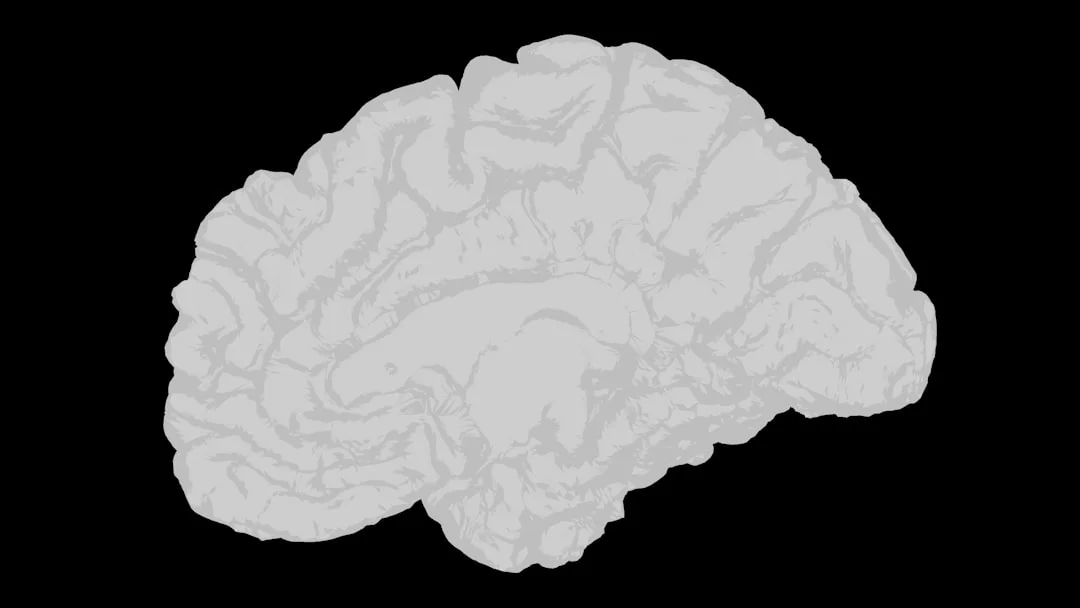
How the Brain Stores Beliefs
Our brain is not a static organ. In his groundbreaking work *The Brain That Changes Itself* (2007), neuroscientist Norman Doidge impressively demonstrated that neural structures can change throughout a person’s lifetime—a phenomenon known as neural plasticity (neuroplasticity). The brain is constantly restructuring its connections depending on the thoughts, feelings, and behaviors we repeat.
From a neural perspective, limiting beliefs are nothing more than well-developed highways in the brain—connections that have become broad and fast through years of repetition. Every time you think, “I can’t do that anyway,” that connection is reinforced a little bit. That sounds discouraging, but in reality it is the basis for hope: the same plasticity that reinforces harmful patterns also enables us to build new, helpful ones.
Doidge (2007) describes patients with severe neurological impairments who, through targeted mental training, activated new areas of the brain and regained abilities that were thought to be lost. If that is possible, changing a belief is certainly achievable.
Cognitive Distortions: The Hidden Mechanisms Behind Limiting Thoughts
Cognitive therapy, which psychiatrist Aaron Beck systematically established in 1979, provides an important tool for understanding limiting beliefs. Beck recognized that psychological distress often arises not from external events themselves, but from the way we interpret these events. He described a series of typical cognitive distortions—automatic, distorted thought patterns that cloud our experience.
You may recognize some of these patterns:
- Black-and-white thinking: Either I’m perfect—or I’m a failure. There is no middle ground.
- Overgeneralization: Failing once means I always fail.
- Mind reading: I’m convinced that others judge me negatively—without any evidence.
- Catastrophizing: If this goes wrong, everything is lost.
- Emotional reasoning: Because I feel like a failure, I am one.
Beck (1979) demonstrated that consciously recognizing and questioning these patterns—without judging or suppressing them—can already lead to a significant improvement in well-being. Since then, cognitive therapy has become one of the most extensively researched psychotherapeutic approaches worldwide.
Neuroplasticity & Hebb's learning rule "Neurons that fire together, connect together" - this principle of neuroplasticity, known as Hebb's learning rule, explains why repeated thought patterns become deep neural pathways. But it also explains why new, consciously chosen thought patterns have the potential to replace old ones - synapse by synapse.
Recognizing Limiting Beliefs: The First Step Toward Change
Before you can change your beliefs, you must first see them. That sounds easier than it is—because limiting beliefs usually operate below the threshold of consciousness. They don’t manifest as loud thoughts, but as a quiet background noise that colors our decisions.
A helpful method is the so-called thought journal. Whenever you notice an unpleasant emotion—fear, shame, sadness, anger—pause briefly and ask yourself: What was I thinking in that moment? Write down that thought without censoring it. Over time, patterns emerge: The same beliefs keep popping up, in different situations, in different phrasing.
Typical indicators of limiting beliefs are sentences that begin with:
- “I am...” (global self-evaluations: “I am not lovable.”)
- “I can’t…” (learned helplessness: “I can’t set boundaries.”)
- “I must...” (rigid rules: “I must always be strong.”)
- “The world is...” (worldview assumptions: “The world is dangerous.”)
Simply writing them down is already a powerful step. It creates distance between you and the thought—you are not the thought; you have the thought.
Transforming Your Thinking: What Neuroscience Recommends
In his book Breaking the Habit of Being Yourself (2012), neurologist and author Joe Dispenza describes how deeply ingrained thought patterns are linked to emotional states. We don’t just think in thoughts—we think in feelings. A belief such as “I don’t deserve success” isn’t just a sentence in our head; it’s linked to a whole landscape of bodily sensations, memories, and emotional reactions.
Dispenza (2012) therefore argues that true belief change cannot be achieved through rational thinking alone, but rather through a combination of mental training and emotional realignment. Specifically, this means: It is not enough to replace a negative thought with a positive one if the emotional body is still stuck in the old pattern. The brain needs repeated, emotionally charged experiences of the new belief to solidify new neural pathways.
In practical terms, this can mean: not just thinking “I am capable,” but vividly imagining what it feels like to be capable—using all the senses, repeatedly, in a relaxed state. Visualization, meditation, and body-oriented practices are not esoteric gimmicks, but tools that support the neural restructuring process.

Practical Methods for Changing Beliefs
Scientifically well-established methods for working with limiting beliefs can be divided into three main areas:
1. Cognitive restructuring
Based on Beck’s (1979) cognitive therapy, this involves consciously examining a limiting thought: What are the arguments for it? What are the arguments against it? What evidence is actually there? Then, you work together on a helpful, more realistic thought. Important: The new thought doesn’t have to be overly positive—it just needs to be more credible than the old one.
Instead of: “I will always fail.”
More helpful: “There have been situations where I failed, and situations where it worked out. Failure doesn’t say anything definitive about me.”
2. Make targeted use of neuroplasticity
According to Hebb’s learning rule, repetition strengthens neural connections. In concrete terms, this means: New, helpful beliefs must be actively and regularly practiced. Journaling, daily affirmations (formulated in the present tense and emotionally anchored), visualizations, and mindfulness practice are proven methods for reinforcing new thought patterns.
3. Physical anchoring
Since beliefs, as Dispenza (2012) shows, are closely linked to bodily sensations, posture can also have an influence. Upright posture, conscious breathing, and targeted movement can help anchor new inner states. The brain responds to bodily signals—and vice versa.

The Role of Self-Compassion in Transforming Beliefs
One aspect that is often overlooked in many approaches to changing beliefs is self-compassion. When people begin to recognize their limiting beliefs, they often encounter an inner critic who judges them mercilessly: “How could I have thought that way for so long?” This self-criticism is understandable—but counterproductive.
As early as 2003, researcher Kristin Neff demonstrated that self-compassion—that is, the ability to be as kind and understanding toward oneself as one would be toward a good friend—does not lead to self-indulgence, but rather to greater motivation, resilience, and mental health. People who treat themselves with compassion recover more quickly from setbacks and are more open to change.
When it comes to working with limiting beliefs, this means: Approach your belief not with judgment, but with curiosity. It once served a purpose—it may have protected you during a difficult time. Now you can decide whether it is still useful. This attitude creates the inner security that makes real change possible in the first place.
How long does it take to truly change beliefs?
An honest answer to this question is: It depends. And it takes time. The oft-cited promise of changing a belief in 21 days is not scientifically sound. Neural restructuring processes require repetition, emotional intensity, and above all—patience.
In his case studies, Doidge (2007) describes how significant neural changes can require weeks to months of targeted practice, depending on the depth of the old pattern and the consistency of the new practice. That sounds like a lot—but remember: the old belief wasn’t formed overnight either.
Research also shows that small, consistent steps are more effective than intense but short-term efforts. Someone who consciously works on a new thought pattern for ten minutes every day will make more progress in the long run than someone who attends a weekend seminar once a month and then does nothing.
It’s also important to remember: setbacks are normal and not a sign of failure. During stressful periods, the brain tends to fall back on old, familiar patterns—this is a neurological protective mechanism, not a personal failure. Acknowledge the setback, return to the practice. That is the process.
When Professional Guidance Is Helpful
Self-work involving journaling, mindfulness, and cognitive reflection is a powerful starting point for many people. However, some limiting beliefs are so deeply rooted—often linked to early attachment experiences, trauma, or ongoing psychological stress—that professional support may not only be helpful but necessary.
Cognitive behavioral therapy (based on Beck’s approach), schema therapy, EMDR (Eye Movement Desensitization and Reprocessing), or depth psychology techniques can help address beliefs at a deeper level that is difficult to reach through self-reflection alone. This is not a weakness—it is self-care.
A good indication that professional support might be helpful: if, despite consistent self-work, you keep falling back into the same patterns; if you experience strong emotional reactions when working through certain beliefs; or if your quality of life isn’t improving despite your efforts.
Transforming Limiting Beliefs: A Look at the Big Picture
Working with limiting beliefs is not a crash course in positive thinking. It is a serious, sometimes uncomfortable process of self-awareness and change—driven by curiosity, self-compassion, and the knowledge that the brain remains malleable well into old age.
What neuroscience and psychology show us in common: transforming thought is possible—not as a magical leap, but as a gradual, neural restructuring. Hebb’s learning rule reminds us that every consciously chosen thought is a small investment in a new neural connection. Beck’s cognitive therapy shows that simply questioning automatic patterns already has a healing effect. Doidge (2007) demonstrates that the brain can adapt throughout a person’s entire life. And Dispenza (2012) reminds us that change must also include the emotional body.
You don’t have to be perfect in this process. You just have to start—and then keep going.
Transform your thinking week by week
The 7zen Workbook combines neuroscientific findings with weekly exercises to transform your beliefs.
Your daily companion for inner growth
With the 7zen app, you receive daily coaching impulses, guided breathing exercises and personal reflections - all based on your individual profile.
What exactly are limiting beliefs?
Limiting beliefs are deeply rooted, usually unconscious assumptions about ourselves, other people or the world that restrict us in our development. They are often formed in childhood through repeated experiences and messages and therefore feel like unchangeable facts - even though they are thought patterns that can be learned and therefore also changed.
Is it really possible to change beliefs permanently?
Yes - this is proven by neuroplasticity research, among other things. As Norman Doidge (2007) documents in detail, the brain can build new neuronal connections and restructure old ones throughout life. However, lasting belief change requires consistent repetition, emotional involvement and time. Short-term techniques alone are usually not enough.
How do I recognize my own limiting beliefs?
A good way to start is to keep a thought diary: whenever an unpleasant emotion arises, write down the thought behind it. Pay attention to phrases such as "I am not...", "I can never..." or "I always have to...". Recurring patterns indicate deeper beliefs. Cognitive behavioral therapy according to Beck (1979) also offers structured tools for identifying such patterns.
Are positive affirmations enough to change beliefs?
Affirmations alone are usually not enough if they are not emotionally anchored. Joe Dispenza (2012) emphasizes that the brain needs emotional intensity in order to consolidate new patterns. A new thought must not only be thought, but also felt - as regularly as possible and in a relaxed state, for example during meditation or visualization. Affirmations can then be a helpful part of a more comprehensive approach.
How long does it take to change a deep belief?
This is very individual and depends on how long and how deeply a belief is anchored, how consistent the new practice is and whether emotional or traumatic experiences are associated with it. Doidge (2007) describes periods of weeks to months for significant neuronal changes. Consistency is more important than speed: daily, small steps have a stronger long-term effect than one-off intensive measures.
When should I seek professional help?
If you keep falling into the same patterns despite regular self-work, experience strong emotional reactions when working on certain beliefs or your quality of life does not improve, professional support is recommended. Cognitive behavioral therapy, schema therapy or EMDR are scientifically proven methods that can be particularly effective for deeply rooted beliefs.
Your prompt for today: Take ten minutes and a blank sheet of paper. Write the following sentence at the top: “I am someone who…”—and let your hand write freely whatever comes to mind. Then read through what you’ve written with friendly curiosity: Which sentence feels limiting? What belief lies behind it? Then formulate a single alternative—not overly positive, but honest and just a little bit more generous toward yourself. This is your first step on the journey to truly transforming your thinking.