Mindfulness exercises for beginners: your introduction to meditation
Never meditated before? These 5 simple mindfulness exercises for beginners will show you how to go through everyday life more calmly, clearly and consciously.
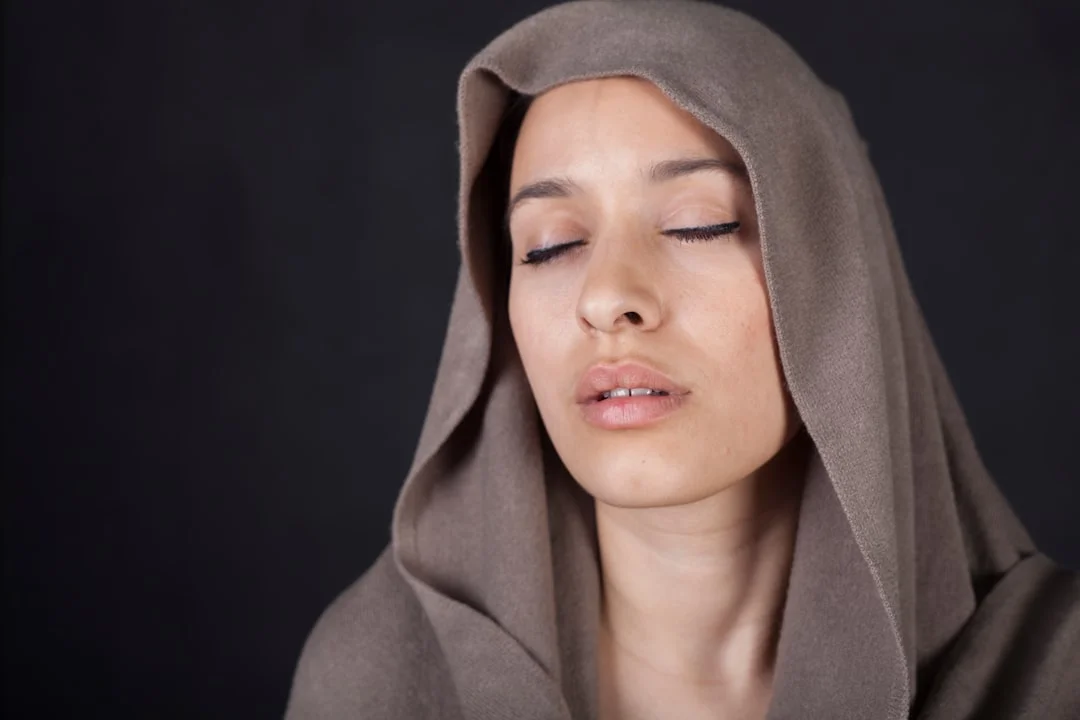
Do you know that feeling when the day has barely begun and you already feel overwhelmed, distracted, or restless inside? When your thoughts are racing, your to-do lists are growing, and your inner peace has gotten lost somewhere in the noise of everyday life? This is exactly where mindfulness exercises for beginners come in—not as an esoteric concept, but as a scientifically proven tool for greater inner clarity that works in everyday life.
This article is your introduction. It shows you what mindfulness really means and which simple exercises you can try right away—without any prior knowledge, special equipment, or hours-long sessions. Whether you’ve never meditated before or are simply looking for a fresh start: Here you’ll find an honest, well-founded, and warm companion on your journey.
What Mindfulness Really Means—and What It Isn’t
Mindfulness is often misunderstood. Many people associate it with hours of meditation in the lotus position, an empty mind, or spiritual rituals. But that is a misconception. At its core, practicing mindfulness means being consciously present in the moment—without judgment.
Scientist Jon Kabat-Zinn, founder of the so-called MBSR program (Mindfulness-Based Stress Reduction) at the University of Massachusetts Medical School, introduced mindfulness to Western medicine in the 1970s. His approach was revolutionary: mindfulness is not a matter of faith, but a learnable skill. And this skill can be trained—just like a muscle.
So what mindfulness really is: a conscious, non-judgmental engagement with whatever is happening right now. What it is not: suppressing thoughts, always being relaxed, or adhering to a particular worldview.
The Science Behind Learning Meditation: What Happens in the Brain?
Anyone who wants to learn meditation rightly asks themselves: Does it really work? The answer is yes, and there is strong evidence to support this. A comprehensive meta-analysis published in 2024 in a scientific database for medical studies clearly shows that after just a few weeks of regular mindfulness practice, cognitive functions such as attention, working memory, and emotional regulation improve measurably.
Kabat-Zinn’s MBSR program has also been extensively researched. Participants report not only reduced stress but also improved sleep quality, less rumination, and increased well-being. And what’s remarkable is that these effects are already evident in beginners—that is, in people who are just starting to practice mindfulness.
What happens in the brain during this process? Regular meditation activates the prefrontal cortex—the area responsible for rational decision-making, empathy, and impulse control. At the same time, the amygdala, the so-called fear center of the brain, calms down. In short: Your brain literally learns to react more calmly.
Mindfulness Exercises for Beginners: The First Exercise – Mindful Breathing
The simplest and most effective exercise for anyone looking to start with mindfulness exercises for beginners is mindful breathing. It requires no preparation, no props, and no specific setting. Just you—and your breath.
Here’s how it works: Sit or lie down comfortably. Close your eyes if you like. Focus your attention on the natural rhythm of your breath. Feel the air flowing in through your nose, how your belly or chest rises and falls, and how the air flows out again. If your thoughts wander—and they will—simply bring your attention back to your breath in a gentle, non-judgmental way.
Start with five minutes a day. This short period of time is perfectly sufficient at the beginning. The key lies not in the duration, but in the regularity. Five minutes of mindful breathing every day is more valuable than thirty minutes once a week.
Exercise 2: Walking Meditation – Mindfulness in Motion
Not everyone finds peace by sitting still. For those who feel uncomfortable or restless just sitting, walking meditation is a wonderful alternative. It is a classic form of meditation for beginners and can be easily integrated into daily life—during a walk, on the way to work, or simply in your own hallway.
Here’s how to practice walking meditation: Walk more slowly than usual. Consciously focus your attention on each individual step. Feel how the sole of your foot touches the ground, how your body weight shifts, how your body moves through space. Breathe calmly and evenly. If your mind wanders, gently return your awareness to your steps.
Ten to fifteen minutes of walking meditation daily can have a noticeably positive effect on your inner peace. Many people report that they think more clearly and feel more balanced afterward—an effect that is significantly enhanced with regular practice.
Exercise 3: Mindful Eating – Savoring as a Form of Meditation
How often do we eat on the go—in front of a screen, standing up, between appointments? Mindful eating invites you to transform one of the most everyday activities into a moment of complete presence. It is one of the most accessible and simple meditation exercises there is—because you do it every day anyway.
Here’s how to practice mindful eating: Consciously set aside time for at least one meal a day. Put all screens aside. Before taking your first bite, pause briefly: What does your food look like? What smells do you notice? Chew slowly and mindfully. Savor every bite. Notice when you feel full. Eat without judgment.
This exercise sounds simple—and it is. But it works. Those who eat mindfully on a regular basis not only develop a better sense of their bodies but also a deeper awareness of the present moment. Enjoyment and mindfulness are not opposites—they reinforce each other.

Expert tip from Jon Kabat-Zinn "You can't stop the waves, but you can learn to surf them." - Jon Kabat-Zinn. Mindfulness does not mean eliminating the chaos of life. It means finding a different way of dealing with it - one that belongs to you.
Exercise 4: The Body Scan – Your Body as an Anchor
The Body Scan is one of the core techniques in the MBSR program and one of the most profound mindfulness exercises for beginners. In this exercise, you systematically guide your attention through your body—from your feet to your head—and notice what you feel there without trying to change anything.
Step by step:
- Lie on your back with your arms relaxed at your sides.
- Close your eyes and take a few calm breaths.
- Start with the toes of your left foot. What do you notice there? Warmth, cold, tingling, numbness—or nothing at all?
- Slowly move on: the sole of your foot, heel, ankle, lower leg, knee, thigh.
- Then switch to the right side and continue your way upward: pelvis, abdomen, back, chest, shoulders, arms, hands, neck, face.
- For each area of the body: simply observe, don’t judge, don’t intervene.
A complete body scan takes between ten and forty-five minutes. To start, we recommend fifteen to twenty minutes. For many people, the body scan is particularly helpful before falling asleep—it calms the nervous system and gently releases physical tension.

Exercise 5: Sensory Awareness – The 5-4-3-2-1 Method
Sometimes a single minute is enough to ground yourself. The sensory perception exercise, also known as the 5-4-3-2-1 method, is a particularly quick and effective technique from cognitive behavioral therapy. It’s ideal for stressful moments, anxiety spikes, or when you simply want to pause for a moment.
Here’s how the exercise works:
- 5 things to see: Name five things you can see right now. Take them in consciously.
- Feel 4 things: What do you physically feel right now? The chair beneath you, the warmth of your hands, the floor beneath your feet.
- Hear 3 things: What sounds do you hear? Maybe traffic noise, the hum of the heater, or birds singing.
- Smell 2 things: What smells are present right now, even if they’re very subtle?
- Taste 1 thing: What do you taste right now?
This exercise takes your mind out of the whirlwind of thoughts and brings it directly into the present moment. It works quickly, is unobtrusive, and can be done anywhere—at the office, on the train, or just before a difficult conversation.
Common Obstacles to Practicing Mindfulness—and How to Overcome Them
Anyone who starts practicing mindfulness will sooner or later encounter typical hurdles. This is normal and not a sign of failure—it’s part of the process. Here are the most common obstacles and specific ways you can deal with them:
“I can’t calm my mind”
This is the ultimate misconception. Mindfulness doesn’t mean having no thoughts. Thoughts will come—always. The goal is to notice them without following them. Every time you notice that you’ve wandered off and bring your attention back, that’s a moment of successful mindfulness. Wandering off isn’t the problem—noticing it is the progress.
“I don’t have time”
Five minutes a day is perfectly sufficient to start with. You don’t need to set aside half an hour. Link your practice to something you do every day anyway: your morning coffee, brushing your teeth, or waiting for the bus. Short, consistent sessions are more effective than rare, long ones.
“I’m doing it wrong”
Mindfulness cannot be done wrong. There is no perfect posture, no correct state of mental blankness, no minimum duration. If you sit and try to notice what is happening right now—then you are practicing mindfulness. That is enough.
“It doesn’t work for me”
Changes brought about by mindfulness are often subtle and don’t show up immediately. Research suggests that measurable effects begin to appear after about four to eight weeks of regular practice. Give yourself and your practice this time—without the pressure of expectations.
How to Build a Sustainable Meditation Practice
The biggest difference between people who benefit from meditation for beginners in the long term and those who give up after a few weeks isn’t talent or time—it’s structure. A routine that fits your life is the foundation of a sustainable practice.
These building blocks will help you:
- Set Time: Choose a time you can stick to every day—mornings after waking up or evenings before bed are particularly effective.
- Fixed place: A quiet, comfortable spot associated with your practice reinforces the habit.
- A small ritual: A glass of water, a minute of quiet sitting, a deep breath—a small opening ritual signals to your brain: Now the practice begins.
- Consistency over duration: Five minutes a day is better than thirty minutes once a week.
- Be kind to yourself: If you skip a day, just start again. No drama, no self-criticism.
Many people also opt for guided meditations—via apps, podcasts, or YouTube channels. This can be especially helpful in the beginning to make getting started easier and to avoid feeling alone.
How long should I meditate every day as a beginner?
At the beginning, five to ten minutes a day is perfectly sufficient. More important than the duration is the regularity. Over time, you can extend your practice to twenty to thirty minutes - but only if it feels right. Don't let yourself be put under pressure. Small, consistent steps are more effective than sporadic, long sessions.
Do I have to sit in the lotus position when meditating?
No, absolutely not. You can sit on a chair, lie on the floor, stand or walk. The important thing is to adopt a posture in which you are alert and relaxed at the same time. The lotus position is a possibility - but not a requirement. Choose the position that works best for your body.
What do I do if my thoughts don't stop while meditating?
Stopping thoughts is not the goal of meditation. Thoughts will always come - this is completely normal and not a mistake. The exercise is to notice when you have wandered off and gently bring your attention back - to the breath, the body or the senses. Each return is a moment of successful mindfulness.
When will I notice the first changes?
This is very individual. Some people report a calmer mind and better sleep after just a few days. Scientific studies show measurable changes in cognitive functions and emotional regulation after around four to eight weeks of regular practice. Give yourself this time - without any pressure of expectation.
Can I also use mindfulness exercises for stress or anxiety?
Yes, and this is exactly what they are particularly good for. Techniques such as mindful breathing or 5-4-3-2-1 sensory perception can help to reduce acute stress and calm the nervous system. Long-term, regular practice can also help you to perceive stress-inducing situations more calmly and deal with them better.
Do I need an app or a course to learn mindfulness?
No. Mindfulness can be practiced without any tools or courses - the exercises in this article are a complete introduction. Apps or guided meditations can make it easier to get started and provide structure, but are not a prerequisite. If you want to go deeper, a structured program such as MBSR can be useful.
Mindfulness isn’t a technique you learn once and then check off your list. It’s a way of life—an invitation to arrive anew, time and again. In this moment. In this breath. In this life.
You don’t have to be perfect. You don’t have to meditate every day. You don’t need any special skills. You already have everything you need: your breath, your senses, and the willingness to be truly present for a moment.
Your action step for today: Take five minutes right now—immediately after reading this article—for a mindful breathing exercise. Set a silent timer, close your eyes, and simply focus your attention on your breath. No goal. No expectations. Just you and this one breath. This is your beginning—and beginnings are allowed to be this small.