Neurobiology of resilience: How stress shapes your brain
Why do some people become stronger through crises? The neurobiology of resilience provides fascinating answers from brain research.

Some people seem to absorb crises with ease—they may be shaken, but they always find their way back to themselves. Others, on the other hand, carry even minor stresses as if they were a backpack full of rocks. What makes the difference? The answer lies not in some mysterious personality trait, but literally in our brains. The neurobiology of resilience shows that psychological resilience is deeply rooted in the structures and processes of our brain—and that the brain can be shaped by experiences, stress, and targeted practice. This article takes you on a journey through the fascinating science behind the concept of the resilient brain: What happens in our nervous system when we come under pressure? And what does research say about how we can support our stress regulation in the long term?
What does resilience mean from a neurobiological perspective?
In everyday life, resilience is often described as a trait that one either has or does not have—a myth that research has long since debunked. From a neurobiological perspective, resilience is not a fixed state, but a dynamic process. In their widely cited work on the neurobiology of resilience, Russo et al. (2012) define resilience as an organism’s ability to maintain stable mental and physical health in the face of adversity—or to return to this state after a period of impairment. This definition is crucial because it understands resilience not as invulnerability, but as the ability to adapt and recover.
At the biological level, this means: Our brain is capable of responding to stressful experiences, changing, and finding new states of equilibrium. This ability is called neuroplasticity—the brain’s capacity to adapt its structure and function through experience. Neuroplasticity in the context of stress is thus a central mechanism that explains why stressful life events can shape the brain—both toward increased vulnerability and toward greater resilience.
The Brain's Stress System: The Amygdala and the Prefrontal Cortex
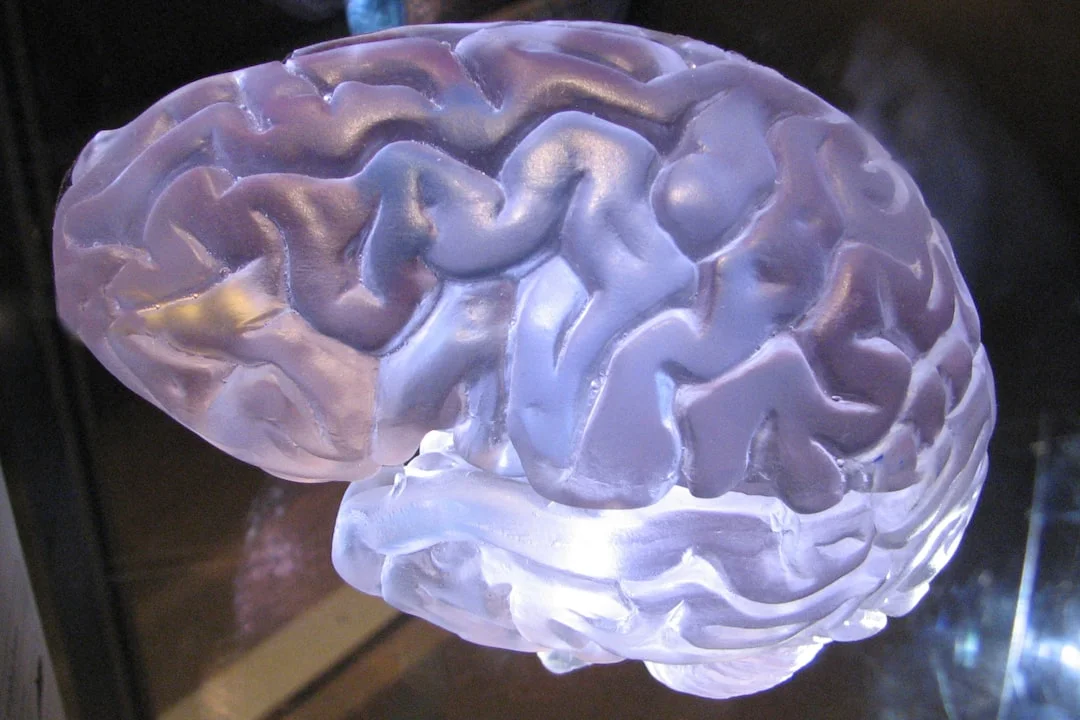
To understand the neurobiology of resilience, it is worth taking a look at two key regions: the amygdala and the prefrontal cortex. The amygdala—an almond-shaped nucleus deep within the temporal lobe—functions as the brain’s emotional alarm detector. It assesses incoming sensory stimuli in a flash for potential threats and, in the event of danger, triggers a stress response within milliseconds, even before conscious thought has a chance to kick in.
The prefrontal cortex, on the other hand, located behind our forehead, is responsible for higher cognitive functions such as planning, decision-making, impulse control, and emotional regulation. It can, in a sense, put the brakes on the amygdala—by contextualizing, evaluating, and mitigating threat signals. In their work on resilience and vulnerability, Karatsoreos and McEwen (2013) describe how the balance between these two systems—the reactive, emotionally driven amygdala system and the regulating, cognitive prefrontal system—significantly determines how resilient a person is to stress. People with high resilience often exhibit a stronger connection between the prefrontal cortex and the amygdala, which enables more effective stress regulation in the brain.
Chronic Stress and Its Effects on the Brain
Short-term stress serves a biological purpose: it mobilizes energy, sharpens attention, and prepares us for action. The problem arises when stress responses become chronic and the brain remains in a constant state of alarm. In this context, McEwen (2007) coined the term “allostatic load”—the cumulative strain on the body and brain caused by repeated or chronic stress exposure. The higher this load, the greater the biological consequences.
Specifically, chronic stress leads to the following changes in the brain:
- Hippocampal atrophy: The hippocampus, which is central to memory formation and spatial orientation, is particularly sensitive to the stress hormone cortisol. Persistently elevated cortisol levels can contribute to the breakdown of nerve cells and a reduction in volume in this region.
- Overactivation of the amygdala: Chronic stress can sensitize the amygdala—it then reacts more quickly and strongly to potential threats, even when these are objectively minor.
- Weakening of the prefrontal cortex: The regulatory function of the prefrontal cortex can be impaired by prolonged stress, which can reduce the ability for emotional self-regulation.
These findings make it clear: Chronic stress leaves biological traces. This is not a weakness, but rather an adaptive response of the nervous system—and at the same time the starting point for targeted approaches to strengthening resilience.
Key message of resilience research "Resilience is not a passive characteristic that people either possess or do not possess. It is the result of active neurobiological adaptation processes that can be influenced by experience, environment and - possibly - targeted interventions." - Southwick & Charney (2018), Resilience: The Science of Mastering Life's Greatest Challenges
Neuroplasticity and Stress: The Brain as a Learning Structure
One of the most significant findings of modern neuroscience is that the brain is not a rigid organ. Neuroplasticity under stress means that stressful experiences can trigger both damaging and strengthening structural changes—depending on the type, intensity, and duration of the stressor, as well as the available coping resources. In their seminal work, Feder, Nestler, and Charney (2009) describe how resilient individuals exhibit a form of active counter-regulation at the neurobiological level: they activate protective mechanisms that can counteract stress-associated changes.
Of particular interest here is the role of the reward system. According to Russo et al. (2012), the mesolimbic dopamine system—often referred to as the reward system—plays a central role in resilience. During stressful experiences, resilient individuals often exhibit altered activity in this system, which apparently helps them maintain positive emotions even under pressure. In a sense, the brain learns to find meaning and the capacity to act even in difficult situations—a skill that can be strengthened through repeated experiences.
The Role of Cortisol and Other Neurotransmitters
When discussing stress regulation in the brain, we cannot overlook certain key neurotransmitters. Cortisol, the best-known stress hormone, is produced in the adrenal cortex and floods the brain during acute stress. It affects memory, attention, and emotions. In the short term, it sharpens cognitive performance; in the long term, it can—as described—promote structural changes.
In addition to cortisol, other neurotransmitters play an important role in resilience:
- Neuropeptide Y (NPY): This peptide is considered one of the most promising biological markers for resilience. It counteracts amygdala activation and can help modulate the stress response. Southwick and Charney (2018) explicitly cite NPY as one of the neurobiological building blocks of resilient individuals.
- BDNF (Brain-Derived Neurotrophic Factor): This so-called nerve growth factor supports the survival and growth of nerve cells and plays an essential role in neuroplasticity. Chronic stress can lower BDNF levels; according to research, exercise, sleep, and social support can help boost it.
- Serotonin and Dopamine: Both neurotransmitters are closely linked to mood regulation, motivation, and the sense of reward—and thus also to the ability to perceive stressful situations as manageable.
Karatsoreos and McEwen (2013) emphasize that the interaction of these neurotransmitters varies greatly from person to person—influenced by genetic predispositions, early life experiences, and current life circumstances. This explains why people can react so differently to the same stressor.

Early Experiences and the Shaping of the Stress System
A particularly compelling chapter in resilience research concerns childhood. Early life experiences—whether positive or stressful—leave a deep imprint on the development of the stress system. McEwen (2007) shows that early childhood stress, such as neglect, abuse, or persistent insecurity, can influence the maturation of the hypothalamic-pituitary-adrenal axis (HPA axis)—the system responsible for cortisol release during stress.
Children who experience reliable, empathetic caregivers in their early years often develop a better-regulated stress response. Their nervous system learns: Threat is temporary; support is reliable. This is not a romantic exaggeration, but biochemically measurable: secure attachment experiences are associated with a more balanced cortisol profile and a better balance between the amygdala and the prefrontal cortex.
However, this explicitly does not mean that early stress constitutes an unalterable fate. The brain’s neuroplasticity persists throughout life—albeit to varying degrees. Therapeutic relationships, new bonding experiences, and targeted exercises can help strengthen protective neural pathways even in later stages of life. However, this article is not a substitute for professional counseling or therapy—if stress persists, seeking support from specialists is recommended.
The Neurobiology of Resilience: What Resilient People Do Differently
Through years of research—including interviews with former prisoners of war, survivors of natural disasters, and people with serious illnesses—Southwick and Charney (2018) have identified a number of factors associated with neurobiological resilience. Some of the most important ones:
Optimism and cognitive flexibility
Resilient people tend to view difficult situations as temporary and changeable. Neurobiologically, this manifests as increased activity in the prefrontal cortex during the cognitive reappraisal of negative experiences. Those who learn to view a stressful situation from a different perspective activate different brain regions than those who remain stuck in the original threat assessment.
Social Support
Humans are social beings—and our brains reflect that. Social connectedness activates the reward system and dampens the amygdala’s stress response. Russo et al. (2012) emphasize that social support is among the most robust protective factors against stress-related vulnerability. People who can draw on strong relationships during difficult times have been shown to regulate their stress levels differently.
Meaning and Significance
The ability to recognize meaning even in suffering—often referred to as meaningfulness—is closely linked to the activity of the prefrontal cortex and the anterior cingulate cortex. Feder, Nestler, and Charney (2009) describe how spiritual or existential orientation can act as a neurobiological buffer by influencing the cognitive evaluation of stressors.
Physical activity
Exercise has one of the best-documented neurobiological effects on the brain: it can boost BDNF production, support hippocampal size, and regulate the HPA axis. According to the research, even moderate endurance training can help support the brain’s stress-responsive architecture in the long term.
Genetics and Epigenetics: Is Resilience Hereditary?
A common question is: Is resilience inherited? The answer, as is so often the case in biology, is: It depends. Certain genetic variants—such as those in the serotonin transporter gene or the corticotropin-releasing factor gene—are associated with increased or decreased susceptibility to stress. Karatsoreos and McEwen (2013) emphasize, however, that genes do not determine destiny. They create probabilities, not certainties.
This is where epigenetics comes into play—the science of how environmental experiences influence gene activity without altering the DNA sequence itself. Early experiences, nutrition, stress, and social interaction can set so-called epigenetic marks that determine whether a gene is active or inactive. This means that even people with a genetic predisposition for higher stress reactivity can develop good regulatory capacity through supportive environmental conditions—and conversely, a genetically favorable starting point can come under pressure due to persistent stress.
These findings are encouraging because they show that resilience is not an unchangeable inheritance, but rather the result of an ongoing dialogue between genes and experiences.
Practical Ways to Support Stress Regulation in the Brain
Neuroscience not only provides explanations but also offers insights into which behaviors can help support stress regulation in the brain. It is important to emphasize that no single approach works the same way for everyone, and none of these practices should replace professional psychotherapeutic or medical support in cases of serious stress.
Mindfulness and meditation
Numerous studies suggest that regular mindfulness practice can contribute to measurable changes in brain structure and function—including reduced amygdala reactivity and increased activity in the prefrontal cortex. Southwick and Charney (2018) explicitly cite meditation practices as one of the most promising tools for supporting resilience.
Adequate Sleep
During sleep, the brain consolidates memories, regulates emotions, and clears itself of metabolic waste products. Sleep deprivation has been shown to impair the function of the prefrontal cortex and increase amygdala reactivity—a neurobiological argument for prioritizing sleep.
Cultivating social connectedness
As previously described, social support is one of the strongest biological protective factors. This doesn’t necessarily mean maintaining many friendships—even a few deep connections can have this effect.
Practice cognitive reappraisal
The ability to consciously reframe a stressful situation—What can I learn from this? What is within my control?—can be trained. It strengthens the connection between the prefrontal cortex and the amygdala and can help modulate stress responses in the medium term.
Conclusion: The Brain as an Ally—Not an Enemy
The neurobiology of resilience paints a picture that is both sobering and deeply encouraging. Our brain is not a static machine that can either handle stress well or poorly. It is a highly complex, plastic system shaped by experience—and one that, in turn, can be supported by experience, relationships, and conscious practice.
The research by McEwen (2007), Southwick and Charney (2018), Karatsoreos and McEwen (2013), Russo et al. (2012), and Feder, Nestler, and Charney (2009) collectively shows: Resilience is not a character trait of the invulnerable. It is a neurobiological process that can unfold in every brain—to varying degrees and in different ways. This takes the pressure off the need to always be strong and shifts the focus to what is actually helpful: small, consistent steps that support the nervous system’s ability to regulate itself.
Your brain is not your enemy in difficult times. It is trying to protect you—sometimes in roundabout ways. The better you understand its language, the better you can work with it.
Action step for today: Choose a single small practice from this article—whether it’s five minutes of mindful breathing, a conversation with someone you trust, or a short walk—and repeat it tomorrow. Not to “fix” your brain, but to support it in what it can do anyway: adapt, learn, and find new ways.
Can resilience really be trained, or is it innate?
Resilience has both genetic and experiential foundations - it is therefore neither purely innate nor arbitrarily malleable. Research, including by Russo et al. (2012) and Southwick & Charney (2018), suggests that neurobiological protective factors can be supported by experiences, relationships and deliberate practices. The brain remains plastic throughout life, albeit to varying degrees. According to current research, concrete approaches such as mindfulness, physical activity and social connectedness can help to support stress regulation - but they are no substitute for professional support in the event of serious stress.
What does the amygdala have to do with my stress response?
The amygdala is a small, almond-shaped brain structure that acts as an emotional alarm detector. It evaluates incoming stimuli for their threatening nature and can trigger a stress reaction within milliseconds - even before conscious thought can set in. In the case of chronic stress, the amygdala can become hypersensitive and react strongly even to minor stimuli. The prefrontal cortex has a regulating effect on the amygdala; according to Karatsoreos and McEwen (2013), the balance between these two systems is a central factor in individual stress regulation.
What is neuroplasticity and why is it important for resilience?
Neuroplasticity refers to the brain's ability to change its structure and function through experience. This means that nerve cells can form new connections, strengthen or weaken existing connections, and certain regions of the brain can change in their activity and even in their size. Neuroplasticity is important for resilience because it explains how stress-relevant networks in the brain can be influenced by experience, practice and conducive environmental conditions. Feder, Nestler and Charney (2009) describe how resilient individuals show active adaptation processes at the neuroplastic level.
What role does cortisol play in stress and resilience?
Cortisol is the body's most important stress hormone. It is released when threatened, mobilizes energy reserves and sharpens attention in the short term. However, long-term elevated cortisol levels - as occur in chronic stress - can contribute to structural changes in the brain, particularly in the hippocampus. McEwen (2007) uses the concept of allostatic load to describe how this cumulative stress strains the brain over time. Resilient people often show a well-regulated release of cortisol - i.e. the level rises during stress and then falls again quickly.
Can severe childhood traumatization permanently impair resilience?
Early experiences of stress can influence the development of the stress system and permanently sensitize the HPA axis - as McEwen (2007), among others, shows in his research. However, this does not mean that early stress is an unalterable fate. The neuroplasticity of the brain remains intact, and therapeutic relationships and targeted interventions can help to strengthen protective neuronal patterns. Professional psychotherapeutic support is strongly recommended for the lasting effects of childhood trauma - this article cannot and should not replace such support.
How quickly can the brain change through new habits?
This is a question that can hardly be answered in general terms - because neuroplastic changes vary greatly from person to person, depending on the intensity, frequency of practice and individual initial state. Studies on mindfulness meditation show the first measurable changes in brain structure and function after several weeks of regular practice. However, continuity is more important than speed: according to Southwick and Charney (2018), small, consistent steps can be more relevant in the long term than intensive, short-term efforts. Resilience is not a sprint, but an ongoing process.