Understanding retrograde planets: Mercury, Venus & Co.
What is really behind retrograde planets? Astronomy meets the tradition of interpretation - explained in an understandable way.

Suddenly, nothing is going right: technology is acting up, misunderstandings are piling up, and old acquaintances are popping up again. And somewhere you read: Mercury is in retrograde. What was once a niche topic in esoteric circles just a few years ago is now on everyone’s lips. But what does it actually mean when planets are retrograde—and what does that have to do with us? This article takes a closer look at the phenomenon of retrograde planets: from the scientific perspective of astronomy to historical traditions of interpretation, and on to the question of how we can meaningfully integrate such concepts into our lives—without falling into panic mode or blindly believing in cosmic fate.
What does “retrograde” actually mean? The astronomy behind it
Before we discuss meaning and interpretation, it’s worth taking a look at the physical reality. No planet actually rotates backward. That is the most important thing to understand about retrograde planets. What we perceive as retrograde motion is an optical phenomenon—an effect of the relative motion of various celestial bodies.
Earth and all the other planets in our solar system orbit the Sun in the same direction: counterclockwise, when viewed from above. However, they do so at different speeds. Earth takes one year to complete a full orbit, Mercury only about 88 days, and Venus around 225 days. The outer planets, such as Mars, Jupiter, or Saturn, on the other hand, take significantly longer. When Earth overtakes an outer planet on its slower orbit—similar to a faster car overtaking a slower one on the highway—it creates the impression that the other planet is moving backward. This apparent backward movement in the sky is called retrograde motion in technical terms.
With inner planets like Mercury and Venus, the effect is slightly different: here, it is the planet itself that overtakes Earth. In this case as well, from our earthly perspective, an apparent backward motion appears in the starry sky. The astronomical principles behind this phenomenon have been known since ancient times and were described in detail by scholars such as Hipparchus and later Ptolemy—even though the correct heliocentric explanation did not follow until Copernicus and Kepler in the 16th and 17th centuries.
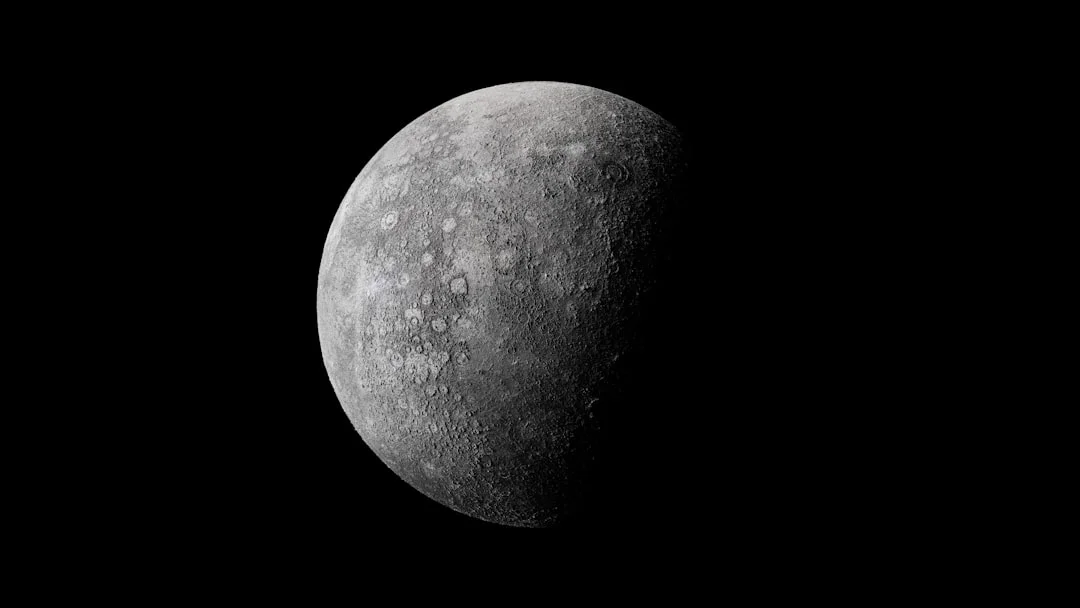
Mercury Retrograde: The Most Well-Known Retrograde Cycle
Of all the retrograde planets, Mercury has gained the most notoriety—and for one simple reason: It goes retrograde more often than any other planet. Up to three times a year, sometimes even four, Mercury enters a retrograde phase that lasts about three weeks each time. This makes it the most frequent subject of astrological interpretations in the headlines.
In basic astrology, Mercury is considered the guardian of communication, technology, travel, and mental clarity. According to traditional interpretation, when Mercury appears to be moving backward, all these areas can come to a standstill. Whether this association holds up empirically remains scientifically unproven—more on that later. What is fascinating from a cultural-historical perspective, however, is that the link between Mercury and communication and the mind dates back to ancient Rome, where Mercurius was revered as the messenger of the gods and patron saint of merchants and travelers.
For many people, however, the Mercury retrograde phase has a practical benefit: it serves as a recurring opportunity to pause, review projects, and shape communication processes more consciously. This reflective impulse is—regardless of astrological beliefs—quite valuable.
Venus Retrograde: Love, Values, and a Moment of Reflection
Venus in retrograde is much rarer, but its effects are felt more intensely. Only once every 18 months does Venus enter a retrograde phase, which lasts about 40 to 43 days. Since Venus is associated in astrological traditions with love, relationships, beauty, pleasure, and personal values, these weeks are considered a special time for reflection in precisely these areas of life.
The geometric regularity of the Venus cycle is fascinating: every eight years, Venus returns to nearly the exact same positions in the sky—a pattern that the Maya had already documented with astronomical precision. The so-called Venus cycle played a central role in the astronomy and cosmology of Mesoamerican cultures, as research on the Dresden Maya Codex—one of the few surviving astronomical documents of this advanced civilization—shows.
In modern astrological circles, a Venus retrograde phase is often described as an invitation to reflect on past relationships, review one’s own values, and reconsider financial decisions. Here, too, the real value lies less in a deterministic cosmic force than in the conscious pause that such a cycle can symbolically initiate.
Astronomical core fact The apparent backward motion of planets is a purely optical phenomenon caused by the different orbital speeds of the planets around the sun. No planet physically moves backwards. However, the cultural and historical significance that people attach to these phenomena says a lot about the human need for order, interpretation and rhythm.
Historical Interpretive Traditions: From Babylon to the Present
The observation and interpretation of retrograde planets is not a modern invention. Even Babylonian astronomers and astrologers—these two roles were inseparably linked in antiquity—tracked the movements of the planets with remarkable precision. The so-called MUL.APIN tables from the 7th century B.C. contain extensive records of planetary movements, including retrograde phases.
In Babylonian and later Hellenistic astrology, retrograde planets were generally regarded as unfavorable or at least as having diminished power. A retrograde planet was considered to be weakened in its effect, slowed down, or turned inward. This basic assumption has persisted in a strikingly similar form through centuries of astrological practice—from medieval Europe and the Islamic scholarly world to modern Western astrology.
Especially in medieval Arabic astronomy, retrograde motions were meticulously calculated and recorded in tables. Scholars such as al-Battani (858–929) and Ibn al-Haytham (965–1040) performed pioneering work in both astronomy and astrology. They established the computational foundations upon which medieval European astronomers and astrologers built—an often-forgotten chapter in the history of science.
With the Copernican Revolution, the understanding of retrograde motion changed fundamentally: it was now clear that it was a consequence of relative motion, not an actual reversal of the planet. Nevertheless, astrological interpretive traditions remained largely stable. Astrology and astronomy, once a single discipline, finally diverged during the 17th and 18th centuries.

Retrograde Planets in Modern Psychology: What Does the Research Say?
The central question many rational-minded people ask themselves is: Is there scientific evidence that retrograde planets influence human behavior or events? The honest answer is: no. Despite numerous studies, empirical psychology and astronomy have found no evidence of a causal link between planetary positions and human experience.
In his work on cognitive bias, psychologist and Nobel laureate Daniel Kahneman has impressively demonstrated how strongly people tend to recognize patterns and attribute meaning, even where no causal connection exists. This phenomenon is called apophenia—the perception of meaningful connections in random events. So when we believe that a particularly high number of misunderstandings occur during a Mercury retrograde phase, this primarily confirms our expectations, not necessarily an astronomical causality.
Nevertheless, it would be too simplistic to completely dismiss astrological practice on this basis. As early as the 1980s, researcher Sherry Cormier pointed out that symbolic systems—even if they do not reflect physical reality—can serve as projection surfaces for self-reflection. An astrological system can therefore be useful as a structured tool for self-observation, as long as it is not applied in a deterministic or fatalistic manner.

The other retrograde planets: Mars, Jupiter, Saturn, and the outer planets
In addition to Mercury and Venus, all the planets in our solar system go through retrograde phases—with varying frequency and duration. A brief overview:
- Mars retrograde: Every two years for about two months. In astrological interpretations, Mars is considered the planet of energy, drive, and willpower. A retrograde phase is often described as a time when energy is directed inward—a period for strategic reflection rather than active expansion.
- Jupiter retrograde: Annually for about four months. Astrologically, Jupiter represents growth, philosophy, and optimism. A retrograde phase is said to invite reflection on personal beliefs and inner growth.
- Saturn retrograde: Also annually, for about four and a half months. Saturn is considered the planet of structure, discipline, and responsibility. Its retrograde phase is often described as a time when structures are questioned and responsibilities are reevaluated.
- Uranus, Neptune, and Pluto: Due to their slow orbits, these outer planets spend a large part of the year—sometimes more than five months—in retrograde. Because their cycles are so slow, astrology tends to attribute generational or collective themes to them.
What all these planets have in common: Their apparent backward motion follows precise astronomical laws and can be calculated decades and centuries in advance. This underscores the purely mechanical, optical nature of the phenomenon.
The Basics of Astrology: Between Symbolic Language and Life Guidance
Anyone who wants to understand astrology must first accept that it is not a scientific system—nor does it claim to be one. Modern astrology increasingly sees itself as a symbolic interpretive system that links archetypal themes and psychological patterns with astronomical cycles. In this interpretation, it is not about Mercury literally disrupting telecommunications infrastructure, but rather about using a recurring cosmic rhythm as a mirror and an occasion for self-reflection.
This perspective was significantly influenced by the Swiss psychiatrist Carl Gustav Jung. Jung developed the concept of synchronicity—meaningful coincidences that appear to be connected not causally, but nevertheless meaningfully. He saw astrological symbols as a way to make unconscious patterns visible. Whether or not one shares Jung’s concept, it illustrates how people use symbolic systems to articulate inner processes.
In fact, many people who work with astrology report an increased awareness of their own patterns and rhythms. In this sense, engaging with retrograde planets—as a kind of structured mindfulness practice—can certainly have practical benefits. The key factor here is one’s inner attitude: Do I use astrology as a tool for reflection, or do I shift responsibility for my life onto cosmic forces?
Retrograde Planets and the Human Need for Rhythm
There is a deeper reason why people are so fascinated by cosmic cycles: We are rhythmic beings. Our bodies follow circadian rhythms, our lives are structured around seasons and life stages, and our minds seek patterns and meaning. In her research on mindfulness, psychologist Ellen Langer demonstrated that the conscious awareness of cycles and changes can enhance well-being and cognitive flexibility.
Viewed in this light, retrograde phases—such as those of Mercury or Venus—serve as a cultural tool for imparting structure and meaning to our lives. They provide fixed anchor points throughout the year: times for review, reflection, and letting go. They share this function with other ritual practices, such as the turn of the year, religious festivals, or seasonal transitions.
Research on the significance of rituals shows that even self-created or cultural rituals can have a calming and structuring effect. Anthropologist Dimitris Xygalatas, who has studied rituals and their psychological effects extensively, describes in his 2022 work how ritual acts reduce anxiety and strengthen the sense of control—regardless of whether they are based on a literally true belief.
Practical Tips: What to Do When Planets Are Retrograde?
Whether you take astrology at face value or not—the phases of retrograde planets can be used as a welcome opportunity to take a more conscious look at certain areas of life. Here are some concrete suggestions that make sense regardless of your astrological beliefs:
- Mercury retrograde as a communication check: Use this phase to have open conversations, clear up misunderstandings, and double-check texts, contracts, or messages before sending them. Not because Mercury forces you to, but because care in communication is always helpful.
- Venus retrograde as a relationship reflection: Ask yourself which relationships in your life currently deserve attention. What values guide you? What do you give—and what do you receive? A quiet reflection on these questions never hurts.
- Keep a journal: During a retrograde phase, pause regularly and write down what moves you, what’s holding you back, and what you’d like to rethink. Journaling is one of the most proven methods for self-reflection and emotional processing.
- Slowing Down as a Principle: Many people report that retrograde phases feel like an invitation to slow down. Use this as permission not to always chase maximum productivity.
- Maintain a critical distance: Don’t fall into fatalism. A retrograde planet is no excuse for missed deadlines or failed relationships. You are responsible for your life—cosmic cycles or not.
Your personal astro poster
Discover the planetary positions of your birth - as a unique work of art for your home. Matching: your individual star map.
Your daily companion for inner growth
With the 7zen app, you receive daily coaching impulses, guided breathing exercises and personal reflections - all based on your individual profile.
Why do we hear so often about Mercury retrograde, but hardly ever about other planets?
Mercury goes through a retrograde phase up to four times a year, whereas outer planets only do this once a year. In addition, Mercury is associated in astrology with everyday topics such as communication, technology and travel - areas in which we experience disruptions on a daily basis and therefore easily make a connection. Its high frequency and relevance to everyday life make Mercury the best-known retrograde instance.
Can retrograde planets really cause technical problems or misunderstandings?
From a scientific point of view: no. There are no empirically proven causal mechanisms by which the apparent retrograde motion of a planet affects electronics, communication or human behavior. What often happens is a so-called confirmation bias: we perceive problems that occur during a retrograde phase more strongly because we expect them. Problems that occur outside these phases are less associated with cosmic influences.
What are the astrology basics for understanding retrograde planets?
In traditional astrology, a retrograde planet is considered to have an inward or slowing effect. The planet's energy should have less of an outward effect and instead invite you to look inwards. Each planet stands for certain areas of life: Mercury for communication and thinking, Venus for love and values, Mars for drive and energy. These assignments have historical roots that go back to Babylonian and Hellenistic antiquity.
How long does a Mercury retrograde phase last and when is the next one?
A Mercury retrograde phase usually lasts around three weeks. In addition, there are so-called shadow phases before and after the actual retrograde, during which Mercury already passes through or is still passing through the relevant area of the sky. Mercury retrogrades three to four times a year. Exact dates are easy to find in astrological annual calendars or astronomical planetary tables.
Does it make sense to postpone important decisions during retrograde planets?
That depends on your own convictions. From a psychological point of view, a short pause before making important decisions can be quite useful - not because of the planetary position, but because decisions fundamentally benefit from reflection, information review and inner clarity. If the reference to a retrograde phase makes you think again in peace, it has a practical benefit. However, postponing everything out of fear of cosmic influences is neither necessary nor advisable.
How can I use retrograde planets for my personal development without becoming esoteric?
By using them as structural anchors, not as forces of fate. Consider retrograde phases such as Mercury retrograde or Venus retrograde as recurring invitations to self-reflection in certain areas of your life. Keep a diary, review open projects, clarify relationships - not because planets force it, but because regular cycles of reflection have been proven to contribute to well-being and personal development. You remain the designer of your life.
Retrograde planets are one of the most fascinating examples of how astronomical reality and the history of human interpretation intersect. Astronomy provides a precise explanation for why planets appear to move backward—an elegant interplay of relative motion and perspective. The history of cultures shows how deeply rooted the human need is to find meaning and orientation in cosmic cycles. And psychology reminds us: The meaning we ascribe to phenomena can shape our experiences and actions—even when there is no physical causal connection.
You don’t have to be someone who believes in astrology to benefit from retrograde phases. What matters is the willingness to pause regularly, reflect, and make conscious decisions. Use the next retrograde phase—whichever one it is—as a personal invitation: Which area of your life is waiting to be viewed with fresh eyes?
Your call to action for today: In the next ten minutes, write down three things you’ve been wanting to rethink or clarify for a long time. Place the note where you can see it and commit to tackling at least one of them concretely by the end of this week. No planet needs to be in retrograde for you to do this.