Comparing makes you unhappy: social media comparison and self-worth
Why looking at Instagram & co. every day makes us unhappier - and what psychology knows about it.
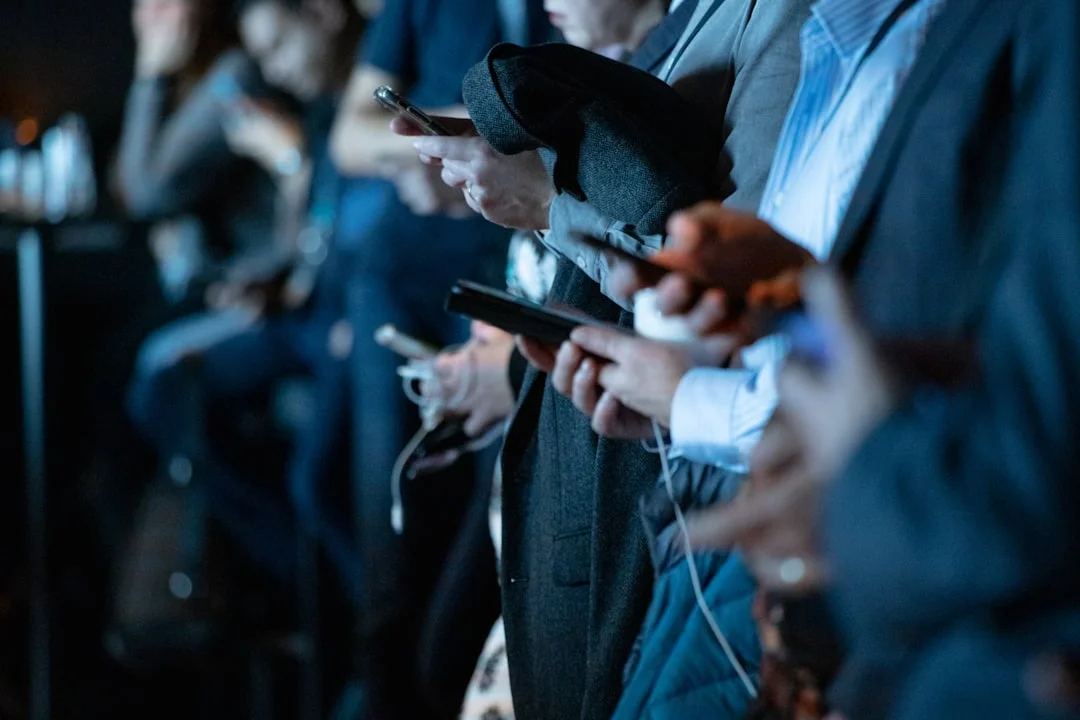
Do you know that feeling? You’re casually scrolling through your feed, seeing a friend’s perfect vacation photo, an influencer’s toned body, an old school friend’s new job—and suddenly, that sense of relaxation is gone. It’s been replaced by a quiet, uncomfortable feeling: your own life seems somehow smaller, duller, less. Welcome to the vortex of social comparison on social media.
This article explains why social media comparison cuts so deeply into our psyche, what science has discovered about its effects on self-esteem, mood, and mental health—and, above all, what you can do about it. Because the goal isn’t to delete all your social media accounts and disappear into a cabin in the woods. The goal is to engage with these platforms in a more mindful and self-caring way.
Why We Compare Ourselves to Others: The Theory of Social Comparison
Comparison is not a modern problem that arose with the invention of the smartphone. It is a deeply human mechanism—and it even has a scientific name. As early as 1954, social psychologist Leon Festinger described in his groundbreaking Social Comparison Theory that people have a fundamental need to evaluate their own opinions, abilities, and life situations. And because there is no objective yardstick for most areas of life—no ruler for happiness, no calculator for success—we use other people as a reference point.
Festinger (1954) distinguished between two types of comparison: upward comparison (we measure ourselves against someone we perceive as better or more successful) and downward comparison (we compare ourselves to someone who is supposedly worse off). Both forms serve psychological functions: downward comparisons can boost one’s own well-being in the short term, while upward comparisons can motivate—but they can also be demoralizing.
The problem with social media isn’t that it invented comparison. The problem is that it feeds our ancient instinct to compare with an unprecedented array of options: We suddenly have access to hundreds, sometimes thousands of lives—and these lives are presented to us in their carefully curated, filtered best versions.
The Curated Life: Why Instagram Isn't a Reflection of Reality
What we see on Instagram, TikTok, or Facebook isn’t a reflection of real life—it’s a showcase of the best moments. No one posts a photo of the burnt dinner, the Monday morning chaos, or the tearful phone call with their best friend. What we see is the sunset on the beach, the perfect brunch photo, the beaming wedding party.
That sounds obvious, and most of us know it rationally. And yet: Our brains often can’t access that knowledge quickly enough in the moment of scrolling. We compare our full, complicated inner lives with the outward facades of others—and almost inevitably come up short.
On top of that, algorithms specifically amplify emotional reactions. Content that triggers admiration, envy, or enthusiasm receives more engagement—and is therefore displayed more frequently. The result: Our feed is no accident, but a psychologically optimized stream of content that hits us right where we’re most vulnerable.
What Studies Really Show: Social Media and Self-Esteem
There is now an impressive body of research on this topic—and the findings are clearly concerning. A widely cited study by Vogel et al. (2014) examined how Facebook use affects self-esteem. The results showed that people who compared their own profiles to those of more attractive, more successful users subsequently reported significantly lower self-esteem than people who did not make such comparisons.
Particularly interesting: According to Vogel et al. (2014), it was not simply the duration of use that was the decisive factor, but how the platform was used. Those who actively posted, commented, and interacted fared differently in terms of well-being than those who passively consumed content.
Verduyn et al. (2015) also examined this exact difference in a study on passive Facebook consumption. Their findings were clear: passive scrolling—that is, silent observation without personal interaction—was particularly strongly associated with negative feelings and lower subjective well-being. The researchers attributed this effect, among other things, to the fact that passive scrolling encourages social comparison without the user experiencing connection or resonance.
This is an important insight for our daily lives: mindlessly, endlessly scrolling through the feed—often in the evening on the couch when we actually want to relax—can have a psychological effect akin to a silent cloud of poison.
Scientific findings Passive scrolling on social networks is consistent and may be associated with lower subjective well-being - not because social media is harmful per se, but because it encourages uncontrolled social comparison without generating social connectedness. (Verduyn et al., 2015)
FOMO: The Fear of Missing Out
FOMO—the fear of missing out—is one of the psychological concepts most closely linked to social media use. It refers to the unsettling feeling that other people are currently having exciting, meaningful, or enjoyable experiences that you yourself are not part of.
FOMO is not a new phenomenon, but social media has amplified it massively. In the past, people simply didn’t know what their friends were doing at any given moment. Today, you see it in real time—the party you weren’t invited to, the concert you couldn’t afford, the impromptu gathering you knew nothing about.
Research shows that FOMO can be closely linked to the Instagram self-esteem problem: people with lower self-esteem and a greater basic need for belonging are particularly susceptible to this form of digital anxiety. FOMO can lead to checking social media even more frequently—in the hope of not missing out—which further fuels the cycle of comparison. A classic vicious cycle.
What is often forgotten: FOMO can primarily be a disruption of attention. If you assume your mind is constantly elsewhere—focused on what others are currently experiencing—you inevitably aren’t present for what your own life has to offer right now. And that is often more than we perceive while scrolling.
Envy on Social Media: An Honest Look at an Unpopular Emotion
Envy is one of the most socially stigmatized emotions. Hardly anyone likes to admit to feeling envious—and certainly not on social media. Yet envy on social media is a widespread, perfectly normal emotion that arises almost automatically from the comparative mechanism described above.
Psychologically, we distinguish between benign envy (which spurs us on to achieve more ourselves) and malignant envy (which makes us wish that the other person had less). On social media, envy often tips toward the latter—not because we’re bad people, but because the platform’s logic puts us in a position of comparison where we see little room to maneuver.
What helps: understanding envy as a signal, not as a judgment. If someone’s career post makes me envious, it shows me what is important to me—professional recognition, perhaps, or more creative freedom. Instead of pushing the feeling aside, it’s worth asking: What does this envy tell me about my own desires and values?
The RSPH Report: What Can Help Young People the Most.
The findings on the mental health of young people are particularly alarming. In 2017, the British Royal Society for Public Health (RSPH) published a widely noted report evaluating five major social media platforms in terms of their impact on the mental health of young people (ages 14–24). The result: Instagram ranked the lowest—followed by Snapchat, Facebook, and Twitter.
According to the RSPH report (2017), young users reported increased anxiety, depression, loneliness, sleep problems, and a negative body image particularly frequently in connection with Instagram use. Comparison with idealized body and lifestyle images was identified as one of the main factors.
Important: The report explicitly emphasized that social media is not harmful per se. Active, meaningful use—such as building supportive communities, discussing mental health issues, or creative expression—can certainly have positive effects. The crux lies in the how, not the whether.
The same mechanisms essentially apply to adults, even though vulnerability is particularly high during adolescence. Self-image is still developing in younger years—and social comparisons therefore have a deeper impact.
Social Media Comparison and Our Body Image
One area where social comparison on social media has particularly drastic effects is body image. Countless studies show that being exposed to slim, muscular, or otherwise idealized bodies worsens one’s own body image—and this applies to both women and men.
Compounding the issue is the fact that a large portion of the bodies depicted on social media are not natural: editing apps make it possible to alter waists, hips, skin, and facial features in seconds. Many users are aware of this—and yet still compare themselves to these digital fictions.
This mechanism has real-world consequences: eating disorders, excessive exercise for the sake of control, cosmetic procedures among increasingly younger people—researchers see the constant exposure to idealized body images on social media as a significant contributing factor to these trends. This is not moralizing, but evidence-based concern.
What’s behind this?
Our brains are evolutionarily designed to read social status signals—and physical attractiveness has been part of that in many historical contexts. What was a somewhat realistic comparison process in small village communities becomes overwhelming on Instagram: Every day we see hundreds of optimized bodies that our brains process as social reality—even though they aren’t.
Self-compassion Instead of Self-Criticism: An Effective Alternative
What really helps against the psychological pitfalls of social comparison? One concept that is gaining increasing importance in research is self-compassion. Kristin Neff, one of the leading researchers in this field, defines self-compassion as the ability to treat oneself with the same understanding and care one would show a good friend—especially during difficult times.
As Neff (2003) demonstrated in her work, self-compassion is a significantly more stable predictor of psychological well-being than self-esteem alone. While traditional self-esteem often depends on external comparisons—I am good because I am better than others—self-compassion is not based on comparison. It doesn’t ask, “Am I good enough in comparison?” but rather, “How can I take good care of myself right now?”
In practice, this means: If you notice that a post on Instagram makes you feel sad or inferior, instead of berating yourself internally (“I’m so weak, why am I comparing myself again?”), try to acknowledge the feeling and respond to it with kindness. It’s human to compare yourself to others. It’s also human to suffer because of it. I’m not alone in this.
Practical Strategies for a More Mindful Approach to Social Media
Knowledge alone rarely changes habits. That’s why we need concrete strategies—not perfect solutions, but effective tools for everyday life.
- Conscious curation instead of passive consumption: Remove profiles from your feed that regularly make you feel worse—even if you like the person. You can appreciate someone without having to watch their glamorous life every day.
- Limit usage time: Studies show that reducing screen time to just about 30 minutes a day can measurably improve well-being. Screen time features on your smartphone can help with this.
- Use actively instead of passively: Write comments, engage in conversation, create your own content. Active use is less associated with negative comparison than passive observation.
- Take conscious breaks: A “social media fast”—even just for a weekend—can greatly heighten your awareness of your own usage habits.
- Diversify your feed: Follow people who share real, unfiltered insights—body diversity, everyday life, failures, processes instead of just results.
- Prioritize offline experiences: Invest energy in relationships and activities that don’t take place on a screen. This may sound trivial, but it’s proven to work.
None of these strategies is revolutionary—but when combined and applied consistently, they can make a real difference. And the most important first step is always the same: raising awareness. Realizing that the comparison mechanism has just kicked in is half the battle.
Find your way back to yourself
The Coaching Cards replace reaching for your cell phone - daily impulses that connect you with yourself instead of with others.
Your daily companion for inner growth
With the 7zen app, you receive daily coaching impulses, guided breathing exercises and personal reflections - all based on your individual profile.
Is it normal to constantly compare yourself with others on social media?
Yes, absolutely. Comparing ourselves with others is a deeply human, evolutionarily rooted mechanism, which the psychologist Leon Festinger described back in 1954. Social networks amplify this process enormously because they confront us with curated insights into other people's lives around the clock. This does not mean that you are weak or doing something wrong - it means that you are a human being with a normal brain. The important thing is to recognize this mechanism and deal with it consciously.
Why do I often feel worse after scrolling, even though I actually wanted to relax?
This is due to the phenomenon of passive consumption: when we scroll silently through the feed without interacting, we are particularly susceptible to social comparison processes. In their study, Verduyn et al. (2015) showed that precisely this type of use - passive observation without any real connection - is particularly strongly associated with negative feelings and lower well-being. Your brain processes dozens of social comparisons without you consciously realizing it. This systematically undermines the feeling of relaxation you were hoping for.
Is Instagram permanently damaging my self-esteem?
Research, including that by Vogel et al. (2014), shows that regular upward comparisons on social media can actually affect self-esteem - especially if they occur chronically and uncritically. However, whether this results in lasting damage depends on many factors: how you use the platforms, how stable your self-image is in general and whether you are aware of the comparison mechanisms. Conscious, active use, curating your own feed and taking targeted breaks can counteract the negative effects.
What can I do specifically if I realize that a post makes me envious or sad?
Firstly, put your smartphone down for a moment and take a deep breath. Secondly, notice the feeling without judging yourself for it - envy and sadness are human reactions, not weaknesses. Thirdly, ask yourself what the feeling is showing you. What desire or need is behind it? Fourthly: Think about whether you want to continue following this profile or whether it would make more sense to remove it from your feed. You always have control over who you give access to your attention and your well-being.
Are social networks fundamentally bad for mental health?
Not across the board. The RSPH report (2017) and many other studies emphasize that how social media is used is very important. Active, meaningful use - such as sharing in supportive communities, creative expression or connecting with like-minded people - can have positive effects on wellbeing. It becomes particularly problematic when use is passive, chronic and without awareness of one's own reactions. The key is not abstinence, but awareness and self-care.
How can I tell if my social media use is a serious problem?
Some warning signs: You automatically reach for your smartphone as soon as you experience a moment of boredom or silence. You regularly feel worse after using it than before. You often compare yourself with others and evaluate yourself negatively. You have trouble sleeping because you scroll late at night. You neglect real relationships or activities in favor of time on social media. If you recognize several of these points, it is worth considering professional support - from a psychologist, for example.
Social comparison on social media isn’t a sign of weakness—it’s a completely normal reaction to an environment that’s psychologically designed to trigger exactly this mechanism. Knowing this won’t change how we feel while scrolling overnight. But it gives us something precious back: perspective.
You’re not in a fair competition with the people in your feed. You’re comparing your whole, living, complicated life to carefully curated moments that someone else has prepared for public consumption. That’s not a comparison—it’s an optical illusion.
Your action step for today: Take five minutes and critically review your feed. Which three profiles regularly make you feel worse—through envy, pressure, or the feeling that you’re not enough? Unfollow them—not out of malice, but out of self-care. Your feed is your mental living room. You get to decide who has a place in it.