Body positivity: making peace with your body
From Body Positivity to Body Neutrality: How to develop a healthy body image - beyond optimization and self-criticism.

Do you know that feeling of looking in the mirror in the morning and immediately making a mental list? The parts you don’t like. The things you’d like to change. The thoughts that whisper: Once you’re slim enough, fit enough, toned enough, everything will be better. Many of us are familiar with this inner monologue—and it drains us every day without us really noticing.
Body positivity was intended as a response to exactly this exhaustion. A movement that said: Your body is good just the way it is. Love it. Celebrate it. But over time, this approach has also come under pressure—because what happens when, on some days, you simply don’t feel capable of celebrating your own body? When self-love feels like yet another task that you’re not fulfilling well enough?
In this article, we take the time for an honest, in-depth exploration of the topics of body image and self-acceptance. Together, we’ll examine what body positivity truly means, where its limits lie—and why the approach of body neutrality can be a liberating middle ground for many people. Not as a new obligation, but as a genuine invitation to inner peace.
What Body Positivity Really Means—and Where It Comes From
The term “body positivity” is on everyone’s lips today—on social media, in advertising campaigns, and in magazines. But its roots go back further than many realize. The movement emerged in the late 1960s in the U.S., initially as a political demand by overweight people for equal medical treatment and social inclusion. It was about dignity, not aesthetics.
At its core lies the conviction that no body is inherently more valuable than another. All people deserve respect, care, and self-determination—regardless of size, shape, skin color, disability, or age. This is a deeply psychologically relevant idea, because our body image directly influences our self-esteem, our social relationships, our mental health, and even our physical habits.
Today, however, the term is often used in a simplified way. Body positivity has become a lifestyle concept that sometimes creates more pressure than it relieves. When we see everywhere that we should love and celebrate our bodies, a new ideal emerges—and those who don’t meet it feel inadequate once again. This is an important contradiction that we should address honestly.

The Pressure Behind Positivity: When Self-Love Becomes an Obligation
From a psychological perspective, it is virtually impossible to feel positive emotions on command—especially toward one’s own body, when years of conditioning by societal beauty ideals, critical comments, or personal insecurities are deeply ingrained. When someone tells us, “You must love your body!” it can sound like a reproach. As if a lack of self-love were a personal failure.
Research from Acceptance and Commitment Therapy shows that attempting to suppress unwanted thoughts or feelings, or to replace them with their opposites, often has the opposite effect: the negative thoughts become stronger. What really helps is not reversing “I hate my body” to “I love my body,” but developing a new, less judgmental relationship with oneself.
Furthermore, the portrayal of body positivity on social media often still features bodies that conform to a certain ideal—just within a slightly broader range. The true diversity of human bodies frequently remains invisible. This creates a new form of exclusion, even if the intention is different.
Body Neutrality: A Body Image Beyond Love and Hate
Body Neutrality is not a counter-model to Body Positivity, but rather an extension—a more realistic, often more accessible attitude for everyday life. The basic idea is: You don’t have to love your body. You don’t have to celebrate it. You just have to let it be.
Body neutrality means defining the body less by its appearance and more by what it does and what it enables. Your body carries you through the day. It breathes, digests, feels, heals. It is the tool with which you experience the world—not the calling card by which you are judged.
This approach is particularly valuable psychologically because it breaks the constant cycle of judgment. Instead of asking in the morning, “How do I look today?”, the focus shifts to: “How do I feel? What do I need? What can my body do for me today?”
That sounds simple, but it is a profound inner shift. Because most of us were never taught to perceive our bodies in a functional and caring way—we were taught to judge them.
Impulse from Lisa, expert in psychology & wellness "Your body is not your project. It's your home." - This simple shift in perspective can be the beginning of a profound inner change.
How does our body image develop—and why is it so persistent?
Our body image is not a neutral self-image—it is a complex construct of memories, evaluations, cultural norms, and interpersonal experiences. It begins to take shape as early as childhood. Comments from parents, siblings, peers, or teachers can leave a deep impression: “You’re too chubby.” “Don’t eat so much.” “She’s so lucky with her figure.”
Such statements leave their mark—not because we are weak, but because the brain classifies social feedback about one’s own body as vital for survival. In a society that closely links belonging and attractiveness, children learn early on: My appearance determines how I am treated.
Add to that decades of media conditioning. Slim, flawless, young bodies as the norm, as the ideal, as the standard. Even today, with more diversity in advertising, the basic principle often remains the same: The body is a project that can and must be improved.
Understanding these influences is the first step toward change. Not to fix the past, but to realize: This voice in my head is not the truth. It is a learned attitude—and what is learned can change.
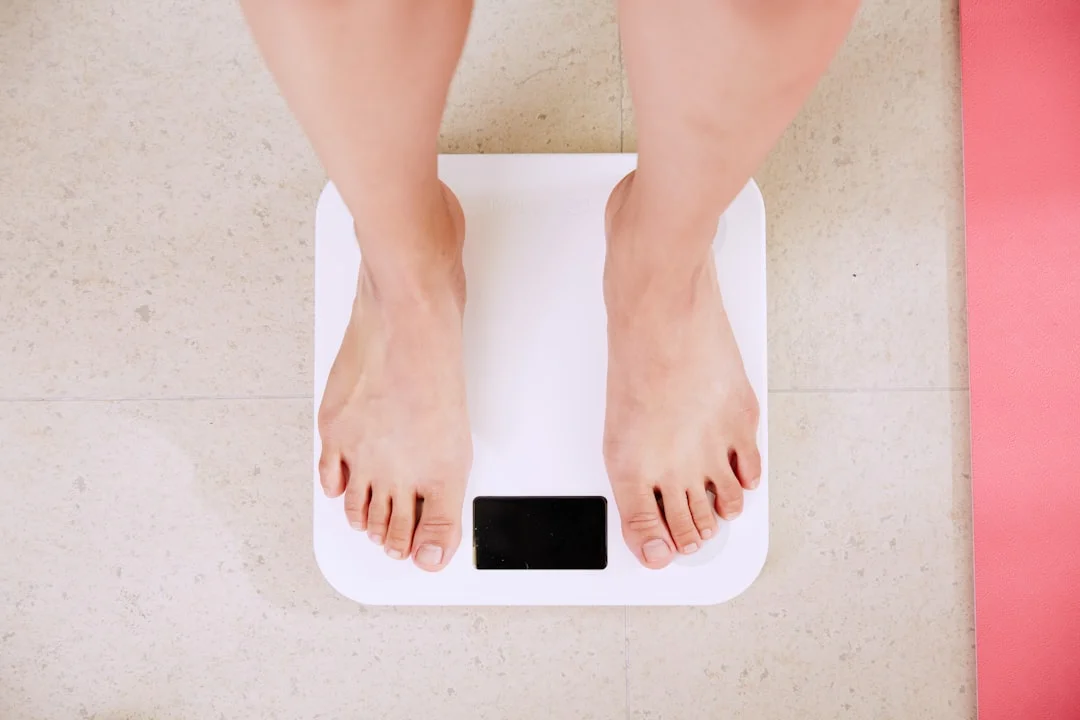
Practicing Self-Acceptance: Five Approaches That Really Work
Self-acceptance isn’t an attitude you decide to adopt once and then just have. It’s a practice—something you work on every day, in small moments. Here are five approaches that are psychologically grounded and can be applied in everyday life:
- Strengthen body awareness: Instead of judging your body, learn to feel it. When you wake up, briefly notice how your body feels—not how it looks. Breathing exercises, gentle movement, or body scan meditations can help cultivate this awareness.
- Name the inner critic: When negative thoughts about your body arise, it helps to observe them rather than identify with them. Recognize: This is a thought, not reality. Psychologically, this process is called cognitive defusion.
- Choose your words consciously: How do we talk about our bodies—to ourselves and in conversation with others? Phrases like “My body is strong” or “I’m grateful that my legs carried me today” shift the focus from appearance to function.
- Reduce social comparisons: Social media is often a comparison machine. Consciously curating your own feed—toward content that showcases real diversity and emphasizes inner life—can noticeably ease body image stress.
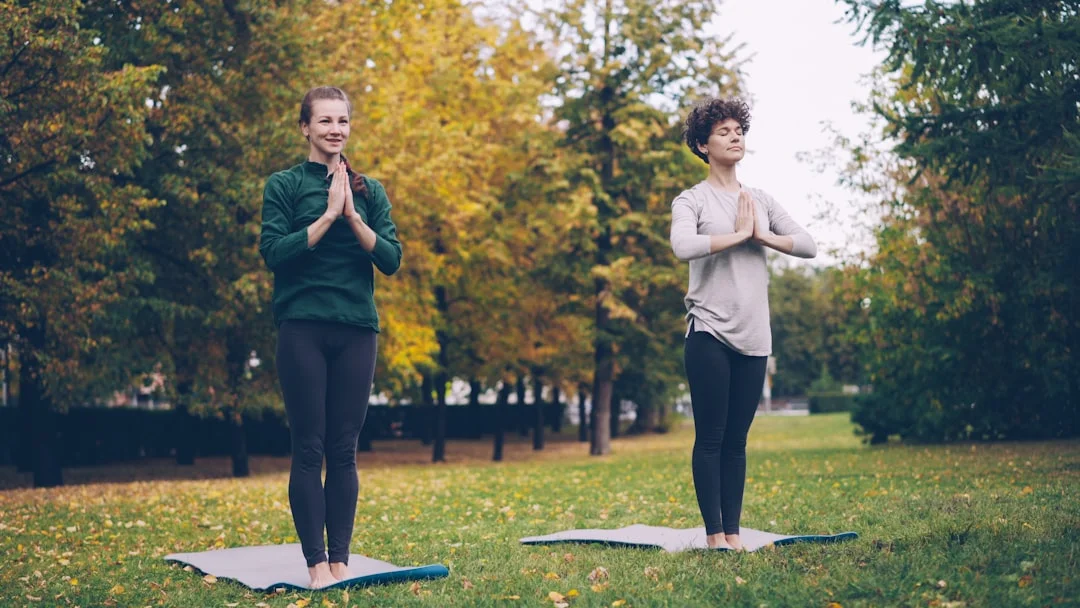
- Move your body with joy: Exercise that is fun rather than punishing changes your relationship with your body. Dancing, swimming, yoga, walking—the question isn’t which burns the most calories, but which feels alive.
Body Positivity and Mental Health: What the Research Says
The link between body image and mental health is well established. A negative body image is one of the strongest risk factors for eating disorders, social anxiety, and depressive moods. At the same time, studies show that improved body acceptance—that is, a less hostile, less judgmental attitude toward one’s own body—increases overall well-being, stabilizes self-esteem, and can even promote healthier behaviors.
What’s interesting here is that it’s not love for one’s body that produces this effect, but rather a reduction in self-criticism. Self-compassion—a term from the research of Kristin Neff—describes the ability to treat oneself the way one would treat a good friend: with understanding, without judgment, during difficult moments.
Self-compassion is not the same as self-pity or shirking responsibility. It means: I see myself. I recognize that I’m struggling right now. And I’m still there for myself. This attitude is one of the most effective psychological interventions for a healthy body image—and it costs nothing but practice and patience.
When Old Wounds Run Deeper: When Professional Help Is Recommended
For some people, a difficult relationship with their body goes beyond everyday insecurities. When body image is so heavily burdened that it restricts daily life—through avoiding social situations, compulsively checking one’s body, or thoughts that won’t let up—then professional support is not only advisable but essential.
This is not a sign of weakness. It is a sign that the experiences that have shaped you run deep and that guidance is needed to resolve them. Body dysmorphic disorder, eating disorders, and severe forms of body shame are treatable mental health conditions—and people who suffer from them deserve empathetic, competent help.
Even below this threshold, it can be helpful to work with a therapist who specializes in body image, self-esteem, or eating disorders. Sometimes it takes a safe space to truly understand and rewrite one’s own story with the body.
Self-Love as a Practice: What That Means in Real Life
Self-love is a word that sounds grand but feels small in everyday life. For many people, it evokes discomfort—too much, too demanding, too far removed from their own reality. And yet it is an important concept when understood correctly.
Self-love doesn’t mean smiling enthusiastically at yourself in the mirror every day. It means treating yourself with dignity—even on days when you don’t feel your best. It shows up in small decisions: Are you getting enough sleep? Are you giving your body food that nourishes it? Do you allow yourself breaks without feeling guilty? Do you speak to yourself with the same kindness you’d show a good friend?
This kind of self-love isn’t a feeling you either have or don’t have. It’s a decision you make again and again. Sometimes it feels bumpy. Sometimes it fails. That’s normal—and it’s part of the process. Slips back into old thought patterns aren’t proof that you can’t do it. They’re proof that you’re trying.
And that, we at 7zen say with complete conviction, is enough.
Beyond Optimization: A New Relationship with the Body in Everyday Life
We live in a culture of optimization. More steps, less sugar, toned arms, a flat stomach. The body as a construction site that’s never finished. This obsession with optimization isn’t just physically exhausting—it’s an ongoing psychological project that pulls us out of the experience of the present moment.
What if you didn’t view your body as a project, but as a companion? As someone you listen to instead of controlling? As a source of information rather than a source of shame?
This perspective changes how you eat: less as a diet, more as self-care. It changes how you move: less as punishment for yesterday’s meal, more as joy in being physical. It changes how you look in the mirror: less as an inspection, more as a fleeting glance at a being who deserves to be seen—without being immediately judged.
This is not a naive ideal. It is an attitude you can practice every day. And the more often you choose it, the more natural it will feel.
Maybe reading this article won’t suddenly put you at peace with your body. That would be asking too much of a few pages of text. But perhaps something inside you has softened just a little bit. Maybe you’ve realized that you’re not alone in this inner struggle—and that there’s a path that doesn’t lead through perfection, but through compassion.
Body positivity, body neutrality, self-love, self-acceptance—these terms aren’t goals you reach and then check off a list. They describe a direction you can move toward. And every step in that direction, no matter how small, counts.
Your body has carried you this far. It carries you through every day, through every challenge, through every joy. That deserves, even if it sounds strange at first, at least a little gratitude. Or at least: less war.
Start today. Not with love, if that still feels too far off. Start with a ceasefire.
What is the difference between body positivity and body neutrality?
Body positivity demands an actively positive, loving attitude towards one's own body, regardless of appearance or social norms. Body neutrality takes a step back: it does not demand enthusiasm, but a neutral, non-judgemental attitude. The body is not defined by its appearance, but by what it can achieve and make possible. For many people, body neutrality is a more accessible and less stressful starting point.
Can you learn self-acceptance if you have had a negative body image for years?
Yes - and this is not just an empty hope, but has been proven by psychological research. Our body image is a learned construct that can change through new experiences, conscious practice and sometimes therapeutic support. It takes time, patience and repetition - just like learning any other skill. Regression is part of the process and does not mean that change is impossible.
Is it unhealthy to want to change your body?
Not automatically. The decisive factor is the motivation behind it. If you want to change your body out of care, pleasure or for health reasons, this is a different starting point than changing out of shame, self-hatred or the pressure to conform to an ideal. Self-acceptance and the desire for change are not mutually exclusive - but the inner attitude from which you act makes a big difference to your well-being.
What can I do if negative thoughts about my body are very persistent?
Persistent negative body thoughts are often deeply rooted and cannot simply be thought away. It is helpful to start by observing them without identifying with them: They are thoughts, not facts. Mindfulness exercises, self-compassion practices and consciously rephrasing self-talk can help in the long term. Professional psychological support is recommended if the thoughts severely interfere with daily life.
How does social media influence body image?
Social media are intense comparison spaces that can strongly influence our body image - often unconsciously. Algorithmically favored content often shows idealized, edited body images that set unrealistic standards. Studies show that a high consumption of such content is linked to a more negative body image and lower self-esteem. Consciously maintaining your own feed - with a focus on diversity, authenticity and depth of content - can counteract this.
When should I seek professional help?
Professional support is useful if thoughts about one's own body take up a lot of space, restrict everyday life or are associated with behaviors such as restricting meals, compulsive exercise or avoiding social situations. Even if body image is linked to anxiety, shame or depressive feelings, therapeutic support can be very helpful. Seeking help is not a weakness - it is an act of self-care.