Building resilience: 5 strategies for difficult times
Mental resilience can be learned. Discover 5 scientifically proven strategies that will help you immediately in a crisis.

There are moments in life when the ground beneath our feet seems to give way. An unexpected breakup, the loss of a job, a bereavement—or simply that quiet, lingering feeling that everything is becoming too much. In times like these, we wonder how some people seem to weather storms without being broken by them. The secret lies not in exceptional strength or invulnerability. It lies in resilience—the ability to get back up after setbacks, to adapt, and even to emerge stronger from difficult experiences.
What many people don’t realize: Resilience isn’t an innate trait that you either have or don’t have. It’s a skill—and therefore something you can learn. Over the past few decades, psychology has gained deep insights into the specific strategies that help build inner strength. In this article, we’ll introduce you to the five most effective methods—with exercises you can integrate into your daily life right away.
What Resilience Really Means — and What It Doesn’t
The word resilience comes from Latin: resilire means something like to bounce back or rebound. In psychology, it describes a person’s ability to recover after stress, crises, or trauma and remain capable of taking action. It is explicitly not about hiding your feelings, suppressing pain, or pretending that everything is fine.
Rather, resilience means: You can weather a storm, feel it—and yet not sink into it permanently. You learn to cope with uncertainty, accept support, and constantly realign yourself. Those who are resilient cry, doubt, and stumble—and yet get back up again. This psychological resilience is not a sign of coldness, but of deep inner grounding.
Research also shows that resilience is not a stable state, but a dynamic process. It can be more or less pronounced in certain phases of life—and it grows when we consciously work on it.

Strategy 1: Self-awareness as the Foundation of Inner Strength
The first and most fundamental strategy in resilience research is one that sounds almost trivial yet has a profound effect: self-awareness. Those who are attuned to their own thoughts, feelings, and physical cues can recognize sooner when they are reaching their limits—and take corrective action in time.
In psychology, this is referred to as emotional self-regulation: the ability to observe one’s own inner states without being immediately overwhelmed by them. It sounds simple, but it takes real practice. Many of us are accustomed to either ignoring our feelings or getting lost in them. The middle ground—conscious awareness without immediate judgment—is the true skill.
Exercise: Observing Your Inner State
Take three to five minutes every day—in the morning or evening—and ask yourself: How am I really feeling right now? What’s on my mind? Write it down without censoring yourself. Even this small routine significantly trains your ability for self-awareness. Some call this practice emotional journaling—and it is one of the simplest yet most effective exercises for greater mental clarity.
Strategy 2: Social Connections as a Protective Factor in Crisis Management
No one can survive crises alone—and that is not a weakness, but a fundamental biological principle. Resilience research is particularly unanimous on one point: strong social relationships are one of the most powerful protective factors a person can have. The brain is a social organ. Connection calms the nervous system, reduces stress hormones, and activates resources we could not mobilize on our own.
In difficult times, however, many people’s first reaction is exactly the opposite: they withdraw, don’t want to be a burden to anyone, and keep functioning outwardly. This pattern is understandable—but it takes an enormous toll in the long run. Research shows that crisis management is more successful when we don’t bear the burden alone.
What social support really means
This isn’t about superficial socializing. It’s about genuine connection—people to whom we can say how we’re really feeling without having to play a certain role. Sometimes that’s a good friend; sometimes it’s professional support from a therapist. Both have their value.
Exercise: Consciously mapping your social network
Draw a circle on a piece of paper with yourself in the center. Then add the people who are close to you—at varying distances, depending on the depth of the connection. Which of these people could you actually call in a crisis? Where are the gaps? This reflection helps you to consciously nurture your own support network rather than activating it only in an emergency.
Cosmic wisdom "The tree that breaks the most in a storm is not the one that stands the strongest - but the one that has no roots." Resilience is not a wall that we build around ourselves. It is the root system that supports us when the wind comes.
Strategy 3: Finding Meaning — The Psychological Power of "Why"
Viktor Frankl, the psychiatrist and founder of logotherapy, survived several concentration camps and later described a realization that had carried him through the unimaginable: Those who have a “why” can endure almost any “how.” This observation sounds simple—and yet it is one of the most profound insights in psychology.
People who can find meaning in crises—even if it is only a small, tentative understanding—demonstrate proven higher resilience. This does not mean glossing over suffering or claiming that everything happens for a reason. It means actively seeking what could give this experience meaning: What am I learning about myself here? What is changing within me? What new direction might emerge from this?
Finding meaning as an active process
Meaning rarely arises spontaneously. It is found—or rather, created. In psychological practice, the method of meaning-making is often used for this purpose: one looks back at a difficult experience from a distance in time and asks what qualities, insights, or new possibilities have emerged from it.
Exercise: The Letter from the Future
Imagine you are five years older and looking back on the current difficult phase. Write yourself a short letter from this future perspective: What have you learned from this time? What has changed? This thought experiment activates the mind’s power to find meaning and opens a small but important inner horizon—even in dark moments.
Strategy 4: Physical Self-Care — Resilience Starts in the Nervous System
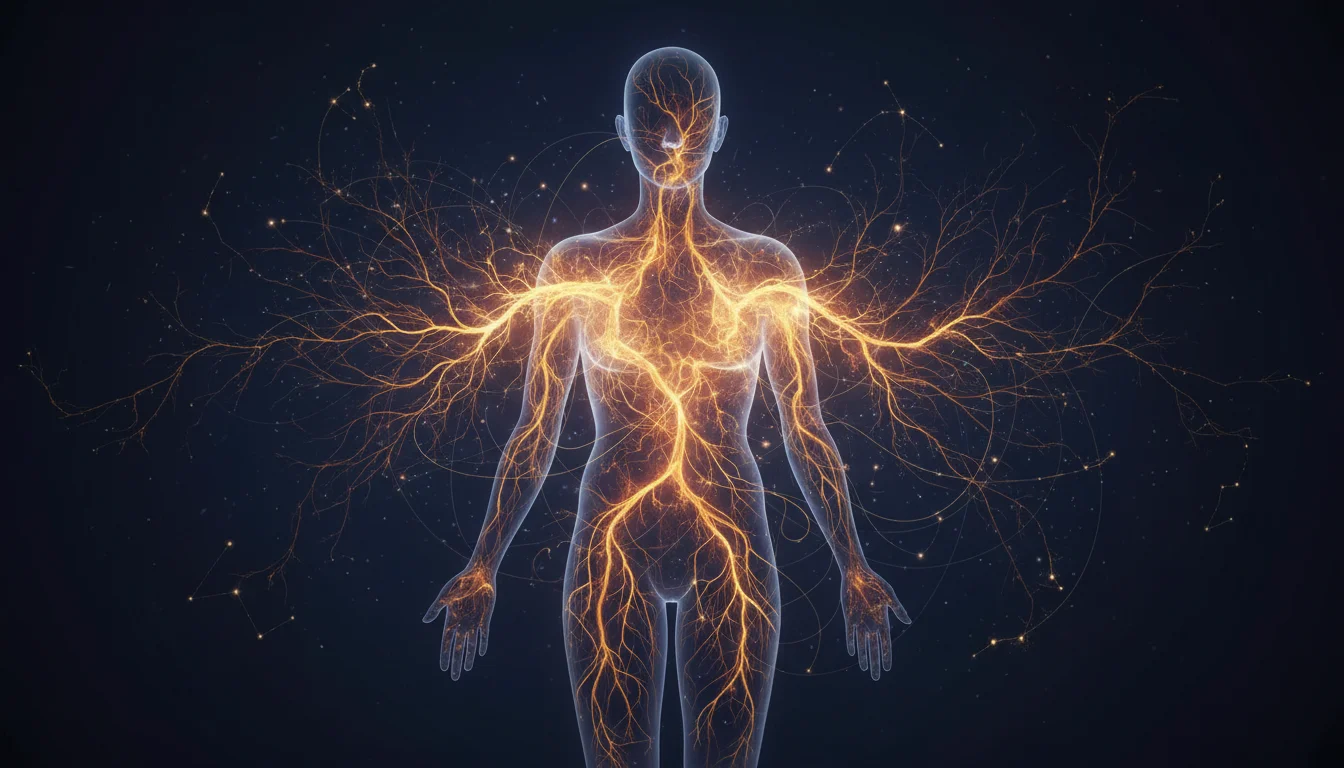
Mental resilience is not purely a mental phenomenon—it has a very concrete, physical foundation. Our nervous system plays a decisive role in determining how we react to stress: whether we fall into fight-or-flight mode, freeze, or remain in a state of relative calm and ability to act. The good news is: we can consciously regulate this system.
Sleep, exercise, nutrition, and breathing exercises are not lifestyle extras—they are the physiological foundations of inner strength. Those who are chronically overtired, get little exercise, and do not eat well simply have less neurobiological capacity for crisis management. This is not a moral judgment, but biology.
Breathing exercise for immediate calm
One of the most effective and best-researched methods for quickly regulating the nervous system is the so-called physiological sigh technique: Inhale through your nose—then take a short additional breath—and exhale slowly and completely through your mouth. Just two to three repetitions measurably lower the heart rate and activate the parasympathetic nervous system, the body’s rest mode.
Movement as Emotional Regulation
Physical exercise is one of the oldest forms of emotional regulation. It reduces stress hormones, promotes the release of neurotransmitters such as serotonin and endorphins, and gives the body the opportunity to release pent-up tension. It doesn’t have to be an intense workout: even a daily walk of 20 to 30 minutes has measurable effects on mood and mental resilience.
Strategy 5: Cognitive Flexibility — Thoughts Are Not Truths
The fifth pillar of resilience is perhaps the most subtle—and at the same time one of the most effective. It is based on a finding from cognitive psychology: Our thoughts are not representations of reality—they are interpretations. And interpretations can be changed.
In times of crisis, the brain tends toward certain thought patterns that make the situation worse: catastrophizing (assuming the worst), generalizing (everything is always bad), and self-blame (it’s all my fault). These patterns have an evolutionary explanation—they were meant to protect us from danger in the past. In modern life crises, however, they often do more harm than good.
What cognitive flexibility means
Cognitive flexibility does not mean thinking positively or sugarcoating things. It means maintaining a kind of inner distance from one’s own thoughts—observing them, questioning them, and more consciously choosing which ones to follow. In psychology, this is called cognitive restructuring, a central element of cognitive behavioral therapy.
Exercise: The Inner Advocate
If you find yourself caught in a whirlwind of stressful thoughts, pause and imagine you are your own defense attorney. What counterarguments are there to your negative beliefs? What would a good friend say? What is more likely than the feared worst-case scenario? This exercise trains the ability to interrupt automatic thought patterns—one of the most powerful mechanisms for lasting resilience.
In astrology, there is the image of Mercury—the messenger who mediates between worlds. Cognitive flexibility works in a similar way: it is the inner mediator between what happens and what we make of it.
Building resilience is a journey, not a destination
Five strategies—and behind each one lies a practice that takes time and repetition. That is perhaps the most important message of this article: Resilience isn’t a state you reach once and then possess. It’s an ongoing process, a daily practice in moments both big and small.
This can sometimes feel overwhelming—especially when you’re already going through a difficult phase. In those moments, it helps to remember: You don’t have to implement all five strategies at once. Start with one. The next small step counts more than the perfect grand plan.
Many spiritual and astrological traditions recognize the image of the spiral—not the straight line. Growth, including inner growth, is not linear. There are setbacks, repetitions, and periods of stagnation. And then suddenly: a moment of clarity, a newfound confidence in yourself, a quiet but genuine sense of inner strength.
Your next step: Making resilience a part of your daily life
Knowledge alone doesn’t change anything. It’s only when it turns into action that it unleashes its power. That’s why we’d like to invite you to take a first concrete step today—not someday.
Choose one of the five strategies that resonated with you the most, and commit to practicing it daily for the next seven days. Just one. Five minutes is enough to start. Write down what you choose—and why. This small gesture of self-commitment makes a measurable difference.
Resilience is born in the small moments: when you pause instead of reacting, when you accept help instead of carrying everything alone, when you ask yourself what this experience is trying to tell you. You are not alone on this journey—and you have more inner resources than you might realize in difficult moments.
Can you really actively build resilience or is it innate?
Although resilience has a genetic component - some people are naturally less sensitive to stress - research agrees that the vast majority of mental resilience can be learned and trained. Through targeted exercises, supportive relationships and conscious self-care, resilience can be strengthened at any age.
How long does it take to notice the first changes?
This depends on various factors - including how regularly you practise and how much stress you are currently under. Many people report that they notice subtle changes after just two to four weeks of daily practice: more composure in minor stressful situations, faster recovery after setbacks, a slightly more stable inner foundation. However, more profound changes often take several months of consistent work.
What do you do when you are in the middle of a crisis and have no energy for exercise?
This is a very common and understandable situation. In acute crises, the first step is often not a complex exercise, but something very simple: breathing. The physiological sigh technique (a double inhale followed by a long exhale) can dampen the body's stress response in less than a minute. Furthermore, seeking professional support from a psychotherapist is not a sign of weakness, but an act of self-care.
Is resilience the same as stress resistance?
Not quite. Stress resistance describes the ability to remain stable under pressure - in other words, to react as little as possible. Resilience is more comprehensive: it includes the ability to regain the ability to act after a shock and to learn from difficult experiences. Someone can therefore appear very resistant to stress and still be less resilient - for example, if he or she permanently suppresses feelings instead of processing them.
Can children and young people also build resilience?
Yes, and the foundation for resilience is particularly formative in the early stages of life. Secure attachment relationships, the experience of self-efficacy and a supportive environment are the most important factors for the development of resilience in children and young people. Targeted programs in schools and families can also demonstrably promote psychological resilience.
Can spiritual practices such as meditation or astrology contribute to resilience?
Yes, absolutely. Meditation and mindfulness practices are now scientifically well documented as effective means of emotional regulation and stress management. Astrology - as a system of self-reflection and meaning-making - can also help to place one's own experience in a wider context and thus promote a sense of direction and meaning. It is crucial that such practices are seen as a supplement to psychological support, not a substitute for it.