Lonely Despite Being Around People: When Loneliness Surrounds Us
Surrounded by people and yet alone—what lies behind emotional loneliness and how you can gently find your way back to genuine connection.

There are moments when you’re sitting in the middle of a group of people—at dinner, at a party, maybe even in your own home—and yet you feel more alone than you’ve ever felt before. Not alone in the sense that others are physically absent. But alone in a way that’s hard to put into words. A quiet, persistent loneliness that creeps in, even though there are voices, laughter, and closeness all around you. If this sounds familiar, then this feeling isn’t a sign of weakness—and you’re not alone in experiencing it. This article guides you through what psychologists call emotional loneliness, shows you the difference between that and simply being alone, and offers gentle, honest suggestions on how you can find genuine connection again—with others and, most importantly, with yourself.
Loneliness and Being Alone: Two Worlds That Are Not the Same
Our language sometimes treats loneliness and being alone as if they were the same thing. Yet they could hardly be more different. Being alone is an external state—no one is with you. It can feel soothing; it can even be a conscious choice. Many people seek solitude to relax, to reflect, to reconnect with themselves. It gives the inner self the quiet it sometimes needs.
Loneliness, on the other hand, is an inner experience. It doesn’t arise from the fact that no one is there—but from the fact that you don’t really feel seen, heard, or connected. You can feel lonely in a room full of people, and you can feel deeply connected even though you’re physically alone. That’s what makes this feeling so confusing and often so hard to put into words: the outside world contradicts what’s happening inside.
Researchers in the field of social psychology describe loneliness as a discrepancy—the perceived gap between the social connections one desires and those one actually experiences. This gap doesn’t necessarily mean you don’t have people around you. It means that the quality of the connection doesn’t fulfill what your soul is seeking.
Emotional Loneliness: What Psychology Has to Say About It
For decades, psychology has distinguished between different forms of loneliness. The distinction between social loneliness and emotional loneliness is particularly relevant. Social loneliness arises when there is a lack of a network of acquaintances, friends, and a sense of community—one longs for more connections and a greater sense of belonging to a group. Emotional loneliness, on the other hand, runs deeper: It arises when there is no close, trusted confidant—someone to whom you can truly open up, someone who knows you for who you really are.
Interestingly, studies suggest that people with many social contacts may be particularly vulnerable to emotional loneliness. A full calendar, many social engagements, a lively social life—and yet still that feeling of never really belonging anywhere. This is often because many of these encounters remain superficial: You talk about everyday things, share experiences, laugh together—but what truly moves you remains unspoken.
The stage of life also plays a role. People between the ages of 25 and 45 often find themselves in a phase of life full of transitions: career, relationships, family, identity—everything is changing at once. Old friendships require more nurturing, and new ones develop more slowly. The feeling of being lonely despite being surrounded by people can become particularly strong during this phase.
Why We Can Lose Ourselves in Society
Have you ever caught yourself playing a version of yourself in the middle of a conversation? Friendlier, more carefree, more easygoing—than you actually are at that moment? This tendency to adapt is human and deeply rooted within us. It protects us from appearing vulnerable, from being “too much,” from being rejected. But it comes at a price.
When we constantly adapt, when we wear masks that fit well, a strange paradox arises: The more we bend ourselves out of shape to fit in, the more we lose touch with ourselves. And where there is no connection to oneself, genuine connection with others can hardly develop. We may share spaces, moments, and activities—but not what really matters.
Added to this is the pressure of our times: always reachable, always visible, always active—and yet so rarely truly present. Screens fill the silence that might once have led to a real conversation. Messages replace encounters. And that quiet feeling of loneliness grows, even when the contact list is long.
In astrology, the Moon is often seen as a symbol of our inner emotional life—that which works in secret, that which isn’t so easily revealed. Sometimes loneliness is a sign that the Moon wants to be seen.
Wisdom on Self-Connection "Connection begins where you stop hiding yourself."
Self-Connection: The Journey Begins Within
Before we ask ourselves how we can build genuine connections with others, it’s worth taking an honest look inward. Self-connection—that is, the ability to stay in touch with one’s own feelings, needs, and thoughts—is considered by psychological research to be an important foundation for successful relationships. If you’re not in touch with yourself, you can hardly be your true self with others.
Self-connection isn’t a major undertaking. It begins with small, honest moments: pausing to ask yourself how you’re really feeling right now—not as a polite formality, but as a genuine question to yourself. Many people report that regular writing—such as in a journal—can help them tap into feelings that would otherwise get lost in the hustle and bustle of daily life.
Mindful breaks can also help: a walk without music, a morning without immediately reaching for your phone, a moment of silence before going to sleep. These moments of conscious self-reflection aren’t a luxury—they’re a form of self-care that can be gentle and lasting. They’re no substitute for professional support when feelings of loneliness run deep, but they can be a gentle starting point.

Genuine Connection with Others: What It Takes
Genuine connection doesn’t happen by chance—nor does it happen simply by being present. It requires something that has become rare in our fast-paced world: attention, honesty, and the willingness to be vulnerable. That sounds simple, but it isn’t always. Truly opening up means saying things that feel risky—your own insecurities, genuine feelings, and unvarnished truths.
Researchers studying the topic of connection suggest that vulnerability—that is, the willingness to open up—is one of the key factors in deep connection. Not the kind of vulnerability that erupts into grand drama, but quiet honesty: “I’m not doing so well right now.” Or: “I miss real conversations.”
This doesn’t mean that every encounter has to turn into a deep analysis. But it does mean that it can be worthwhile to be more mindful about who you spend time with and how. Fewer interactions, but more genuine ones. Fewer obligatory get-togethers, but more moments when you truly connect.
Sometimes it also helps to take the first step: to have a conversation that goes a little deeper than usual, to ask a question that goes beyond the everyday. Many people are waiting for exactly this kind of invitation—they just don’t dare to voice it themselves.
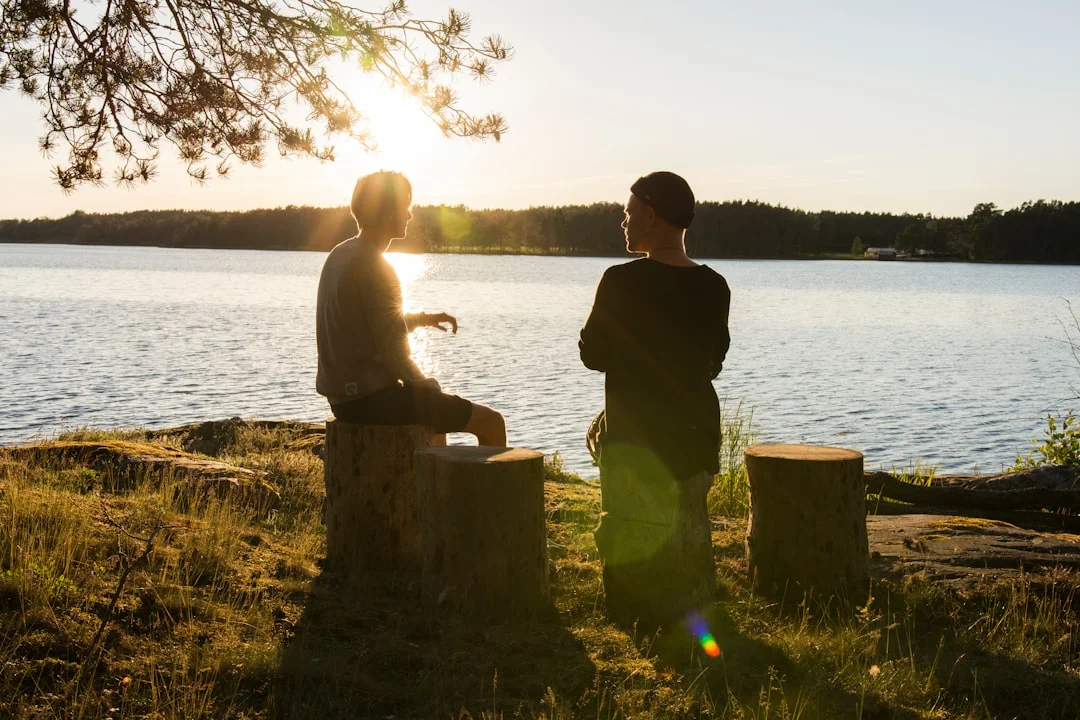
When Loneliness Is a Sign: Pay Attention Instead of Pushing It Away
Loneliness is unpleasant—there’s no question about that. And like so many unpleasant feelings, it’s often pushed aside, drowned out, or numbed: with activity, with noise, with distractions. That’s understandable. But it can help to look at loneliness differently for once: not as a mistake or a failure, but as a signal from our inner system.
Loneliness is telling us something. It’s saying: Something is missing here. A longing remains unfulfilled here. A need is waiting to be heard here. If you give it a little space—not too much, but enough to notice it—it can become a guide. It reveals what you’re truly longing for: to be truly heard? A kindred spirit? More authenticity in your own life?
From a psychological perspective, chronic loneliness is a condition that should be taken seriously. If the feeling is very distressing, persists over a long period of time, and significantly impairs your daily well-being, it may be helpful to seek professional support—for example, through therapy. This article is not a substitute for professional counseling or therapy, but it can be a first mindful step toward better understanding this feeling.
Loneliness Despite Being in a Relationship or Having a Family: An Often-Overlooked Topic
Loneliness within close relationships is a particularly silent taboo. Society often hardly acknowledges that someone in a relationship, with a family, or living in a close-knit community can experience loneliness. And yet: Emotional loneliness, in particular, can take deep root in long-term relationships—when communication becomes a routine, when people have stopped truly asking about each other, when physical closeness remains but emotional distance has long since taken its place.
That doesn’t mean the relationship has failed. It may mean that both partners have, at some point, stopped truly revealing themselves—out of habit, exhaustion, or fear of conflict. Connection in relationships needs to be nurtured—like a plant that needs water and light, even if it’s been growing for a long time.
Sometimes all it takes are small gestures: an honest conversation in the evening, a question that goes beyond the practical details, or consciously acknowledging the other person—not as a matter of course in everyday life, but as a human being with their own inner world.
Gentle Paths Back to Genuine Connection
There’s no quick fix for loneliness—and it’s important to be honest with yourself about that. What there can be, however, are small, gentle steps that can make a difference over time. Here are a few of them:
- Keep a journal: Writing regularly can help you sort through your thoughts and feelings and get to know yourself better. Many people say it helps them see more clearly what they actually want.
- Ask genuine questions: The next time you’re in a conversation, make a conscious effort to dig deeper—don’t just skim the surface, but show genuine interest. How is the other person really doing? What’s on their mind right now?
- Seek community: Groups that form around a shared interest—whether it’s yoga, reading, creative writing, or something else—can be a fertile ground for genuine connection. Shared values and interests often create more closeness than casual acquaintances.
- Take time for yourself: Consciously spending time with yourself—without distractions—can strengthen your connection to yourself and help you hear your own inner voice again.
- Seek professional help: If loneliness is very overwhelming, therapeutic support can be an important and courageous step. This is not a sign of weakness, but of self-care.
- Dare to be honest: Share how you’re really feeling with someone you trust. Not as a complaint, but as an honest gesture. This small act of vulnerability can sometimes trigger an amazing response.
None of these paths is a magic bullet. But each one could be a starting point—a small window that opens.
Being Alone as a Resource: The Other Side
In conclusion, it’s worth taking a look at being alone—the genuine, voluntarily chosen kind. For there is a form of being alone that is not loneliness, but rather its opposite: healing silence, conscious introspection, and restorative calm. In many wisdom traditions, as well as in modern psychology, the ability to be alone is regarded as a sign of inner strength.
Once you have learned to keep yourself company—not as a last resort, but as a genuine choice—being alone loses its threatening nature. You then carry within you a kind of inner connection that does not depend on external circumstances.
In astrology, this state is sometimes associated with the image of Jupiter—the planet of inner wisdom and expansion. The idea is this: Those who know themselves and are at peace within carry their center with them wherever they go. This is, of course, an image, a metaphor. But metaphors can sometimes express what words alone cannot.
Being alone and loneliness are not enemies. Genuine solitude, lived consciously, can even help us overcome loneliness—because it brings us back into contact with ourselves, which is the only place from which true connection can arise.
Nutze die kostenfreie 7zen-App als deinen persönlichen Alltagshelfer. Tägliche Horoskope, Coaching-Impulse und dein persönliches Profil — alles in einer App.
Is it really possible to feel lonely even when you're surrounded by people?
Yes, and this happens more often than people realize. Loneliness is not an external condition, but an internal experience. Psychology refers to a perceived gap between the connections one desires and those one actually experiences. Someone who has many superficial contacts but no one to whom they can truly open up can still experience deep emotional loneliness.
What is the difference between emotional and social loneliness?
Social loneliness arises when there is a lack of a network of acquaintances and a sense of belonging—one longs for more connections or a sense of community. Emotional loneliness runs deeper: it arises when there is no close, trusted confidant—someone to whom one can truly be oneself. Both forms can exist simultaneously or occur independently of one another.
What can I do if I feel lonely in my relationship?
Loneliness in a relationship is a sensitive but important topic. It often arises when communication has become routine and genuine connection has taken a back seat. Honest conversations that go beyond everyday topics can be a first step. If the feeling runs deep and persists, it may be helpful to consider seeking professional support—such as couples therapy—either together or individually. This article is not a substitute for therapeutic counseling.
Is loneliness a sign that something is wrong with me?
No. Loneliness is a universal human emotion that everyone experiences at some point. It is not a sign of weakness or failure, but often a signal from our inner self indicating an unmet need—for genuine connection, for being heard, for authenticity. Taking loneliness seriously and approaching it mindfully can be an important first step.
How can I tell the difference between healthy solitude and unhealthy loneliness?
Healthy solitude usually feels rejuvenating—it provides strength, clarity, and a sense of being at peace with oneself. Unhealthy loneliness, on the other hand, often feels oppressive, empty, or painful and is accompanied by a desire for genuine connection that seems out of reach. The line between the two is individual and can also change over time.
When should I seek professional help?
If feelings of loneliness are very distressing, persist over a long period of time, significantly interfere with daily life, or are accompanied by feelings of hopelessness, it makes sense to seek professional help—such as from a therapist. This is a courageous and important step in self-care. This article can serve as a starting point for reflection, but it is no substitute for professional counseling or therapy.
If you’ve read this article this far, then you may already know: You’re not wrong just because you sometimes feel lonely even when you’re surrounded by people. This feeling has a name, it has reasons—and it has doors that can be opened. Slowly, gently, honestly.
Connection doesn’t always start with a grand outward gesture. It often begins with a single, quiet moment of introspection: the moment when you ask yourself how you’re really doing—and allow yourself to accept the answer without immediately pushing it away.
Your prompt for today: Take five minutes tonight. No cell phone, no screen. Sit down, breathe, and write down three sentences—honestly, uncensored—about how you’re really feeling right now. Not for anyone else. Just for you. This is a first step back to yourself—and from there, toward genuine connection.
With that in mind: stay close to yourself.