Finding sport motivation and sticking with it: how it really works
It's easy to start - but how do you stick with it? Psychologically sound strategies that turn exercise into a real habit.

You know the feeling: Your first day at the gym or your first morning run through the park feels wonderful. You’re determined, full of energy, and your resolve is as solid as a rock. But at some point—after two weeks, or maybe even a month—that enthusiasm starts to fade. The alarm goes off, and suddenly your warm bed seems much more tempting than your running shoes. The motivation to exercise, which felt so natural at first, seems to have vanished into thin air.
If this sounds familiar, you’re in good company. The fading of that initial spark isn’t a sign of weakness or a lack of willpower—it’s a deeply human phenomenon rooted in our psychology. And that’s exactly why it’s worth taking an honest look at it: not with self-criticism, but with curiosity and a genuine desire to permanently integrate exercise into your life. This article shows you why staying consistent is so hard—and which concrete, psychologically grounded strategies can help you truly make fitness a habit.
Why It’s So Easy to Stay Motivated When You First Start Exercising
At the start of a new fitness endeavor, everything is new, exciting, and meaningful. The brain rewards us generously during this phase: new experiences activate the dopaminergic reward system, and we feel good when we make a plan and take the first steps. Psychologists also call this state the “honeymoon effect”—the initial phase in which the mere idea of the goal carries us forward.
On top of that, many people start with a powerful emotional trigger: a special experience, a new year, a birthday, or a moment when they felt uncomfortable in their own skin. This pain or this desire for change generates high initial motivation. But motivation, as research shows, is a fleeting resource. It’s a spark—not a long-burning flame. If you want to stay active in the long term, you need something more stable underneath.
That doesn’t mean motivation is worthless. It gets us started. But to stick with it, we need something else: structure, habit, and inner conviction.
The Psychology of Perseverance: What the Research Says
In motivational psychology, a fundamental distinction is made between two sources of motivation: extrinsic motivation—that is, motivation driven by external factors such as praise, appearance, or social pressure—and intrinsic motivation, which arises from a genuine inner interest, enjoyment, or personal value.
Studies consistently show that people who exercise out of intrinsic motivation—because it makes them feel good, because they enjoy the movement itself, or because they see exercise as part of their identity—stick with it significantly longer than those who work exclusively toward external goals like a specific body shape.
In concrete terms, this means: The more you find your own personal answer to the question of why exercise is important to you—beyond burning calories and achieving ideal measurements—the more stable your foundation for long-term fitness becomes. Exercise as an expression of self-care, as time for yourself, as a path to more energy in everyday life: These are values that don’t fade when the initial euphoria subsides.

Habit Beats Willpower: How Exercise Becomes Second Nature
Willpower is a limited resource. If you have to decide every morning whether to work out, you’re using up mental energy—and eventually, the easier option wins out. The good news: habits work differently. They happen largely on autopilot, without major decision-making.
Behavioral research shows that a habit consists of three elements: a cue, a routine, and a reward. If you want to permanently integrate exercise into your daily life, you should consciously design this loop. An example: The alarm goes off (cue), you immediately put on your workout clothes—still half-asleep (routine)—and afterward, you treat yourself to a particularly good breakfast or a quiet moment with your favorite tea (reward).
Consistency is also key, not intensity. Building up ten minutes of exercise daily is more valuable than a long, strenuous workout twice a week that you already dread. Small, reliable sessions are the foundation of sustainable fitness. Your brain learns: exercise is part of the day—just like brushing your teeth.
The Inner Slacker: Why It’s Not the Enemy
We often talk about our inner sloth as an obstacle, as something that must be overcome. But a different perspective can be liberating: This inner resistance isn’t a sign of laziness—it’s a protective mechanism. Our nervous system prefers the familiar, the safe, and what conserves energy. This makes evolutionary sense.
So if you don’t feel like getting up in the morning to work out, you’re not fighting a character flaw—you’re fighting a deeply ingrained biological pattern. This makes it easier to treat yourself with compassion. Self-criticism is one of the biggest motivation killers there is. If you berate yourself for every slip-up, you’ll increasingly associate exercise with negative feelings—and eventually avoid it altogether.
A helpful shift in perspective: Instead of asking yourself why you’ve failed again, ask yourself: What made it hard for me to exercise today—and what can I do a little differently tomorrow? This attitude, described in psychology as self-compassion, has been proven to be more conducive to long-term change than self-blame.
Expert tip from the 7zen editorial team "Motivation gets you going. Habit keeps you going." - This sentence, often attributed to Jim Ryun, gets to the heart of any sustainable sports practice. It's not about jumping up every day full of enthusiasm. It's about creating a system that sustains you even when the energy is lacking.
Practical Strategies: How to Rekindle Your Motivation to Exercise
There is no universal formula that works the same for everyone. But there are a number of strategies that have proven effective in practice and in psychological research. Here are the most effective ones:
- Write down your “why”: Take ten minutes and put into your own words why you want to exercise. Not because of a number on the scale—but because of what you want: more energy, more balance, a better sense of well-being, time for yourself. This text is your personal anchor.
- Minimize barriers to getting started: Lay out your workout clothes the night before. Place your shoes by the door. The fewer decisions and preparations you have to make in the morning, the more likely you are to get going.
- Choose forms of exercise that you enjoy: No one can stick with it long-term if every workout is torture. Dance, swim, go hiking, try martial arts—exercise doesn’t have to mean the gym.
- Social anchor: Making plans to exercise with a friend, a group, or a class greatly increases your commitment. We’re often more reliable when exercising for others than for ourselves—and that’s not a flaw, but human nature.
- Make progress visible: A simple calendar system where you mark completed workouts activates your reward system. The visual image of a streak—a continuous series—is surprisingly effective at motivating you.
- Flexible goals instead of rigid plans: Life is unpredictable. Anyone with a plan that leaves no room for flexibility will fail at the first hurdle. Instead, plan for alternatives: If the gym is closed, even 15 minutes of exercise at home will do.
Mindfulness and Exercise: How to Stay Present in the Moment
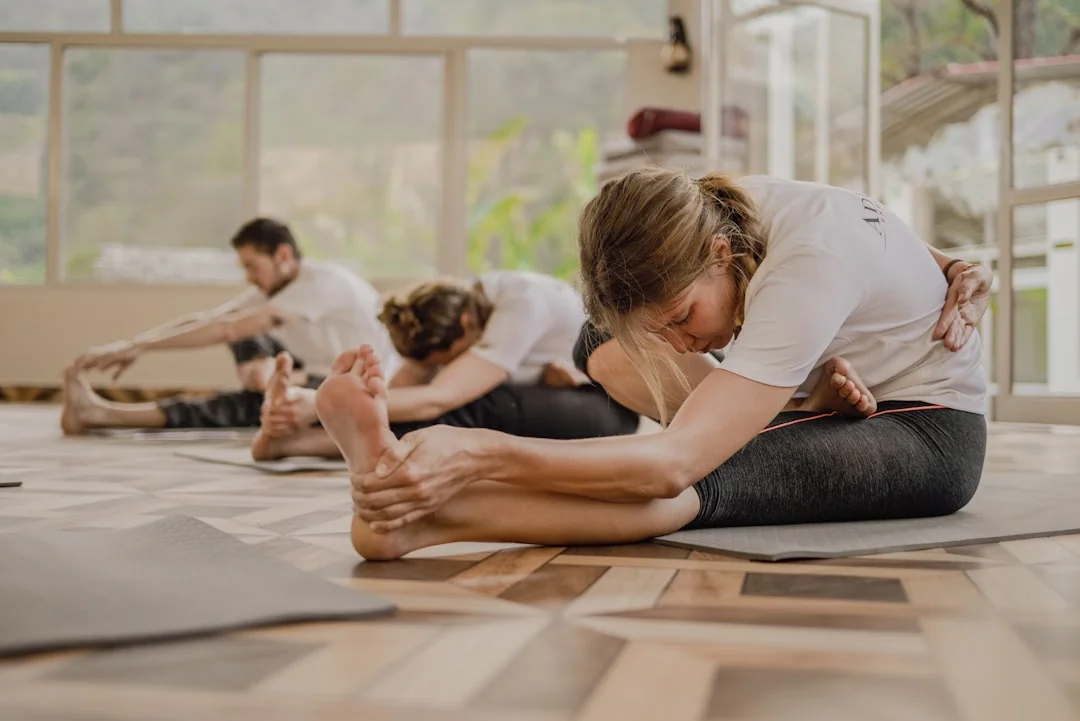
Mindfulness and exercise are often viewed as two separate worlds. Yet they complement each other in a powerful way. Mindful movement means being truly present in your body and in the moment while exercising—rather than mentally already thinking about your next appointment or comparing yourself to others.
This kind of presence fundamentally changes the inner experience of movement. A walk during which you consciously notice your breath, feel the ground beneath your feet, and experience your surroundings with all your senses is not time you “just quickly check off your list.” It becomes true relaxation and true joy—and that is exactly what makes it sustainable.
Especially helpful: Occasionally skip the podcast or music during your workout. Not because that’s fundamentally wrong, but to allow yourself, at least sometimes, the experience of truly listening to your own body. What feels strenuous? What feels good? Where do you feel strength? These questions connect you with your body—and strengthen your intrinsic motivation for fitness in the long run.

Expect Setbacks: Why Breaks Are Normal
One of the most important insights from behavioral psychology is this: Setbacks are not failures—they are a normal part of any process of change. Anyone building an exercise habit will inevitably experience periods when they haven’t worked out: illness, travel, stress, family challenges. That’s not the end.
It only becomes dangerous because of what psychologists call the “all-or-nothing effect”: the belief that a break means having to start over or even that you’ve failed. If, after a break, you say, “It doesn’t matter now anyway” and give up the routine entirely, you’re turning a brief interruption into a permanent abandonment.
The most effective counter-strategy: Consciously plan for exceptions. Decide in advance what will happen if you miss a week. How will you get back into it? With which session? To what extent? Those who have already answered this question don’t have to make a new decision in a moment of weakness—and act more reliably.
Also allow yourself to start smaller than before after a break. This may not feel very heroic, but it’s the smartest way to gently bring your body back into the routine—and to overcome the inner resistance that can be particularly strong right after a break.
Identity Over Goals: Become the Kind of Person Who Moves
There is a subtle yet profound shift that distinguishes people who stay active long-term from those who keep starting over: they define themselves differently. Instead of saying, “I’m trying to exercise more,” they tell themselves, “I am someone who moves regularly.”
That may sound like a small thing—but it’s psychologically very significant. When exercise becomes part of your identity, every workout is no longer an act of self-discipline, but an expression of who you are. You don’t exercise to achieve a goal. You move because it’s part of who you are.
This shift in identity doesn’t happen overnight. It arises from many small actions that repeatedly send the signal: I am this person. Every session, even a short one, reinforces your self-image. That’s why consistency is more valuable than occasional peak performance: Ten minutes a day shapes your identity more strongly than a two-hour workout once a month.
Start by addressing yourself differently internally. Talk to friends about how important exercise is to you. Write it down. These small declarations—both outward and inward—will solidify your new self-image faster than you might expect.
Exercise and Well-Being: How Physical Activity Affects Your Mental Health
Sometimes it helps to remind ourselves why exercise is so fundamental to our well-being—beyond just physical fitness. The effects of regular exercise on mental health are remarkably well-documented:
- Mood regulation: Physical activity releases neurotransmitters that positively influence mood and well-being—including endorphins, serotonin, and dopamine. Even a short walk can shift your inner state.
- Stress relief: Exercise is one of the most effective biological methods for reducing the physical effects of stress. It helps the nervous system return to a state of balance.
- Self-efficacy: Regular exercise strengthens your confidence in your own ability to take action—the feeling that you can set goals for yourself and achieve them. This feeling carries over into other areas of life.
- Sleep quality: Regular exercise has been proven to improve sleep—and good sleep, in turn, boosts motivation and the ability to self-regulate.
- Body awareness: People who exercise regularly develop a more nuanced and often more positive relationship with their own bodies—not because their bodies change, but because they begin to experience them as allies.
These psychological effects are not a side effect of fitness—for many people, they are the very essence of it. I exercise because it makes me feel better afterward: This is one of the strongest intrinsic motivators you can cultivate.
Perhaps by reading this article, you’ve already taken an important first step: you’ve taken the time to seriously reflect on your relationship with exercise. That’s not something to be taken for granted.
What we want to leave you with, above all, is this: You don’t have to motivate yourself every day. You don’t have to love exercise. You don’t have to be perfect or always consistent. What you need is an honest understanding of how habits work—and the willingness to be as patient with yourself as you would be with a good friend.
Exercise isn’t a punishment. It’s a gift you give yourself. And sometimes it takes a little time before that gift feels like one. Start where you are. With what you have. Today.
How long does it take for sport to become a habit?
The often quoted figure of 21 days is a myth. Behavioral research shows that establishing a new habit can take between 18 and over 200 days, depending on the person and their behavior - on average around 66 days. This sounds sobering at first, but is actually liberating: there is no fixed expiry date after which you have to give up. Take small steps and give yourself the time you need.
What should I do if I just don't feel like exercising?
Firstly, this is completely normal and doesn't mean there's anything wrong with you. Secondly, ask yourself if you can make the hurdle smaller. Instead of a full training session, take a ten-minute walk. Instead of the gym: a short exercise routine at home. Often the first small action is enough to overcome the inner resistance. And if nothing really works - accept the day and plan the next step for tomorrow, without self-criticism.
Which sport is the best way to keep going?
The best sport is the one you really like - or at least don't dread. No objectively healthy sport will help you in the long term if you experience it as torture. Experiment: Try out different forms of exercise, go to taster sessions and observe which type of exercise gives you energy instead of taking it away. Enjoyment is the strongest indicator of sustainability.
After a long break, I feel like I have to start all over again - is that true?
Physically, you lose fitness and strength after longer breaks - that's true. But the good news is that muscle memory and neurological patterns are retained. You'll get back into shape faster than you think. More importantly, you don't have to start from scratch psychologically. The experiences you have already had are stored within you. Start smaller than before and be patient with yourself - getting back into shape is easier than the first start.
Does it help to set goals to stay motivated?
Goals can be helpful - but only if they are set correctly. Goals that are too ambitious or unrealistic often lead to frustration and giving up. So-called process goals are more effective than result goals: instead of "I want to lose five kilos", I would rather "I want to exercise three times a week for 30 minutes". Process goals are within your direct control - and every achievement strengthens your confidence in yourself.
How can I motivate someone around me to do sport together?
The most effective approach is not persuasion, but invitation. Share what exercise means to you - not as advice, but as a personal experience. Ask if the person would like to try something together - without pressure, without expectations. People change when they feel invited, not when they are persuaded. A walk together is often a more effective way to start than any external motivation.