Learning to Slow Down: Why “Slower” Alone Isn’t Enough
The gaps in our day are filled, and every piece of advice on slowing down becomes the next task. Why peace of mind fails as soon as it becomes a goal—and what might take its place.

The kettle takes ninety seconds. During that time, nothing happens that demands our attention—and perhaps that’s precisely why it’s so hard to bear. Our hand reaches for the phone before we’ve even finished thinking, “I have time now.”
Such gaps used to be scattered throughout the day: at the bus stop, in the waiting room, in the elevator, in line at the register. No one had planned them as breaks; they were simply there. Today, they’re filled. Not because anyone ordered it, but because there’s something in every pocket that can fill any gap instantly.
And then comes the advice: Slow down. Take a break. Ease up. It’s well-intentioned, and it’s even right. Yet most of the time—nothing happens.
Why “slowing down” alone isn’t enough
The recommendations have been the same for years: simplify, own less, react less, pause more often. Hardly anyone would disagree with them. And almost everyone has failed to follow them at some point.
One reason is what happens to a piece of advice the moment you take it seriously: it becomes yet another task. Calmness slips onto the same list where everything else is already listed, and finds its place there between filing taxes and exercising. Thus, of all things, taking a moment to pause becomes something that can be done right or wrong.
The second reason follows from this. As soon as peace of mind becomes a performance metric, it becomes something to be compared. Who meditates longer? Who has better control over screen time? Who has been more consistent about keeping the weekend free? It’s the same competition as before, only with the tables turned. Anyone who wants to step back but starts comparing themselves to others has never truly stepped back.
Many people have a similar experience with the concept of resilience: it, too, is often treated as a goal that can be achieved. That’s why our article on resilience in everyday life focuses less on strength and more on capacity—and in the glossary, you’ll find the technical definition of resilience.
Peace of mind that you force yourself to have isn't true peace of mind. It's just a quieter form of pressure.
What Happens in Your Mind When Nothing Is Happening Outside
A common misconception is that nothing happens when we’re doing nothing. As soon as the external task is no longer present, a network in the brain becomes active that researchers call the default mode network—essentially the brain’s resting state. Within it, experiences are sorted, thoughts wander, and connections form between things that previously had nothing to do with one another.
This isn’t idling; it’s more like a time for tidying up. Anyone who fills every gap robs this process of its space. Many people recognize this from everyday experience: Good ideas rarely come at the desk, but rather in the shower, while walking, or just before falling asleep. The article “What Meditation Does to Your Brain” explains the science behind this in more detail.
The body is involved as well. The vagus nerve connects the brain to the organs and plays a role in the transition between tension and relaxation. Research suggests that calm, prolonged exhalation can support this transition—a connection explored in the article “Regulating the Nervous System” with specific exercises. This is not a cure, and as such, no one should market it as one. Rather, it’s an indication that taking a moment to pause isn’t just a matter of the mind.
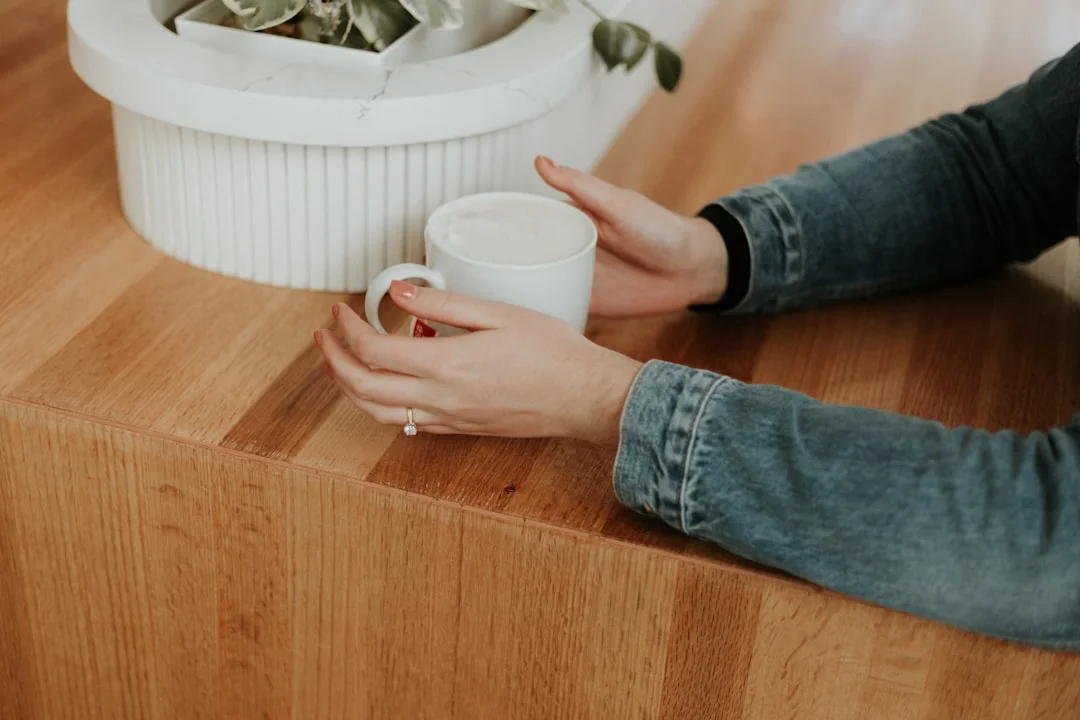
Your standard is not everyone else's standard
At this point, it’s worth raising an objection that typical self-help guides rarely make: Slowing down isn’t right for everyone.
Some people are fast-paced. Not because they’re frantic, but because speed is their way of thinking—they get into their stride when many things are happening at once, and they get restless when a day is too empty. For them, a prescribed slowness would not be a liberation, but a shackle with a better reputation. Anyone who recommends it to them is recommending that they be someone else.
The opposite of being driven isn’t slowness. It’s finding your own rhythm.
And that’s different from what it sounds like at first: It doesn’t mean that everything always has to be harmonious. Those who follow their nature also have fast-paced days, noisy phases, and weeks when a lot is happening all at once. That’s not a relapse. It’s not about becoming a calmer person—but about realizing when the pace comes from within and when it’s imposed from the outside. The difference usually feels more distinct in the body than in the mind.
The glossary describes what it feels like when the two align—the task and your own pace—under “flow state.” And anyone who has ever tried to follow someone else’s daily routine knows that people need very different amounts of structure to stay true to themselves.
Categorize Less
Who actually decides what’s right? A surprisingly large part of what rushes us isn’t a real requirement, but a judgment: too slow, too little, too late, not enough. The clock ticks the same for everyone—the pressure only arises from our judgment of it.
Pausing, then, is less a matter of time than of judgment. A moment when something is simply allowed to be, without being immediately categorized. The tea is too strong, the apartment is a mess, the day was unproductive—and for the length of a breath, that’s simply how it remains, without comment.
This isn’t indifference. It’s the difference between observing and judging. And as a rule, those who are less hard on themselves are also less hard on others. “Live and let live” rarely starts with others.
The fact that this idea is old actually speaks in its favor—the article on Stoic philosophy in modern everyday life shows just how long people have been distinguishing between what happens to them and what they make of it.

Three Small Anchors
Grand resolutions rarely last. Small anchors have the advantage of fitting into a day just as it is. Three that have proven themselves—as an invitation, not an instruction:
Leave the first gap unused. Not all of them. Just the first one of the day. The kettle, the elevator, the red light. Do nothing, don’t think of anything, just stand there. It feels uncomfortable at first, and that’s part of it.
A walk without headphones. A regular route you take anyway, without music or a podcast. The act of walking itself holds your attention; you don’t have to think about anything. If you want to take it further, you’ll find the more advanced form of this under “walking meditation.”
One sentence in the evening. Just one—not three pages. What happened today, without judgment. At its core, a mindfulness journal is nothing more than that, and it almost always fails because people make too much of a big deal out of it.
If you’re looking for more of these small practices, you’ll find them collected in *Mindfulness in Everyday Life*.
When the restlessness is physical
Sometimes taking a moment to pause doesn’t help, because the restlessness isn’t in your head—it’s physical: a tight chest, shallow breathing, the feeling that you’re about to jump up. In moments like these, the advice to sit down and do nothing is about as useful as telling yourself to stay calm.
One approach that many find easier is tapping: a sequence of points on the head and upper body, accompanied by a phrase that names what’s happening right now. Instead of fighting the restlessness, you give it a voice. The step-by-step instructions explain how this works; the glossary explains where the tapping points are located.
The assistant below will guide you through a short session. It’s freely accessible—no account or registration required.
Klopf-Assistent
Geführter Klopfablauf mit Handkante und drei Punkten, ca. 3 Minuten, mit gesprochener Anleitung. Vorher und nachher wird die eigene Belastung auf einer Skala von 0 bis 10 eingeschätzt.
Der Ablauf
- Handkante — der Setup-Satz, dreimal
- Augenbraue — am Anfang der Braue, siebenmal
- Unter dem Auge — auf dem Knochen unter der Pupille, siebenmal
- Schlüsselbein — knapp unterhalb der Mulde, siebenmal
Themen zur Auswahl
- Anspannung & Stress — Wenn alles zu viel wird.
- Schlaf — der Kopf wird nicht still — Wenn die Gedanken kreisen.
- Sorge & Grübeln — Wenn etwas dich nicht loslässt.
- Selbstzweifel — Wenn die innere Stimme klein macht.
- Trauer & Schwere — Wenn das Leben sich schwer anfühlt.
- Angst — Wenn die Brust eng wird.
- Ärger & Wut — Wenn etwas in dir kocht.
- Überforderung — Wenn der Tag größer ist als du.
Mit einem 7zen-Kartenset steht in der App der vollständige Assistent mit allen neun Klopfpunkten zur Verfügung.
7zen ist kein Ersatz für Psychotherapie. Bei anhaltenden Beschwerden wende dich an eine Fachperson.
Something in your hand instead of on the screen
There’s a reason why many people reach for something tangible when they take a break. A sheet of paper doesn’t ask questions or report anything. It simply waits until you look at it again.
The workbook takes on exactly this role: a question, a blank page, and the permission to take your time. The card sets work the other way around—a drawn card provides a prompt, so that for a moment, the decision of what to think about isn’t up to you. For some, that’s the real relief.
For teenagers, the same question arises in an even more acute form: Their days are more tightly scheduled, and the gaps are filled even more reliably. The card sets for teenagers speak their language instead of that of self-help guides—and leave it open as to whether anyone is even reading along.
How long does a break have to be for it to be effective?
Shorter than most people think. Even the break you take while waiting for the kettle to boil counts as one. It seems that regularity matters more than duration—one minute a day usually has a greater effect than one free Sunday a month.
When I'm doing nothing, I get restless instead of calm. Am I doing something wrong?
No, that’s actually the norm. When external distractions fade away, what lay beneath becomes apparent. For many people, this initial restlessness subsides on its own after a short time. If it’s very intense, a form of movement—walking, tapping, breathing—may be easier to engage in than simply sitting still.
Isn't "slowing down" just a luxury problem?
People who work two shifts and take care of children have different options than those who can manage their own time—that’s true. That’s exactly why this isn’t about days off or places to retreat to, but about the gaps that every day naturally contains. They cost nothing and can’t be eliminated through planning.
Do I have to meditate to do that?
No. Meditation is a practiced form of it, but it’s not a prerequisite. Walking without headphones, cooking without a screen in the background, or spending a minute by the window serve the same purpose. If you want to learn the practiced form, breathing exercises are usually the easiest way to get started.
How does this relate to cell phones?
The device isn't the cause of the restlessness, but it is the quickest way available to drown it out. That's why it works so reliably during those lulls. It doesn't need to be banned—it's often enough to simply refrain from reaching for it at a single recurring time each day.
What if I'm just a fast person?
Then let it be. Pace is not a mistake that needs to be corrected. The difference that matters is between a pace that comes from within and one that is imposed from the outside—not between fast and slow.
Can taking a break help when you're exhausted or under prolonged stress?
Many people find that taking short breaks is a relief, and research suggests that regular moments of rest can help build resilience. They are not a substitute for treatment. If exhaustion, insomnia, or low mood persist for weeks, this is a matter for a doctor or therapist—not a blog post.
The longing for a slower pace is rarely a longing to withdraw. Most of the time, it’s the desire to be aware of what’s happening right now—instead of only noticing it in the evening, when the day is already over.
You don’t need a different life to achieve this. All it takes is letting go of one thing. Ninety seconds is enough to get started.