Intuitive nutrition: back to natural hunger
No more diet rules and calorie counting. Learn how intuitive eating helps you to listen to your body again.
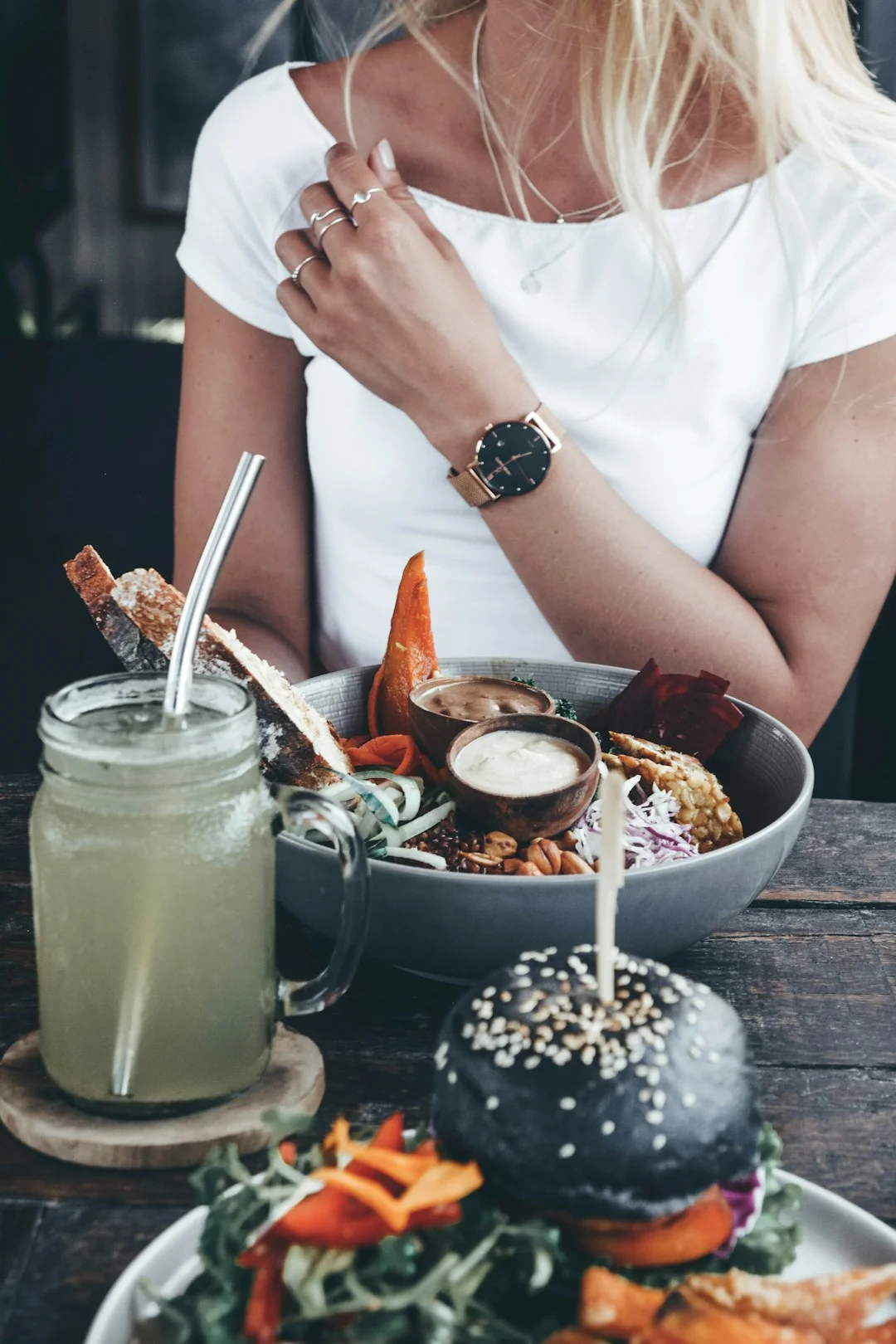
Do you know that feeling of waking up in the morning and the first thing you ask yourself is, “What am I allowed to eat today?” Not what you want—but what’s permitted? If eating feels like a daily battle between your mind and body, between discipline and desire, then you’re not alone. Millions of people have, through years of dieting, forgotten how to listen to the simplest language in the world: the language of their own bodies. Intuitive eating isn’t a new trend or just another diet—it’s a return to what you’re naturally capable of. This article shows you how to do it.
What Is Intuitive Eating—and What It Isn’t
Intuitive eating was developed in the 1990s by American nutritionists Evelyn Tribole and Elyse Resch. Their approach is based on ten core principles that together describe a new relationship with food—one that involves no restrictions, no guilt, and no external rules. At its core, it’s about reconnecting with your body’s natural signals and trusting them.
Many people hear the term and immediately think: That means I can just eat whatever I want. That is a misunderstanding. Intuitive eating does not mean acting impulsively or ignoring health. It means developing an inner dialogue—mindful, respectful, and non-judgmental. It’s about recognizing the difference between genuine physical hunger and emotional eating, between feeling full and satisfied and numbing oneself with overeating.
What intuitive eating clearly rejects: It is not a diet. No point-counting, no forbidden foods, no measure of success on the scale. The measure is your well-being—physical, emotional, and mental.

How Dieting Mindsets Harm Our Body Image
Years of dieting leave their mark—not just on the body, but deep within our minds. Psychologically speaking, chronic restriction leads to a phenomenon that experts call cognitive restriction: The brain learns to categorize food as “good” and “bad,” and links this assessment directly to self-esteem. Those who chose the salad feel good. Those who ate the piece of cake feel bad—as a person, not just as someone who eats.
This pattern is not a weakness, but a learned response. Studies in behavioral psychology show that, paradoxically, strict dietary rules often lead to more cravings and bouts of uncontrolled eating. The so-called regulation boomerang: what we forbid ourselves, we crave more intensely. The body reacts to restriction with alarm—both biologically and emotionally.
Intuitive eating starts right here. By lifting restrictions, food loses its forbidden status. That sounds easier than it is—but it is possible, step by step.
An Overview of the Ten Principles of Intuitive Eating
Tribole and Resch have outlined their approach in ten clearly defined principles. These form the core of intuitive eating and help create a new framework for your own eating culture:
- Reject the diet mindset: Recognize and question the inner voice that tells you you need to lose weight or restrict yourself.
- Respect hunger: Learn to recognize your body’s hunger cues early on and take them seriously.
- Make peace with food: Give yourself unlimited permission to eat—without guilt.
- Silence the nutrition police: Say goodbye to internal and external voices that categorize food as good or bad.
- Notice when you’re full: Pay attention while eating to when you feel full and satisfied.
- Discover the pleasure factor: Eating can be enjoyable. Joy is a legitimate and important criterion.
- Managing emotions without food: Develop strategies to cope with emotions without “eating” them.
- Respect your own body: Accept your genetically determined body type without judgment.
- Feel the movement instead of burning calories: Move in a way that feels good—not as a punishment for eating.
- Gentle nutrition: Integrate nutritional knowledge as one of many sources of information—without pressure.
These principles are interconnected. They are not a checklist, but a process that takes time and requires self-compassion.
From the practice of intuitive nutrition "Your body is not a project to be optimized. It's a home you live in - and it deserves your care, not your control."
Understanding Hunger: The Internal Scale as a Guide
One of the most practical exercises in intuitive eating is the so-called hunger-satiety scale. It ranges from 1 to 10, where 1 means extreme, painful hunger and 10 means uncomfortable fullness. The goal is to stay in the middle range most of the time—that is, to start eating at around 3 to 4 and stop at 6 to 7.
Sounds simple? For many people, it’s a real challenge. Those who have eaten by the clock for years (because it’s “mealtime”) or because emotional pressure triggered a craving have often lost touch with their sense of true physical hunger. The good news: This sense can be rediscovered. It takes practice, patience, and above all, curiosity instead of self-criticism.
In practice, it helps to pause briefly before every meal and ask yourself: How hungry am I really right now—on a scale of 1 to 10? And while eating: How does my body feel? Am I still hungry or already satisfied? These small moments of mindfulness are the beginning of a deeper body awareness.


Recognizing Emotional Eating – Without Self-Judgment
Food and emotions are inextricably linked. That’s not a mistake—it’s human nature. We eat when we celebrate, when we mourn, when we’re stressed, and when we want to reward ourselves. Food has always had a social, cultural, and emotional dimension. The problem doesn’t arise from emotional eating itself, but when it becomes the only tool we use to regulate difficult feelings.
Psychological research distinguishes between physical hunger and emotional hunger. Physical hunger develops slowly, isn’t fixated on a specific food, and subsides after eating. Emotional hunger comes on suddenly, is often focused on specific comfort foods, and frequently leaves behind feelings of guilt rather than satisfaction.
How to tell the difference
A helpful exercise is taking a moment to pause: Before you eat, pause briefly and consciously ask yourself what’s going on inside you right now. Are you physically hungry? Or are you tense, bored, lonely, or sad? Both answers are valid. But when you realize that it’s a feeling that needs attention, you can choose: Do I eat now—and that’s okay—or is there something that would directly help with this feeling?
It’s not about completely eliminating emotional eating. It’s about developing a broader repertoire of coping strategies: a conversation with a trusted person, a short breathing exercise, a walk, writing in a journal. Eating remains an option—but not the only one.
Intuitive Eating and Mindfulness: Two Sides of the Same Coin
Anyone interested in mindfulness will find many familiar concepts in intuitive eating. Both approaches share the same core: conscious awareness without judgment. In mindfulness practice, you learn to observe thoughts and feelings without getting carried away by them. In intuitive eating, this principle applies to food—you observe hunger, taste, and fullness without immediately falling into categories of good and bad.
Mindful eating—a subset closely related to intuitive eating—means, in concrete terms: eating without distractions, truly noticing the taste, chewing slowly, and being present with your body while eating instead of scrolling on your smartphone. This practice sounds simple, but it has profound effects. Studies show that people who eat mindfully are better able to perceive their signals of fullness and develop a more relaxed relationship with food overall.
For anyone who already practices meditation or incorporates mindfulness into their life, intuitive eating can be a very natural next step—an extension of inner work into an everyday aspect of life.
Common Obstacles on the Path to Intuitive Eating
As straightforward as the concept sounds, the path to it can be challenging. It would be dishonest to say that you simply decide to eat intuitively and then it works overnight. Here are the most common hurdles—and how you can deal with them:
“I don’t trust myself”
Many people who have been on diets for a long time have developed a deep mistrust of their bodies. They believe that if they allow themselves to eat whatever they want, they’ll never stop eating. This fear is understandable—and explainable from the perspective of behavioral psychology. Yet the opposite is usually true: as soon as a food is no longer off-limits, it loses its exaggerated appeal. It takes time, but the body learns to regulate itself again.
External Pressure and Social Dietary Rules
We live in a society that glorifies body ideals and constantly promotes new dietary rules. Intuitive eating therefore also requires inner resilience: the ability to critically question external messages and to treat one’s own inner voice as a more reliable source. This is no easy feat—but one that has a positive impact on many areas of life.
The desire for clear rules
Some people feel lost without structure. Intuitive eating doesn’t offer a list of permitted foods—and that can be unsettling at first. Here, it helps to focus on the inner questions: How do I feel? What do I really need right now? Over time, these questions become a reliable internal compass.
Who is intuitive eating suitable for—and who is it not suitable for?
Intuitive eating is a powerful approach for many people—but not for everyone in every situation. It’s important to be honest about that.
It is particularly well-suited for:
- People who have been dieting for years and are exhausted
- People with a strained relationship with food and their own bodies
- People who feel restricted by dietary rules
- Anyone who wants to develop a sustainable, positive relationship with food
Limitations and notes:
In cases of active eating disorders such as anorexia or bulimia, intuitive eating should only be practiced under professional supervision. In these cases, the perception of hunger and satiety is often so distorted that therapeutic support is essential. Certain medical conditions—such as diabetes—also require an individualized approach coordinated with healthcare professionals.
Intuitive eating is not a panacea, but a profound, people-centered framework that can be a true source of liberation for many people.
First Steps: How to Get Started with Intuitive Eating
You don’t have to change everything at once. Intuitive eating is a process that unfolds—not a system you implement overnight. Here are some starting points that have proven effective in practice:
1. Try eating without distractions
Choose one meal a day where you consciously avoid screens and distractions. Sit down, take a moment to breathe, and eat slowly. Notice what you taste and how your body changes during the meal.
2. Keep a food journal of your sensations
No calorie counting, no logging of foods. Instead: After eating, briefly note how hungry you were beforehand, how you felt during the meal, and how you feel afterward. Over time, patterns emerge that are revealing.
3. Observe your inner nutrition police
Whenever a thought like “I can’t eat that” or “That’s unhealthy” pops up, pause for a moment. Ask yourself: Whose voice is that? Where does this rule come from? You don’t have to get rid of the rule right away—but observing it without automatically following it is a first step.
4. Allow all foods—step by step
Choose a food that you’ve long classified as “off-limits.” Buy it, eat it mindfully, calmly, without guilt. Observe what happens. Often, you’ll find that the allure of the forbidden fades once the ban itself is lifted.
5. Seek professional support
Nutritionists specializing in intuitive eating, as well as psychological support, can be valuable companions on this journey. Especially if your relationship with food is very strained, seeking professional support is not a sign of weakness—but rather wise self-care.
Is intuitive eating the same as mindful eating?
The two concepts are closely related, but not identical. Mindful eating primarily describes the way you eat - consciously, slowly, without distraction. Intuitive eating is a broader framework that also includes the psychological relationship to food, body awareness and dealing with dietary thinking. Mindful eating is an important part of intuitive eating, but not all of it.
Will I gain or lose weight with intuitive eating?
Intuitive eating is not a weight management program. Its goal is not weight loss or weight gain, but a healthy, relaxed relationship with food and your own body. Some people lose weight, some gain weight, some remain stable - depending on their previous eating habits. The decisive yardstick is well-being, not the scales.
Can I eat intuitively if I have special dietary requirements - for example, if I have food intolerances?
Yes, intuitive nutrition can be reconciled with medical nutritional needs. The tenth principle - so-called gentle nutrition - explicitly incorporates health knowledge. It is about integrating this knowledge as care for the body, not as another set of rules of restriction. In the case of intolerances, it makes sense to consult a specialist who is familiar with this approach and can provide support.
How long does it take for intuitive eating to feel natural?
This is very individual. People who have a few years of dieting experience often find it quicker. People who have eaten very restrictively for years often need more time - and that's perfectly fine. Many people report that the first changes become apparent after a few weeks, but that a truly relaxed relationship with food takes months or even longer to develop. Patience and self-compassion are not options, but basic requirements.
What is the difference between intuitive eating and simply eating what you want?
Intuitive eating does not mean eating impulsively or unconsciously. It combines trust in physical signals with a mindful, conscious approach to eating. You learn to distinguish between real hunger and emotional triggers, to recognize satiety signals and to enjoy food without feeling guilty. It is an active, learning process - not a passive indulgence.
Is there any scientific evidence for the effectiveness of intuitive nutrition?
Yes, the research is constantly growing. Studies show that intuitive eating is associated with a more positive body image, fewer binge eating episodes, fewer eating disorder symptoms and an overall improvement in mental well-being. It is also associated with more sustainable behavioral changes than traditional dieting approaches. The scientific community increasingly views it as a valuable alternative to restrictive dietary interventions.
Your body has never stopped talking to you. It sends signals—for hunger, for fullness, for energy, and for exhaustion. What many of us have forgotten is how to listen. Intuitive eating invites you to relearn this language: without rushing, without perfectionism, with genuine curiosity about what your body is trying to tell you.
This is not an easy path—but it is a deeply human one. And it doesn’t lead to an ideal body, an optimized diet, or a finish line. It leads to yourself. To eating that doesn’t feel like a daily test, but like a natural, nourishing part of life.
Your action step for today: Choose your next meal mindfully. Put your smartphone away, sit down, and ask yourself before the first bite: How hungry am I really right now? Eat slowly, take a short break in the middle, and ask yourself: How do I feel? No judgment, no expectations—just observation. This one moment can be the beginning of something that changes your relationship with food forever.