Fostering Resilience in Children: What Parents Can Really Do
Resilience in children isn't built through training—but through relationships. Here's what that means and what you can do about it.
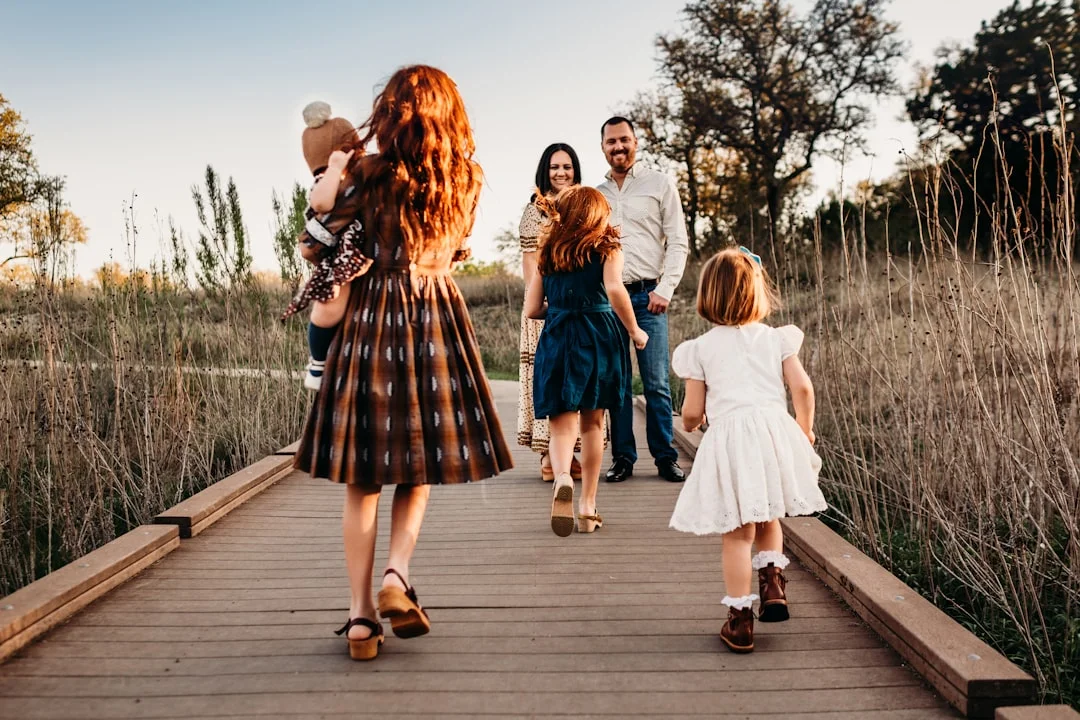
There are moments when, as parents, we would love to put a protective shield around our children. When their favorite toy breaks and the world comes crashing down for a four-year-old. When their best friend suddenly turns to someone else. When the first test goes wrong and our child’s face shows us just how deep disappointment can really run. In moments like these, we ask ourselves: How can I help my child build inner strength? How can I ensure that they can handle life with all its ups and downs?
The topic of resilience in children is on many parents’ minds—and for good reason. After all, the ability to cope with setbacks, changes, and stress is considered one of the most important foundations for a fulfilling life. But what does it really mean? And what can we—as parents, grandparents, or caregivers—actually do—without feeling pressured or overwhelmed?
This article isn’t meant to give you a checklist that leaves you feeling worse than before. Instead, it invites you to rethink resilience—shifting your perspective from a training program to a vibrant quality of relationship that you may already be nurturing without even realizing it.
What Resilience Really Means for Children
The word “resilience” comes from Latin—“resilire” means to bounce back or rebound. In psychology, it describes a person’s ability to regain emotional balance after difficult experiences. It’s not about being invulnerable. It’s about being able to bounce back.
A common misconception is that resilience in children is innate—that some children just have it and others don’t. Research, however, paints a more nuanced picture: resilience is not a fixed trait, but a process. It arises from the interplay of internal factors, external resources, and, above all, the quality of the relationships in which a child is embedded.
Children are not, by nature, little adults who can simply brush off stress. Their nervous systems are still developing; their ability to regulate stress only matures over the course of childhood and adolescence. What they need to develop this maturity is not toughening up—but support.

Secure Attachment: The Root of Strength
When researchers look for the key factor that distinguishes resilient children from those who are less resilient, they always come back to the same thing: attachment. A secure, reliable relationship with at least one primary caregiver can help children remain emotionally stable even under difficult circumstances.
What does secure attachment actually mean? It means that a child can feel confident that if I fall, I will be caught. If I cry, I’ll be seen. If I’m angry, I won’t lose my caregiver’s affection. This fundamental sense of emotional security lays an inner foundation that allows children to take risks on their own, tolerate mistakes, and weather crises.
This doesn’t mean that you, as a parent, always have to react perfectly. Quite the contrary: attachment research suggests that it’s not the flawless reaction that matters, but rather reestablishing the connection after a breakdown. If you’ve ever been too loud, too impatient, or too distracted—and then reach out again afterward—you’re showing your child that relationships can be repaired. That’s one of the most valuable experiences a child can have.
Empowering Children Without Pressure: What Doesn't Work
Because we want our children to grow strong, we sometimes resort to methods that are well-intentioned but can have the opposite effect. Here are some common patterns you may recognize:
Overprotecting: When we remove every obstacle before a child has a chance to face it, we rob them of the opportunity to develop their own problem-solving skills. Children need measured challenges—not maximum protection.
Dismissing feelings: Phrases like “Don’t be such a baby” or “It’s not that bad” convey to the child that their inner world is wrong. This can lead them to suppress their feelings instead of processing them.
Demanding resilience as a performance: When we expect children to bounce back quickly, function well, or hide their grief, they learn to conform—not to recover.
Comparisons and competition: “Look, Leon isn’t crying either” creates shame, not strength.
It’s important to realize: No parent does this with malicious intent. These patterns often arise from feeling overwhelmed, from cultural influences, or from a deep desire not to see the child suffer. You don’t have to be ashamed of this—but it’s worth taking a closer look.
A thought from attachment research "Children don't need perfect parents. They need real people who are open and honest, who connect with one another, and who find their way back to each other after misunderstandings."
Building Resilience in Everyday Life: Small Moments, Big Impact
The great thing about resilience is that it doesn’t require elaborate programs. It develops in the course of everyday life—in the small, often unnoticed moments between you and your child. Here are a few areas where you can start:
Naming and Supporting Emotions
When a child is angry, sad, or afraid, it doesn’t help much to ignore or try to calm these feelings. What can help is naming them. “I can see that you’re very angry right now. That’s okay.” This simple act of mirroring conveys to the child that feelings aren’t dangerous—and that they’re not alone in experiencing them. Over time, this helps them develop their own emotional vocabulary and the ability to cope with their inner states.
Fostering Self-Efficacy
Empowering children also means trusting them. Let your child take on tasks appropriate for their developmental stage—even if they fail in the process. A child who experiences that they can make a difference through their own actions develops an inner sense of competence. This is one of the central pillars of resilience.
Creating Routines and Predictability
A child’s nervous system thrives on predictability. Set rituals—a specific dinner, a goodnight kiss, the same song before bedtime—provide a sense of security. In a world full of uncertainties, this is no small matter; it’s a stable foundation.
- Card set for school children - feelings and change
- Card set for little explorers - My feelings & me
- Card set for teens - Who am I?
- Coaching Cards
Cultivating Your Own Inner Attitude as a Parent
Here’s an aspect that’s often overlooked in parenting guides: Your own well-being influences your child’s resilience. Not because you have to be relaxed and balanced all the time—that’s simply impossible. But because children co-regulate. This means they regulate their own stress levels in part based on the state of the nervous systems of the people close to them.
If you’re stressed, overwhelmed, or emotionally agitated, you pass that on—unconsciously and unintentionally. If, on the other hand, you’re in a state of relative inner calm, your child can “tune into” that and calm themselves down. This isn’t a criticism—it’s biology.
What this means for you: Your own self-care isn’t a luxury you treat yourself to after becoming a parent. It’s part of being a parent. Moments of silence, breathing exercises, physical activity, and talking with someone you trust—all of these can help you stay present with your child during difficult moments, rather than just reacting.
And if you notice that you keep falling back into patterns that aren’t good for you—perhaps ones you recognize from your own childhood—that’s not a sign of weakness. It may be a sign that you yourself deserve support. More on that in a moment.
Resilience in Children During Difficult Life Stages
Some children grow up under particularly challenging circumstances: parental separation, illness, loss, poverty, migration, or trauma. In these situations, resilience is not a natural process but rather something that requires special support.
Research suggests that even under difficult circumstances, a stable attachment figure can make a significant difference—whether it’s a parent, a grandmother, a teacher, or another reliable adult figure. You don’t have to shoulder everything on your own. Sometimes it’s enough to guide the child to a place where they can find other secure relationships: a sports team, a therapist, a club, or an inclusive school community.
What can be especially helpful during these phases:
Explain to the child what’s happening—in an age-appropriate and honest way, without overwhelming them
Explicitly allow and normalize their feelings
Maintain routines, even when a lot is changing
Show your child that they belong to the community and are needed
Seek professional support when your own resources are exhausted
When Professional Help Is Important
This article is not a substitute for professional counseling or therapy. This isn’t just a disclaimer in the margin—it’s a genuine, serious warning.
There are situations in which resilience cannot be fostered through parental support alone. If you notice that your child:
is suffering persistently from anxiety, sadness, or withdrawal that does not improve
seems different after a traumatic experience (loss, accident, violence)
exhibits physical symptoms with no apparent medical cause
is harming themselves or expressing such thoughts
is performing significantly worse in school or cutting off social contacts
…then the right step is to seek professional help. Child and adolescent psychotherapists, pediatric counseling centers, psychological counseling centers, or family counseling services can be valuable resources.
The same applies to you as a parent: If you yourself feel like you can’t go on anymore, if old wounds are reopening, if you realize that you’re stuck in your own past—then you deserve support. For yourself. And, by extension, for your child.
Asking for help is not a defeat. It is often the bravest and most loving step you can take.
Child Attachment: What Research Says About Relationship Quality
Attachment theory, founded by John Bowlby and further developed by Mary Ainsworth, has consistently demonstrated one thing over decades of research: child attachment—that is, the quality of early emotional bonding—influences how people cope with stress, relationships, and themselves, far beyond childhood.
A secure attachment in early childhood is no guarantee of a trouble-free life. But it provides a kind of internal compass that helps keep one on course even in turbulent times. Studies show that children with secure attachment experiences tend to be more flexible in dealing with stress, seek support more often in times of crisis, and develop more stable social relationships in the long term.
What’s particularly interesting is that these attachment patterns are not set in stone. Even children who experienced insecure attachment early on can develop new internal working models through later secure relationships—with teachers, therapists, partners, and friends. This is a deeply encouraging insight: change is possible. Always.
Building Resilience in Children: Practical Ideas for Everyday Life
To wrap up the main section, we’d like to share a few practical ideas that you can easily incorporate into your daily routine. No program, no to-do list—just suggestions to try out:
Daily Check-In
Take two minutes in the morning or evening to ask your child how they’re doing—not as a chore, but out of genuine curiosity. And listen without immediately judging or trying to solve the problem. This kind of presence is often experienced as deeply soothing.
Celebrate Mistakes as Learning Opportunities
When your child makes a mistake, you can use it as an opportunity: “Oh, that didn’t work out this time. What could you try next time?” This way, making mistakes isn’t equated with failure, but with learning.
Use the Body and Breath as Anchors
Children can learn early on to perceive their own bodies as a resource. Taking a deep breath, exhaling slowly, consciously feeling their feet on the ground—these are simple techniques that can help during turbulent moments. Some families make this a shared habit.
Create moments of connection without a specific goal
Not every moment spent together has to be productive. Sometimes it’s enough to simply sit next to each other, read a book, or collect leaves outside. These aimless moments of connection can help replenish the emotional bank account—for both sides.
Klopf-Assistent
Geführter Klopfablauf mit Handkante und drei Punkten, ca. 3 Minuten, mit gesprochener Anleitung. Vorher und nachher wird die eigene Belastung auf einer Skala von 0 bis 10 eingeschätzt.
Der Ablauf
- Handkante — der Setup-Satz, dreimal
- Augenbraue — am Anfang der Braue, siebenmal
- Unter dem Auge — auf dem Knochen unter der Pupille, siebenmal
- Schlüsselbein — knapp unterhalb der Mulde, siebenmal
Themen zur Auswahl
- Anspannung & Stress — Wenn alles zu viel wird.
- Schlaf — der Kopf wird nicht still — Wenn die Gedanken kreisen.
- Sorge & Grübeln — Wenn etwas dich nicht loslässt.
- Selbstzweifel — Wenn die innere Stimme klein macht.
- Trauer & Schwere — Wenn das Leben sich schwer anfühlt.
- Angst — Wenn die Brust eng wird.
- Ärger & Wut — Wenn etwas in dir kocht.
- Überforderung — Wenn der Tag größer ist als du.
Mit einem 7zen-Kartenset steht in der App der vollständige Assistent mit allen neun Klopfpunkten zur Verfügung.
7zen ist kein Ersatz für Psychotherapie. Bei anhaltenden Beschwerden wende dich an eine Fachperson.
At what age can I start fostering my child's resilience?
Resilience in children begins to develop from birth—more specifically, during the first weeks and months, when an infant experiences whether his or her needs are reliably met. This means it’s never too early to pay attention to the quality of the attachment. At the same time, it’s never too late either. Children are remarkably adaptable in their development, and positive relationship experiences can continue to have an impact even in later childhood and adolescence.
My child is very sensitive and cries easily. Does that mean he or she isn't very resilient?
No. Crying and sensitivity are not signs of weakness or a lack of resilience. Some children naturally react more intensely to stimuli—this is described in developmental psychology as high sensory processing sensitivity. With the right support, these children can become very resilient—they may just need a little more space, quiet, and understanding to regulate themselves. Resilience doesn’t mean not showing emotions, but rather being able to manage them.
Does it scare children when I, as a parent, show my feelings or cry?
Not necessarily. When parents authentically express their own feelings—within a framework that’s manageable for the child—children learn that feelings are a natural part of life and can be handled. It’s important not to burden the child with emotional responsibility. A brief statement like, “Mom is sad right now because she’s thinking about Grandma. I’m okay—you don’t need to worry,” can help combine openness with a sense of security.
What is the difference between resilience and simply having to be strong?
That’s a very important distinction. “Being strong” in the sense of suppressing emotions, not asking for help, and always functioning—that’s not resilience, but often the opposite of it. True resilience means acknowledging one’s own vulnerability while still remaining capable of taking action. It means being able to seek support, recover, and learn from experiences. Guiding children toward true resilience means allowing them to be themselves—not forcing them to be strong.
Can grandparents or other caregivers also contribute to a child’s resilience?
Absolutely—and that’s a very encouraging insight. Resilience isn’t just built through the parent-child relationship, but through the entire network of reliable caregivers. A loving grandmother, a trusting uncle, an empathetic teacher—all these people can help a child feel supported. The more secure relationships a child has in their life, the broader that foundation becomes.
How can I tell if my child needs professional help?
A good rule of thumb is this: If unusual behaviors persist for more than a few weeks, become more severe, or significantly interfere with the child’s daily life, it’s worth seeking professional advice. These can include persistent sleep problems, social withdrawal, physical symptoms with no clear cause, severe anxiety, or behavioral changes following a traumatic experience. Child and adolescent psychotherapists, family counseling centers, or the pediatrician are good first points of contact. Seeking support early on is always better than waiting to see what happens.
If you’ve read this article this far, there’s one thing you know for sure: You love your child. And that love—even if it sometimes comes across as clumsy, loud, or exhausted—is the most important resource your child has.
Resilience in children doesn’t come from the perfect parenting method. It grows in the space you maintain between the two of you—even when things get tough. In holding on. In coming back. In honest conversation. In sitting quietly side by side.
You don’t have to do everything right. You just have to find your way back again and again.
And you can do that. Every single day.
Your call to action for today: Take five minutes tonight for your child—no screens, no distractions, no agenda. Just ask, “What was nice today? And what was difficult?” Listen without judging. This might be the most resilient moment of the whole day—for both of you.