Bodyscan meditation: instructions & effects of the body journey
The body scan guides you step by step through your body - and changes the way you perceive yourself. Find out how here.

Do you know that feeling of rushing through the day for hours on end—and then, by evening, not being able to say how it actually felt? Your mind is racing, your to-do list seems endless, and somewhere between your midday meeting and your evening routine, you’ve stopped truly feeling your body. This is exactly where the Body Scan Meditation comes in. It invites you to step off autopilot and come home in a very special way—to your own body. This guided meditation isn’t a trick or a quick relaxation technique, but a deep practice in mindfulness and self-awareness. In this article, we’ll show you what’s behind the Body Scan, what science has to say about it, and how you can integrate it into your daily life step by step.
What is body scan meditation—and where does it come from?
The term “body scan” refers to a form of meditation in which you systematically direct your attention to different parts of your body. As you do so, you observe what you perceive: tension, warmth, tingling, numbness, or simply nothing. No judgment, no desire to change—just mindful awareness.
This technique was popularized by American medical professor Jon Kabat-Zinn, who developed the MBSR (Mindfulness-Based Stress Reduction) program in the late 1970s. To this day, the body scan remains one of the central elements of this eight-week mindfulness program, which is used worldwide in clinics, psychotherapy practices, and wellness settings. In the MBSR body scan, the focus is not on relaxation as a goal—but on the pure perception of what is. Relaxation may occur as a side effect, but it is not a requirement.
What makes it special: The Body Scan requires no special equipment, no prior knowledge, and no specific location. All you need is your body, a few minutes of time, and the willingness to connect with yourself.
What Science Says About the Body Scan
The body scan is not an esoteric method, but one that has been well researched. A widely cited 2013 study by Dreeben and colleagues, published in the journal Mindfulness, examined the specific effects of the body scan within the MBSR program. The results showed significant improvements in body awareness, a reduction in stress symptoms, and an increased ability to regulate emotions among participants.
Of particular interest is the effect on chronic pain: research by Fadel Zeidan and his team, published in the Journal of Neuroscience, demonstrates that mindfulness-based body exercises such as the body scan can measurably reduce subjective pain perception—without pharmacological intervention. Changes in pain processing in the brain appear to play a central role in this.
Other effects described in the research include: better sleep, reduced emotional reactivity, increased body awareness, and a deeper connection between mind and body. For people with stress-related complaints, anxiety, or psychosomatic symptoms, the Body Scan can be a valuable introduction to mindfulness practice.
Body Scan vs. Progressive Muscle Relaxation: What's the Difference?
Many people confuse the body scan with Progressive Muscle Relaxation (PMR) as developed by Edmund Jacobson—yet the two methods have fundamentally different goals.
In Progressive Muscle Relaxation, individual muscle groups are consciously tensed and then released. The goal is physical relaxation through the contrast between tension and release. PMR is an active process that works on a physiological level.
The body scan, on the other hand, is a purely passive observation technique. You don’t tense anything, you don’t intentionally relax anything. You simply observe. You notice what is present in your body right now—without intervening. This radical acceptance is the core of the exercise. It doesn’t train relaxation, but rather presence and non-judgment—two central pillars of mindfulness.
- PME: active, muscular, aimed at relaxation
- Body Scan: passive, observational, aimed at awareness and acceptance
Both methods complement each other well and can coexist in a holistic mindfulness practice. The body scan is particularly suitable for people who want to learn to connect better with their bodies.
Expert tip from Lisa, Psychology & Wellness "The Bodyscan is not a relaxation method - it is an invitation to experience your own body as home. Not as something that is supposed to work, but as something that is alive."
Body Scan Guide: A Step-by-Step Journey Through Your Body
A complete body scan exercise usually takes between 20 and 45 minutes. This timeframe is no coincidence: it gives you enough space to really go deep and consciously perceive every part of your body without rushing. Below you’ll find detailed instructions.
Step 1: Preparation
Lie flat on your back—on a yoga mat, a soft blanket, or your bed. Let your arms rest loosely at your sides, palms facing up. Close your eyes. Take three deep breaths in through your nose and out through your mouth. Let your body become heavy and surrender to the surface beneath you.
If you’re unable to lie down, the body scan also works while sitting. The important thing is to find a position where you can remain still for an extended period of time.
Step 2: Arriving in the Moment
First, focus your attention on your breath. You don’t need to change it—just observe how your belly rises and falls. For three to five breaths, simply notice this movement. This is your anchor to the present moment.
Step 3: The Journey Through the Body
Now start with your feet. Focus your inner attention on the toes of your left foot. What do you notice? Tingling, warmth, cold, numbness—or nothing at all? There is no right answer. Stay with this area for one to two breaths, then move on to the ball of your foot, the heel, and the ankle.
Work your way up systematically from the bottom:
- lower leg, knee, thigh—first the left, then the right
- Pelvis and hips
- Abdomen (pay special attention to your breath here)
- Chest and heart
- Lower back, upper back
- Shoulders, upper arms, elbows, forearms, hands
- Neck and nape
- Face: jaw, mouth, nose, eyes, forehead, scalp
Take as much time as feels right for each area. If you notice your thoughts wandering, that’s not a mistake—that’s the moment of the exercise. Gently return to the part of the body you were focusing on, without self-criticism.
Step 4: Conclusion
Once you have explored all body regions, expand your awareness: perceive your body as a whole. Feel the weight, the warmth, the breath. Remain in this expansive, open awareness for another two to three minutes. Then slowly move your fingers and toes, stretch, and open your eyes. Take your time before getting up.
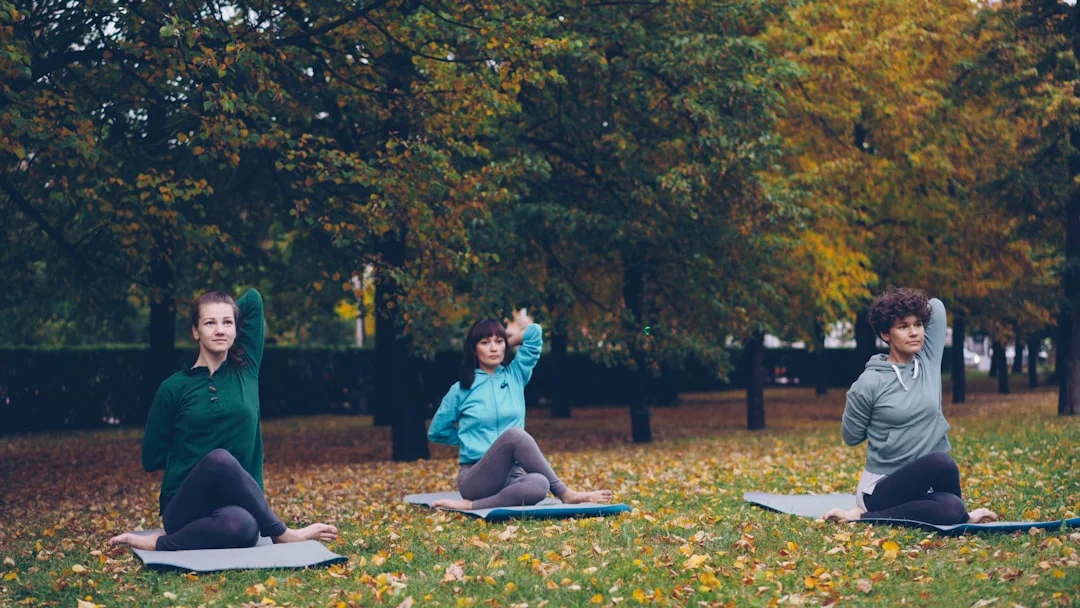
What should you do if you fall asleep during a body scan?
Falling asleep during a body scan is one of the most common stumbling blocks—especially for beginners. And while a nap certainly has its merits, the actual goal of the body scan is awareness, not sleep. So how should you handle this?
Choose the right time: Try not to do the body scan right after a meal or just before bedtime—these are classic times when you’re likely to feel sleepy. Mornings or early afternoons often work better.
Change position: If you regularly doze off, you can keep your eyes slightly open or do the meditation while sitting. A seated position stimulates the nervous system slightly more than lying down.
Inner attitude: Jon Kabat-Zinn recommends approaching falling asleep with friendly interest rather than frustration. When it happens, it’s a sign of exhaustion—and that, too, is valuable information. You can start your next attempt with a fresher mind.
Open your eyes: A simple trick: With your eyes closed, direct your inner gaze slightly upward, toward your forehead. This has a subtle activating effect on the nervous system.
Body Scan Variations: Short, Shorter, Super-Short
You don’t always have 45 minutes to spare. The good news: The Bodyscan is wonderfully scalable without losing its core essence. Here are three variations that are suitable depending on how you’re feeling and the time you have available.
Detailed Body Scan (20–45 minutes)
This is the classic, complete form as taught in the MBSR program. Each body region is explored in detail and accompanied by several breaths. Ideal for free evenings, weekends, or as an evening ritual before bed.
Short Body Scan (10 minutes)
Here, the body regions are grouped into larger units: feet and legs, torso, arms and hands, head. You spend about two minutes on each unit. This variation is well-suited for a lunch break or as an introduction to your daily practice.
Quick Body Scan (3–5 minutes)
A quick check-in with your body that you can even do at your desk. Close your eyes for a moment, take a deep breath, and quickly scan your body from your feet to your head. Ask yourself: Where do I feel tension? Where am I right now? This micro-practice is ideal for stepping out of autopilot—in between tasks, several times a day.
All three variations train the same skill: staying in touch with your own body. Those who practice regularly—even in short sessions—develop a deeper body awareness over time than someone who occasionally does a long session.
Integrating Body Scan Meditation into Your Daily Life – Here’s How to Make It Work
Knowledge and practice are two different things. Many people read about meditation, try it once or twice, and then return to their usual daily routine. What helps make the body scan a real habit?
A fixed place, a fixed time: Link the body scan to an existing ritual. For example, right after waking up, while still in bed—or as a transition between your workday and the end of the day. A fixed time significantly reduces internal resistance.
No perfectionism: Even a five-minute body scan counts. Even if your thoughts wander thirty times. Even if you fall asleep. The value lies in doing it, not in the perfect result.
Use guided meditations: Especially in the beginning, a guided meditation can be enormously helpful. A voice that guides you through the body scan takes the planning off your hands and lets you simply follow along. There are many free audio guides available in German.
Keep a journal: After each session, briefly note down what you noticed—physically, emotionally, mentally. This sharpens your awareness over time and makes your progress visible.
Seek community: Whether in an MBSR course, a meditation group, or with a friend—practicing together increases commitment and makes the practice more vibrant.
Who is the body scan suitable for—and who should exercise caution?
For most people, the Body Scan is a safe and enriching practice. It is particularly well-suited for:
- People experiencing stress, feeling overwhelmed, or inner restlessness
- People who want to learn to listen more closely to their body’s signals
- People with sleep problems or difficulty falling asleep
- Anyone looking for a gentle introductory exercise to mindfulness practice
- People with chronic pain who want to explore complementary methods
However, there are situations in which mindful body awareness can be challenging or counterproductive. Anyone suffering from a post-traumatic stress disorder or experiencing dissociative symptoms should first try the body scan with therapeutic guidance. In these cases, intense body awareness can have a destabilizing effect.
It is also recommended to begin the practice under professional guidance in cases of acute mental health crises or severe anxiety disorders. A mental health professional can integrate the body scan into a safe therapeutic setting and tailor it to your individual needs.
For everyone else: Dare to listen. Your body has more to say than you might think.
Imagine truly knowing your body. Not as a shell meant to function, but as a living home that communicates with you—through signals, sensations, tension, and expansiveness. That is precisely where the quiet power of body scan meditation lies. It doesn’t change who you are. It shows you who you already are—beyond roles, to-do lists, and the constant chatter of your mind.
Start today. Not perfectly, not for long, not with the right pillow or the right atmosphere. Just lie down, close your eyes, and start with your toes. The rest will follow.
Your first step: Take ten minutes tonight. Lie down, close your eyes, and scan your body from head to toe. Then write down one sentence: What did I notice in my body today? This one question can be the beginning of something meaningful.
How long should a Bodyscan meditation last?
This depends on your goal and your available time. In the classic MBSR program, the body scan takes 45 minutes. A shortened version of 10 to 20 minutes is well suited to everyday life. If you are short on time, you can also start with a quick body scan of 3 to 5 minutes - regular short sessions are more valuable in the long term than infrequent long sessions.
Can I also do the body scan in bed before going to sleep?
Yes, and many people report that the body scan helps them to fall asleep. However, the original aim of the exercise is awareness and not sleep. If you want to use it specifically to promote sleep, that's perfectly fine. If you want to practice mindfulness, we recommend doing it at a time when you are still awake and alert.
What is the difference between a body scan and guided meditation?
The body scan is a specific form of guided meditation that focuses on systematic body awareness. Guided meditation is an umbrella term and can take many forms: Breathing meditations, visualizations, compassion exercises and more. The body scan is therefore a guided meditation - but not every guided meditation is a body scan.
Do I need to have previous experience of meditation to practise the body scan?
No. The body scan is an excellent introduction to mindfulness practice because it has a clear structure and requires no prior knowledge. The instructions are simple: attention wanders through the body. The body scan is often more accessible than pure breathing meditation, especially for people who have not been able to do meditation before.
What should I do if I notice unpleasant sensations during the body scan?
This is an important part of the practice. If you notice pain, tension or unpleasant sensations, the invitation is to stay with them briefly without wanting to react or leave immediately. Observe how the sensation changes - or not. This ability to sit with discomfort is one of the most valuable skills that the Bodyscan trains. If a sensation becomes overwhelming, it is always okay to return your attention to your breath.
How often should I practise the body scan to feel the effect?
The MBSR program involves daily practice - ideally six days a week. For beginners, a rhythm of three to five times a week is realistic and sufficient to notice initial changes over several weeks. Consistency is more important than frequency: five minutes a day is better than 45 minutes once a week.