Chakras & Astrology: Planets and the Seven Energy Centers
What is the connection between your birth chart and your chakras? Discover the fascinating link between astrology and energy centers.

What if your birth chart could not only reveal something about your personality, but also hold a very personal key to your chakras? The connection between chakras and astrology is older than many realize—and it can reveal, in a surprisingly harmonious way, which energy centers in your life might be particularly vibrant and which might be calling for more attention. In this article, we’d like to introduce you to this connection: gently, openly, and without making any absolute promises. After all, what the connection between planets and chakras ultimately means for you is something you must discover for yourself.
The correspondences described here are drawn from traditional systems of correspondence in esoteric astrology—a system of thought that seeks to interweave symbols, principles, and inner experiences. These are meaningful analogies from a spiritual tradition, not scientifically proven causal relationships. With this in mind, we invite you to embark on a journey through seven energy centers and their cosmic mirrors.
Chakras and Astrology: An Ancient Connection
The concept of chakras originates from the Sanskrit texts of ancient India—specifically from Tantric and yogic traditions, which can be roughly dated to the first millennium B.C. The term “chakra” literally means “wheel” or “circle” and, in the classical understanding, describes energy vortices along the body’s center through which life energy (prana) is said to flow. Western astrology, on the other hand, has its roots in Babylonian and Greco-Hellenistic thought—a system that associated celestial bodies with human qualities and life themes.
It is no coincidence that these two traditions were linked. In esoteric astrology, as systematized in the early 20th century by thinkers such as Alice Bailey, a detailed system of correspondences emerged: Each chakra was assigned specific planets, zodiac signs, and life principles. This system makes no claim to scientific provability—rather, it is intended to serve as an inner navigational system that can provide guidance.
It is interesting to note that research on the effectiveness of symbolic and narrative systems does indeed provide relevant insights into well-being: As McAdams (2001) suggests in his work on narrative identity, embedding one’s own experiences in meaningful stories and images can help develop a more coherent sense of self. Whether astrology or the chakra model can serve as such a meaningful image for you—that’s entirely up to you.
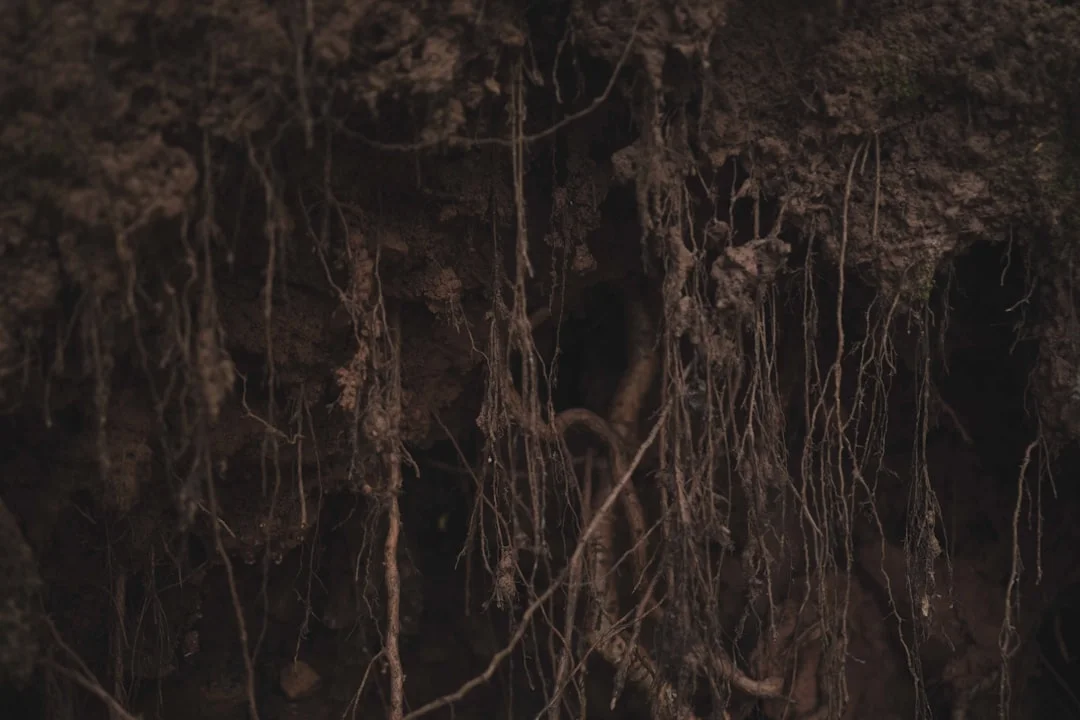
The Root Chakra and Saturn: Grounding in Being
The first energy center, the root chakra (Muladhara), is considered in the yogic tradition to be the seat of our survival instinct, our sense of security, and our connection to the earth. It is associated with the color red, the element of earth, and the most fundamental questions of life: Am I safe? Do I have enough? Do I belong?
In traditional chakra-astrology correspondences, the root chakra is often associated with the planet Saturn—and sometimes with Mars. Astrologically, Saturn symbolizes structure, boundaries, discipline, and the path of learning through responsibility. According to this tradition, people for whom Saturn plays a prominent role in their birth chart may have a special connection to themes of security, building a foundation, and stability.
Some people who explore this chakra-zodiac connection report that the idea helps them see Saturn-related challenges in their lives not as obstacles, but as invitations to become more deeply rooted within themselves. Perhaps you’d like to take a moment to reflect: How stable does your inner foundation feel right now?
Sacral Chakra and Venus: The Flow of Joy and Connection
The second chakra, Svadhisthana (Sacral Chakra), is associated with the element of water and symbolizes emotions, creativity, pleasure, and the ability to connect—especially in intimate relationships. It is the center of flow, creativity, and the joy of life.
In the esoteric astrology-chakra tradition, this center is often associated with Venus, the planet of beauty, love, sensuality, and aesthetic experience. According to classical astrological understanding, Venus governs the Taurus side (pleasure, the body, stability) and the Libra side (relationships, harmony, balance) of human experience.
The connection seems obvious: Those with a strongly emphasized Venus in their birth chart might, by this analogy, possess a natural receptivity to the qualities of the sacral chakra—a tendency toward sensual perception, creative expression, and deep relational experiences. Conversely, engaging with the sacral chakra—for example, through movement, creative expression, or mindful physical contact—can be a way for many people to experience greater flow and joy in life. Research in the field of positive psychology—such as Csikszentmihalyi’s (1990) concept of “flow”—suggests that creative, self-forgetful activity can promote subjective well-being—even if this holds true independently of the chakra model.
The Solar Plexus Chakra, Mars, and the Sun: Will and Identity
The third energy center, Manipura (Solar Plexus Chakra), is associated with fire, the color yellow, and the principle of personal power. It is about self-confidence, willpower, assertiveness, and the feeling of being able to actively shape the direction of one’s own life.
Traditional systems of correspondence often assign two astrological principles to this chakra: Mars (drive, courage, energy, initiative) and the Sun (identity, life force, the core of the self). This dual association makes symbolic sense: The solar plexus chakra unites both the fiery, action-oriented energy of Mars and the radiant self-assurance of the Sun.
In a birth chart, the positions of the Sun and Mars play a central role—they provide insights into how a person expresses their life energy and where they might encounter obstacles in accessing their own power. Some people who are familiar with doubts about their own worth or with difficulties setting boundaries report that exploring the solar plexus chakra has been meaningful for them—though professional support through therapy or coaching can be an important complement and is not a substitute for it here.
A Note on Self-Compassion Research
In this context, Neff’s (2003) research on self-compassion is particularly interesting: It suggests that treating oneself with kindness—rather than self-criticism—may be associated with more stable self-esteem in the long term. Perhaps this can be seen as a gentle invitation to nourish the inner “fire” of the solar plexus not through self-flagellation, but through compassion.
The Heart Chakra, Venus, and Jupiter: The Center of Love
The fourth chakra, Anahata (heart chakra), is considered the center of the seven-chakra system and a bridge between the lower chakras, which are more closely tied to the physical body, and the upper chakras, which are more spiritual in nature. It represents unconditional love, compassion, openness, and the ability to both give and receive.
In chakra-astrology correspondences, we often encounter Venus here once again—this time in her capacity as the principle of pure affection beyond sensuality—as well as Jupiter, the planet of generosity, growth, and trust in life. While Venus might reflect one’s capacity for personal love, Jupiter symbolizes the expansion of this quality into the universal realm.
Exploring the heart chakra touches on profound questions: How easy is it for me to accept myself? Can I receive care without feeling uncomfortable? Researcher Brené Brown has suggested in numerous studies (e.g., Brown, 2010) has suggested that the capacity for vulnerability may be closely linked to the experience of genuine connection—an observation that finds a familiar echo in chakra theory, even though the two systems speak different languages.

Meaningful Analogies & Narrative Identity Symbolic systems, such as the connection between planets and chakras, can serve as inner maps—not as rules, but as invitations to self-reflection. As McAdams (2001) suggests in his research on narrative identity, embedding personal experiences in meaningful images and stories can help develop a deeper sense of coherence and self-understanding.
Throat and Third Eye Chakras: Mercury, the Moon, and the Inner Voice
The fifth energy center, Vishuddha (Throat Chakra), is associated with the element of ether and symbolizes communication, expression, truthfulness, and the ability to convey one’s inner truth to the outside world. It is the center of the voice—both literally and figuratively.
In the esoteric astrology-chakra tradition, Mercury is primarily associated with this center—the messenger of the gods, the planet of communication, thought, learning, and expression. People with a prominent Mercury in their horoscope may therefore have a natural connection to this center: a joy in formulating ideas, communicating, asking questions, and organizing their thoughts. At the same time, many people are familiar with the feeling of thinking things they don’t dare to say—an experience traditionally associated with a blocked throat chakra.
The Third Eye Chakra and the Moon
The sixth chakra, Ajna (the brow chakra or “third eye”), is considered the seat of intuition, imagination, and inner wisdom. In some systems of correspondence, we find the Moon associated with this chakra—the principle of the unconscious, the inner world, dreams, and subtle perception. In other systems, Ajna is also associated with Neptune, the planet of the transcendent, the dissolution of boundaries, and spiritual aspiration.
It might be interesting to look at your own Moon in your horoscope from this perspective: In which sign is it, and what inner quality of perception might that reflect? Perhaps this will reveal a resonance with what you know about your intuition and your inner experience—or even a tension that invites you to explore further.

The Crown Chakra and Astrological Energy Centers: Transcendence and Neptune
The seventh and final energy center in the classical system, Sahasrara (Crown Chakra), is symbolically situated at the crown of the head and is considered the point of connection between individual consciousness and a greater whole—whatever one may choose to call this greater whole: the universe, silence, the ineffable.
In chakra-astrology systems, the crown chakra is often associated with Neptune or Uranus—planets that are regarded in modern astrology as transpersonal, collective forces. Neptune represents the dissolution of boundaries, spiritual longing, compassion on a grand scale, and the experience of connectedness beyond the ego. Uranus, on the other hand, symbolizes awakening, sudden insight, the breaking of old patterns, and the new that is breaking through.
People who have experienced profound moments of stillness or oneness in their spiritual practice—whether through meditation, prayer, connecting with nature, or mindful silence—may recognize what the crown chakra points to. Whether or not one chooses to interpret these experiences astrologically: they are among the most profound human moments. Research on meditation and mindfulness practices, such as the reviews by Kabat-Zinn (2003), suggests that regular practice of stillness may be associated with greater inner balance and a deeper sense of meaning.
Your Birth Chart as a Personal Chakra Guide
Now that we’ve explored the seven chakras and their astrological correspondences, an obvious question arises: What might this look like for you personally? That is the true strength of the connection between astrology and energy centers—it doesn’t stop at general correspondences, but invites you to use your own birth chart as a personal mirror.
A birth chart reveals which planets are particularly emphasized—for example, through their positions at the angles (Ascendant, Midheaven), through clusters in certain signs, or through prominent aspects. In the tradition described here, these emphases could provide clues as to which chakras might be particularly vibrant—or perhaps particularly challenging—in your life.
Some examples for guidance
- An emphasized Saturn could indicate an intense connection to the root chakra—possible themes: security, structure, and building an inner foundation.
- A strong Venus could invigorate the sacral and heart chakras—possible qualities: sensuality, creativity, the ability to connect, a sense of beauty.
- A prominent Mercury could particularly resonate with the throat chakra—possible themes: communication, expression, finding one’s own voice.
- A strong Moon could touch the third eye chakra—possible qualities: intuition, inner imagery, sensitivity, and the ability to sense moods.
These associations are meant as suggestions, not as fixed rules. You know yourself best—and perhaps you’ll feel a connection with some points, but not with others. Both are perfectly fine.
Chakras, Astrology, and Well-Being: What the Research Says
It would be dishonest to conclude without making one thing clear: Neither the chakra model nor astrology has been empirically proven in the strict scientific sense. To date, there are no randomized controlled studies that would show that planets have a causal effect on human energy centers. This is important to know—and it does not necessarily diminish the potential value of these systems.
For what research does suggest is the value of self-reflection, symbolic thinking, and meaningful narratives. As psychologist Dan McAdams (2001) describes in his work on narrative identity, telling and understanding one’s own story through meaningful imagery can be an important part of psychological well-being. The chakra model and astrology offer such imagery—for some people, they can prove profoundly helpful; for others, less so. Neither system is a substitute for professional psychological or medical care.
What we’d like to offer here is an invitation: Use these symbols as tools for self-reflection. Ask yourself whether an image, a planet, or a chakra resonates with you—and if so, what that might reveal about your inner world. This kind of curious self-observation, which mindfulness research (Kabat-Zinn, 2003) describes as valuable, can be a gentle path to greater self-knowledge.
Your Personal Insight: The Free Star Profile
If the connection between chakras and your birth chart has piqued your curiosity and you’d like to explore your own personal connection to these energy centers, then our free Star Profile could be a great next step. Based on your birth data, we’ll show you which astrological principles might be particularly prominent in your life—and how you can use this information as an invitation to self-discovery.
It’s not a prediction or a judgment—it’s a mirror. An image you can look at, question, and interpret for yourself. Perhaps you’ll find something in it that you’ve long sensed but haven’t yet been able to put into words.
And perhaps that is precisely the most beautiful moment that the chakras and astrology can offer together: the quiet realization that what stirs within you has a name—and that you are not alone in this.
Your Personalized Star Chart
The star chart captures the sky at the time of your birth—a personal starting point for connecting astrology with your energy centers.
Your daily companion for personal growth
With the 7zen app, you'll receive daily coaching tips, guided breathing exercises, and personal reflections—all based on your individual profile.
Is there scientific evidence for the connections between planets and chakras?
No—the association of planets with chakras stems from traditional systems of correspondence in esoteric astrology and is not a causally proven relationship based on scientific evidence. These are meaningful analogies from a spiritual tradition that can serve as tools for self-reflection but do not make empirically verifiable statements about physical relationships. Those who use these systems do so with an awareness of their symbolic nature.
Which planet corresponds to which chakra?
In common chakra-astrology correspondences, the following associations are described: Root Chakra – Saturn (sometimes also Mars); Sacral Chakra – Venus; Solar Plexus Chakra – Mars and the Sun; Heart Chakra – Venus and Jupiter; Throat Chakra – Mercury; Third Eye Chakra – Moon (or Neptune); Crown Chakra – Neptune or Uranus. These correspondences are not uniform—different traditions and authors may use varying systems.
Can I use my birth chart to better understand my chakras?
This is certainly one possibility that some people find enriching. If you know which planets are particularly prominent in your horoscope, you can use traditional associations to explore whether certain chakra themes might play a special role in your life. This is neither a guarantee nor a diagnosis—but rather an invitation to self-reflection. Our free Star Profile can be a helpful starting point for this.
What does the zodiac sign have to do with the chakras?
In the chakra-zodiac system, not only planets but also the twelve signs of the zodiac are associated with specific energy centers—often through the assignment of signs to planets (known as “rulership”). For example, Taurus is associated with Venus and thus with the sacral chakra, while Capricorn is associated with Saturn and thus with the root chakra. These connections can offer an additional layer of self-reflection when one considers their own Sun, Moon, or Ascendant sign in relation to the chakras.
Does studying chakras and astrology replace therapy or medical care?
No, absolutely not. Chakra work and astrology are spiritual and reflective practices that cannot and should not replace professional therapeutic, psychological, or medical care. If you are facing stressful life situations or suffering from mental or physical health issues, it is important to seek out qualified professionals. The systems described here can serve as complementary tools for self-exploration—as a supplement, not a substitute.
How can I get started exploring astrology and chakras for myself in a practical way?
A gentle starting point could be: Take a look at which planets are particularly emphasized in your birth chart (e.g., through frequent aspects or a position on the ascendant). Then look up which chakra that planet is traditionally associated with—and take some time to quietly reflect on whether the described themes play a role in your life. You don’t have to believe or prove anything—simply reflecting and observing is enough. Our free star profile on 7zen gives you a good foundation for exactly this step.