Changing habits: The neuroscience behind sustainable change
The 21-day myth has been disproved - real habit change takes an average of 66 days. What neuroplasticity, habit loops and the Fogg model really teach us.
“It takes 21 days to form a new habit.” This quote, mistakenly attributed to a plastic surgeon from the 1960s, is one of the most persistent myths in self-help literature. The reality is more complex—but also more hopeful—than many people realize.
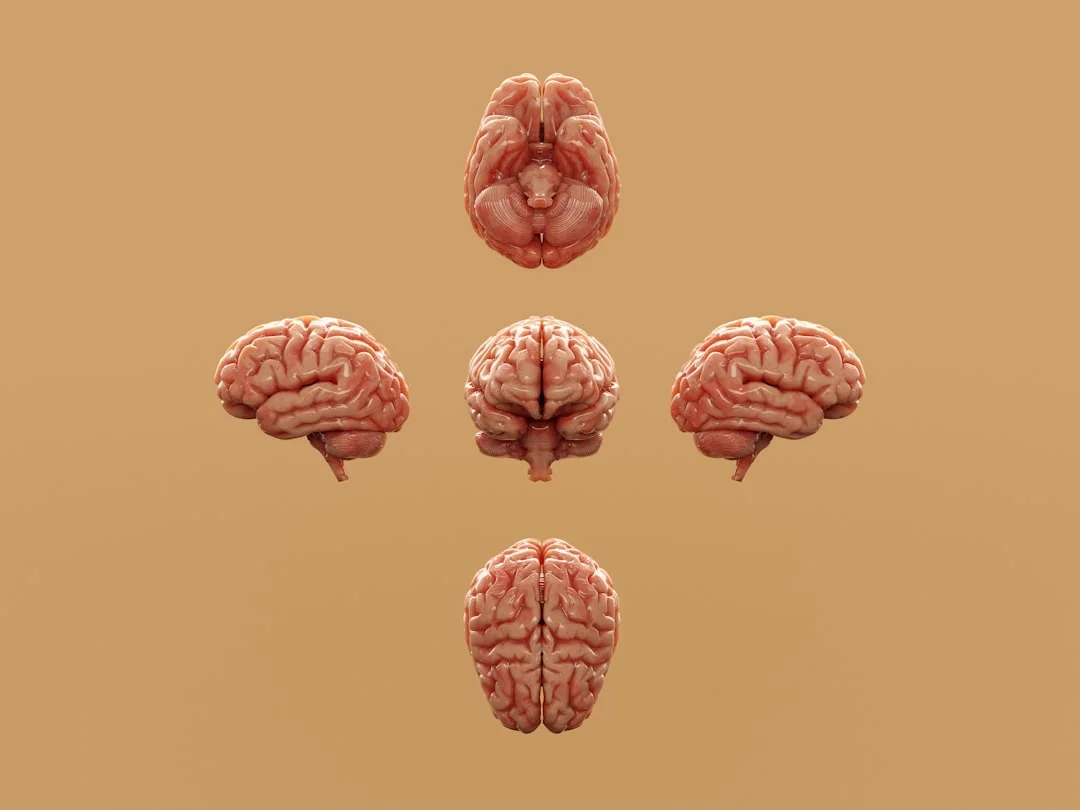
The neuroscience of the past two decades has revolutionized our understanding of habits. We now know that the brain is neuroplastic—it shapes itself throughout our lives through our experiences and behaviors. And we have precise models that explain how habits form, why they are so persistent, and how we can change them for the long term.
Neuroplasticity — The Brain Continues to Develop Throughout Life
As recently as the 1990s, many neuroscientists believed that the adult brain was essentially “finished.” Eleanor Maguire and colleagues (2000, Proceedings of the National Academy of Sciences) spectacularly disproved this: They showed that London taxi drivers—who navigate the city’s complex street network for years—have a significantly enlarged hippocampus (the brain region responsible for spatial navigation) compared to control subjects.
Further studies confirmed this: Musicians have enlarged areas for motor skills and hearing, while meditators show a thicker cerebral cortex in attention-related regions (Lazar et al., 2005, NeuroReport). The brain is not a static organ—it is a constantly reorganizing network.
For changing habits, this means: Every time you repeat a new behavior, you strengthen the corresponding neural connections—and weaken the old ones. It is a gradual process, not an on-off switch. But it works. Reliably.
The Habit Loop — How Habits Work
Wendy Wood (University of Southern California), one of the world’s leading habit researchers, estimates that about 43% of our daily actions are habit-driven—we perform them automatically without consciously thinking about them.
The mechanism behind this is the Habit Loop, which Charles Duhigg (based on research by MIT neuroscientists Ann Graybiel and colleagues) popularized:
- Cue — A signal from the environment that triggers the habit
- Routine (Behavior) — The automatic action itself
- Reward — The positive feeling that reinforces the behavior
The key point: The cue and the reward usually remain the same—only the routine in between can be changed. A smoker who smokes a cigarette (routine) when stressed (cue) and feels relaxed afterward (reward) must find a different routine that responds to the same cue and provides a similar reward—e.g., breathing exercises or a short walk.
66 Days, Not 21 — The Lally Study
Phillippa Lally and colleagues (University College London, 2010, European Journal of Social Psychology) conducted the most thorough study to date on habit formation. Ninety-six participants each chose a new habit and documented daily how automatic the behavior felt.
Result: On average, it took 66 days for a behavior to become automatic. The range, however, was enormous: from 18 to 254 days, depending on the complexity of the behavior and the individual.
Two other key findings from the study: First, automation followed an asymptotic curve—the greatest progress occurs in the first few weeks. Second—and this is particularly encouraging—an occasional slip-up did not significantly harm the overall process. You don’t have to be perfect to establish a habit.
The Fogg Behavior Model — Behavior = Motivation × Ability × Prompt
BJ Fogg (Stanford University) developed one of the most elegant models in behavioral science: B = MAP (Behavior = Motivation × Ability × Prompt).
For a behavior to occur, three conditions must be met simultaneously:
- Motivation — You want to do it
- Ability — You can do it (it’s easy enough)
- Prompt — Something reminds you
Fogg’s revolutionary insight: Instead of boosting motivation (which is hard), make the behavior easier. His “Tiny Habits” approach (Stanford Behavior Design Lab) starts with absurdly small behaviors: Not “meditate for 30 minutes,” but “take one conscious breath.” Not “go for a jog every day,” but “put on your running shoes.”
Research shows: These micro-habits create a momentum of success. The good feeling after the tiny success motivates you to do more—and the behavior grows organically.
Identity-based habits — “I am someone who...”
In Atomic Habits, James Clear builds on the research of Daphna Oyserman (USC), who developed the concept of identity-based motivation. Her research shows that people act more consistently when they view a behavior as part of their identity, not just as a goal.
The difference:
- Goal-based: “I want to lose 10 kg” → Motivation ends when the goal is achieved (or abandoned)
- Identity-based: “I am someone who takes care of my body” → The behavior becomes an expression of who you are
Clear puts it this way: Every action is a vote for the person you want to become. You don’t have to be perfect—you just have to vote for your desired identity more often than against it.
Relapses are normal — The Transtheoretical Model
Prochaska and DiClemente (1983) demonstrated with their Transtheoretical Model of Behavior Change: Change does not proceed linearly, but in phases—and relapses are a normal, expected part of the process.
The five stages: Precontemplation → Contemplation → Preparation → Action → Maintenance. A relapse does not take you back to the beginning, but to an earlier stage—with the knowledge and experience you have gained.
This understanding is liberating: A relapse is not a failure—it is a data point. It shows which cue was too strong, which strategy was insufficient, and which situation requires more preparation. Those who understand this do not give up, but adapt.
Summary Changing habits is not a battle of willpower - it's applied neuroscience. Use Tiny Habits as a starting point, design your environment to fit, connect new behaviors to your identity and view relapses as learning opportunities. Your brain is shaped by what you do regularly - use this power consciously.
Sources & Further Reading
- Stanford Behavior Design Lab — BJ Fogg
- Society for Neuroscience — Neuroplasticity
- Lally, P. et al. (2010). How Are Habits Formed: Modelling Habit Formation in the Real World. European Journal of Social Psychology, 40(6).
- Maguire, E. A. et al. (2000). Navigation-Related Structural Change in the Hippocampi of Taxi Drivers. PNAS, 97(8).
- Wood, W. & Rünger, D. (2016). Psychology of Habit. Annual Review of Psychology, 67.
- Prochaska, J. O. & DiClemente, C. C. (1983). Stages and Processes of Self-Change in Smoking. Journal of Consulting and Clinical Psychology, 51(3).