EFT for anxiety disorders: What current studies show
Tapping acupressure for anxiety - hocus-pocus or science? What current EFT studies really prove.

Imagine gently tapping certain points on your body with two fingers—and your anxiety subsiding. Sound like some esoteric trick? In fact, scientific evidence has been mounting in recent years showing that EFT for anxiety is more than just a placebo effect. Emotional Freedom Techniques (EFT) combine elements of cognitive behavioral therapy with acupressure points—and are thus increasingly becoming the focus of clinical research. This article takes a closer look at current studies, explains how EFT works, and shows you how you can use it yourself.
What exactly are Emotional Freedom Techniques?
EFT was developed in the 1990s by American engineer Gary Craig based on earlier approaches in energy psychology. The method combines two worlds: on the one hand, there is cognitive restructuring—that is, the conscious identification and processing of distressing thoughts and feelings. On the other hand, there is acupressure, in which specific meridian points on the body (a theory from traditional Chinese medicine) are tapped with the fingers.
The basic premise: Emotional stress arises when the flow of energy in the body is disrupted. By simultaneously focusing on a problem and tapping the corresponding points, this disruption is intended to be resolved. Whether the energetic model is accurate is scientifically disputed—but the effect itself can increasingly be measured. And that is exactly what matters here.
A typical EFT session begins with a so-called setup statement—for example: “Even though I have this fear of driving, I fully and unconditionally accept myself.” Subsequently, several acupressure points are tapped in sequence while focusing inwardly on the problem. This pattern is repeated several times until measurable relief is achieved.

EFT Studies: What the Research on Anxiety Really Says
The most important review on the topic of EFT and anxiety was conducted by Church and colleagues in 2013. In their meta-analysis, they evaluated 14 controlled studies and arrived at a clear conclusion: EFT demonstrated a significant and clinically relevant reduction in anxiety symptoms compared to control conditions. The effect sizes were in the moderate to high range—a result that is quite noteworthy in psychotherapy research.
As Church et al. (2013) emphasized, this effect could not be explained solely by the placebo effect or the general attention associated with treatment. Particularly interesting: In several studies, EFT performed comparably well to recognized standard therapies—in a fraction of the treatment time.
For skeptics, it is important to note that the analyzed studies followed the gold standard of research—randomized controlled trials with comparison groups, standardized measurement tools, and clear inclusion criteria. This fundamentally distinguishes these findings from mere anecdotal reports.
Cortisol and the Body: The Biological Aspect of EFT
One of the most compelling arguments for the effectiveness of EFT comes from research at the biological level. In a systematic review, Clond (2016) investigated the physiological changes triggered by EFT treatments—and the results are remarkable.
The focus is on the stress hormone cortisol. In several studies summarized by Clond (2016), a significant reduction in blood cortisol levels was observed following EFT sessions—compared to control groups that received no treatment or participated in a talk-only intervention. Cortisol is considered one of the most reliable biological markers for stress and anxiety; its reduction is thus a concrete, objectively measurable indication of effectiveness.
Furthermore, Clond (2016) reports changes in heart rate variability—a measure of the flexibility of the autonomic nervous system. Higher heart rate variability is associated with better stress management, lower anxiety, and improved overall well-being. EFT thus appears to work not only on the level of thoughts and emotions but also to actually intervene in the body’s stress physiology.
For anyone wondering how this is possible: Current neurobiological explanatory models suggest that the rhythmic tapping of acupressure points has a calming effect on the amygdala—the part of the brain responsible for processing fear and threatening stimuli. When the amygdala is less activated, the stress response of the entire organism decreases.
Study findings: Bach et al. (2019) In a randomized controlled trial by Bach et al. (2019), EFT showed a clinically significant reduction in anxiety symptoms after just four sessions - comparable to established short-term cognitive therapies. The effect remained stable even six months after the end of treatment.
Bach et al. 2019: One of the most rigorous EFT studies
Anyone who wants to seriously examine the effectiveness of Emotional Freedom Techniques cannot ignore the 2019 study by Bach and colleagues. It is a carefully conducted randomized controlled trial (RCT)—the highest standard of quality in clinical research.
Participants diagnosed with anxiety disorders were randomly assigned to either an EFT treatment group or a waiting-list control group. The EFT group received four structured 60-minute sessions. Standardized anxiety scales, depressive symptoms, and measures of general psychological well-being were assessed—before treatment, immediately afterward, and six months later.
The results from Bach et al. (2019) are impressive: The EFT group showed significant improvements across all measured dimensions, while the control group exhibited no comparable changes. Crucially, the effect was sustained. Six months after the end of treatment, the improvements were still fully present—an indication that EFT not only provides short-term relief but may also trigger deeper learning processes in the nervous system.
Of course, the study has its limitations: the sample sizes were relatively small, and an active control condition (i.e., a different therapeutic approach instead of a waiting list) was lacking. Nevertheless, it provides one of the most robust pieces of evidence to date for the effectiveness of EFT in treating anxiety disorders in a clinical setting.
Tapping Therapy for Anxiety Disorders: Who Is EFT Suitable For?
Research to date on tapping for anxiety disorders has examined various forms of anxiety: generalized anxiety disorder, phobias, post-traumatic stress disorder, test anxiety, and social anxiety. Overall, it can be said that EFT appears to be helpful for a wide range of anxiety-related problems—from everyday worries to clinically diagnosed anxiety disorders.
The effects are particularly well-documented for specific phobias (e.g., fear of flying, fear of heights) and for mild to moderate generalized anxiety disorders. For severe or complex conditions—such as chronic trauma or severe panic disorders with significant impairment—EFT should always be considered a complementary approach, not a substitute for professional psychotherapy.
EFT is also ideal as a self-help technique: after a brief introduction, most people can apply the basic technique on their own—at home, in the office, or on the go. This makes it particularly valuable for anyone who wants to intervene quickly and easily in stressful situations.

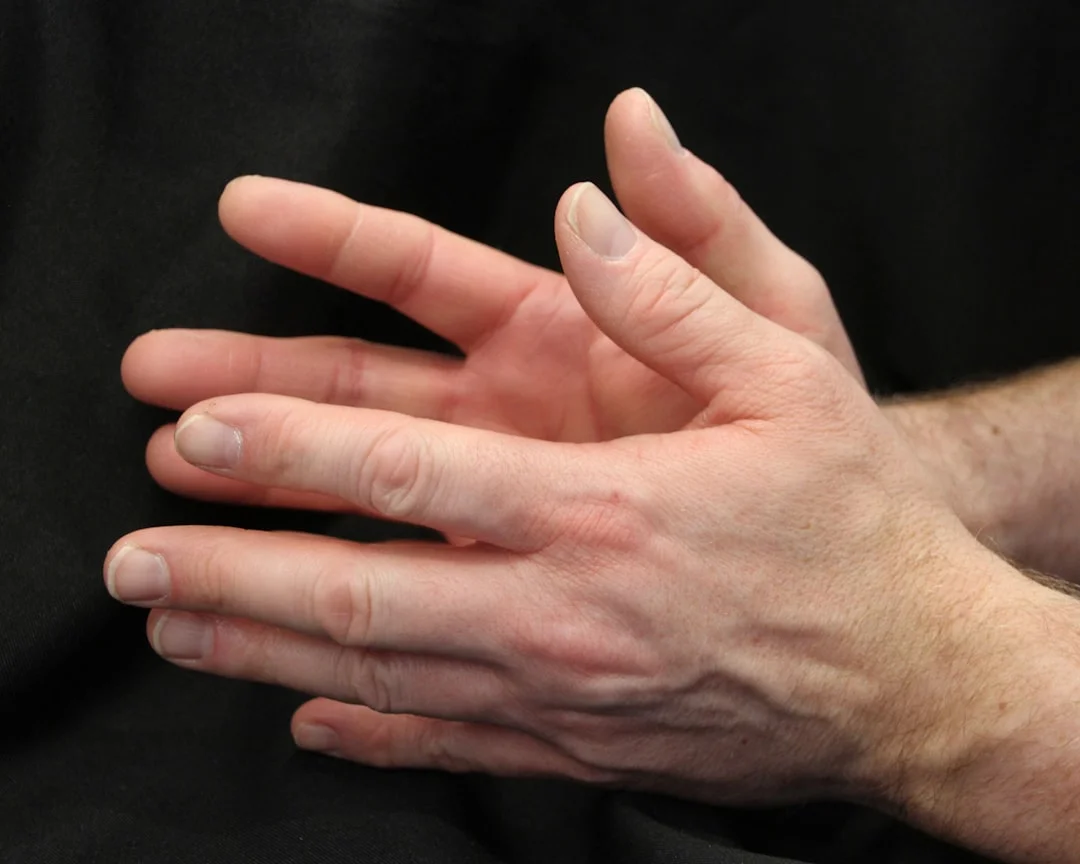
EFT Tapping Points: A Brief Overview
Before we delve deeper into practical application, it’s worth taking a look at the anatomical basis. EFT works with a fixed sequence of tapping points located along traditional acupuncture meridians. Unlike acupuncture, no needles are used—only gentle finger pressure or light tapping with two to four fingers.
The most common points in the EFT protocol are:
- Edge of the Hand Point (KC): The fleshy outer side of the hand, between the little finger and the wrist—this is where each sequence begins with the setup statement.
- Crown (TH): Top of the head, in the center.
- Eyebrow Start (EB): The inner end of the eyebrow, near the bridge of the nose.
- Outer corner of the eye (SE): Next to the outer corner of the eye on the bone.
- Under the Eye (UE): On the cheekbone, directly below the pupil.
- Under the Nose (UN): Between the nose and the upper lip.
- Chin dimple (Ch): In the indentation between the lower lip and the chin.
- Collarbone point (CB): Just below the collarbone, next to the sternum.
- Under the armpit (UA): About a hand’s width below the armpit, on the side of the torso.
These points are tapped in a fixed order—usually five to seven times per point—while you focus internally on the stressful feeling. The entire sequence usually takes only two to three minutes.
Critical Perspectives: What EFT Research Has Yet to Prove
A serious presentation of EFT research also requires an honest look at its limitations. In fact, there are critical voices within the scientific community—and they deserve to be heard.
A common objection: Many EFT studies have small sample sizes and lack active control conditions. This means it is not always clear whether the improvements are truly due to the tapping—or to other factors such as relaxation, mindfulness, breath regulation, or the calming effect of focusing on distressing content in a safe setting.
Some researchers have also shown that tapping on random body locations (i.e., not on the classic acupressure points) can produce effects similar to those of the classic EFT protocol. This calls into question the specific meridian theory without refuting the overall effectiveness of the method.
What remains: The most robust studies—including the work by Church et al. (2013), Clond (2016), and Bach et al. (2019)—suggest that EFT is more effective for anxiety than no treatment and comparable to other recognized brief interventions. Whether this occurs specifically through the tapping points or through a combined effect of multiple factors remains a subject of ongoing research.
This openness is not a weakness—it is scientific integrity. And it is a good reason neither to uncritically glorify EFT nor to dismiss it prematurely.
Try EFT for Yourself: A Simple Exercise for Acute Anxiety
Theory is good—but most people who have read this far also want to know: What does it actually feel like? That’s why you’ll find a brief guide here for a first EFT sequence that you can try yourself at any time.
Step 1: Identify and assess the problem
Take a moment to tune into the anxiety or stress you’re feeling right now. Assign it a number on a scale from 0 (no stress) to 10 (maximum stress). In EFT terminology, this value is called the SUDS score (Subjective Units of Distress Scale).
Step 2: The Setup Statement
Tap rhythmically with four fingers on the edge of your hand (outer side of the hand) and say aloud or silently three times: “Even though I have [this fear / this stress], I fully accept myself and love myself just as I am.” Honestly adapt the statement to your current situation.
Step 3: The tapping sequence
Now go through all the tapping points listed above in order—from the crown of your head to below your armpit. At each point, tap five to seven times while briefly stating the core issue: e.g., “this fear,” “this pressure,” or “this tension.” Allow all thoughts and feelings that arise to surface—you don’t need to control or suppress anything.
Step 4: Reassess
After completing a full round: Take a deep breath and ask yourself again what your SUDS score is now. Many people report that it drops noticeably after just one round. Repeat the sequence until the distress level has stabilized at 2 or below.
Important Note: This exercise is not a substitute for psychotherapeutic treatment. Professional support is strongly recommended for severe anxiety disorders or trauma.
EFT in Comparison: How Does the Method Stack Up Against Other Approaches?
A valid question is: If there are already well-established methods like cognitive behavioral therapy or EMDR—why do we still need EFT?
The honest answer: EFT does not replace any of these methods. But it has certain characteristics that make it particularly attractive in specific contexts.
Speed: As Bach et al. (2019) demonstrated, as few as four sessions can lead to clinically significant improvements. Traditional behavioral therapies often require 12 to 20 sessions to achieve similar effects—which makes EFT an interesting option as a brief intervention.
Self-efficacy: Unlike many therapeutic methods, EFT can be applied independently after a brief introduction. This strengthens the sense of control and agency—two factors considered particularly effective in anxiety research.
Body integration: EFT combines cognitive and somatic (physical) work. For people for whom talk therapy alone reaches its limits—perhaps because their anxiety is strongly rooted in the body—this holistic approach can make a significant difference.
Low-threshold accessibility: EFT requires no special equipment, no office space, and no appointments. This makes it a valuable addition to a comprehensive self-care repertoire.
Daily impulses for inner peace
The Coaching Cards accompany you through anxious moments with gentle reflection impulses - an anchor in everyday life.
Your daily companion for inner growth
With the 7zen app, you receive daily coaching impulses, guided breathing exercises and personal reflections - all based on your individual profile.
Is EFT scientifically recognized?
EFT is at a stage that could be described as „growing evidence“. Several meta-analyses and randomized controlled trials - including Church et al. (2013), Clond (2016) and Bach et al. (2019) - show significant effects on anxiety and stress. In the USA, the American Psychological Association has not yet formally recognized EFT, but the organization SAMHSA (Substance Abuse and Mental Health Services Administration) lists EFT on its database of evidence-based interventions. In Germany, EFT is not covered by health insurance, but is being used by an increasing number of therapists as a complementary treatment.
Can I use EFT myself with a diagnosed anxiety disorder?
Basically yes - EFT is well suited as a self-help technique for mild to moderate anxiety symptoms. However, in the case of a clinically diagnosed anxiety disorder, EFT should always be used in consultation with a professional (psychotherapist, doctor) - preferably as a supplement to professional treatment, not as the sole therapy. If you are unsure, talk to the person treating you.
How many EFT sessions do I need before I feel an effect?
This varies greatly from person to person. Many people report noticeable relief from a specific issue after the first session. For lasting changes in deeper-rooted anxiety patterns, most EFT practitioners recommend a series of four to eight sessions. Bach et al (2019) demonstrated clinically significant and stable results with just four sessions.
Are there any side effects with EFT?
EFT is generally considered to be a very gentle technique with a low risk profile. Occasionally people report a brief surge of emotional intensity at the beginning of a session - similar to other exposure-based methods. In the case of trauma, reliving distressing memories without professional guidance can be overwhelming. Therefore, in the case of severe trauma or complex mental illness, it is essential to work with a qualified professional.
How does EFT differ from traditional acupuncture?
Both methods are based on the concept of meridians from traditional Chinese medicine. The main difference is that acupuncture uses needles that are inserted by a trained professional. EFT instead uses gentle tapping with the fingers and explicitly combines bodywork with a cognitive component - focusing on stressful thoughts and feelings. EFT can also be used entirely on your own.
Where can I find qualified EFT therapists in Germany?
In Germany, there are several professional associations and training organizations that list therapists with EFT training - including the DGEP (German Society for Energetic Psychology) and the AAMET-accredited provider. When searching, look for solid basic training in psychotherapy or counseling in addition to EFT certification. International directories such as that of EFT International also provide initial guidance.
EFT is not a miracle cure—but it is not hocus-pocus either. Research from the past two decades, summarized in review articles such as that by Church et al. (2013), substantiated by biological findings such as those in Clond (2016), and corroborated by rigorous clinical studies such as those by Bach et al. (2019), paints a clear picture: EFT works for anxiety—reliably, quickly, and with surprisingly stable long-term effects.
The exact mechanisms of action have not yet been fully deciphered. But that applies to many established therapeutic methods as well. What matters is this: people suffer less. Their cortisol levels drop. Their quality of life improves.
Your action step for today: Choose a specific anxiety or stress issue from your daily life—something that’s been on your mind lately. Rate its intensity on a scale of 0 to 10. Then simply try out the EFT sequence from this article. Not with the expectation of solving everything immediately—but with curiosity and an open mind. Your nervous system will thank you for it.