Meditation for anxiety and depression: how mindfulness helps
Can meditation really help against anxiety and depression? What the research says - and how you can start today.

Do you know that feeling of waking up in the morning and feeling an invisible weight settle on your chest—even before the day has even begun? Or the whirlwind of thoughts that spins and spins at night, even though all you really want to do is sleep? Millions of people experience exactly that every day. Meditation for anxiety and inner heaviness is not a new concept—but what sets us apart from previous generations today is the growing scientific understanding of why it works.
In this article, we take the time to look at the topic honestly and thoroughly: What does research really say about meditation and depression? Which forms of mindfulness help with which symptoms? And where are the limits—in other words, when is more needed than just a daily meditation routine? Julia, Lisa, and Laura from the 7zen editorial team collaborated on this article because we believe: You deserve honest answers, not quick promises.
What happens in your brain when you experience anxiety and depression?
Before we talk about meditation, it’s worth taking a brief look inside. Anxiety disorders and depression are not signs of weakness—they are the result of complex interactions between neurobiology, life experiences, and current stressors. In anxiety, the brain’s so-called alarm system, the amygdala, is chronically overactivated. It reacts to perceived threats—even if they exist only in the mind—with a stress response: a racing heart, muscle tension, and a flood of thoughts.
Depression follows a different pattern: the prefrontal cortex, responsible for rational judgment and emotional regulation, loses its influence. At the same time, the so-called default mode network is overactive—the part of the brain responsible for rumination and self-absorption. One keeps dwelling on past mistakes, imagines bleak futures, and finds no way out of the thought loop.
Mindfulness and mental health are so closely linked because meditation targets precisely these neural patterns: It trains the mind to perceive thoughts for what they are—fleeting mental events, not facts about the world or about yourself.
What the Research Says About Meditation for Anxiety
The question of whether meditation really helps with anxiety is no longer purely philosophical. One of the most significant reviews on this topic—conducted by Goyal and colleagues and published in the renowned journal JAMA Internal Medicine—analyzed over 18,000 studies and found moderate evidence that mindfulness meditation can significantly reduce symptoms of anxiety, depression, and pain.
What does “moderate evidence” mean in scientific terms? It means: The effect is real and reproducible, but it is not a panacea. Meditation works—and demonstrably so—but it unfolds its full potential especially when practiced regularly and when embedded in broader health behaviors.
Particularly impressive are the findings from a study published in Nature Mental Health in 2024: It examined the long-term effects of mindfulness practices and found that people who meditated regularly over several months not only showed fewer anxiety symptoms in the short term but also developed lasting improvements in emotional resilience. Mindfulness against anxiety is therefore not a sprint, but a marathon—with lasting results.
MBCT: The Method That Prevents Relapses
MBCT—Mindfulness-Based Cognitive Therapy—is currently one of the most thoroughly researched treatment methods for recurrent depression. It combines classic cognitive behavioral therapy with systematic mindfulness exercises and was originally developed by psychologists Zindel Segal, Mark Williams, and John Teasdale.
The British National Institute for Health and Care Excellence (NICE) officially recommends MBCT as a treatment option for people who have already experienced three or more depressive episodes. The reason: MBCT has been shown to reduce the risk of relapse by up to 50 percent in this group. That’s a figure that really catches your attention.
How does MBCT work? At its core, it’s about recognizing early on when the typical thought patterns of depression start creeping back in—self-criticism, hopelessness, withdrawal. Instead of letting these thoughts carry them away, participants learn to maintain a friendly distance. Meditation and the mind come together here in a very practical way: The thoughts don’t disappear—but their power over actions and feelings diminishes.
MBCT typically takes place in an eight-week group program and is led by trained therapists. It is not a self-help app, but a structured clinical program—and that is precisely what makes it so effective.
Impulse sentence for your practice "There is a space between stimulus and reaction. In this space lies our freedom and our possibility for development." - Viktor Frankl, psychiatrist and author
Meditation and Depression: Which Forms Are Most Helpful
Not every form of meditation is equally suitable for every person and every situation. This is not a flaw in the concept, but rather an invitation to take a closer look. Here are the approaches that have been most thoroughly researched in relation to meditation, depression, and anxiety disorders:
- Breath meditation: The easiest way to get started. Focusing on the breath anchors the mind in the present moment and breaks the cycle of thoughts. Just five minutes a day can have a measurable effect.
- Body scan: In this exercise, attention slowly moves through the body. It is particularly helpful for recognizing physical tension associated with anxiety or depressive heaviness—and promotes gentle body awareness.
- Loving-kindness meditation (Metta): Here, feelings of goodwill are consciously cultivated—first toward oneself, then toward others. Studies show that Metta practices reduce self-critical patterns, which are often central to depression.
- MBSR (Mindfulness-Based Stress Reduction): Jon Kabat-Zinn’s eight-week program is the precursor to MBCT and has also been shown to have significant effects on anxiety and general psychological distress.
- Guided visualizations: For people who initially find silence difficult, guided meditations with gentle narration offer a gentler introduction.
Important: In cases of severe depressive symptoms, meditation can also be challenging at first—because the quiet space allows more room for difficult thoughts. In such cases, it is advisable to start with short sessions and, ideally, to do so under the guidance of a professional.
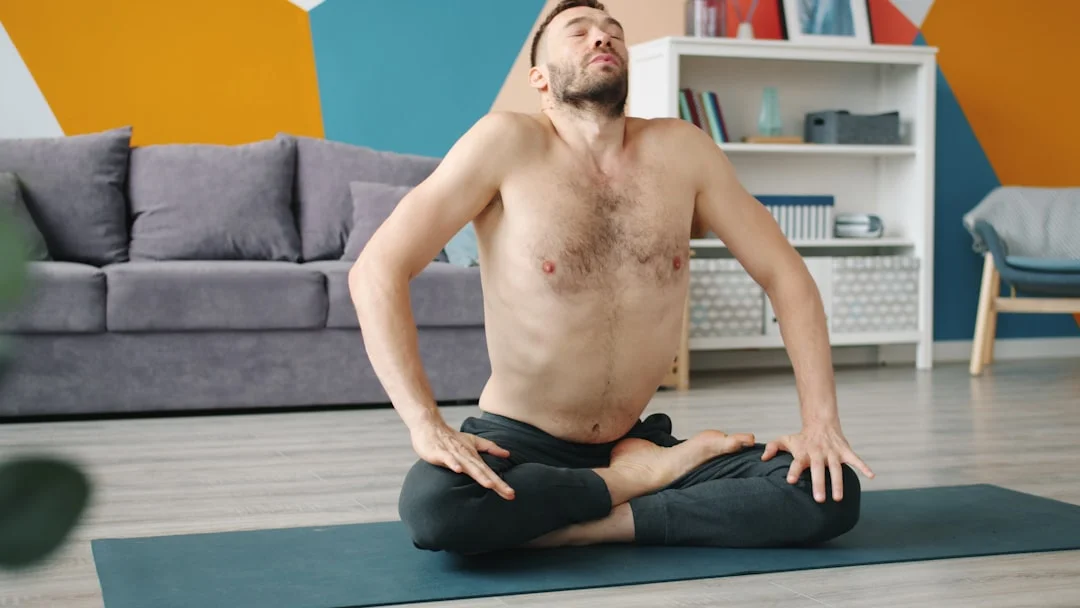
Mindfulness vs. Anxiety: Practical Exercises for Everyday Life
Theory is important—but it doesn’t have any effect on the yoga mat. That’s why we’d like to share three practical exercises with you here that you can try right away. They’re simple, scientifically proven, and require no prior knowledge.
The 5-4-3-2-1 Exercise for Acute Anxiety
This technique comes from trauma therapy and helps you quickly ground yourself during an anxiety attack. Consciously name: 5 things you see – 4 things you hear – 3 things you physically feel – 2 things you smell – 1 thing you taste. This exercise forces the nervous system to return to the present moment and breaks the cycle of anxiety.
Counting your breaths – the simplest form of meditation
Sit comfortably. Breathe in and out calmly. Count as you exhale: one – inhale and exhale twice: two – and so on up to ten. Then start over. If you notice that your mind has wandered: no judgment, just return. This exercise trains exactly what is so central to meditation: the ability to observe without judging.
STOP – the quick break for in between
This four-step exercise from the MBSR program can be used anywhere—at the office, at the supermarket, on your way home:
Stop—pause whatever you’re doing.
Breathe deeply—take a long, conscious breath.
Observe—notice what’s going on inside you right now: thoughts, feelings, bodily sensations—without judging.
Proceed – continue with a little more awareness.
Sounds simple? It is. And that is precisely where its strength lies.

How long does it take for meditation to work?
One of the most common questions we receive at 7zen is: “When will I notice a difference?” The honest answer: It varies from person to person—and depends on several factors.
In the short term, many people show a measurable reduction in stress hormones like cortisol after just a single meditation session. This is a genuine physiological effect, not a placebo. In the medium term—that is, after four to eight weeks of regular practice—changes in the activity of the prefrontal cortex and improved emotional regulation become apparent. In the long term, as the 2024 study in Nature Mental Health shows, regular meditators develop significantly greater psychological resilience.
What does “regularly” mean? Not sitting in silence for two hours a day. Studies show that just 10 to 20 minutes five days a week produces significant effects. What matters is consistency, not the length of each session. A short daily practice is far more effective than an occasional long meditation session.
And here’s something else that surprises many people: meditation is not a state of perfect silence. Thoughts arise—that’s normal; that’s human. The crucial step is to let them come and go without getting lost in them. This letting go takes practice. And with each session, it gets just a little bit easier.
Mindfulness and Mental Health: The Important Boundaries
We want to be clear and direct here—because it matters to you and because it’s the right thing to do: Meditation is a valuable complement, but not a substitute for professional psychiatric or psychotherapeutic treatment.
For mild to moderate anxiety or depressive moods, mindfulness practice can be a key pillar—especially as a complement to therapy or medical care. In cases of severe depression, acute panic attacks, post-traumatic stress disorder, or suicidal thoughts, professional help is not optional but necessary.
There are also situations in which meditation may be contraindicated—such as during acute psychotic episodes or certain forms of dissociation. In these cases, meditation should only be practiced under therapeutic supervision.
When should you seek professional help?
- If anxiety or depressive moods last longer than two weeks and interfere with your daily life
- If you have thoughts of harming yourself
- If you are significantly neglecting your sleep, diet, or social interactions
- If meditation seems to be worsening your symptoms
In Germany, there are numerous low-threshold resources available: the telephone counseling service (0800 111 0 111, free and available 24/7), family doctors’ offices, psychiatric emergency rooms, and the Association of Statutory Health Insurance Physicians for therapy placements. You don’t have to go through this alone.
Mindfulness as an attitude—not just an exercise
A realization that many meditators only come to over time: Mindfulness isn’t an exercise you finish on the mat and then set aside. It’s an attitude toward life—a way of relating to yourself and your experiences.
What does that mean in practice? It means really tasting your food when you eat. It means truly listening in a conversation instead of already preparing your next response. It means not immediately pushing away or analyzing negative feelings, but simply letting them be for a moment.
This mindful attitude in everyday life is no less effective than formal meditation practice—it is its living extension. Mindfulness against anxiety works not only because you meditate daily, but because you learn to deal with your thoughts and feelings differently even off the mat.
A small starting point: Choose an everyday activity—brushing your teeth, your first cup of coffee, the commute to work—and do it mindfully and without distraction this week. Not as a spiritual exercise, but simply as an invitation to truly be present for once.
How to Build a Sustainable Meditation Practice
People who start meditating often follow a typical pattern: At first, motivation is high, and the initial experiences are interesting. After two or three weeks, you hit a plateau—the practice feels less exciting, and everyday life catches up with you. This is where it’s decided whether a habit takes root or not.
Here are the most important strategies for a sustainable practice:
- Set small, realistic goals: Start with five to ten minutes a day. Success motivates more than overwhelming yourself.
- Set a fixed time: In the morning after getting up or in the evening before going to bed—choose a time that fits your rhythm and stick to it.
- Don’t judge: There is no “good” or “bad” meditation. Every session you’ve sat through counts—even if you were distracted most of the time.
- Use guided meditations: German-language apps and audio recordings can be especially helpful in the beginning to make it easier to get started.
- Find a community: Whether it’s a meditation group, an online course, or a circle of friends with similar interests—practicing together significantly boosts your stamina.
And if you take a break for a few days? No problem. Just start again. The next breath is always a new opportunity.
Can meditation cure my anxiety disorder?
Meditation can demonstrably reduce the symptoms of an anxiety disorder and improve quality of life - as numerous scientific studies have shown. However, it is not a substitute for specialist medical or psychotherapeutic treatment, but a valuable addition. In the case of diagnosed anxiety disorders, we recommend planning your meditation practice together with a specialist.
How long should I meditate every day to feel an effect on depression?
Studies show that just 10 to 20 minutes a day, at least five days a week, can have a measurable effect on depressive symptoms. More important than the length of the individual session is the regularity of the practice. Beginners are welcome to start with five minutes and gradually increase the duration.
What is MBCT and who is it suitable for?
MBCT stands for Mindfulness-Based Cognitive Therapy. It is an eight-week, therapeutically supervised program that combines mindfulness exercises with elements of cognitive behavioural therapy. It is particularly suitable for people who have already experienced several episodes of depression and is recommended as a treatment in the UK by the National Institute of Healthcare Excellence (NICE). MBCT usually takes place in groups led by trained professionals.
Can meditation be harmful for severe depression?
In most cases, meditation is safe and helpful. However, in cases of severe depression, silence can sometimes lead to a more intense perception of difficult thoughts and feelings. This is not a failure of the method, but should be taken seriously. Anyone experiencing severe depressive symptoms should only begin meditation in consultation with a specialist - ideally as part of a supervised program such as MBCT.
Do I have to empty my head completely when I meditate?
No - and this is one of the most persistent misconceptions about meditation. Having thoughts is normal and human. The aim of meditation is not to have no thoughts, but to learn to notice thoughts without getting carried away by them. This ability - to become the friendly observer of your own thoughts - is the real core of mindfulness practice.
Which form of meditation is best suited for beginners with anxiety symptoms?
Guided breathing meditations are recommended as an introduction: They are easy to learn, require no prior knowledge and have a proven calming effect on the nervous system. The body scan is also easily accessible for many beginners. Those who quickly become restless in silence can start with short sessions of three to five minutes and slowly increase the duration. It is important to choose a form that feels harmonious and non-threatening.
If you’ve read this far, you may sense that mindfulness is more than just a trend or another wellness exercise. Meditation and the mind are inextricably linked—because we all have a mind that deserves care. Not just when it stumbles, but every day. Quietly, patiently, without fanfare.
At 7zen, we don’t believe in quick fixes. We believe in small, courageous steps—in pausing in a noisy world, in the willingness to treat ourselves with a little more kindness. That is precisely the promise of mindfulness: not perfection, but presence.
Maybe today is the right moment to start. Not tomorrow, not when you have more time—but now. Five minutes. One breath. And then the next.
Your call to action for today: Take five minutes right now—immediately after reading this. Close your eyes, take three deep breaths in and out, and simply observe what you feel. No goal, no judgment. Just you, your breath, and this moment. That is enough.