Meditation against stress: scientifically proven techniques
How meditation really helps combat stress - with scientific evidence, specific techniques and a plan for your everyday life.
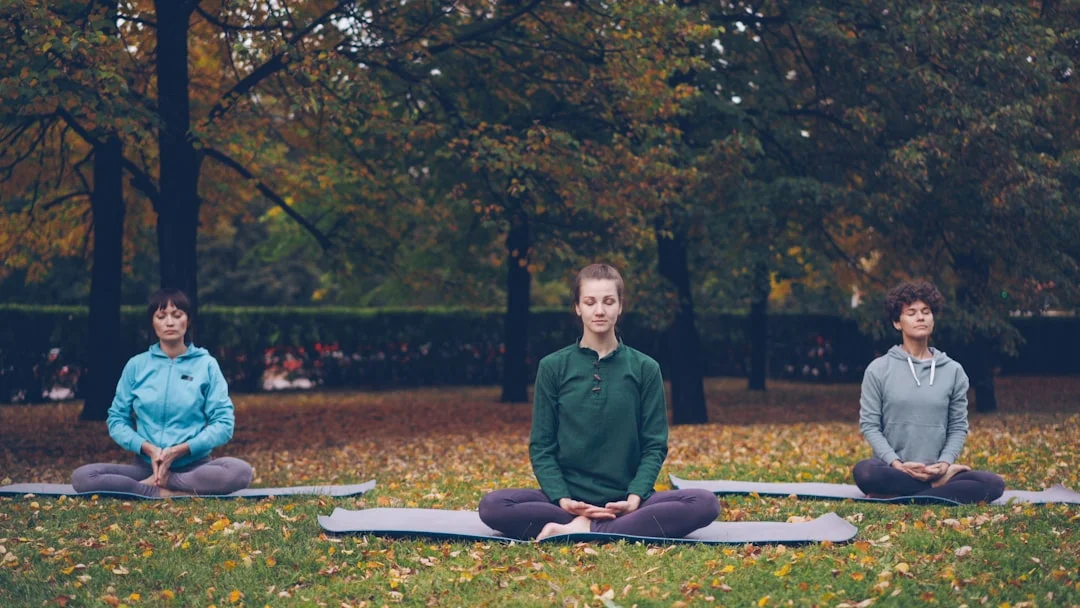
Do you know that feeling when the day hasn’t even really started yet and you already feel exhausted and overwhelmed? When your thoughts are racing, your breathing becomes shallow, and your body is already on edge first thing in the morning? You’re not alone. Stress has become one of the most common burdens of our time—and many people are looking for a solution that actually works. Meditation for stress is no longer a niche, esoteric practice. It is one of the most thoroughly researched methods of stress management—with measurable changes in the brain, the hormonal system, and overall well-being. This article will show you what science knows, which meditation techniques are particularly effective, and how you can start finding inner peace today.
How Stress Affects Your Body and Brain
To understand why meditation is so effective against stress, it’s worth taking a quick look at what stress triggers in us. When we perceive a threatening situation—whether it’s a tight deadline, an everyday conflict, or chronic overload—our nervous system activates the so-called fight-or-flight response. The amygdala, an almond-shaped region deep within the brain, sounds the alarm. Stress hormones like cortisol and adrenaline are released. The heart rate accelerates, muscles tense up, and digestion pauses.
In the short term, this reaction is useful and vital for survival. It becomes a problem when it becomes chronic. Persistently elevated cortisol levels impair the immune system, disrupt sleep, promote anxiety, and can even alter brain structures over the long term. The hippocampus—our center for memory and learning—has been shown to shrink under chronic stress. At the same time, the amygdala becomes overactive and reacts with increasing sensitivity to perceived threats. A vicious cycle emerges from which many people cannot find a way out.
This is exactly where stress reduction through meditation comes in—not as a distraction, but as targeted training for the nervous system and the mind.
What Science Knows About Meditation for Stress Relief
Research over the past few decades has impressively demonstrated the effectiveness of meditation. One of the most influential studies comes from neuroscientist Britta Hölzel and her team at Harvard Medical School. They were able to show that just eight weeks of regular mindfulness meditation leads to measurable structural changes in the brain: gray matter in the hippocampus increased, while the amygdala—our stress alarm center—became smaller and less reactive.
A recent study from 2025, published in the Proceedings of the National Academy of Sciences (PNAS), confirms these findings using modern imaging techniques. Following a structured eight-week meditation program, the researchers observed significant changes in both the amygdala and the hippocampus—regions directly associated with stress processing and emotional regulation.
A large-scale meta-analysis published in Nature Mental Health evaluated dozens of studies and reached a clear conclusion: Regular meditation has been shown to lower cortisol levels in the blood and significantly reduce both physical and psychological stress symptoms. These findings hold true regardless of the practitioners’ age, gender, or prior experience.
Lowering Cortisol Through Mindfulness: How It Works
The stress hormone cortisol is a reliable biological marker of internal tension. It rises during stress, remains elevated during rest if we don’t actively counteract it—and has been shown to decrease through regular meditation practice. But how exactly does meditation affect cortisol levels?
The key lies in the transition from the sympathetic nervous system—responsible for arousal and alertness—to the parasympathetic nervous system, the so-called rest-and-digest system. Meditation specifically activates this calming branch of the nervous system. The vagus nerve, which regulates heart rate, breathing, and digestion, is stimulated. The release of cortisol and adrenaline decreases. At the same time, the production of neurotransmitters such as serotonin and dopamine, which promote well-being and balance, increases.
The key point here is: This effect does not take years of practice to manifest. Even after just a few weeks of regular practice—often after just a single session—a measurable reduction in physiological stress responses can be observed. Lowering cortisol with meditation techniques is therefore not a metaphor, but a biological process.
Mindfulness wisdom "The present moment is the only place where peace can truly be found. Not in the past, not in the future - but right here, right now."
The 4-7-8 Breathing Meditation: Easy to Start and Highly Effective
Breathing meditation is one of the most accessible and, at the same time, most effective meditation techniques for combating stress. A particularly well-researched variation is the 4-7-8 technique, which was originally described by physician Andrew Weil and is now used in numerous clinical settings.
The basic principle is simple: You inhale for four seconds, hold your breath for seven seconds, and exhale for eight seconds. This prolonged exhalation is the key mechanism of action. It activates the parasympathetic nervous system, slows the heart rate, and signals to the nervous system: The danger has passed. You are safe.
Here’s how it works:
- Sit or lie down comfortably.
- Place the tip of your tongue behind your upper front teeth.
- Exhale completely through your mouth.
- Close your mouth and inhale through your nose—counting to four as you do so.
- Hold your breath and count to seven.
- Exhale completely through your mouth and count to eight.
- Repeat the cycle three to four times.
After just two or three rounds, many people report feeling significantly more relaxed. For those new to meditation, this is often the ideal way to start—no prior knowledge required, no equipment needed, and it can be done anytime, anywhere.
Body Scan: Using the Body as an Anchor
Another of the best-known and most extensively studied meditation techniques is the body scan. It is a central component of the Mindfulness-Based Stress Reduction (MBSR) program, which molecular biologist Jon Kabat-Zinn developed in the 1970s at the University of Massachusetts and which has since been used by millions of people worldwide.
In the Body Scan, you systematically direct your attention through your body—from the crown of your head to the tips of your toes, or vice versa. The goal is not to change or eliminate sensations, but simply to notice them. You consciously scan each part of your body, registering every tension, every warmth, every tingling sensation, without judgment.
This seemingly simple exercise has profound effects. It shifts attention away from racing thoughts and into the physical moment. It helps you become aware of chronic tension that we hardly notice in everyday life. And it trains precisely that form of non-judgmental presence that forms the foundation of all mindfulness practice.
How to practice the Body Scan
- Lie down comfortably on your back—on a mat, a bed, or the sofa.
- Close your eyes and take a few deep breaths.
- Start at the soles of your feet: What do you sense there? Warmth, pressure, tingling?
- Slowly move upward—calves, knees, thighs, hips, abdomen, chest, shoulders, arms, hands, neck, face, crown of the head.
- Stay with each area for five to ten breaths.
- If your mind wanders—and it will—simply bring your attention back gently.
A full body scan takes between 20 and 45 minutes. However, a short ten-minute version is just as effective for beginners. Regular practitioners report falling into a deep sleep, reduced sensitivity to pain, and a significantly improved ability to find inner peace.
Progressive Muscle Relaxation with Mindfulness: Consciously Releasing Tension
Progressive muscle relaxation (PMR) was originally developed by the American physician Edmund Jacobson in the 1920s and is one of the most thoroughly researched relaxation methods in the world. In its mindfulness-based form, it combines physical relaxation work with conscious inner awareness—thereby becoming a fully-fledged meditation technique for combating stress.
The principle: You consciously tense individual muscle groups—for about five to seven seconds—and then deliberately release them. In the moment of release, you focus your full attention on the feeling of relaxation. You observe how the tension subsides, how warmth flows into the muscles, and how the body becomes heavier and calmer.
This combination of physical action and mindful awareness has several benefits:
- It makes the difference between tension and relaxation tangible—and thus makes the physical stress response more conscious and manageable.
- It helps people who find it difficult to access mindfulness through mental exercises alone to enter a state of mindfulness via the body.
- It is particularly effective for physically manifested stress—such as neck tension, headaches, jaw problems, or sleep disorders.
Studies show that regular PME practice lowers cortisol levels, improves heart rate variability, and reduces subjectively experienced stress. Combined with breath meditation or body scan, this creates a holistic practice program for stress management.
Incorporating Meditation into Your Daily Life: Small Steps, Big Impact
The biggest hurdle in meditation is often not the technique itself, but consistency. Many people start out motivated, lose their momentum after a few days, and give up. Yet research clearly shows: The stress-reducing effects of meditation are cumulative. They build up over weeks and months. This means: It’s better to meditate for five minutes a day than for an hour once a week.
Practical strategies for making meditation a habit
- Use anchors: Link meditation to an existing habit—first thing in the morning right after waking up, before your first cup of coffee, or after brushing your teeth.
- Start small: Begin with five minutes. You don’t have to be perfect from the start. Five minutes of mindful breathing are more effective than no practice at all.
- Choose a fixed location: A quiet place where you always meditate helps your brain shift into a relaxed state more quickly—through conditioning.
- Get some support: Guided meditations—via apps or audio recordings—significantly lower the barrier to entry and help you stay on track.
- Practice self-compassion: If you skip a day, it’s not a failure. It’s human. Just start over.
It’s particularly effective to weave meditation moments into your daily routine—for example, as a brief breather between two appointments, a mindful pause before lunch, or an evening body scan before falling asleep. Finding inner peace doesn’t have to be a major time-consuming break. It can grow in small moments.
Stress Management Through Meditation: Who It’s Best Suited For
Meditation is suitable for most people—regardless of age, physical condition, or prior experience. However, there are certain groups for whom getting started is particularly rewarding:
- People with chronic daily stress: Work overload, family obligations, and constant availability are classic triggers for persistent tension. This is where mindfulness-based meditation techniques come into play.
- People with trouble falling asleep: Body scan and progressive relaxation have been clinically proven to be effective for stress-related sleep disorders.
- People prone to overthinking: Mindfulness meditation interrupts spiraling thoughts by repeatedly bringing attention back to the present moment—away from worries about the past or future.
- People going through life changes: Life phases filled with uncertainty—career changes, breakups, new life situations—often come with higher stress levels. Meditation creates a stable inner anchor.
Important to note: Meditation is a complementary method for stress management and is not a substitute for professional psychotherapeutic support in cases of severe anxiety disorders, depression, or post-traumatic stress disorder. For more serious conditions, it is recommended to work with a specialist.
Setting the Record Straight on Common Misconceptions About Meditation
Although meditation is more widely known today than ever before, some misconceptions persist, preventing many people from getting started. Here is an overview of the most common misconceptions:
“I can’t meditate because I can’t turn off my mind.”
This is perhaps the most common misconception of all. Meditation does not mean having no thoughts. The brain produces thoughts—that is its job. Meditation means noticing thoughts without getting carried away by them, and consciously bringing your attention back again and again. It is precisely this act of bringing it back that is the practice.
“I need a lot of time or special conditions.”
Just five to ten minutes a day can have a measurable effect. And you don’t need a special cushion or a perfectly quiet environment. A chair, a park bench, the floor of your living room—anything works.
“Meditation is only for those interested in spirituality.”
Meditation is a psychological technique based on training attention and the nervous system. You don’t need to have a specific worldview. The effect is physiological and measurable—and works regardless of religious or spiritual beliefs.
“If I don’t relax, I’m doing something wrong.”
Some meditation sessions bring deep calm. Others feel restless or exhausting. Both are normal. The value of the practice lies not in every single moment, but in long-term training.
Stress is not a sign of weakness. It is a human response—and meditation is one of the most powerful ways we can address it. Not because it takes us away from life, but because it teaches us to navigate it better. More calmly. More clearly. More in tune with ourselves.
The science is clear: meditation for stress changes the brain, lowers cortisol, reduces physical symptoms of stress, and strengthens emotional resilience. And the best part is: you can start today. Not tomorrow, not when you have more time—today. With five minutes. With a single conscious breath.
At 7zen, we believe that inner peace isn’t a matter of circumstances, but a skill that anyone can develop. Step by step. Breath by breath. We’re happy to accompany you on this journey.
How long does it take for meditation to have a noticeable effect against stress?
Many people report initial effects - a slight feeling of calm after the exercise, better sleep, less reactivity in everyday life - after just a few days of regular practice. According to research, measurable changes in the brain and hormone system can be seen after around eight weeks of daily meditation of 15 to 30 minutes. The decisive factor is regularity, not the duration of individual sessions.
Which meditation technique to combat stress is best for beginners?
The 4-7-8 breathing meditation is ideal for beginners: it requires no prior knowledge, works immediately and quickly has a noticeable effect. If you have a little more time, you can also benefit from guided body scan meditations, which are available as free audio recordings. Both techniques are evidence-based and easy to learn, even without meditation experience.
Can meditation really lower cortisol levels?
Yes - this is one of the most consistently proven effects of regular meditation practice. Several independent studies, including a large-scale meta-analysis in Nature Mental Health, show significant reductions in blood and salivary cortisol levels in people who meditate regularly. The mechanism lies in the activation of the parasympathetic nervous system, which calms the stress axis in the body.
How many times a week should I meditate to reduce stress?
Daily is ideal - but three to five times a week also brings measurable improvements. Continuity over weeks is more important than frequency. Five minutes a day is more effective than one long session a week. If you can't find the time one day, a short conscious breathing moment is enough to keep the practice alive.
Is meditation also helpful for serious stress or burnout?
Meditation can be a valuable supportive measure in cases of serious stress - but should always be used in consultation with a specialist in cases of burnout, depression or anxiety disorders. In such situations, professional psychotherapeutic support is the most important step. Mindfulness-based programs such as MBSR are also used clinically, but in a structured and supervised way.
Do I have to think about nothing when I meditate?
No - and this is one of the biggest misunderstandings about meditation. Thoughts arise automatically, that is the normal function of the brain. Meditation is not about stopping thoughts, but about noticing them without getting carried away by them. Whenever you notice that you have wandered off and bring your attention back calmly - that is exactly what meditation is.