Meditation to fall asleep: the best exercises for restful sleep
Sleepless despite exhaustion? Discover evidence-based meditations that gently guide you into deep, restful sleep.

It’s just past midnight. You’re lying in the dark, eyes closed, and yet your mind is racing through the day that’s just ended, through tomorrow, through next week. Your body is exhausted—but your mind just won’t let go. Maybe you know this feeling all too well. Maybe it’s even the reason you’re here right now.
The good news: You’re not alone, and you’re not helpless. Meditation for falling asleep is one of the most effective and accessible methods for calming your mind—scientifically proven, with no side effects, and completely free. In this article, we’ll show you which techniques really work, how to integrate them into your daily life, and why regular sleep meditation transforms not only your nights but your overall well-being.
Why Sleep Meditation Is So Effective
Before we dive into the practice, it’s worth taking a quick look at what happens in your body when you can’t sleep. Sleep problems often arise from overactivation of the sympathetic nervous system—the system that puts you on high alert. Stress, rumination, and unprocessed emotions keep your body trapped in “fight-or-flight” mode, even though you actually need rest.
Sleep meditation addresses this very issue: It activates the parasympathetic nervous system, the natural counterbalance to the stress response. Heart rate and breathing slow down, muscles relax, and stress hormones like cortisol drop. The body receives the biochemical signal: It’s safe. You can let go.
A widely cited study published in JAMA Internal Medicine examined older adults with sleep problems and found that mindfulness meditation significantly improved sleep quality—more so than a traditional sleep education program. Participants reported less daytime sleepiness, less rumination, and overall more restful sleep. This isn’t magic. It’s neurophysiology.
Body Scan: A Journey Through Your Body to Help You Fall Asleep
The Body Scan is one of the best-known and most extensively researched forms of meditation for transitioning into sleep. The principle is simple: You systematically direct your attention—without judgment—through different parts of your body—from the tips of your toes to the crown of your head, or vice versa.
Through this conscious, wandering awareness, something remarkable happens: The mind is engaged but not agitated. It has a task—namely, the quiet observation of physical sensations—and thereby detaches itself from the whirlwind of thoughts. At the same time, muscle groups relax almost on their own as soon as you give them your attention.
Here’s how it works: Lie comfortably on your back. Close your eyes. Take three deep breaths in and out. Then start at the soles of your feet: Notice whether they feel warm or cool, whether you feel pressure or lightness. Slowly move on—toes, ankles, calves, knees. The goal isn’t to change anything. Just to notice. Many people fall asleep before they even reach their hips.
The 4-7-8 Breathing Technique: Your Nighttime Switch
When your thoughts are racing and you can’t or don’t want to commit to a longer meditation session, the 4-7-8 breathing technique is your most reliable ally. It was popularized by integrative medicine specialist Andrew Weil and is based on traditional breathing exercises from yoga.
The pattern is easy to explain:
- Breathe in calmly through your nose for 4 seconds
- Hold your breath for 7 seconds
- Exhale completely and audibly through your mouth for 8 seconds
This cycle is repeated four to eight times. The prolonged exhalation activates the vagus nerve—that important pathway connecting the brain and the gut—and puts the nervous system into a state of deep relaxation. Many people report feeling noticeably calmer after just a few rounds. After one to two weeks of regular practice, the full effect becomes apparent: the body begins to recognize the pattern as a signal to fall asleep.
Important note: If you feel dizzy, breathe less deeply at first. The technique is gentle—let your body get used to it.
Yoga Nidra: Deep Relaxation Between Waking and Sleeping
Yoga Nidra — literally translated as “yogic sleep” — is a guided relaxation practice that leads the mind into that hypnagogic state that lies between wakefulness and sleep. In this state of consciousness, the brain is particularly receptive to deep rest: theta waves dominate, critical thinking recedes, and the body can regenerate at the cellular level.
Yoga Nidra differs from conventional sleep in that a subtle thread of consciousness remains intact. You aren’t completely gone—and that is precisely what makes the practice so healing. Studies suggest that 30 minutes of Yoga Nidra can come close to the restorative effects of a deep sleep phase lasting up to two hours—even if sleep itself isn’t actually achieved.
For beginners, a guided recording is recommended: A calm voice guides you through body awareness, breath observation, and mental imagery. Your only task is to stay awake—which many, however, do not succeed in doing. And that is perfectly fine.
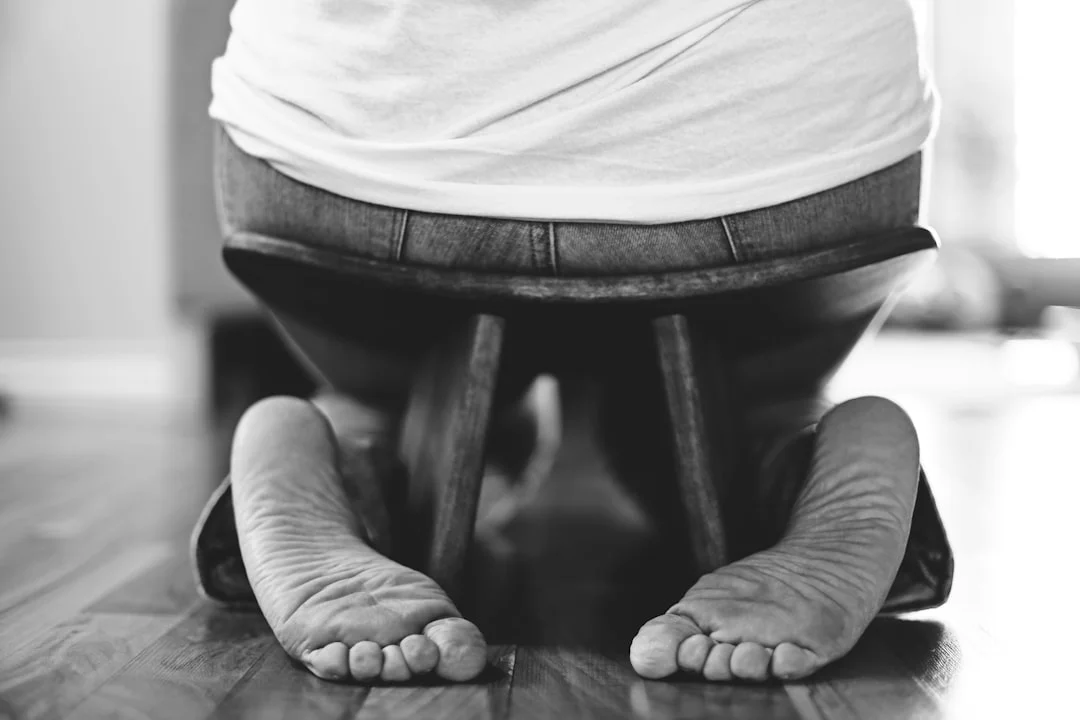
Expert tip from Lisa, psychology & wellness expert at 7zen "Sleep is not the absence of wakefulness - it is the result of letting go. Learning to consciously accept the moment without holding on to it opens the door to the deepest of all states of rest."
Progressive Muscle Relaxation: Systematically Calming the Body
Progressive muscle relaxation, as developed by Edmund Jacobson, is another evidence-based method that is excellent for helping you fall asleep. The basic principle: muscle groups are deliberately tensed and then consciously released. The contrast between tension and relaxation is what makes deep relaxation truly noticeable.
A review article in Sleep Medicine Reviews confirmed that progressive muscle relaxation both shortens the time it takes to fall asleep and improves subjectively perceived sleep quality—especially in people experiencing chronic stress.
Here’s how it works while lying down:
- Start with your feet: Point your toes firmly upward for five seconds, then release and feel the relaxation for ten seconds.
- Move on to the calves, thighs, and buttocks—always: tense, hold, release, feel.
- Then the abdomen, hands, arms, shoulders, and face.
- At the end: Your entire body lies relaxed, heavy, and warm on the mattress.
The full routine takes about 15 to 20 minutes. With a little practice, you can also perform the technique in a shortened form in five to ten minutes.

Improving Sleep Quality Through Mindfulness: More Than Just a Technique
Meditation to help you fall asleep is effective—but it only reaches its full potential when it’s incorporated into a mindful evening routine. Mindfulness isn’t just another item on your to-do list; it’s a mindset: consciously guiding the transition from day to night.
Here are some mindfulness-based habits that will improve your sleep quality in the long term:
- Digital Detox: No screens at least 30 minutes before bed. Blue light inhibits melatonin production, and the flood of information keeps the brain racing.
- Gratitude practice: Before bed, write down three things you’re grateful for today. This simple exercise shifts your mental focus from worries to resources—and has been proven to make the transition to sleep easier.
- Fixed Bedtimes: Your internal rhythm thrives on regularity. A consistent bedtime routine—even on weekends—stabilizes your circadian rhythm and makes falling asleep easier.
- Evening rituals: A warm bath, a cup of herbal tea, gently dimming the lights—these signals tell your nervous system that the active phase of the day is ending.
Mindfulness here means: no longer treating the evening as the leftover time of the day, but as a consciously designed transition. This isn’t perfection—it’s an invitation.
Meditation to Help You Fall Asleep: Routines for 10, 20, and 30 Minutes
No matter how much time you have in the evening—there’s a practice that’s right for you. The following routines are designed to be flexible, suitable for everyday use, and effective at the same time.
The 10-Minute Routine: For Short Evenings
Lie down and close your eyes. Take three deep breaths. Then: two rounds of the 4-7-8 breathing technique, followed by a shortened body scan—only from the feet to the knees. End the exercise with the mental phrase: “I am safe. I can let go.” These ten minutes are enough to noticeably calm the nervous system.
The 20-Minute Routine: For Most Evenings
Start with five minutes of mindful breath awareness—simply observe without changing anything. Then follow with a full body scan from your feet to your head (about ten minutes). Finish with a brief gratitude practice: Let three moments from the day that felt good rise up in your mind’s eye.
The 30-minute routine: For deep relaxation
This routine is particularly suitable for stressful periods or when you realize you need extra care. Start with progressive muscle relaxation (15 minutes), then transition into a guided Yoga Nidra practice (15 minutes, ideally with a recording). Let yourself be guided—your only task is to be present.
Common Obstacles — and How to Overcome Them
“I can’t meditate; my mind is too cluttered.” That’s by far the most common thing we hear. And our answer is always the same: A cluttered mind isn’t an obstacle to meditation—it’s the starting point. Meditation doesn’t mean having no thoughts. It means noticing thoughts without getting carried away by them.
Here are some other common challenges and practical solutions:
- “I fall asleep while meditating and then wake up again.” — This is a good sign that your body is relaxing. Adjust your technique: During a body scan, sit slightly upright first before lying down.
- “It’s too quiet for me; I hear every thought.” — Soft, instrumental background music or nature sounds can help without being stimulating. Rain, the sound of the ocean, or a soft hum act as an acoustic cocoon for many people.
- “I don’t have time for this.” — Ten minutes is enough. And they’re more valuable than another hour in front of the screen.
- “I’ll do it for a week, then I’ll forget about it again.” — Link the practice to something that’s already firmly part of your evening routine: after brushing your teeth, after reading, after turning off the lights. Habits need an anchor.
Why Consistency Is More Important Than Perfection
The biggest pitfall in meditation practice is the idea that you have to do it “right.” Yet research clearly shows: it is consistency, not perfection, that produces long-term results. Five minutes of breath awareness every evening is more effective than one intense hour once a week.
Your nervous system learns through repetition. It builds up a kind of internal memory—a conditioning, if you will—that leads to certain stimuli (your cushion, your breathing rhythm, the silence) increasingly triggering relaxation automatically. This is not a habit in the mundane sense. It is neurobiological intelligence that you actively cultivate.
So don’t start by aiming to meditate for 30 minutes every day. Start by aiming to do something every evening. Three deep breaths count. A one-minute body scan counts. The most important thing is showing up—night after night.
Sleep isn’t a luxury. It’s the foundation of everything—your health, your relationships, your creativity, your inner balance. And meditation to help you fall asleep is one of the most direct, gentle ways to strengthen this cornerstone of your well-being.
You don’t have to meditate perfectly. You don’t have to force yourself into a state of total mental blankness. You can simply be present—breathing, noticing, letting go. A little bit more each night.
At 7zen, we believe: The healthiest thing you can do tonight isn’t to accomplish even more. It’s to consciously turn your attention to sleep—with kindness, with patience, one breath at a time.
Your action step for tonight: Choose one of the techniques presented—whether Body Scan, 4-7-8 Breathing, or Yoga Nidra—and give it ten minutes tonight. No more. Just observe what happens. Your body knows how to sleep. Your job is simply to give it the space to do so.
How long does it take for sleep meditation to work?
Many people notice a slight improvement in their sleep time after the first session. A clear, lasting effect on the quality of sleep is usually seen after two to four weeks of regular practice - that means five to seven times a week, even if it is only a few minutes. Regularity is more important than the length of the individual session.
Can I practise sleep meditation even if I have insomnia?
Yes, sleep meditation is particularly suitable for people with difficulty falling asleep and staying asleep, as it has a direct effect on the nervous system and brings the body out of stress mode. In the case of chronic or clinically relevant sleep disorders, a consultation with a specialist is also recommended - meditation is no substitute for medical or psychotherapeutic treatment, but it can accompany it effectively.
What is the difference between Yoga Nidra and a normal sleep meditation?
Yoga Nidra is a specific, structured deep relaxation practice that specifically guides the mind into the state between waking and sleeping. It follows a fixed sequence with body movements, pairs of opposites and mental images. A general sleep meditation can be more freely structured - for example as a simple breath observation or body scan. Both methods are effective; yoga nidra is particularly suitable for deep exhaustion and strong mental noise.
Should I practise sleep meditation in bed or on a mat?
If your goal is to fall asleep, practise directly in bed, in your usual sleeping position. In this way, you connect the exercise directly with the place where you sleep, which reinforces the conditioning effect. If you want to use the techniques for relaxation without falling asleep - as a lunch break, for example - we recommend using a mat or sofa to associate the bed exclusively with sleep.
I fall asleep while meditating - am I doing something wrong?
No, on the contrary. If you fall asleep while meditating, this is a sign that your body and mind are deeply accepting the relaxation. This is the desired result of sleep meditation in particular. If you want to use the technique for relaxation without sleep, meditate during the day or sit slightly upright.
How do I combine sleep meditation with my existing evening routine?
It's best to anchor meditation at a fixed point in your evening routine - for example, directly after brushing your teeth or after reading. Start with just five minutes to keep the barrier low. Over time, the practice can grow organically. The important thing is that it doesn't feel like a duty, but like a gift to yourself - a conscious letting go of the day.