Self-compassion meditation: Why kindness to yourself changes everything
Self-compassion in meditation is not a luxury - it is the basis for true well-being. Discover how to become kinder to yourself.
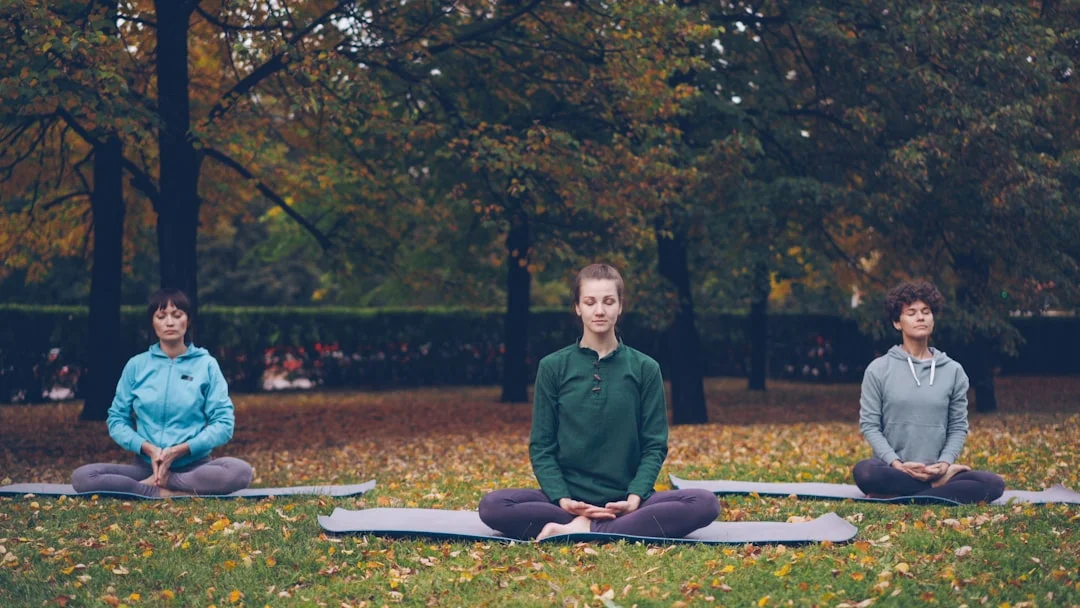
When was the last time you spoke kindly to yourself—the way you would to a good friend? Not with a quick word of encouragement, but with genuine warmth and understanding? For many of us, this question is uncomfortably honest. We’re used to criticizing ourselves, pushing ourselves, judging ourselves. Yet research from the past few decades shows us very clearly: self-compassion in meditation and in everyday life isn’t a sign of weakness or self-indulgence—it’s one of the most powerful forms of self-care we know.
In this article, we’ll take you on a journey into the science and practice of self-compassion. You’ll learn what researchers like Kristin Neff and Christopher Germer have discovered, why Loving-Kindness meditation has been proven to change the brain, and how you can take your first concrete steps today—without any prior knowledge.
What Is Self-Compassion, Really? More Than Just a Nice Idea
The word may sound soft, almost a little impractical. But self-compassion—the technical term—is a scientifically grounded construct that has been intensively studied in psychology since the early 2000s. The pioneer in this field is psychologist and meditation teacher Kristin Neff, who researches and teaches at the University of Texas.
Neff describes self-compassion as consisting of three closely interwoven components:
- Self-kindness: Being warm and understanding toward oneself—especially in difficult moments—rather than criticizing or judging oneself.
- Shared humanity: The realization that suffering, mistakes, and personal shortcomings are part of the shared human experience—and not signs that something is fundamentally wrong with oneself.
- Mindfulness: Consciously noticing painful thoughts and feelings without exaggerating or suppressing them.
These three elements mesh together like gears. Without mindfulness, you overlook your own pain. Without awareness of our shared humanity, you feel alone with your weaknesses. And without self-kindness, you become hard on yourself—even if you already recognize all of this. Only when all three work together does genuine self-compassion arise.
The research behind it: What really happens inside us?
In 2013, Kristin Neff and Christopher Germer—both founders of the Mindful Self-Compassion (MSC) program—published a groundbreaking study in the Journal of Clinical Psychology. They guided participants through an eight-week program that systematically combined mindfulness and self-compassion.
The results were remarkable: At the end of the program, participants showed significantly higher levels of life satisfaction, compassion for others, and emotional well-being—while anxiety, depression, and feelings of emotional exhaustion decreased noticeably. And these changes persisted: The positive effects were still measurable a year later.
What makes this research so significant is not just the result itself, but the mechanism behind it: Self-compassion activates the brain’s care system—the neurobiological circuit that normally kicks in when we support a loved one. When we learn to direct this system toward ourselves as well, we regulate our nervous system in a deep, lasting way.
Self-Compassion Meditation: The Three Most Important Practices
Theory alone doesn’t change anything. What truly cultivates self-compassion is regular practice—and it doesn’t have to be long or complicated. Here, we present three evidence-based exercises you can try right away.
1. The Self-Compassion Break
This short exercise from the MSC program takes only a few minutes and can be practiced anywhere—during your lunch break, after a stressful conversation, or simply in everyday life when you notice yourself being critical of yourself.
Here’s how it works: Close your eyes briefly. First, clearly acknowledge what is difficult right now—without downplaying it, but also without dramatizing it. Then remind yourself: “I am not alone. Everyone experiences pain and difficulties.” Finally, direct kindness toward yourself: Place a hand on your heart and say to yourself inwardly: “May I be kind to myself. May I show myself compassion.”
2. The Letter to Yourself
This writing exercise is particularly effective for people who tend to be highly self-critical. Imagine a close friend—someone who loves you unconditionally and knows both your strengths and your weaknesses. How would this person write about your current situation? What would she say to you?
Write this letter—from her perspective, addressed to you. Allow yourself to accept warmth and understanding. Many people report that while writing this letter, they realize for the first time how harshly they treat themselves—and how little they allow themselves what they so readily grant to others.
3. The Self-Care Meditation in the Body
Sit comfortably and close your eyes. Take a few deep breaths in and out. Then scan your body from top to bottom: Where are you holding tension right now? Where does something feel tight or heavy? Consciously direct your attention to this spot—not to change it, but to give it space. Breathe gently into this spot and imagine how, with every exhalation, a little warmth and kindness flows into exactly this area.
Kristin Neff, pioneer of self-compassion research "When you develop compassion for yourself, you don't become more passive or complacent. On the contrary: you become more stable, more resilient and able to really be there for others."
Metta Meditation: Loving-Kindness as an Exercise for the Heart and Brain
In addition to the exercises from the MSC program, there is a millennia-old meditation practice that is making an impressive comeback in modern science: so-called Metta meditation, also known as Loving-Kindness meditation.
“Metta” is a Pali term and roughly translates to “loving-kindness” or “benevolent friendliness.” In this practice, wishes for well-being are systematically sent out—first to oneself, then to close friends and family, then to neutral individuals, and finally to all beings.
Psychologist Barbara Fredrickson of the University of North Carolina has conducted extensive research on this form of meditation. In a widely cited study, she demonstrated that just seven weeks of regular Metta meditation leads to a significant increase in positive emotions—including joy, gratitude, contentment, and love. These positive emotions, in turn, strengthened social bonds, psychological resilience, and even the physical well-being of the participants.
Particularly noteworthy: Fredrickson’s research showed that the practice not only lifts one’s mood in the short term but also triggers long-term changes in brain structure and the immune system. The brain literally learns to be kinder—toward others and toward oneself.

A Step-by-Step Guide to Metta Meditation
For this practice, you’ll need: a quiet place, about ten to fifteen minutes of time, and the willingness to open yourself up to something that might feel a bit unfamiliar at first. This is completely normal—especially for people who aren’t used to treating themselves with kindness; they sometimes find their first attempts strange or even forced.
Step 1 – Settling In: Sit upright and comfortably. Close your eyes. Take three deep breaths in through your nose and out through your mouth. Let your shoulders drop.
Step 2 – Kindness toward yourself: Mentally bring your own face or essence to mind. Then repeat silently, in your own rhythm:
- May I be happy.
- May I be healthy.
- May I be at peace.
- May I feel safe and secure.
Step 3 – Kindness toward loved ones: Now bring to mind a person with whom you feel a deep connection—someone you love dearly. Direct the same wishes toward them: May you be happy. May you be healthy. May you be at peace.
Step 4 – Expanding the Circle: Gradually expand the circle—to neutral people (someone you barely know), to difficult people (if you’re ready), and finally to all beings. Do this at your own pace.
Step 5 – Conclusion: Gently return to yourself. Take a deep breath. Before opening your eyes, take a moment to feel what this practice has stirred within you.

Why We’re So Bad at Being Kind to Ourselves
Many people react to the concept of self-compassion with a certain inner resistance. “If I’m nicer to myself, I’ll become lazier.” Or: “I don’t deserve this leniency.” Or quite simply: “That sounds kind of selfish.”
These reservations are deeply human—and deeply rooted in culture. In many societies, self-criticism is treated as a virtue, a sign of seriousness and ambition. Those who drive themselves, chastise themselves, and never praise themselves are considered disciplined. Those who treat themselves kindly, on the other hand, quickly come across as people who are taking the easy way out.
Research, however, paints a completely different picture. Self-criticism activates the same threat response in the brain as external dangers—with the same physiological consequences: elevated cortisol levels, tension, withdrawal. People who are chronically self-critical show higher rates of anxiety disorders, depression, and emotional exhaustion.
Self-compassion, on the other hand, activates the calming system. It lowers stress hormone levels, fosters a sense of security, and creates the inner space from which wise, constructive decisions arise. Paradoxically, those who treat themselves with compassion are more motivated, not less—because their inner drive is no longer based on fear and panic of failure, but on genuine goodwill toward themselves.
Incorporating Self-Care Meditation into Your Daily Life: Small Rituals with a Big Impact
Self-compassion doesn’t have to be a complicated program. What matters is consistency—not duration. Here are a few ways you can naturally incorporate this practice into your daily life:
The Morning Moment
Before you get out of bed, take thirty seconds. Place one hand on your heart and say a single sentence to yourself: “Today, I’m allowed to be kind to myself.” This small gesture isn’t a magic cure—but practiced over weeks, it begins to shift your inner mindset.
Lunch Break as a Mini-Retreat
Five minutes during which you simply sit, breathe, and consciously do nothing—that is already a form of self-care. No notifications, no scrolling, no multitasking. Just breathe.
The evening question
Before you fall asleep: Don’t ask yourself what you could have done better today. Instead, ask yourself: “What did I do well today?” And then—this is important—allow yourself to really stay with the answer. Don’t immediately downplay it. Don’t immediately follow it up with a counterargument.
The Mindful “No”
Self-compassion isn’t just evident in meditation sessions. It shows up the moment you turn down another commitment because you know you need rest right now. It shows up when you allow yourself to be less than perfect. It shows up in everyday life—a thousand times a day.
Self-Compassion and Mindfulness: How They Work Together
Mindfulness and self-compassion are often mentioned in the same breath—and for good reason. Both concepts complement each other in profound ways, even though they are not the same.
Mindfulness is the conscious, non-judgmental awareness of the present moment. It helps us recognize what is happening within us right now—without immediately reacting or evaluating it. Self-compassion goes one step further: it responds to what we’ve recognized with warmth. Mindfulness opens the window; self-compassion lets the sun in.
In the Mindful Self-Compassion program, both qualities are therefore always practiced together. Only when we can perceive that we are suffering—without immediately pushing the suffering away—can we meet ourselves with genuine kindness. And conversely: When we encounter ourselves in the silence of meditation and struggle with ourselves, we need the resource of self-compassion to avoid sinking into the spiral of self-criticism.
This connection makes self-compassion meditation a particularly holistic practice. It not only trains mindfulness—it transforms the underlying emotional attitude with which we approach ourselves and the world.
Common Pitfalls and How to Deal with Them
Especially when you’re just starting out with self-compassion practice, certain challenges tend to crop up again and again. It helps to be aware of them—so you don’t think there’s something wrong with you when they arise.
“I don’t feel anything at all.”
Many people report that metta meditation or self-compassion breaks feel empty or forced at first. This is completely normal. The brain needs time to build new neural pathways. Keep practicing—even if it feels mechanical. The effects often don’t become noticeable until weeks later.
“I actually feel sadder instead.”
Sometimes self-compassion initially opens up space for feelings we’ve long suppressed. This can manifest as sadness, exhaustion, or even tears. This isn’t a sign that something is wrong—it’s a sign that something is being released. If the emotions become overwhelming, take a break. If they intensify regularly, therapeutic support may be helpful.
“I just forget.”
Link your practice to an existing habit: after waking up, before lunch, at bedtime. Small reminders—a Post-it note on the mirror, a notification on your phone—can help until the practice becomes a habit.
There’s a phrase Kristin Neff uses time and again in her talks, and it sums up everything self-compassion is all about: “What would you say to a good friend who’s going through what you’re going through right now?”
Most of us know the answer right away. We’d be kind. We’d show understanding. We wouldn’t judge. And we’d say, “It’s okay. You’re not alone.”
The difference between what we would say to a friend and what we say to ourselves is often shockingly vast. And in that gap—in that space between self-judgment and genuine kindness—lies the full potential of the practice.
Self-compassion is not a goal you reach one day. It is a direction toward which you can realign yourself again and again. With every small exercise, with every metta session, with every moment in which you treat yourself with kindness instead of criticism, new inner patterns are formed. Slowly. Persistently. Effectively.
You deserve the same kindness that you so naturally give to others. And you can start right now.
What is the difference between self-compassion and self-pity?
Self-pity and self-compassion sound similar, but they are fundamentally different. Self-compassion tends to isolate and reinforce us in our pain - we circle around our suffering, feel victimized and lose touch with others. Self-compassion, on the other hand, clearly acknowledges pain but connects it with the awareness that suffering is part of our common humanity. It creates space instead of constricting - and promotes inner strength instead of helplessness.
How long does it take for self-compassion meditation to take effect?
This depends on factors such as regularity, starting point and personal history. Studies show that a structured program such as Mindful Self-Compassion Training over eight weeks brings about measurable changes in well-being, anxiety and life satisfaction. For noticeable changes in everyday life, many people report a difference in their inner attitude towards themselves after just two to four weeks of daily, even brief, practice.
Can self-compassion reduce my drive and performance?
This concern is widespread - but research clearly disproves it. Self-criticism and inner pressure may motivate in the short term, but in the long term they lead to burnout, exhaustion and avoidance behavior. Self-compassion, on the other hand, creates a stable inner foundation from which sustainable drive can arise. Studies show that people with higher self-compassion scores show more personal initiative, set themselves more ambitious goals and get up again more quickly after setbacks - because they don't lose themselves in self-reproach.
What is metta meditation and who is it suitable for?
Metta meditation, also known as loving-kindness meditation, is a traditional Buddhist practice that is also used in modern psychology today. It essentially consists of inwardly wishing for benevolence - first towards yourself, then towards other people and finally towards all beings. It is suitable for most people, even those with no experience of meditation. Those who suffer from strong self-criticism, shame or traumatic experiences should approach the practice with caution - ideally accompanied by a specialist.
Do I need to be able to meditate to benefit from self-compassion?
No. Self-compassion can also be practiced without formal meditation - by writing (for example, a letter to yourself), by consciously talking to yourself, by pausing in difficult moments. Formal meditations such as the metta practice or the self-compassion pause can deepen and accelerate the effect, but are not a prerequisite. Every small, kind gesture towards yourself is a step in the right direction.
How does the MSC program differ from normal mindfulness meditation?
The Mindful Self-Compassion program was developed by Kristin Neff and Christopher Germer and combines classic mindfulness practice with targeted exercises to cultivate self-kindness and compassion. While traditional mindfulness programs focus primarily on noticing the present moment, the MSC program places an additional emphasis on the emotional attitude with which one encounters oneself. It was specially developed for people who suffer from self-criticism, perfectionism or emotional exhaustion.