Chakra Imbalance: Signs & Gentle Rebalancing
When something feels off inside: What a chakra imbalance means in traditional terms—and how you can gently find your way back.

Maybe you know this feeling: It’s hard to put into words, but somehow something just isn’t right right now. An inner restlessness that takes hold. A tightness in your chest when you think about certain things. The exhaustion that lingers even though you’ve actually had enough sleep. Experiences like these are deeply human—and many people are looking for ways to make sense of them beyond lab results and diagnoses. Here, the concept of chakra imbalance can offer a welcoming framework: not as a medical explanation, but as an internal system of orientation that invites greater self-awareness.
This article aims to gently guide you through this perspective. Together, we’ll explore what “balance” and “imbalance” actually mean in chakra teachings, what sensations some people describe when they speak of a blocked or unbalanced chakra—and how gentle practices might help you reconnect with yourself. Please always keep in mind: Nothing you read here is a substitute for professional advice, a medical examination, or psychotherapy. Physical and emotional symptoms should always be evaluated by a professional.
What “Balance” Means in the Chakra Tradition
The concept of chakras—a Sanskrit word meaning “wheel” or “circle”—stems from millennia-old Indian traditions, particularly Tantric yoga and Ayurvedic philosophy. In these traditions, chakras are described as energetic centers in the subtle body, said to be arranged along a vertical axis—the so-called Sushumna Nadi. Seven main chakras are most commonly mentioned, extending from the base of the spine to the crown of the head.
The image used in this tradition is that of a freely flowing stream of energy. According to this concept, when all the centers are open and vibrant, life energy—often called “prana”—can flow unimpeded through the body. This is experienced as a state of chakra balance. Conversely, the tradition speaks of “blockages” or “imbalances” when certain centers are perceived as underactive, overactive, or altered in their resonance.
It is important to understand that the image of a “blockage” is an energetic metaphor within this tradition—not a medical term or a verifiable physical diagnosis. Science has not yet proven the existence of chakras as anatomical structures. However, this does not diminish the value of this concept as a tool for personal reflection: Many people find that thinking in these terms helps them become more mindful of their inner states.
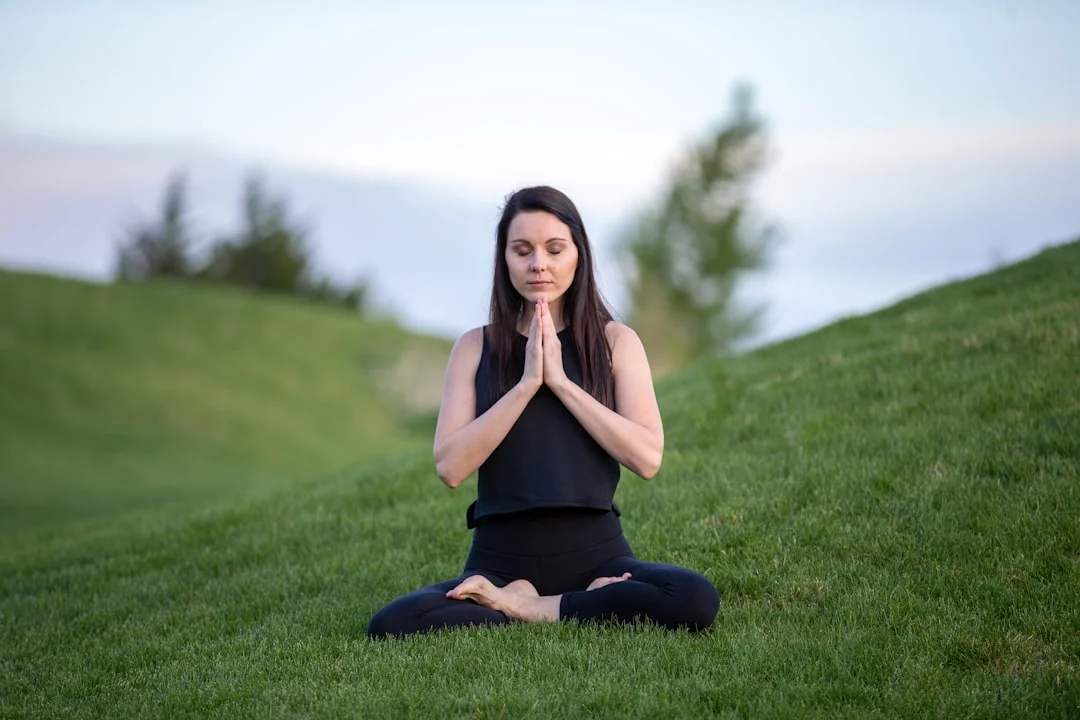
Chakra Imbalance: A Metaphor, Not a Diagnosis
When people speak of a “chakra imbalance” in the context of chakra teachings, they usually mean a subjective experience—an inner signal that demands attention. It’s not about diagnosing something as “broken,” but rather about listening to the subtle language of one’s own inner life.
In the traditional view, imbalances can manifest in two ways: An energy center might be experienced as “underactive”—as if there is little movement there, a kind of stillness that feels heavy. Or it might be perceived as “overactive”—an intensity that can feel overwhelming or exhausting. According to this model, both are indicators, not judgments.
At its core, this perspective is an invitation to self-awareness: What do I feel? Where in my body? Since when? What has changed? These questions can spark a valuable inner dialogue—regardless of whether one shares this energetic worldview or not.
The Seven Chakras and How They Might Be Experienced When Out of Balance
In this tradition, each of the seven main chakras is associated with specific areas of life, regions of the body, and inner qualities. When a chakra is described as out of balance, certain sensations may arise—purely on the level of subjective experience. These descriptions are intentionally general and should never be understood as an explanation or cause of physical or emotional suffering.
- Root Chakra (Muladhara): Some people describe the feeling of “not being grounded”—a vague restlessness, the sensation of not having solid ground beneath their feet, or a persistent inner restlessness.
- Sacral Chakra (Svadhisthana): Here, a loss of access to joy or creativity may manifest—or, conversely, an emotional intensity that is difficult to regulate.
- Solar Plexus Chakra (Manipura): Some people experience a lack of drive in this area, uncertainty about their own ability to take action—or tension that is felt in the abdominal region.
- Heart Chakra (Anahata): Feelings such as a sense of being cut off from others, difficulty accepting affection, or a kind of inner closed-offness may arise here.
- Throat Chakra (Vishuddha): The experience of not being able to truly use one’s own voice—both literally and figuratively—or the feeling of not being heard is often associated with this center.
- Third Eye Chakra (Ajna): Some describe difficulties thinking clearly, making decisions, or the feeling of having lost their inner compass.
- Crown Chakra (Sahasrara): A sense of meaninglessness, a feeling of being cut off from something greater, or a kind of inner emptiness is sometimes described here.
Please read these descriptions for what they are: traditional imagery and subjective accounts of experience that invite self-reflection. They are not a diagnostic tool and are no substitute for a conversation with a doctor or therapist.
Scientific Background: Self-Perception & Well-Being Research in the field of mindfulness science—such as the work of Jon Kabat-Zinn (1990) on Mindfulness-Based Stress Reduction—suggests that consciously tuning into physical sensations and inner states can help promote well-being and deepen self-awareness. The chakra system draws on similar principles: it invites us to become more aware of our inner signals—even if its energetic framework differs from Western concepts.
Self-Reflection: Questions for Reflection
Perhaps the most valuable aspect of chakra work lies not in external rituals, but in honestly examining your own experience. The following questions are not a checklist or a test—they are invitations to enter into a quiet dialogue with yourself. You might want to take a moment of silence before reading them.
For Grounding and Security
How does your relationship with everyday life feel right now? Are there moments when you feel stable and grounded—and what characterizes those moments? Or do you notice a persistent restlessness, a feeling of “not quite being there”?
On Joy and Vitality
When was the last time you truly enjoyed something—without obligation, without a goal? Are there areas of your life that feel empty or dull? Or do you experience phases when your emotions are hard to regulate?
On Your Own Strength and Ability to Act
How much do you trust yourself when it comes to making decisions? Is there a sense of inner strength—or rather a hesitation, a doubt about your own effectiveness?
On Connection and Compassion
How easy or how difficult is it for you to be open to others? Does a pattern emerge—perhaps a tendency to withdraw, or, conversely, to engage very deeply with others?
On Your Voice and Expression
Do you feel free to say what’s truly important to you? Are there topics where you hesitate inwardly—where the words just won’t come?
On Clarity and Inner Guidance
How clear does your inner compass feel? Do you trust your intuition? Or are there moments when you feel like you’ve lost your way?
There are no right or wrong answers to these questions. Perhaps as you read, you’ll feel a sense of resonance—a quiet “Yes, that’s exactly it.” Or maybe not. Both are perfectly fine. These questions aren’t meant to unsettle you, but to encourage mindfulness.

When a Chakra Is Blocked: How It Might Manifest
The concept of a blocked chakra—that is, an energy center that appears to be restricted in its mobility—is traditionally a metaphor for inner stagnation. It’s not about there being something “wrong” with you. Rather, this metaphor describes states that many people are familiar with: periods when you feel stuck, exhausted, or disconnected from yourself.
How might this manifest? Some people experience a persistent heaviness that’s hard to put into words. Others describe a feeling of being “constricted” in certain areas of life—in their interactions with others, in creative expression, or in their body awareness. Still others notice that they can barely respond to their inner impulses anymore, as if a faint murmur had grown louder than their inner voice.
Such experiences are deeply human—and they cannot be reduced to chakras nor explained solely through them. The chakra metaphor offers a possible interpretive framework that may be helpful to some people. Others find their language in psychology, in spiritual traditions, or somewhere else entirely. The important thing is this: If you recognize yourself in these descriptions and the feeling is intense or distressing, please speak with a professional. This is not a sign of weakness—it is self-care.

Balancing the Chakras: Gentle First Steps
What can help if you feel like something inside you has shifted—that a chakra seems out of balance? Tradition offers a rich repertoire of practices that can be seen as an invitation to self-care. None of these practices is a panacea, and none of them replaces professional support. But some people find that they can help them reconnect with themselves.
Mindfulness and Body Awareness
Research suggests that mindful body awareness can support subjective well-being. As Kabat-Zinn (1990) describes in his work on mindfulness, consciously tuning into the body can help us notice internal signals sooner and respond to them more mindfully. A simple way to get started could be to sit in silence for a few minutes each day and consciously notice how your body feels in the moment—without judgment.
Movement and Grounding
Whether it’s yoga, taking a walk in nature, or consciously standing barefoot on the ground—many people find movement to be grounding. Research suggests that spending time in nature can have positive effects on emotional well-being (Kaplan & Kaplan, 1989). Within the framework of chakra theory, grounding is particularly associated with the root chakra—but the practice itself is accessible to everyone, regardless of one’s energetic worldview.
Breathing Exercises
Breath is one of the most direct connections between body and mind. In the yogic tradition, breathing exercises—known as pranayama—are considered a way to support the flow of energy. Even from a Western perspective, research suggests that conscious, deep breathing can calm the autonomic nervous system (Zaccaro et al., 2018). Perhaps you’d like to simply breathe in and out consciously and slowly—and observe what that stirs within you.
Creativity and Expression
Writing, painting, singing, dancing—creative forms of expression can be a way to bring inner states to the surface that otherwise cannot be put into words. In her work, researcher Brené Brown (2010) emphasizes that creative self-actualization can be closely linked to feelings of connection and well-being.
Self-Compassion
Perhaps the most effective practice of all is self-compassion: the willingness to be as kind to yourself as you would be to a good friend. As Neff (2003) demonstrated in her research, self-compassion can help make emotional burdens easier to bear and support mental well-being. This does not mean dismissing difficult situations—but rather acknowledging them without judging yourself for them.
Chakra Balance in Everyday Life: Small Rituals with a Big Impact
Not every practice has to be elaborate. Many people report that small, regular rituals in particular can support a sense of inner chakra balance—not because they work magic, but because they bring awareness into everyday life.
Some may start by pausing briefly in the morning before picking up their phone—simply to check in: How am I feeling right now? What do I need today? This tiny pause, when practiced over time, can take on a transformative quality.
Others find colors, sounds, or certain scents helpful—each associated with the chakra they wish to focus on at that moment. For example, the root chakra is associated with the color red, the heart chakra with green, and the throat chakra with blue. These associations aren’t laws of nature—they’re images that can serve as anchor points for your attention.
Stones, singing bowls, or certain yoga poses are also frequently mentioned in connection with chakra work. Whether and how these elements might be helpful for you can only be discovered through your own experimentation. There is no one-size-fits-all formula—and that’s a good thing.
For detailed practical guidance on how to balance your chakras, we’d like to refer you to our practice article, which presents specific exercises and rituals for each of the seven main centers.
What Science and Tradition Have in Common
It would be too simplistic to treat the teachings of the chakras and science as irreconcilable opposites. In fact, there are interesting points of overlap—even if they operate on different levels.
Psychology recognizes the concept of “body memory”—the idea that emotional experiences can be stored in the body. In his influential work, body-oriented psychotherapist Bessel van der Kolk (2014) describes how trauma, stress, and emotions can manifest physically—and how body-based practices can help process them. Although this perspective differs from that of chakra theory, it shares the fundamental belief that the body is not a passive container but a living communication system.
The concept of “interoception”—the ability to perceive internal bodily states—is also gaining increasing importance in research. Craig (2003) and other researchers have shown that this ability may be closely linked to emotional well-being, decision-making, and self-perception. Those who learn to listen to the body’s inner language may be able to navigate life with greater inner strength—at least that is what research suggests.
The chakra tradition has cultivated a practice of inner listening over millennia. Whether or not one subscribes to the energetic model, the invitation to treat oneself with greater attention and kindness remains universally valuable.
A Word of Honesty to Conclude: What Chakra Work Can’t Do
As valuable as the teachings on chakras can be as a language of self-awareness, there are things it cannot and should not do. If you’re experiencing physical symptoms, you should seek medical evaluation. If you’re in the midst of a deep emotional crisis, you need professional psychological or psychiatric support. If you’re going through experiences that are deeply distressing or destabilizing, talking to a professional is the most important next step—no chakra ritual in the world can replace that.
The chakra tradition itself—in its original, carefully developed form—recognizes this. It was never intended as a substitute for what we now call medicine or psychology. It is a complementary language for inner experience, a map of consciousness that can coexist alongside other maps.
If you’ve found yourself reflected in this article—if an image, a question, or a description has touched something within you—then take that as a friendly signal. Not as an alarm, not as a diagnosis. As an invitation to give yourself a little more attention. That alone can sometimes be the first small step back toward your own balance.
Action Step: Perhaps you’d like to take five minutes tonight—just sit, breathe, and tune into your body. Where do you feel light? Where do you feel heavy? Without judging, without trying to change anything. Just notice. That can be a start.
Your Space for Reflection: The Workbook
The 7zen Workbook helps you organize your thoughts—gentle reflective questions to help you get to know yourself more mindfully.
Your daily companion for personal growth
With the 7zen app, you'll receive daily coaching tips, guided breathing exercises, and personal reflections—all based on your individual profile.
What does it mean when a chakra is blocked or out of balance?
In the chakra tradition, a “blocked” or “imbalanced” chakra describes a state in which a particular energy center is perceived as underactive, overactive, or restricted in its mobility. Important: This is an energetic concept within the tradition; it is not a medical diagnosis nor a verifiable physical finding. Rather, it concerns subjective sensations—an inner signal that can be acknowledged through mindfulness. Physical or emotional symptoms should always be evaluated by a healthcare professional.
How can I tell for myself if my chakras are out of balance?
The chakra system offers a framework for self-awareness, not a diagnostic tool. Some people notice certain sensations—such as feeling ungrounded, having difficulty expressing themselves, or experiencing a persistent inner emptiness—and associate these with a specific chakra. This can be helpful for becoming more aware of one’s inner states. The questions in this article that invite you to explore your feelings could serve as a gentle starting point.
Is there scientific evidence for chakras?
Chakras have not yet been scientifically proven to exist as physical or anatomical structures. The concept originates from millennia-old Indian traditions and describes an energetic level of experience that lies beyond measurable bodily functions. Nevertheless, there are interesting points of overlap with modern research: Studies on mindfulness, interoception, and body-based practices suggest that consciously tuning into the body can promote well-being—even if the theoretical framework is different.
Can I balance my chakras on my own, or do I need help to do so?
Many simple practices—mindful breathing, moving in nature, journaling, or meditative silence—can be easily explored on your own. For more in-depth work, such as energy work, sound baths, or bodywork, guidance from an experienced practitioner can be helpful. In cases of emotional distress or physical ailments, you should always seek professional help first—whether medical, psychological, or therapeutic. Chakra practices can be complementary, but they are not a substitute for professional help.
How long does it take to correct a chakra imbalance?
There is no one-size-fits-all answer to this question—and any statement promising a specific timeframe would be misleading. Some people experience changes in their inner experience after just a short period of regular practice; others need more time or experience different effects. This depends on many factors: your own pace, your life circumstances, the type of practice, and the underlying cause of the imbalance. Patience and self-compassion are perhaps the most important companions on this journey.
Do I have to believe in chakras to benefit from these practices?
No—and that’s a wonderful aspect of many chakra-based practices. Mindfulness, breathing exercises, movement, creative expression, and self-reflection have intrinsic value that can exist independently of an energetic worldview. If you find the chakra metaphor to be a useful framework for your own self-awareness, you can use it. If you’re skeptical of it, you can still benefit from the practices—and vice versa. Ultimately, it’s about what helps you get to know yourself better and treat yourself with more care.