Human design profession: deciphering your career path
How your Human Design Chart shows your ideal career path - and why traditional career guides often don't work.

Do you know that feeling of waking up in the morning and thinking, “This isn’t for me”? You’ve done everything right—the right education, a stable job, maybe even a promotion. And yet there’s a nagging sense of unease that just won’t go away. If you recognize yourself in these words, you’re not alone—and you’re not wrong either. You may simply be working against your true nature. This is exactly where Human Design comes into play in your career: as a framework that can help you understand how you naturally function, how you use energy, and where your professional calling might lie. This article explains what Human Design means for your career, what role your profile and your Incarnation Cross play—and how you can apply this knowledge in your day-to-day work.
What is Human Design—and why is it relevant to one’s career?
Human Design is a synthetic system that combines elements from astrology, the I Ching, Kabbalah, Hindu chakras, and modern quantum physics. It was developed in the late 1980s by Ra Uru Hu and has since become a widely used tool for self-awareness. Based on your date, time, and place of birth, a so-called Body Graph is created—a kind of energetic map of your personality.
Important to understand: Human Design does not claim to be an empirically validated science. It is a conceptual descriptive system that many people find to be a useful tool for self-reflection. In a review article (2019), psychologist Sherry Ashworth pointed out that personality-describing systems—even if they are not scientifically validated in the strict sense—can have genuine therapeutic value, provided they lead people to greater self-acceptance and clearer decision-making. You should view Human Design in this spirit: not as dogma, but as an invitation to self-exploration.
Human Design is particularly interesting for professional contexts because it goes beyond classic personality models such as the Myers-Briggs Type Indicator (MBTI) or the Big Five model. It doesn’t just ask: Who are you? but also: How do you handle energy, how do you make good decisions, and what is your deepest calling?
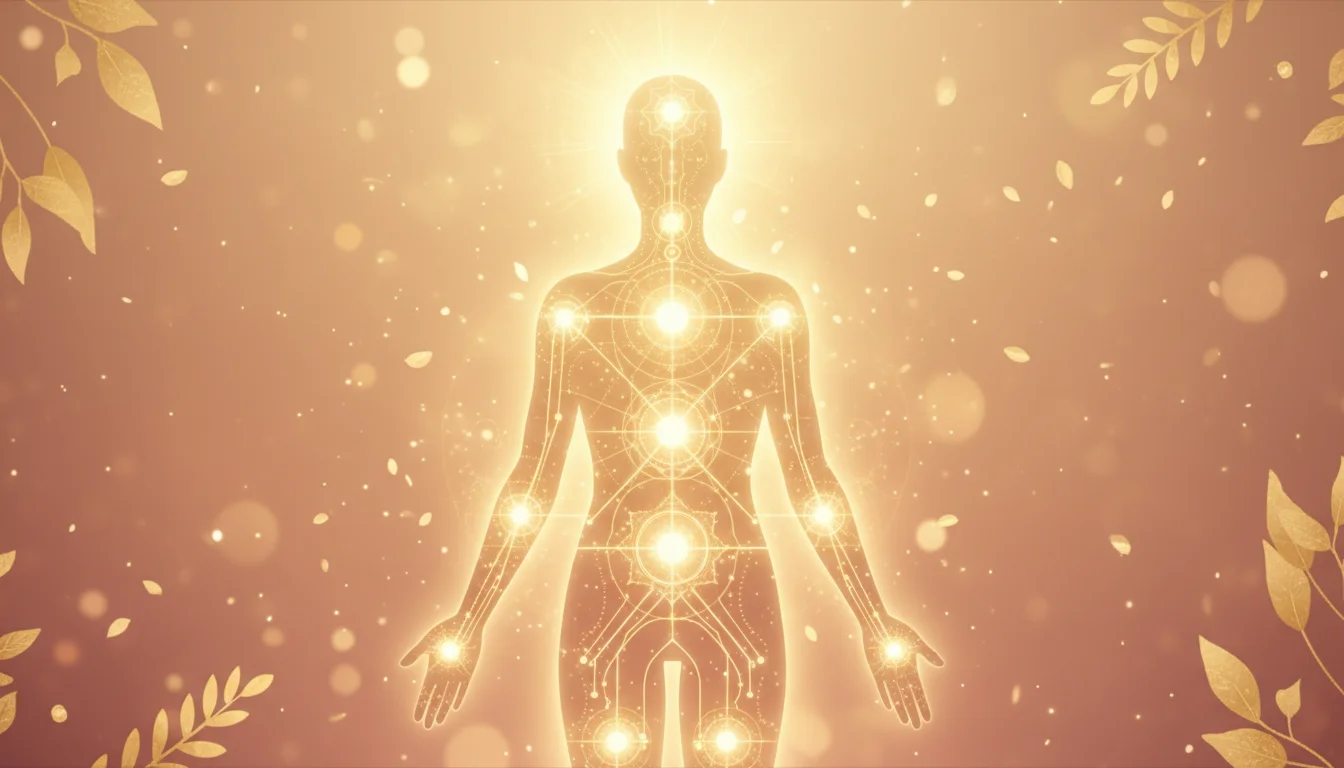
The Five Types and Their Professional Energy
In Human Design, there are five so-called types that describe how a person fundamentally handles life and work energy. They are the first major key to your professional orientation.
- Manifesting Generators and Generators (approx. 70% of the population): They possess a powerful, sustainable life force. In their careers, they need tasks that truly inspire them—then they are virtually inexhaustible. Forced duties without inner resonance, on the other hand, cost them a disproportionate amount of energy.
- Projectors (approx. 20%): They have no internal driving force of their own and are designed to recognize and guide systems and people. Their best work environment: roles in which their foresight is recognized and valued. Maintaining systems by invitation rather than driving them forward on their own is their key.
- Manifestors (approx. 9%): They are the only ones who can initiate things independently. In the professional sphere, they need autonomy and creative freedom. Tight control or overly detailed responsibilities stifle their potential.
- Reflectors (approx. 1%): They are highly sensitive to the energy of their surroundings. They thrive in inspiring, healthy work environments and need more time to make important career decisions than other types.
Simply knowing your type can explain why certain work structures energize you—and others drain you.
Human Design Profile: Your Professional Archetype
Your professional nature is described even more specifically by your profile than by your type. The profile consists of two numbers—for example, 1/3, 2/4, or 5/1—and is derived from your date of birth and the position of your conscious and unconscious Sun in the I Ching. There are twelve possible profile combinations based on six so-called profile lines.
Researchers such as Chetan Parkyn, who has documented Human Design in numerous practical studies (2009), describe the profile lines as archetypal life themes that determine how a person learns, grows, and positions themselves in the world. Although these observations are not designed as controlled studies, they align with psychological insights on narrative identity: We understand ourselves through stories and roles—and a clearly defined archetype can help us understand our own professional history more coherently.
An overview of the six profile lines
- Line 1 – The Explorer: Requires a solid foundation of knowledge. In the workplace: research, specialization, in-depth expertise.
- Line 2 – The Hermit: Talent often manifests unconsciously. Is best “called upon” by others. Needs periods of retreat for regeneration and creativity.
- Line 3 – The Martyr: Learns through trial and error. Every professional “defeat” is valuable experience. Ideal for dynamic fields that encourage experimentation.
- Line 4 – The Opportunist: Career is built through personal networks. Relationships and trust are more important than formal qualifications.
- Line 5 – The Heretic: Possesses a natural aura of authority and is often confronted with expectations projected by others. Strong in problem-solving roles and strategic leadership.
- Line 6 – The Role Model: Lives through three life phases. First learning (like Line 3), then withdrawal and observation, then growing prestige as a wise role model—often only starting in midlife.
Once you know your profile, you gain a deep understanding of how you learn best, how to advance your career, and which relationship qualities are crucial in your professional world. This is a qualitative added value that traditional career counseling rarely offers.
Psychology of professional identity According to Dan McAdams (2001), people with a coherent narrative about their own identity show more professional resilience, greater life satisfaction and a stronger sense of purpose. Human design - when used sensibly - can provide precisely this identity-forming narrative.
The Incarnation Cross: Your Life's Work
The Incarnation Cross is perhaps the deepest and, at the same time, most frequently misunderstood element in Human Design. It is composed of the four Gates (hexagrams of the I Ching) that were active at the time of your birth and approximately 88 days before your birth—specifically, the conscious and unconscious Sun and Earth. The result is an expression of what many Human Design practitioners refer to as a life’s work or professional calling.
There are 64 basic gates and, consequently, 192 possible Incarnation Crosses, divided into three major families: the Right Angle Crosses (personal development), the Left Angle Crosses (transpersonal destiny), and the Juxtaposition Crosses (fixed, unchanging theme). This classification broadly describes whether your life path is more introverted and self-focused or extroverted and service-oriented—a distinction that can be significant for career choice.
Parkyn (2009) describes the Incarnation Cross as the overarching framework within which Type and Profile operate. While your type shows how you use energy, and your profile shows how you learn and position yourself, the Incarnation Cross answers the question: What is my ultimate purpose? This question is not some esoteric gimmick—it is, at its core, identical to what positive psychology refers to as a “calling.” As Wrzesniewski et al. (1997) demonstrated in their widely cited study, people who view their work as a calling experience significantly higher job satisfaction, greater commitment, and better mental health than those who view work merely as a job or a means to advance their career.
Human Design in Practice: Strategy and Decision-Making Authority in Everyday Life
In addition to Type, Profile, and Incarnation Cross, there are two other concepts that are particularly useful in everyday professional life: Strategy and Inner Authority (inner decision-making authority).
Every Human Design type has its own strategy—a kind of guiding principle that helps them navigate life most effectively. Generators wait to react (responding to external impulses rather than blindly initiating action), Projectors wait for an invitation, Manifestors inform their surroundings before taking major steps, and Reflectors wait for a full 28-day lunar cycle. In a professional context, this means: How you accept a new job, start a project, or enter into a collaboration should ideally follow your strategy.
Inner Authority describes how you make good decisions. People with a defined solar plexus center (emotional authority), for example, need emotional clarity before making career decisions—spontaneous commitments often lead to regret. People with sacral authority, on the other hand, rely on a physical yes/no signal. This may sound unusual, but it aligns with findings from decision-making research: Damasio (1994) demonstrated with his Somatic Marker Hypothesis that the body often “knows” before rational thought does—a finding that supports the Human Design concept of body-based authority, at least metaphorically.

Defined and Open Centers: Strengths and Blind Spots in the Workplace
The Bodygraph contains nine energy centers, each representing specific areas of life. If a center is defined (shown in color on the chart), it functions consistently and reliably—it is a stable resource. If it is open (white), it is permeable to external influences: You perceive the energy of others more strongly there and can easily be influenced.
This has direct consequences in the workplace. An open throat center (communication center), for example, means that under pressure you may easily say more than you actually intend—or feel compelled to communicate constantly, even when you have nothing to say. An open heart center can lead you to constantly feel the need to prove yourself at work, even though this drive isn’t your own but was absorbed from the outside.
The concept of open centers as “fields of conditioning” is reminiscent of psychological research on social comparison and self-esteem: As Crocker and Wolfe (2001) demonstrated, people with contingent self-esteem—that is, self-esteem that depends heavily on external validation—tend to experience more workplace stress, more burnout, and less sustainable performance. Human Design would say: They are “living their open heart center.” This may serve as a metaphor—the underlying dynamics are well-documented scientifically.
Finding Your Career Path: Practical Steps with Human Design
Theory is one thing—but how can you actually use Human Design for your career? Here are five steps you can implement right away:
- Step 1 – Create a chart: Free chart generators (e.g., Jovian Archive or myBodyGraph) calculate your body graph based on your birth time, date, and place. You’ll need your exact birth time for this.
- Step 2 – Understand your type and strategy: Read up on your type and observe for a week whether you’re following your strategy in your current job. A key question: Are you being invited to react—or are you forcing yourself to do things?
- Step 3 – Reflect on your profile: Note down three professional situations in which you felt most alive. Do these align with your profile lines? This is often a revealing moment.
- Step 4 – The Incarnation Cross as a Compass: The Incarnation Cross identifies overarching themes. Don’t look for a specific job title, but rather for fields where these themes can be expressed.
- Step 5 – Testing Decisions: Consciously use your inner authority when making your next career decision. Emotionally defined people: Don’t make commitments in the heat of the moment. Sacral authority: Listen to your gut feeling—yes or no, clear and direct.
Human Design is not a substitute for professional career counseling or in-depth psychotherapy for occupational burnout. It is a complementary tool for self-reflection—and that is precisely where its value lies.
Create your 7zen profile now
Combines astrology, human design and numerology - conveniently via APP or directly in the store
When Human Design Reaches Its Limits in the Workplace
As useful as Human Design may be as a tool for self-reflection, it would be dishonest not to acknowledge its limitations. The system has not been empirically validated. To date, there are no controlled studies proving that people who live according to their Human Design type are objectively more successful or satisfied in their careers. Critics such as psychologist Rolf Degen point out that many personality description systems benefit from the so-called Barnum effect: people tend to perceive very general descriptions as accurate for themselves.
This means: You shouldn’t interpret Human Design as destiny. Your type doesn’t say that you can’t pursue a certain career. Your profile does not dictate how your life must unfold. View it as one lens among many—alongside values-based work (according to Schwartz, 2012), strengths assessments (such as the VIA Survey by Peterson and Seligman, 2004), and traditional career counseling.
Human Design has the deepest impact when it helps you identify previously unconscious patterns—and thereby gain freedom of choice. Not because the chart tells you so, but because the act of naming itself is liberating.
Human Design and Career: A Compass, Not a Roadmap
People who use Human Design for their careers often describe a similar experience: The system didn’t give them the answer—but it asked the right questions. Why does this job feel so exhausting, even though I’m technically good at it? Why do I feel out of place in my leadership role, even though I have all the necessary skills? Why do I feel passionate about topics that don’t seem to fit my resume?
These questions are deeply human—and they lie at the heart of what positive psychology describes as flourishing. As Seligman (2011) demonstrated in his PERMA model, meaning is one of the five central pillars of human well-being. Work that provides meaning is not a luxury—it is a psychological necessity.
Human Design gives you a language for what you may have always sensed. It allows you to say: I am neither too little nor too much—I am built differently. And that is perhaps the most valuable contribution this system makes to professional self-awareness: not to provide the perfect job title, but to grant permission to use yourself as the standard.
Find your professional purpose
The Coaching Cards Career & Vocation accompany you with daily impulses on the path to fulfilling work.
Your daily companion for inner growth
With the 7zen app, you receive daily coaching impulses, guided breathing exercises and personal reflections - all based on your individual profile.
Is human design scientifically proven?
No - Human Design is not a scientifically validated system in the sense of empirical psychology. There are no controlled studies that prove its core statements. Nevertheless, many people report a great personal gain in knowledge. Used sensibly, it can serve as a reflection tool that helps people to see their own patterns and needs more clearly. It should complement, but not replace, traditional career counseling or psychological support.
Which human design elements are most important for the profession?
Three elements are particularly relevant for career orientation: the type (how you use energy), the profile (how you learn and position yourself) and the incarnation cross (your overarching life theme). In addition, strategy and inner authority help you to make concrete career decisions intuitively and coherently.
How do I find out my Human Design profile?
Your profile is calculated from your exact date, time and place of birth. Free online generators such as Jovian Archive or myBodyGraph create your body graph including profile and incarnation cross in just a few minutes. Important: The more precisely your time of birth is known, the more accurate the result will be.
Can Human Design tell me which profession I should pursue?
No - and that's a good thing. Human Design does not provide specific job titles, but describes your energetic nature, your way of learning and your overarching life themes. From this, you can deduce which working environments, roles and subject areas suit you. The actual career decision always remains yours - the system is a compass, not a roadmap.
What is the difference between type and profile in human design?
The type describes how you fundamentally deal with life energy - whether you work in a reactive, initiating, leading or reflective way. The profile, on the other hand, describes the archetype of your learning and social role: how you make experiences, how you build your career and what kind of relationships are crucial in your professional environment. The two together provide a much more complete picture than either element alone.
Is human design consulting worthwhile for career issues?
It very much depends on what you are looking for. A good human design consultancy can help you to understand your chart in depth and apply it to specific professional issues. Look out for consultants who convey the system critically and without esoteric absolutism. It can be a valuable addition to traditional career advice or coaching - especially if you find yourself at a crossroads.
Your next step: Create your free Human Design chart today and note down three things: your type, your profile, and a theme from your Incarnation Cross. Then write a short journal entry describing which professional situations in the past few weeks have truly felt right for you—and which haven’t. Compare these observations with the descriptions in your chart. Not to find answers, but to ask better questions. Because the path to your professional calling doesn’t start with a perfect plan—it starts with honest self-knowledge.