Chakras: Understanding the 7 Energy Centers—A Comprehensive Overview
What are chakras, how are they related to astrology, and how do you balance them? The big 7zen overview.
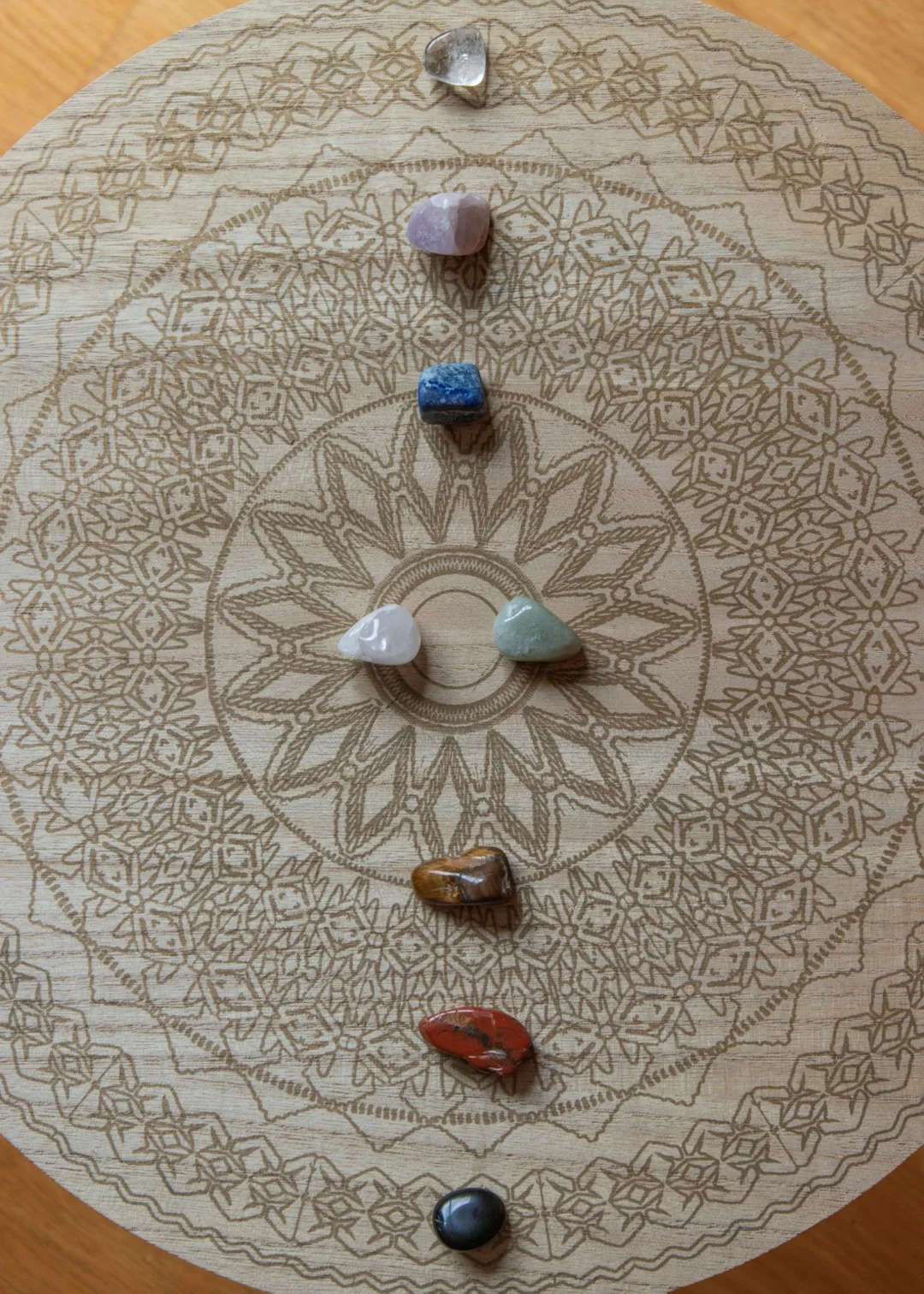
Imagine an invisible current flowing within you—quiet, steady, sometimes powerful, and sometimes barely perceptible. Not the blood in your veins, not the air in your lungs, but something that the ancient yogic traditions call prana: life energy. And along this invisible current lie seven nodes, seven vortices of power and consciousness that have been at the heart of spiritual practice for millennia. We’re talking about the chakras—one of the most fascinating and, at the same time, most misunderstood concepts in energy work.
This article is your introduction to the entire field: a calm, honest overview of all 7 chakras, their colors and symbols, their connection to the planets and zodiac signs—and the question of how you can gently incorporate this ancient wisdom into your modern daily life. If you’d like to dive deeper, you’ll find a link to our respective in-depth articles at the end of each section. But first: Let’s start from the beginning.
What Are Chakras? The Basic Principle of Energy Centers
The word “chakra” comes from Sanskrit and means “wheel” or “circle”—an apt image, since these energy centers are traditionally conceived as rotating vortices that absorb, process, and release life energy. In the classical Indian yoga system, in Tantric philosophy, and in many other wisdom traditions, the body is not regarded as a purely physical structure, but as a multi-layered energy field in which the material and the subtle are inextricably interwoven.
The seven main chakras are located along the spine—from the base of the coccyx to the crown of the head. Each is associated with a specific aspect of life: security, creativity, willpower, love, expression, intuition, and consciousness. Together, they form the so-called chakra system, a kind of inner map of human experience—ranging from the most basic questions of survival to the highest forms of spiritual awareness.
It is important to understand that the concept of chakras stems from a centuries-old spiritual tradition. It is not a medical model, and working with chakras is not a substitute for professional medical or therapeutic advice. What engaging with them can offer is an invitation to self-awareness—a gentle mirror for what is in motion or stagnant within us.
A Brief Overview of the 7 Chakras: From the Root to the Crown
Before we dive deeper, it’s worth taking an initial tour of all seven energy centers—like a journey through the floors of a house you live in but may not yet know completely.
1. Root Chakra – Muladhara
The first chakra is located at the base of the pelvis and is our connection to the earth. It encompasses everything related to security, trust, and a sense of being grounded. When you feel grounded and stable, a calm, supportive force pulses here. Its color is a deep red.
2. Sacral Chakra – Svadhisthana
About a hand’s width below the navel lies the second chakra—the center of creativity, sensuality, and the flow of emotions. It represents joy, the ability to form relationships, and the willingness to surrender to the flow of life. Its color is a vibrant orange.
3. Solar Plexus Chakra – Manipura
The third chakra, the fiery wheel of the personality, is located in the area of the stomach. This is where willpower, self-confidence, and the ability to project one’s own strength outward reside. Its color is a radiant yellow—like sunlight.
4. Heart Chakra – Anahata
In the center of the chest, the fourth chakra opens as a bridge between the lower, earth-bound energy centers and the upper, spiritual ones. It is the center of love, compassion, and connection—to others and to oneself. Its color ranges from a delicate to a radiant green.
5. Throat Chakra – Vishuddha
The fifth chakra is located in the throat area and governs everything related to expression, communication, and the courage to stand by one’s own truth. It invites you to find your own voice—both literally and figuratively. Its color is a clear turquoise-blue.
6. Third Eye Chakra – Ajna
The sixth chakra, known as the “third eye,” is situated between the eyebrows. It is associated with inner perception, intuition, and the ability to see beyond the veil of the obvious. Its color is a dark indigo.
7. Crown Chakra – Sahasrara
At the crown of the head, the seventh chakra opens like a thousand-petaled lotus flower—the symbol of connection to the Greater Whole, to the cosmos, to that which is greater than the individual self. Its colors range from a radiant violet to a brilliant white.
Colors, Symbols, and Elements: The Language of the Chakras
Each of the seven chakras speaks its own symbolic language. Colors, geometric shapes, elements, mantras, and deities—all of these are part of the multifaceted meaning of the chakras, which has been passed down through yogic texts over the centuries. This symbolism is far more than mere decoration: it is a key to understanding the energy associated with each chakra.
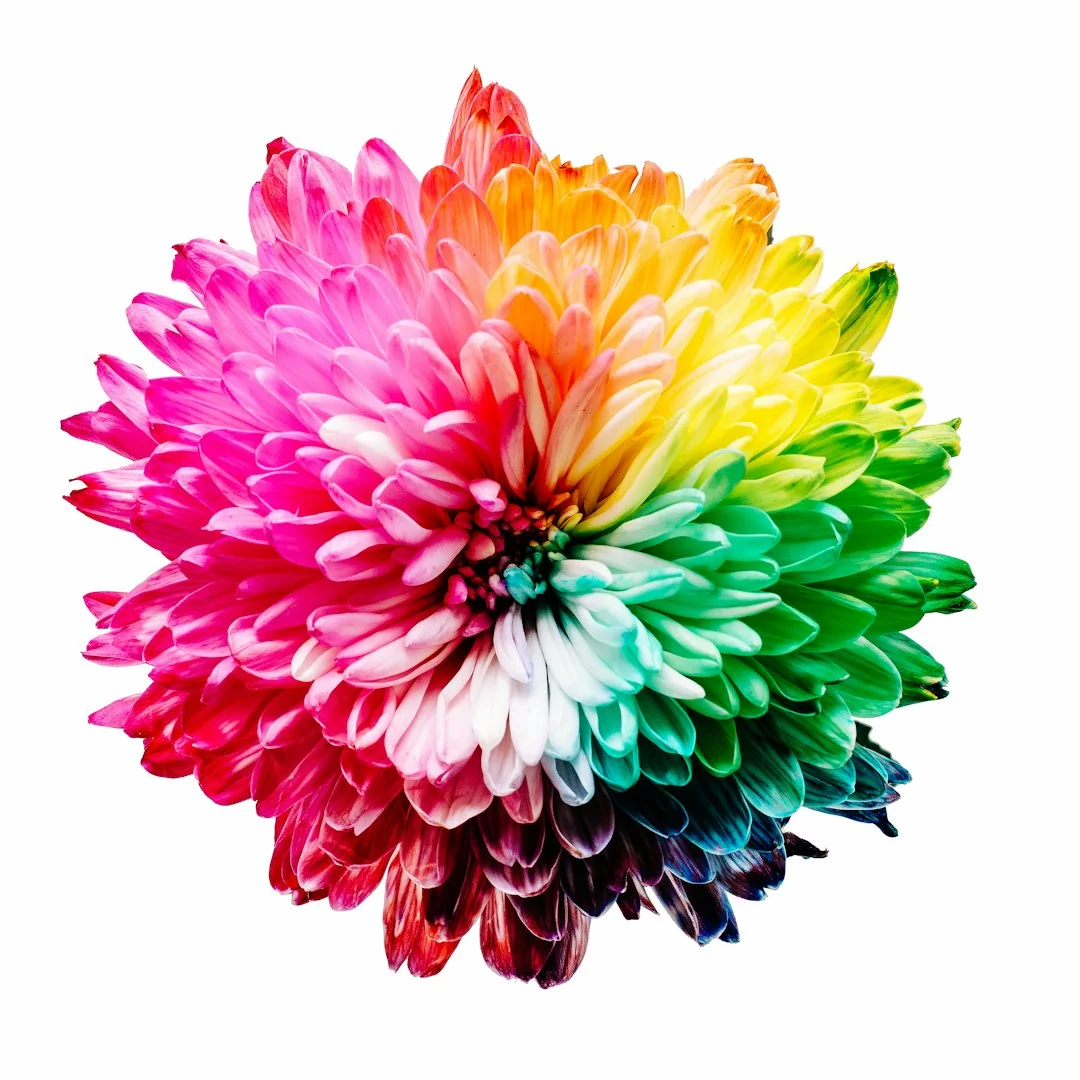
The colors of the chakras follow the spectrum of visible light—from red through orange, yellow, green, blue, and indigo to violet. This is no coincidence: in many traditions, the light spectrum itself is regarded as an expression of cosmic order. The same applies to the elements: the root chakra is associated with earth, the sacral chakra with water, the solar plexus chakra with fire, the heart chakra with air, the throat chakra with ether—and the two upper chakras transcend the elemental realm into the subtle realm.
The geometric yantras (symbols) of each chakra—square, crescent, triangle, hexagram, circle—reflect the quality of the respective energy. Anyone who wishes to delve deeper into this fascinating world of symbols will find a detailed exploration of each individual image and its meaning in our in-depth article on chakra colors and symbolism.
Chakras & Astrology "The seven chakras are like the seven visible planets of the ancient sky—each a reflection of a cosmic force that also dwells within us. The sky outside and the energy field within tell the same story."
Opening and Activating Chakras: Gentle Practices for Everyday Life
One of the most common misconceptions about chakras is the idea that you have to “fix” something—as if the energy centers were broken and just waiting for the right technique. Tradition sees it differently: Chakras are always in motion, always alive. What can change is the quality of this movement—how free, how open, how in harmony with the rest of the system.
In yogic and energetic practice, opening and activating the chakras therefore means more like extending an invitation—creating a space where stagnant energy can flow again. There are wonderfully simple ways to do this that fit into everyday life:
- Movement & Yoga: Certain asanas (yoga poses) are traditionally associated with specific chakras—for example, Warrior Pose is considered grounding for the root chakra, while heart-opening poses can address the fourth center.
- Breathing Exercises: Pranayama techniques can help guide the breath’s energy purposefully through the body—from the bottom up, from the root to the crown.
- Meditation & Visualization: Many practitioners find it helpful to quietly focus their attention on a specific chakra, connecting with its color or sound.
- Sound & Mantras: Each chakra is associated with a vowel or syllable mantra (LAM, VAM, RAM, YAM, HAM, OM, silence). Consciously singing or humming these sounds can resonate with a chakra’s vibration.
- Nature & Elements: Walking barefoot on the earth for the root chakra, gazing at a candle for the solar plexus chakra, looking up at the starry sky for the crown chakra—sometimes the simplest rituals are the most effective.
All of these methods are invitations, not guarantees. They are not a substitute for professional therapeutic or medical support. If you’d like to delve deeper into specific practices, you’ll find what you’re looking for in our article on opening and activating chakras—with detailed instructions for each energy center.

Chakra Balance: What Balance Really Means
The word “balance” can easily sound like an ideal state that we must strive to achieve—and one that we fail to attain as soon as we feel out of sorts. But the chakra tradition means something more vibrant: a constant, dynamic interplay that continually renews itself. Just as the planets never stand still but are in constant motion, our energy centers are also in a perpetual rhythm of contraction and expansion.
Balance in the chakra system does not mean that all seven centers are equally active. Rather, it means that no single chakra appears to be permanently dominant or completely blocked—that energy can flow freely between all levels. Many people intuitively sense when an area of their life requires special attention: persistent restlessness, communication difficulties, or the feeling of being emotionally cut off. The chakra perspective offers an opportunity for self-reflection here—not a diagnostic tool, but a loving inner compass.
Practices such as guided chakra meditations, breathing exercises, or mindful bodywork are found by many people to be helpful in developing greater awareness of their own inner landscape. You can find a detailed exploration of this topic—including specific tips on how to recognize imbalances and which practices are traditionally recommended—in our article on chakra balance and harmony.
Chakras and Astrology: The Cosmic Bridge
For an astrology brand like 7zen, the most intriguing question naturally comes to mind: How are chakras and astrology connected? And the answer is: more deeply than most people realize.
In Western esotericism and Vedic astrology (Jyotish), there has long been a correspondence between the seven classical planets and the seven chakras. This connection is not a modern invention, but is rooted in an ancient understanding according to which the human interior is seen as a mirror of the cosmos—“as above, so below; as within, so without,” as the Hermetic tradition puts it.
Here is an initial overview of the classical correspondences:
- Root Chakra – Saturn: The god of time and guardian of structures represents stability, grounding, and the laws of matter.
- Sacral Chakra – Jupiter: The Great Benefactor connects with the flow of creation, abundance, and the joy of life.
- Solar Plexus Chakra – Mars: The red planet of drive and will reflects the fiery energy center of the personality.
- Heart Chakra – Venus: The goddess of love in the heavens finds her natural resonance in the fourth chakra—beauty, harmony, and connection.
- Throat Chakra – Mercury: The messenger of the gods and guardian of language and communication corresponds to the center of expression.
- Third Eye Chakra – Moon: The ruler of intuition, inner imagery, and the unconscious shines upon the third eye.
- Crown Chakra – Sun: The highest center of light mirrors the heart of our solar system—consciousness, enlightenment, the Self in its greatest expanse.
These correspondences open up fascinating possibilities: For example, someone with Mercury strongly positioned in their birth chart might feel a natural affinity for the throat chakra. A challenging Saturn transit could affect one’s sense of security and grounding—that is, the root chakra. The cosmic rhythms of the planets and the inner landscape of the chakras sometimes tell the same story in different languages.
The zodiac signs also play a role: Fire signs like Aries, Leo, and Sagittarius often resonate with the fiery, powerful energies of the third chakra; Water signs like Cancer, Scorpio, and Pisces tend toward the deep sensitivity of the second and fourth chakras. Earth signs naturally connect with the stability of the root chakra, while air signs align with the communicative flow of the fifth.
Of course, this is just the beginning of a very rich exploration. To learn exactly how these correspondences work, which transit phases evoke specific chakra qualities, and how you can integrate your personal horoscope with your chakra practice—read our in-depth article on chakras and astrology.
The Significance of Chakras in Everyday Life: Why This Knowledge Is Relevant Today
It’s easy to dismiss the topic of chakras as exotic, abstract, or too “spiritual”—and yet, at the same time, more and more people feel that a purely rational, materialistic worldview overlooks something essential. The longing for depth, for an inner compass, for tools of self-knowledge—it is not a weakness, but one of the most human impulses of all.
The chakra system offers exactly that: a map of inner experience that connects ancient wisdom with what we experience every day. Why am I having a hard time expressing myself right now? Why do I feel cut off from my creativity? Why am I restless, even though I’m actually exhausted? The language of the chakras gives these everyday experiences names and context—without diagnosing, without judging, without making promises.
Instead, it invites us to pause, feel, and observe. That alone—in a world full of noise and speed—can set something valuable in motion. Many people who begin working with the chakras regularly report that they become more attentive and compassionate toward themselves. Whether this is an “effect” of the chakras or simply the result of any serious introspection—perhaps that question isn’t all that important.
The 7zen Chakra Series: Your Guide to All the In-Depth Articles
This pillar article serves as the starting point for our comprehensive chakra series at 7zen. Each of the five in-depth topics has its own article, inviting you to truly dive in:
- Chakra Colors and Symbolism: A detailed journey through the world of colors and imagery of all seven energy centers—from yantras to lotus blossoms to the classical elements.
- Opening and Activating Chakras: Practical guides for yoga, breathwork, sound, meditation, and daily rituals—tailored to each individual chakra.
- Chakra Balance and Harmony: What an imbalance in the energy system might mean, how to recognize it, and how to gently counteract it.
- Chakras and Astrology: The fascinating world of planet-chakra correspondences—with astrological tools for your personal energy work.
- The Crown Chakra and Spiritual Awakening: An in-depth exploration of the seventh chakra—transcendence, expansion of consciousness, and the cosmic connection beyond the ego.
Follow the path that appeals to you most right now. Often, the intuitive choice is the right one—that, too, is a way of listening to your inner energy field.
Perhaps by reading this article, you’ve already embarked on a journey—through the seven floors of your inner home. Perhaps a description touched something within you, raised a question, or sparked a quiet realization. That is exactly the first step: not to accumulate knowledge, but to feel what resonates.
The chakras aren’t a concept you have to understand before you can work with them. You can start at any time—with a deep breath, a moment of silence, or simply by pausing and asking: Where in my body am I holding onto something right now? The cosmos keeps turning. The planets follow their orbits. And within you—quietly and vibrantly—seven wheels turn.
Your Personalized Star Chart
The star chart captures the sky at the time of your birth—a personal starting point for connecting astrology with your energy centers.
Your daily companion for personal growth
With the 7zen app, you'll receive daily coaching tips, guided breathing exercises, and personal reflections—all based on your individual profile.
What exactly are chakras, and where does this concept come from?
According to ancient yogic and tantric traditions, chakras are energy centers in the human subtle body. The word comes from Sanskrit and means “wheel” or “circle.” The concept is found in Indian texts such as the Vedas and Upanishads, as well as in Tantric literature, which has been passed down over millennia. It is a spiritual, not a medical, model—and yet it has found its way into numerous holistic practices worldwide.
Can I "see" or measure chakras?
No, chakras are not anatomical structures and cannot be detected with medical devices. They are part of the subtle or energetic body, as described by many Eastern traditions. Some people report that they can sense chakras as warmth, tingling, or an inner sensation—but this remains a deeply subjective experience. Their “reality” lies more in the realm of inner experience than in measurable physics.
How are chakras and astrology related?
In Western esotericism and Vedic astrology, the seven main chakras are associated with the seven classical planets: Saturn to the root chakra, Jupiter to the sacral chakra, Mars to the solar plexus chakra, Venus to the heart chakra, Mercury to the throat chakra, the Moon to the third eye chakra, and the Sun to the crown chakra. These correspondences reflect the Hermetic principle “as above, so below” and can be used to integrate astrological influences with one’s own energy work.
How long does it take to "open" a chakra?
There’s no one-size-fits-all answer to that—and the goal is less about “opening up” and more about inviting greater awareness and flow. Some people report changes in their inner experience after just a single meditation, while others work continuously with specific energy centers over long periods of time. It’s less about speed and more about regularity, mindfulness, and the willingness to perceive oneself honestly. Consistency and self-compassion are more helpful than ambition.
Can I work with chakras without any prior knowledge of yoga or meditation?
Absolutely. Although the concept of chakras originates from the context of yoga, many of the practices are accessible even without prior knowledge. Walking barefoot in nature, mindful breathing, sitting quietly with a color or a sound—all of these can be a starting point. You don’t need a perfect meditation posture or decades of practice. Curiosity and openness are the most important prerequisites.
Do chakra exercises replace medical or psychological treatment?
No—definitely not. Working with chakras is a spiritual and self-reflective practice rooted in ancient traditions; it is not a substitute for professional medical or psychotherapeutic care. If you are experiencing physical symptoms or psychological distress, please consult a doctor or a mental health professional. Chakra practice can be a valuable complement—but it cannot replace therapy.