Sleep better: 8 rituals for restful nights
Sleep is not a luxury - it's the basis for everything. 8 scientifically proven rituals for deep relaxation and full energy.
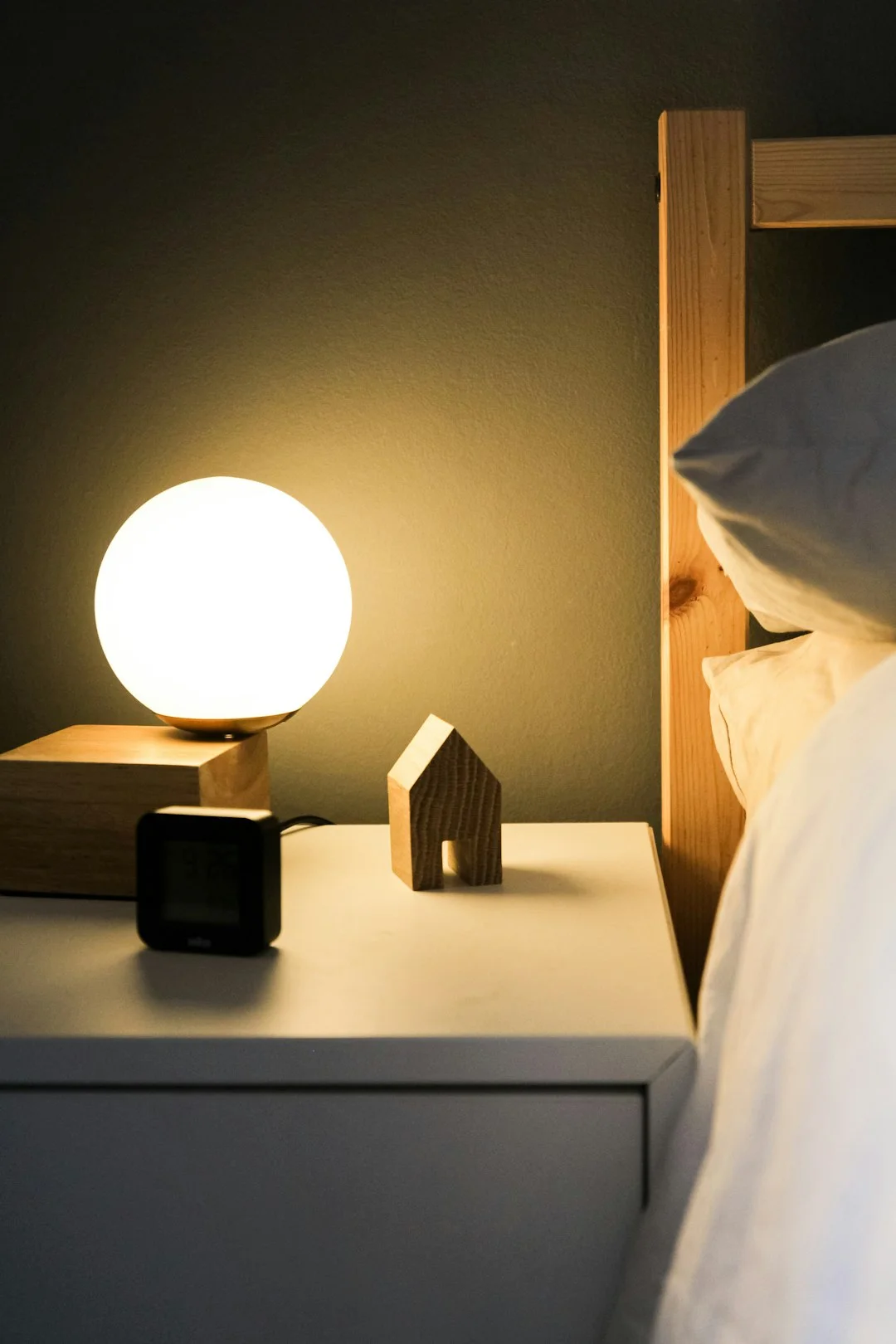
Do you know that feeling of waking up in the morning and wondering why you even went to sleep? You’re lying there, the alarm is ringing, and instead of feeling refreshed, you just feel sluggish. Yet you spent eight hours in bed. What went wrong?
The answer rarely lies in the amount of sleep—it lies in the quality of sleep. And that begins long before you turn off the light. Good sleep isn’t a coincidence. It’s the result of conscious rituals that signal to your body and mind: It’s time to let go.
At 7zen, we believe that true rest is possible—for everyone. In this article, we’ll introduce you to eight rituals that are scientifically proven to work and that you can try tonight. No magic, no complicated systems. Just simple, effective habits that can transform your sleep—and, as a result, your overall health and energy—for the long term.
Why Sleep Is the Foundation of Your Health
Sleep is often underestimated in our society. People who sleep little are quickly seen as particularly hardworking or dedicated. Yet the opposite is true: lack of sleep is one of the greatest enemies of our performance, our emotional stability, and our physical health.
While we sleep, vital processes take place in the body. The brain processes experiences and consolidates what has been learned. The immune system regenerates. Cells are repaired, hormones are regulated, and inflammation is suppressed. Those who consistently sleep too little or poorly risk not only exhaustion the next day but also, in the long term, an increased risk of cardiovascular disease, obesity, depression, and anxiety disorders.
This connection is particularly relevant for our target audience—people who want to work on themselves, grow, and live mindfully: Without restful sleep, personal development is hardly possible. Emotional regulation, creativity, empathy, and concentration—all of these suffer from poor sleep. Good sleep is therefore not a given, but a form of self-care that supports everything else.
What is sleep hygiene—and why is it so important?
The term “sleep hygiene” might sound dry, but it describes something very practical: the totality of all habits and conditions that promote or hinder your sleep. Sleep hygiene encompasses everything—from your sleep environment and evening routine to what you drink or do after 6 p.m.
The good news: Sleep hygiene can be learned. You don’t need to be genetically gifted when it comes to sleep. You just need to understand how your internal system works and support it in a targeted way. Your body has what’s known as an internal clock—the circadian rhythm—which is regulated by light, temperature, nutrition, and social cues. When you learn to work with this internal clock instead of against it, your sleep quality often improves noticeably within just a few days.
The following eight rituals are not a random list. They interlock, complement each other, and together create an evening routine that guides your body step by step into sleep mode. Start by picking two or three that feel right for you—and build from there.

Ritual 1: Consciously Design Your Sleep Environment
Your bedroom should be a place that clearly signals to your brain: This is where you sleep. That sounds obvious, but for many people, it isn’t. A laptop on the bed, a cell phone on the nightstand, a TV across the room—all of these send the wrong message.
The ideal sleep environment is cool, dark, and quiet. Research shows that a room temperature between 16 and 19 degrees Celsius promotes falling asleep because the body’s core temperature needs to drop slightly for sleep. Complete darkness promotes the release of melatonin, the body’s natural sleep hormone. And quiet—or at least steady sounds like white noise—prevents your brain from staying awake.
Make a conscious investment in your sleep environment. Blackout curtains, a comfortable mattress, high-quality bedding—this isn’t a waste, but an investment in your health and energy. Also, remove anything associated with work or digital devices from the bedroom as much as possible.
Ritual 2: Reduce blue light – disconnect from digital devices
Smartphones, tablets, and laptops emit blue light that signals to our brains: It’s daytime. Daylight. Time to be awake. This signal suppresses melatonin production and thus delays the natural process of falling asleep—sometimes by up to two hours.
Put your smartphone down at least 60 minutes before bed. For many people, this is the hardest step—and at the same time, one of the most effective. How do you fill this time instead? Read a book, keep a journal, listen to calm music or podcasts through headphones, draw, or engage in a quiet hobby.
If completely disconnecting isn’t realistic yet: Use night mode on your devices, reduce screen brightness to a minimum, and avoid emotionally stirring content—exciting TV shows, news, or social media—in the hours leading up to sleep. Your nervous system will feel the difference.

Ritual 3: The Power of Consistent Bedtimes
Your circadian rhythm thrives on consistency. Going to bed and waking up at the same time every day—even on weekends—helps train your body to maintain a stable sleep-wake cycle. This may sound strict, but it’s one of the most effective ways to improve your sleep.
Many people don’t get enough sleep during the week and try to catch up on lost sleep on the weekend. What’s often overlooked is that this so-called “social jet lag pattern” throws off your internal rhythm, much like real jet lag after a long flight. Your body no longer knows when it’s supposed to be tired—and when it isn’t.
Find your ideal sleep times by paying attention to when you naturally get tired and when you wake up without an alarm. For most adults, the optimal sleep window is between 10 and 11 p.m. and 6 and 7 a.m.—but individual differences are normal and should be respected. Listen to your body, not to societal expectations of when you should sleep.
Expert perspective of the 7zen editorial team "Sleep is not the time when life pauses. Sleep is the time when life renews itself."
Ritual 4: Breathing Exercises as a Gateway to Calm
Breathing techniques are among the most well-researched and accessible methods for specifically calming the nervous system. When we’re stressed, we breathe shallowly and quickly—this activates the sympathetic nervous system, our “fight-or-flight” mode. Deep, slow breathing does the opposite: it activates the parasympathetic nervous system, our body’s rest mode.
The 4-7-8 technique is particularly effective for falling asleep. Here’s how it works:
- Breathe in through your nose for 4 seconds.
- Hold your breath for 7 seconds.
- Exhale through your mouth for 8 seconds.
- Repeat this cycle four to six times.
Another simple technique is abdominal breathing: Place one hand on your stomach and the other on your chest. Breathe so that only the hand on your stomach rises. This form of breathing immediately signals safety and relaxation to the brain.
Try one of these techniques every day for at least seven days—preferably in bed, just before you turn off the light. The effects become increasingly noticeable with regular practice.

Ritual 5: Journaling as a Way to Clear Your Mind
One of the most common obstacles to falling asleep is a mind full of thoughts. Sending that email tomorrow. Reflecting on the conversation from earlier. The to-do list for the weekend. Our brain tries to hold onto everything important—and unfortunately does so precisely when we want to wind down.
Evening writing—also known as a “brain dump”—helps get these thoughts out of your head and onto paper. Take five to ten minutes and write down everything that’s on your mind: tasks, worries, unanswered questions, but also positive experiences from the day. This act of writing signals to the brain that this information is safely stored—it no longer needs to actively “keep it in mind.”
Combining two elements is particularly effective:
- A short to-do list for the next day—so your brain can let go, knowing everything is written down.
- Three things you’re grateful for today—this shifts your final focus to the positive and influences the emotional state you fall asleep in.
Practicing gratitude before sleep is not just an empty phrase. It is well-supported by psychological research: People who regularly practice gratitude fall asleep faster, sleep longer, and report more restful nights.
Ritual 6: Physical Relaxation Through Progressive Muscle Relaxation
Many of us carry physical tension without even realizing it. Tense shoulders, a clenched jaw, a hunched chest—the body holds onto the day’s stress even when the mind is long ready to let go.
Progressive muscle relaxation, as developed by Edmund Jacobson, is a simple yet highly effective method: You tense different muscle groups one after another for a few seconds and then consciously release them. This alternation between tension and relaxation trains the body to recognize tension and release it in a targeted manner.
A typical sequence looks like this:
- Start with your feet: tense your toes, hold for five seconds, release.
- Continue through the calves, thighs, buttocks, abdomen, hands, forearms, shoulders, and up to the face.
- Take your time with each muscle group and feel the relaxation after releasing.
Just ten minutes of this exercise can significantly shorten the time it takes to fall asleep while also improving the depth of your sleep. It is particularly suitable for people who experience physical restlessness in the evening or feel like they “can’t switch off.”
Ritual 7: Make Mindful Choices About Food and Drinks in the Evening
What you consume in the hours before bed affects your sleep more than most people realize. Caffeine has a half-life of five to seven hours—which means that a cup of coffee at 3 p.m. is still half active in your bloodstream at 8 p.m. For many people, it makes sense to cut back even earlier in the day.
Alcohol, which is often underestimated as a sleep aid, also significantly disrupts sleep. While it may help you fall asleep, it fragments deep sleep phases and REM sleep—the phases that are crucial for true rest and mental recovery.
What is helpful, however:
- Warm milk or herbal teas such as valerian, chamomile, or passionflower have a mildly calming effect on the nervous system.
- Magnesium-rich foods like nuts, dark chocolate, or green leafy vegetables can promote muscle relaxation.
- A light, early evening meal is better than a heavy, late dinner—digestion uses energy that the body needs for regeneration at night.
Also, drink enough water throughout the day, but reduce your fluid intake in the hour before bed to avoid waking up at night.
Ritual 8: A Personal Evening Ritual as a Transition Rite
Perhaps the most effective of all rituals is the most personal one: creating a conscious rite of passage between the active day and the night. Our brains love patterns. If you perform the same sequence of actions every evening, after just a few weeks your body will begin to automatically respond to this routine with relaxation.
Such an evening ritual could look like this, for example:
- 8:30 p.m.: Put away your smartphone, turn off screens.
- 8:45 PM: Take a warm bath or shower—the subsequent drop in body temperature promotes melatonin release.
- 9:15 PM: Write in a journal, jot down gratitude notes.
- 9:30 p.m.: Soft music or silence, read a book or do gentle stretching exercises.
- 10:00 PM: Dim the lights, do breathing exercises in bed, fall asleep.
The key principle is consistency, not perfection. It doesn’t have to be exactly the same every night. But the more often you send the same signals, the more reliably your body will respond to them. Start with one element that feels right right away—maybe the breathing exercise, maybe the journal—and build gently from there.
Think of your evening ritual as a gift to yourself. As a daily practice of self-care that not only helps you sleep better but also gives you a break every evening where you can be fully present with yourself.
Good sleep isn’t a matter of luck. It’s the result of conscious choices—small, daily actions that add up to something significant over time. If you sleep better tonight, you’ll wake up tomorrow morning as a slightly more rested, slightly more balanced version of yourself. And that changes everything: how you think, how you feel, how you interact with others, how much energy you have for what really matters to you.
You don’t have to introduce all eight rituals at once. Pick one tonight. Start there. And don’t forget: Every change begins with a single step—or in this case, with a single calm breath before falling asleep.
We at 7zen wish you restful nights, plenty of energy, and the stillness in which you can be completely yourself.
How many hours of sleep do I really need?
Most adults need between seven and nine hours of sleep per night. However, there are individual differences: some people feel fully rested with seven hours, others need nine. It's not the exact number that matters, but how you feel in the morning. If you wake up without an alarm clock and feel rested, you have probably found the right amount of sleep for you. Long-term sleep deprivation manifests itself in irritability, poor concentration, increased hunger and slower reaction times.
Why can't I fall asleep even though I'm tired?
This is a common phenomenon that experts refer to as "sleepless exhaustion". Causes can be an overactive stress system, too much blue light in the evening, an irregular sleep rhythm, caffeine late at night or persistent thought spirals. In many cases, it helps to rethink your evening routine and start with breathing exercises or progressive muscle relaxation. If the problem persists for weeks, a consultation with a doctor or psychologist can also be useful to rule out organic or psychological causes.
Do sleep apps really help you fall asleep?
Some sleep apps can be helpful - for example, those that offer guided relaxation exercises, breathing techniques or calming sounds. It becomes problematic when the app itself becomes a sleep problem: If you use your cell phone for the app and then briefly check social media or read the news, you counteract the positive effect. If you want to use an app, pair it with an inexpensive Bluetooth speaker so that you can put your phone down and out of sight as soon as you start the exercise.
What should I do if I wake up at night and can't go back to sleep?
Waking up briefly at night is normal and not a sign of disturbed sleep. However, if you lie awake for more than 20 minutes, sleep researchers recommend getting out of bed briefly and doing something quiet - quiet reading, gentle stretching or a breathing exercise. Stay in the dark or in very dimmed, warm light. Avoid looking at your phone or checking the time. If you feel tired again, go back to bed. The goal is to avoid undermining the mental connection of "bed equals sleep" by lying awake in frustration for long periods of time.
Is a nap good or bad for sleep at night?
A short midday nap of 10 to 20 minutes - often referred to as a "power nap" - can significantly improve concentration and energy levels in the afternoon without interfering with sleep at night. Problems arise with naps that last longer than 30 minutes or take place after 3 pm. The so-called sleep pressure - the natural feeling of tiredness that builds up during the day and makes it easier to fall asleep in the evening - can then be reduced too much. People with sleep problems should initially avoid midday naps altogether until their night-time sleep has stabilized.
How quickly do sleep rituals take effect?
This varies from person to person, but most people report the first noticeable improvements after just three to seven days of consistent use. Measures such as reducing screen time in the evening and regular sleeping times have a particularly rapid effect. Techniques such as progressive muscle relaxation or breathing exercises often require some practice before they take full effect - but the effects are usually clearly noticeable after two to three weeks. Be patient with yourself and your body: changes in sleep patterns need time to become anchored in the nervous system.