Yoga for beginners: your gentle introduction to movement and mindfulness
Never done yoga before? No problem. Here you'll find everything you need to get off to a calm and confident start.
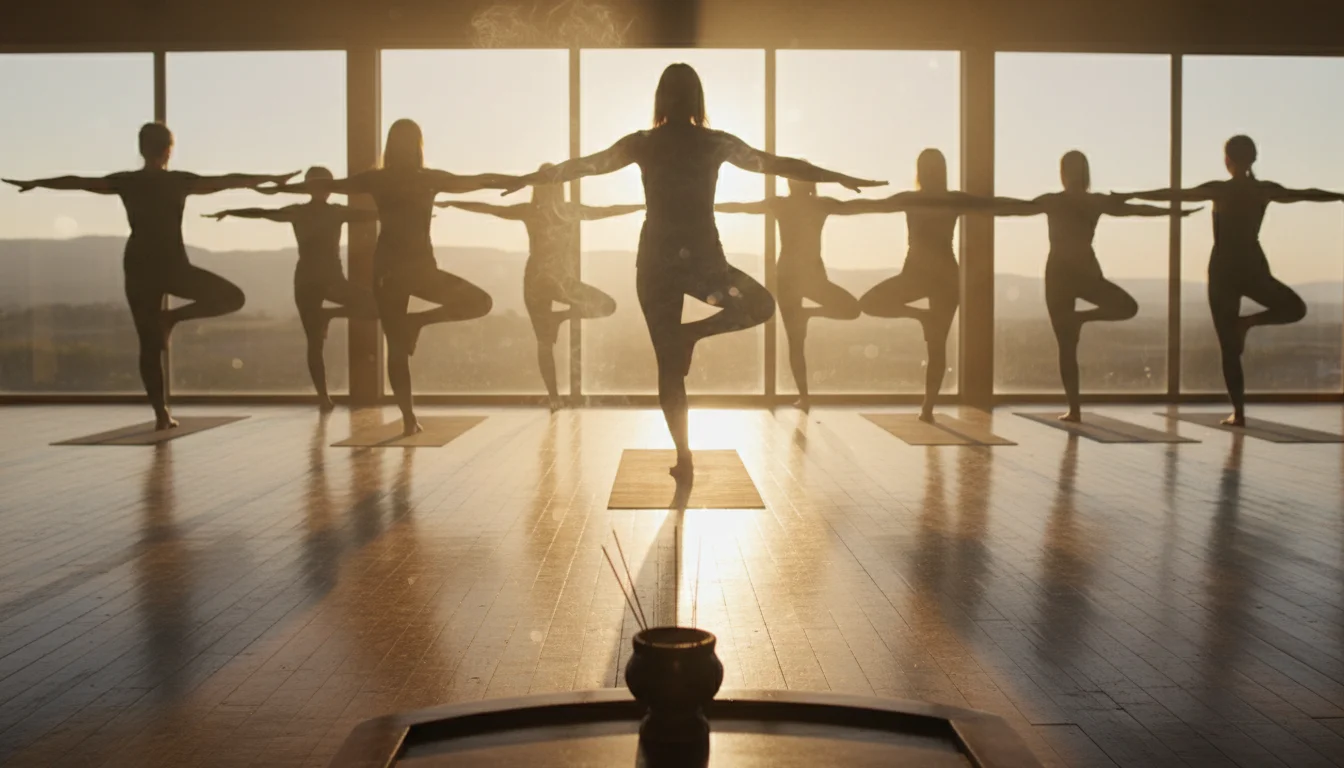
Maybe yoga has been on your mental to-do list for a long time. Time and again, you’ve thought: Someday I’ll start. But then doubts crept in: Am I flexible enough? Do I have to be able to do this? Is this really for me? We know these thoughts well—and we can tell you: They’re completely normal, and yet they’re not true. Yoga for beginners doesn’t mean being perfect. It means getting started. Right here, right now, just as you are.
In this article, we’ll gently guide you along the way. We’ll show you which yoga styles are best for beginners, what you really need, how you can get started at home—and why yoga is so much more than just stretching. It’s about movement, mindfulness, and finding your inner self. And that’s a gift you can give yourself anytime.
What Yoga Really Is – Beyond Contortions and Instagram Poses
The image many people have of yoga is dominated by athletic bodies in seemingly impossible positions, captured in perfect lighting. Yet this image has little to do with what yoga is at its core. Yoga is a millennia-old practice that connects body, breath, and mind—originating in Indian philosophy and further developed today in many Western forms.
The Sanskrit word yoga means “connection” or “unity.” It’s about consciously experiencing the moment, becoming aware of your own body, and calming the stream of thoughts. This is especially valuable for beginners: You don’t just learn new movements, but develop a whole new way of connecting with yourself.
From a psychological perspective, yoga is a form of body-based mindfulness. Studies in health psychology show that regular yoga practice can significantly reduce stress levels, improve body awareness, and enhance overall well-being. In short: Yoga is exercise, mindfulness, and self-care all in one—and you need zero prior experience to benefit from it.
An Overview of the Best Yoga Styles for Beginners
Not all yoga styles are the same—and some are much better suited for beginners than others. Here’s an overview to help you find the right style for you:
Hatha Yoga
Hatha Yoga is the classic starting point. The exercises are performed slowly and mindfully, with a strong focus on posture and breath. No time pressure, no rush. Perfect for anyone just starting out who wants to build confidence in the basic poses first.
Yin Yoga
In Yin Yoga, you hold poses for several minutes—passively, deeply, and meditatively. It is especially recommended for people who are very much in their heads and want to learn to let go. The long holding phases promote deep relaxation of the connective tissue and cultivate mindfulness in a unique way.
Restorative Yoga
Even gentler than Yin: In Restorative Yoga, you lie in supported poses—using pillows, blankets, or blocks—and allow your body to rest completely. Ideal for exhaustion, stress, or after intense periods in life.
Vinyasa for Beginners
If you’re looking for a bit more dynamism, try beginner Vinyasa classes. Here, movements flow in sync with your breath. Important: Be sure to look specifically for beginner classes, as the style can quickly become challenging otherwise.
What You Really Need as a Beginner—and What You Don’t
Before you start putting together a list of gear, let’s be honest: You really don’t need much to get started with yoga. The idea that you have to buy the right gear first is often an unconscious procrastination tactic—a phenomenon psychology refers to as “preparation as avoidance.”
What you actually need:
- A yoga mat: It gives you stability and a clear surface for your practice. A simple, non-slip mat is perfectly sufficient.
- Comfortable clothing: Anything you can move freely in. No specific brand or material is necessary.
- Some space: A clear area about two meters long and one meter wide is perfectly sufficient.
- 15 to 30 minutes of time: That’s all you need to start with. Consistency beats duration.
What you don’t need: Flexibility (that comes with time), an expensive gym membership, prior experience, or a specific body type. Yoga is for everyone—and that’s not just a cliché, but the fundamental principle of this practice.
Expert tip from Lisa, Psychology & Wellness expert at 7zen "Yoga is not what you do - it's how you do it. It's not about the perfect pose, it's about being fully present in what you are experiencing."
Yoga and Mindfulness: Why This Combination Is So Effective
What sets yoga apart from other sports is the conscious connection between movement and breath awareness. This combination has a profound effect on the nervous system. When you learn to observe your breath while simultaneously feeling your body in a pose, you activate the parasympathetic part of your nervous system—the part responsible for rest and recovery.
Mindfulness in yoga means, specifically: You are fully present in the moment. Not thinking about what you still have to do later. Not worrying about whether you’re doing the exercise correctly. But focusing on what you feel in your body right now.
That sounds easier than it is—and that is precisely where the real practice lies. For many people who are stuck in the midst of everyday life and barely notice themselves anymore, this is exactly one of the most profound experiences yoga can offer: I am here. I feel myself. I am well.
From a psychological perspective, you’re also training what researchers call interoceptive perception—that is, the ability to recognize and interpret internal bodily signals. This ability is closely linked to emotional intelligence, stress regulation, and self-care.
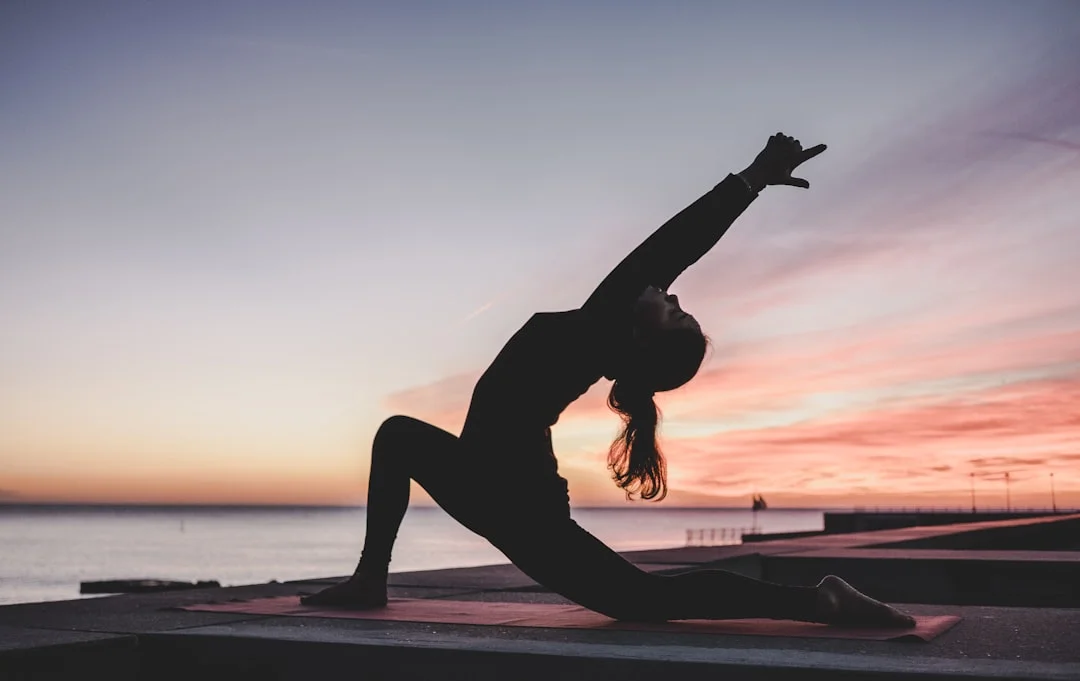
Your First Yoga Session at Home: 5 Simple Exercises for Beginners
You don’t need a studio or a class to start practicing yoga. The following sequence is designed specifically for beginners—gentle, clear, and easy to do even without any prior experience. Set aside about 20 minutes. Start each session with three deep breaths and simply let go at the end.
1. Child’s Pose (Balasana)
Kneel on the mat, sit back on your heels, and stretch your arms forward while your forehead touches the floor. Breathe calmly and evenly. This pose calms the nervous system and serves as a good starting position. Hold it for 5 to 10 breaths.
2. Cat-Cow Pose (Marjaryasana-Bitilasana)
Get on all fours. As you inhale, lift your head and tailbone, letting your belly sink toward the floor (Cow). As you exhale, round your back, pull your navel inward, and lower your head (Cat). This flowing movement releases tension in the spine. Repeat 8 to 10 times.
3. Downward-Facing Dog (Adho Mukha Svanasana)
From a tabletop position, lift your knees and push your hips upward so that your body forms an inverted V. Keep your feet hip-width apart and your hands shoulder-width apart. Your knees may remain slightly bent. This pose stretches the entire back of your body. Hold it for 5 breaths.
4. Mountain Pose (Tadasana)
Stand upright with your feet hip-width apart and your arms at your sides. Feel the contact of your feet with the floor. Straighten your spine and take a deep breath. This seemingly simple pose sharpens body awareness and promotes grounding. Hold it for 5 deep breaths.
5. Corpse Pose (Savasana)
Lie flat on your back, arms slightly away from your body, palms facing up. Close your eyes. Let your body become completely heavy. This is the most important exercise in all of yoga—conscious relaxation. Stay in this position for at least 3 to 5 minutes.
Why Yoga Is More Than Just Exercise—and How It Can Change Your Life
If you view yoga as just a sport, you’re missing half the picture. Of course, regular yoga strengthens your muscles, improves flexibility, and promotes good posture. But the deeper changes that many people describe take place on a different level.
Yoga changes how you treat yourself. You learn not to view your body as an enemy or a tool, but as a home. You learn to endure uncomfortable sensations without immediately fleeing—a skill that has an impact far beyond the mat. You learn to stay in the moment, even when your mind would rather be elsewhere.
People who practice yoga regularly often report a calmer approach to stress, greater self-awareness, and a strengthened sense of self-efficacy. These are not random side effects—they are the result of a consistent practice of mindfulness in motion.
For anyone on the path of personal development: Yoga is an exceptionally effective tool. It connects the mental with the physical, the inner with the outer, and doing with being.
Common Obstacles When Getting Started—and How to Overcome Them
Even when you’re motivated, there are typical mental barriers that many beginners face. We’ll identify them—and show you how to deal with them constructively.
“I’m not flexible enough.”
This is the most common misconception of all. Flexibility isn’t a prerequisite for yoga—it’s a result of it. No one expects you to be able to contort yourself from day one. On the contrary: inflexible bodies, in particular, benefit enormously from a gentle, regular practice.
“I don’t have time.”
Ten minutes a day are worth more than an hour once a week. Yoga’s benefits come from consistency, not duration. Incorporate it in the morning before breakfast, during your lunch break, or in the evening before bed—even short sessions count.
“I’m probably doing it wrong.”
Perfectionism is one of the biggest obstacles. Yoga isn’t a test. As long as you listen to your body and don’t ignore any pain, you can’t go wrong. Over time, your body awareness grows—and with it, your confidence in the poses.
“This isn’t for me—I’m not a spiritual person.”
Yoga is so versatile that you can use it entirely as a physical and psychological practice—without any spiritual context at all. You don’t have to believe in anything, invoke anything, or reject anything. You can simply breathe, move, and stay present with yourself.
Incorporating Yoga into Your Daily Life: How to Build a Sustainable Practice
Starting a practice is one thing—anchoring it in your daily life over the long term is another. Behavioral psychology refers to this as habit formation: For a new routine to truly become a habit, it needs a firm anchor in your daily schedule, a low barrier to entry, and regular positive experiences.
Specifically, this means for your yoga practice:
- Choose a set time: in the morning after getting up, in the evening after work—whatever fits better into your rhythm. Stick to this time consistently.
- Lower the barrier: Leave the mat rolled out. Lay out your clothes. The less preparation required, the more likely you are to start.
- Start small: Ten minutes is a great start. You can always do more—but you don’t have to.
- Link yoga to an existing ritual: After your morning coffee, before your shower, after lunch. Linking it to an existing habit is one of the most effective ways to build a habit.
- Be kind to yourself: You’ll skip days. That’s normal and not a failure. What matters is that you come back—without blaming yourself.
Remember: Yoga isn’t about performance. It’s an invitation to start anew every day.
Online Resources and Classes: Where to Start as a Beginner
You don’t need a physical studio to get good instruction. The selection of high-quality yoga classes for beginners is greater than ever—and many of them are available for free.
Video platforms
On major video platforms, you’ll find numerous German-speaking yoga instructors who offer courses specifically designed for beginners. Search for terms like “Yoga for Beginners in German” or “Hatha Yoga for Beginners.” Make sure the instructions are clear, calm, and tailored to beginners.
Apps
Several wellness apps offer structured yoga programs for beginners—often with reminder features to help you stay on track. Many of these are available for free in a basic version.
In-Person Classes
If you value the energy and community of an in-person class, it’s worth asking your local yoga studio about beginner workshops. Especially in the beginning, personal feedback on your posture is very valuable—it helps prevent improper strain and gives you confidence.
Our tip: Combine both. Start with sessions at home to get comfortable at your own pace, and occasionally attend an in-person class to refine your technique.
How often should I do yoga as a beginner?
To get started, we recommend two to three sessions per week of 15 to 30 minutes each. Regularity is more important than frequency or duration. After just a few weeks, you will notice noticeable changes in your body awareness and perception of stress. Over time, you can naturally increase the frequency and length of your sessions - without any pressure.
Is yoga also suitable for people who have physical limitations?
Yes, very good in most cases - but with one important caveat: if you have chronic complaints, injuries or have had surgery, talk to a doctor first. Many yoga styles such as restorative yoga or specially adapted hatha classes are deliberately designed for people with limited mobility. Inform the course leader about your situation at the first class.
Do I need to have previous knowledge to join a yoga course?
No. Beginner courses do not require any prior knowledge. Good instructors explain each position from the ground up and give alternatives for different bodies and abilities. Don't be afraid to tell the class that it's your first session - this is not a weakness, but helpful information for everyone involved.
What is the difference between yoga and meditation?
Yoga and meditation complement each other wonderfully, but they are not the same thing. Yoga is a body-based practice that combines movement, breath and awareness. Meditation usually takes place in stillness and silence, without physical movement. Many yoga sessions end with a short meditation or stillness - this makes the transitions smooth. Both practices train mindfulness, just in different ways.
Can I do yoga if I'm not flexible at all?
Absolutely - and this is exactly what yoga is particularly suitable for. Flexibility is not a prerequisite, but an effect. If you can barely touch your toes at the beginning, you will notice significant progress after a few weeks of regular practice. Yoga meets you where you are - and accompanies you from there.
Do I need specific equipment for yoga?
A non-slip mat, comfortable clothes and a quiet place with some open space - that's all you really need. Tools such as yoga blocks or a belt can be useful, but are not a must for getting started. Start with what you have and add what you find useful later.
You now have everything you need to get started. No need to wait for the right moment, no need for perfect preparation, and no need for a special occasion. Yoga for beginners starts right here: with a mat, a breath, and the decision to give yourself some space.
Whatever led you to this article—curiosity, stress, the desire for more exercise, or simply the feeling that something is missing—trust that impulse. It shows that you want to make a change within yourself. And yoga is a gentle, effective, and deeply human way to do just that.
At 7zen, we believe that mindfulness isn’t a matter of lifestyle, but a choice—renewed daily, possible every day. And sometimes that choice begins with rolling out the mat, closing your eyes, and simply breathing.
Your action step for today: Roll out your mat—or lay a blanket on the floor. Set a timer for ten minutes. Start with Child’s Pose. Breathe. That’s your first step—and it counts.