Ageing and body image: peace at every stage of life
How does our body image change with age - and how do you find true self-acceptance? Evidence-based answers for every stage of life.
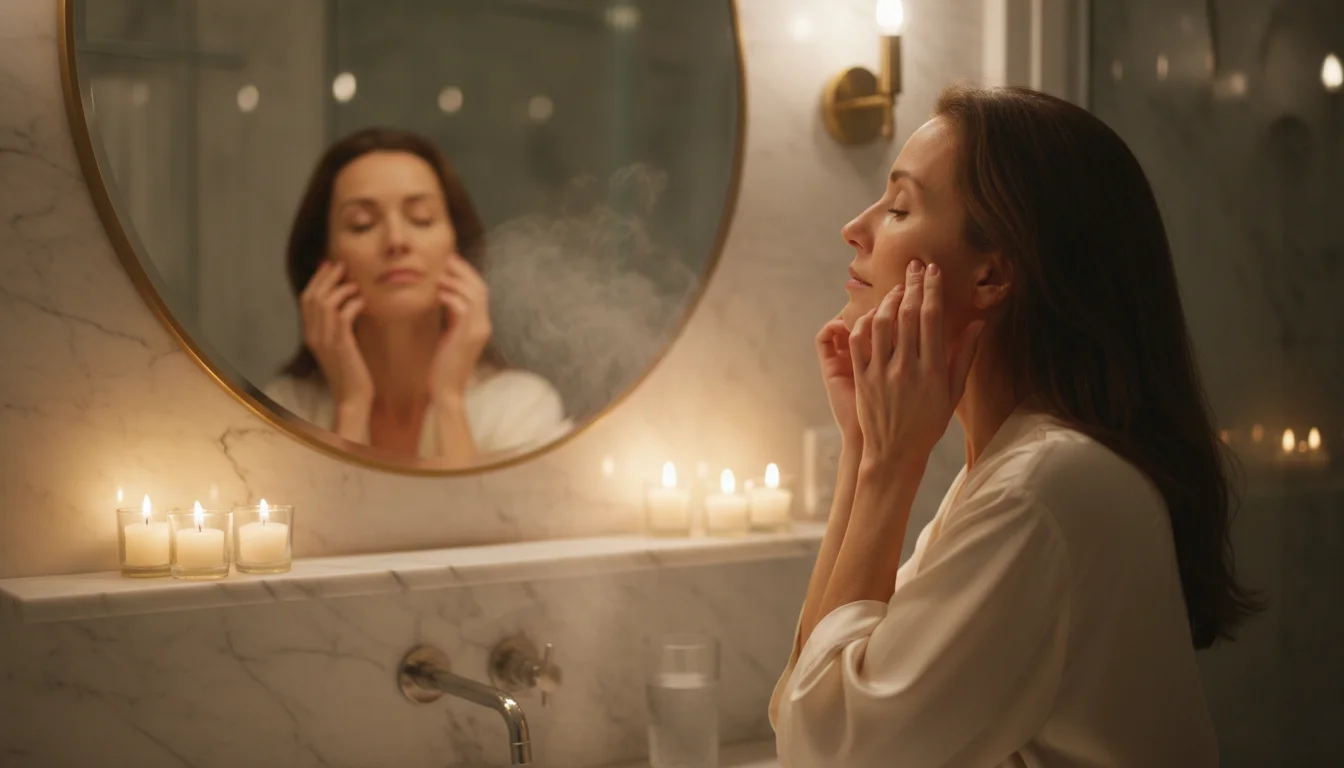
A new gray hair in the mirror, deeper wrinkles around the eyes, a body that feels different than it did at thirty—aging leaves its mark, and we see those signs every day. But how we interpret these signs makes the crucial difference between a life filled with inner tension and a life at peace with oneself. The topic of aging and body image is more complex than it seems at first glance: it touches on psychology, social norms, and the very personal history that every person carries with their body. This article takes you on an evidence-based journey through the stages of life—and shows you what research really knows about how we can make peace with our changing bodies.
What is body image—and why does it change throughout our lives?
Body image encompasses far more than what we see in the mirror. It is an internal map of perceptions, thoughts, feelings, and behaviors that we develop toward our own bodies. This map emerges early in childhood and is continually reshaped by experiences, relationships, media, and cultural messages.
In a widely acclaimed study from 2004, researcher Marika Tiggemann systematically examined how body image changes across different stages of life. Tiggemann (2004) found that body image is not a rigid construct, but a dynamic process that takes on new qualities with each stage of life. While young women often suffer from the pressure to conform to a narrow ideal of beauty, many women in middle and older age experience a remarkable shift: the function of the body—what it can accomplish—gains importance over mere appearance.
This insight is no small matter. It suggests that, under certain conditions, aging can indeed lead to liberation from the pressure to conform to appearance—provided we understand the forces that work against it.
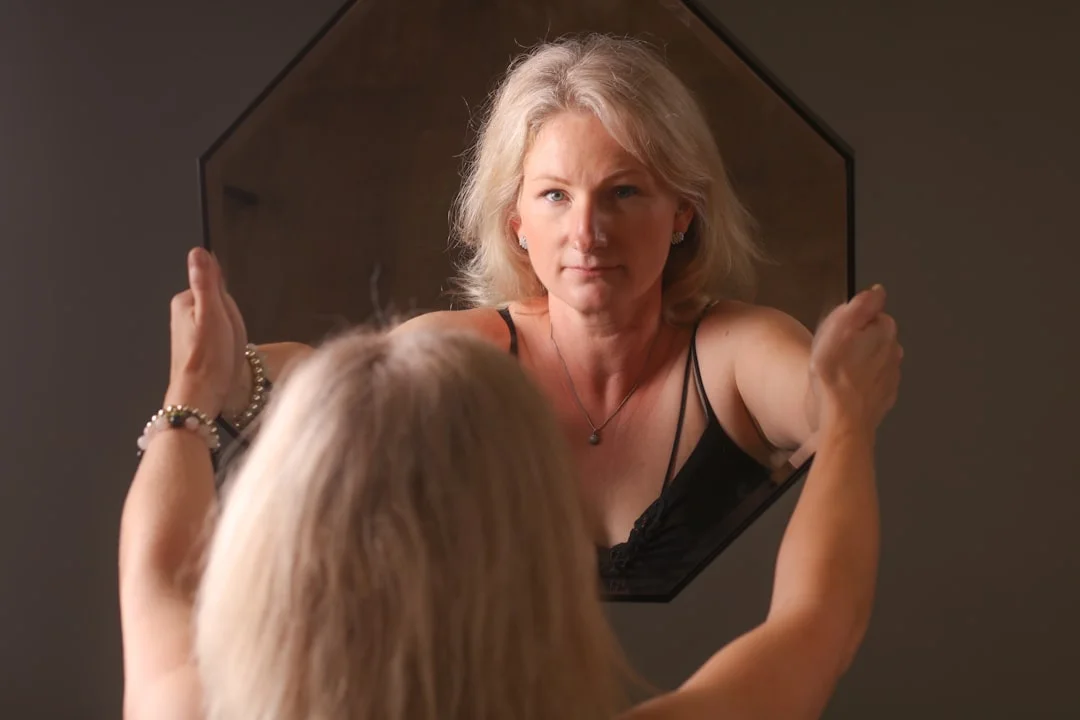
Social Pressure: Aging as a Problem That Must Be Solved
Although many people develop a certain serenity regarding their appearance as they age, society often pushes in the opposite direction. Advertising for anti-aging products, the glorification of youthful bodies in the media, and the pervasive message that aging is something to be fought—all of this leaves its mark.
In her 2009 research, social psychologist Becca Levy demonstrated that negative age stereotypes not only influence older people’s self-image but also affect their physical health and life expectancy. Levy (2009) was able to demonstrate that people who harbor internalized negative images of aging, on average, exhibit poorer memory performance and have a lower life expectancy than those with positive images of aging. This is an alarming finding—and at the same time an invitation: The way we think about aging is no small matter. It is literally a matter of life and death.
This is where the concept of age positivity comes in. It is not about denying the reality of physical changes, but about creating a social and personal framework in which aging is recognized and celebrated as a natural part of life—rather than a flaw.
Body Image in Midlife: Between Loss and New Freedom
Midlife—roughly between the ages of forty and sixty—is a time of intense physical changes for many people. Menopause, changes in body composition, declining physical stamina, or the onset of chronic health issues can significantly disrupt one’s body image. At the same time, this phase often brings with it a deeper exploration of one’s self.
In her groundbreaking 2010 research, Canadian scholar Laura Hurd Clarke explored the experience of physicality in middle and older age. Hurd Clarke (2010) describes the phenomenon of embodied identity: how the aging body becomes the stage for an internal negotiation process, where the former self-image enters into dialogue with current reality. Many of her interviewees described the feeling of being in a body that no longer matches the self-image they carry within.
At first, this sounds burdensome—and often it is. Yet Hurd Clarke also observed a remarkable capacity for adaptation: women who actively engaged with this discrepancy rather than repressing it developed a more realistic and stable body image over time. Confrontation rather than avoidance—that seems to be a central key.
When the mirror lies—or we believe it too much
A common pattern in midlife is so-called “body surveillance”: the constant observation, comparison, and evaluation of one’s own appearance. Tiggemann (2004) showed that this behavior is linked to lower well-being and a stronger sense of shame—regardless of how the body objectively looks. The message is clear: It is not the body itself that is the problem, but the relationship we maintain with it.
Scientific findings People with positive inner images of ageing live on average 7.5 years longer than those with negative images of ageing - regardless of health, socio-economic status and other factors. (Levy, 2009)
Aging and Body Image in Later Life: What the Research Reveals
Many people expect dissatisfaction with one’s own body to steadily increase with age. However, the research paints a surprisingly different picture. In her longitudinal study, Tiggemann (2004) found evidence that older women, on average, report less physical dissatisfaction than younger women—despite, or perhaps precisely because of, the more visibly apparent changes.
How can this be explained? Part of the answer lies in psychologist Laura Carstensen’s so-called socio-emotional selectivity theory. Carstensen (1999) argued that as people age, their emotional goals and priorities shift: While young adults often pursue information-oriented goals and engage in frequent social comparisons, emotional meaningfulness, deep relationships, and inner satisfaction come to the forefront in later life. External evaluations—whether by others or by looking in the mirror—simply lose their relevance.
This means: Those who learn early on to shift their focus from external evaluation to inner significance can tap into a measure of this serenity even in their younger years. Age positivity is not just a topic for older people—it begins with how we think about aging today.
Self-acceptance as We Age: What Really Helps
Self-acceptance is not a state that you achieve once and then possess forever. It is a practice—something that must be chosen anew every day, especially in a society that sends us different messages daily. But what does the research specifically say about what supports this practice?
Focusing on bodily function rather than physical appearance
One of the most effective shifts that researchers consistently describe is shifting the focus from the body’s aesthetics to its functionality. When I no longer evaluate my body primarily by how it looks, but by what it does for me—carrying me through the woods, hugging my granddaughter, turning the pages of a book—my relationship with it changes fundamentally. Tiggemann (2004) confirmed that this shift in perspective is associated with significantly higher body satisfaction in older age.
Consciously reducing social comparisons
Social media is one of the most powerful sources of negative body image at any age. What makes it particularly insidious is that the comparison often happens unconsciously and automatically. Consciously limiting platforms that predominantly show idealized body images is not a withdrawal from the world—it is an act of self-care supported by numerous studies.
Telling stories—your own and those of others
Hurd Clarke (2010) emphasized the importance of narratives: the way we tell our own body story influences how we experience it. Those who view their bodies as a story of strength, adaptation, and resilience—rather than a story of decline—develop a deeper connection with themselves. This does not mean glossing over difficulties, but rather placing them in a meaningful context.
Age Positivity: More Than a Trend—A Social Necessity
Age Positivity refers to the attitude of recognizing aging as a valuable, normal, and multifaceted part of human life—rather than pathologizing, hiding, or fighting it. This movement has gained greater social visibility in recent years, but is still frequently misunderstood by the public.
Age positivity does not mean pretending that there are no challenges associated with growing older. Physical limitations, changes in health, or the loss of loved ones are real and must not be glossed over. Rather, age positivity means acknowledging these changes without inferring that they diminish a person’s worth.
Levy (2009) demonstrated that socially prevalent negative age stereotypes—such as the assumption that older people are fundamentally less competent, less attractive, or less valuable—are often unconsciously internalized by those affected. This process, which Levy refers to as “stereotype embodiment,” has demonstrable consequences for health, cognition, and quality of life. Age positivity as a social norm can counteract this mechanism—by circulating different, richer images of aging.
Body Image Across the Lifespan: Gender Differences
For a long time, research on body image across the lifespan focused almost exclusively on women—which has led to a skewed data set. Yet the topic is relevant to all genders, albeit with different focal points.
In studies, women consistently report greater pressure to look a certain way and higher levels of body dissatisfaction across all life stages, which Tiggemann (2004) attributes, among other things, to the more intense societal evaluation of female bodies. Men, on the other hand, often experience different specific stresses as they age: declining physical performance, loss of muscle mass, or societal expectations of strength and invulnerability can significantly influence self-image.
Hurd Clarke (2010) emphasized that body images are always culturally and socially constructed: what is considered attractive, healthy, or dignified varies greatly depending on gender, background, generation, and social class. A critical examination of these constructions is an important step toward self-acceptance as we age—regardless of our gender.
Practical Ways to Develop a Positive Body Image at Every Stage of Life
Theory is valuable—but what concrete steps can you take to strengthen your body image at this stage of life? The following approaches are scientifically grounded and practical:
- Practice physical mindfulness: It is not the evaluation of appearance, but the conscious awareness of bodily sensations—warmth, movement, breath—that strengthens the connection to one’s own body beyond aesthetics. Studies show that mindfulness practices are associated with higher body satisfaction.
- Use language consciously: How do we talk about our bodies—and about the bodies of others? Phrases like “I feel strong” or “My body has carried me through so much” activate different internal processes than “I look old.” This isn’t self-deception, but a well-founded practice of cognitive restructuring.
- Question media consumption: What images of aging do you consume daily? Actively seeking out depictions of people in different stages of life—beyond anti-aging advertisements—broadens your internal frame of reference.
- Exercise as expression, not as a duty: Carstensen (1999) emphasized how important it is to choose activities that generate emotional meaning. Exercise that brings joy—whether dancing, swimming, or walking—strengthens body image more sustainably than training done out of a sense of duty.
- Seeking community: Interacting with others in similar life stages can reinforce a sense of normality and reduce shame. Whether in a group, in conversation with friends, or with therapeutic support—connection makes a difference.
Aging and Self-Acceptance: Inner Attitude as a Decisive Factor
At the end of all strategies and studies lies a realization that is as simple as it is profound: The relationship with one’s own body is, first and foremost, an internal matter. Social norms can be changed, media consumption can be regulated—but the fundamental decision to view one’s own body as an ally rather than an enemy lies with each individual.
Carstensen (1999) described how older adults often achieve a more balanced emotional experience by shifting their emotional priorities. It is less about suppressing negative feelings and more about a deeper clarity of values: What is truly important to me? What should define my life—and what should not?
These questions are not abstract philosophical exercises. They are the starting point for authentic self-acceptance as we age, one that is not based on self-deception but on an honest and compassionate encounter with oneself. Levy (2009) reminds us that the way we think about aging is literally inscribed in our cells. This makes every conscious, kind attitude toward our own aging an act of self-care—and perhaps even preventive health care.
Make peace with what has been. Stay curious about what is to come. And take your body along on this journey—not as a piece of luggage that grows heavier and heavier, but as a faithful companion that has carried you this far.
Beauty in every phase of life
The Coaching Cards remind you daily of your inner beauty and wisdom - regardless of your age.
Your daily companion for inner growth
With the 7zen app, you receive daily coaching impulses, guided breathing exercises and personal reflections - all based on your individual profile.
Is it normal to be dissatisfied with your body as you get older?
Body dissatisfaction is widespread in our society and affects people at all stages of life. However, research by Tiggemann (2004) shows that many people actually become more satisfied with their bodies in middle and old age than in younger years - because the function of the body becomes more important than the appearance. Dissatisfaction is therefore understandable, but by no means inevitable.
What is age positivity and how does it differ from just talking nice?
Age positivity means acknowledging ageing as a normal, valuable part of life - not idealizing it or denying challenges. Anyone who acknowledges physical changes, health restrictions or losses as they grow older without deriving a diminished value from them is practising genuine age positivity. This is the opposite of glossing over - it is an honest, compassionate attitude towards oneself.
Can negative thoughts about ageing really affect health?
Yes - and this has been scientifically proven. Becca Levy (2009) showed that people with internalized negative age images have poorer cognitive performance on average and a lower life expectancy than those with positive age images. This effect was found to be independent of other health factors. One's own attitude to ageing is therefore by no means just a philosophical question.
What can I do specifically to improve my body image as I get older?
Proven approaches include: shifting the focus from body appearance to body function, developing mindfulness practices that reduce social comparisons, consciously shaping media consumption, choosing exercise for pleasure rather than obligation and seeking out exchanges with people at similar stages of life. Talking consciously about your own body is particularly effective - a step that can begin immediately.
Is body image different for men and women in old age?
Yes, with different emphases. Women report greater appearance pressure and higher body dissatisfaction across all phases of life, which Tiggemann (2004) attributes to the more intensive social evaluation of female bodies. As men age, they often experience specific stresses related to declining physical performance and strength. Both experiences deserve attention and stem from culturally shaped expectations that can be questioned.
When should I seek professional support if my body image is bothering me?
If a negative body image significantly restricts your everyday life - for example through constant preoccupation with your appearance, avoiding social situations, eating disorders or persistent depression - professional support from a mental health professional is useful and helpful. Body image dissatisfaction is treatable, and early support significantly improves the prognosis.
Your prompt for today: Take five minutes and write down three things you’re grateful to your body for at this stage of your life—not because of how it looks, but because of what it does or has done for you. This simple exercise isn’t self-deception; it’s a scientifically grounded practice of shifting your perspective. It can be the first step toward making your relationship with your body just a little bit warmer today—and that’s worth more than any anti-aging cream in the world could ever achieve.