Self-compassion instead of self-criticism: the three components according to Kristin Neff
Why inner toughness doesn't get us anywhere - and how self-compassion has been scientifically proven to strengthen our well-being according to Kristin Neff.

Do you know that inner critic who immediately pipes up whenever you mess something up? “How could you have been so careless?” he whispers—or yells. Most people are far harsher on themselves than they would ever be on a friend. Yet research has clearly shown for years: self-compassion is not a sign of weakness, but one of the most powerful psychological resources we possess. American psychologist Kristin Neff has scientifically grounded the concept of self-compassion, made it measurable, and brought it to the attention of a broad public. In this article, you’ll learn what self-compassion really means, how its three core components work together—and why it’s high time to finally retire that inner critic.
What Self-Compassion Really Means—and What It Doesn’t
When the word “self-compassion” comes up, many people frown. Self-pity? Weakness? Self-indulgence? These fears are widespread—and scientifically unfounded. Kristin Neff, a psychology professor at the University of Texas, makes a very clear distinction between self-compassion and self-pity in her seminal work (Neff, 2003). Self-pity isolates us, allows us to wallow in our own pain, and gives us the feeling that we are the only ones suffering. Self-compassion, on the other hand, connects us with others and acknowledges the pain—without being overwhelmed by it.
The fear that self-compassion leads to laziness or a lack of ambition has also been empirically disproved. Breines and Chen (2012) demonstrated in a series of experiments that participants who adopted a self-compassionate attitude after a failure were subsequently more motivated to correct their mistakes and improve—not less. Self-compassion is not a free pass to mediocrity, but a stable foundation from which genuine growth becomes possible.
So it’s not about downplaying mistakes or practicing false modesty. It’s about extending to ourselves the same warmth, patience, and kindness that we would automatically offer a good friend in need.

Kristin Neff and the Development of the Self-Compassion Model
Kristin Neff began her research on self-compassion in the late 1990s, inspired by her own meditation practice and Buddhist psychology. She was one of the first to operationalize the concept—that is, to make it measurable and usable in academic research. In her groundbreaking 2003 work, Neff defined self-compassion as a construct consisting of three interconnected components: kindness toward oneself, awareness of shared humanity, and mindfulness. These three elements do not operate in isolation but reinforce one another.
Together with clinical psychologist Christopher Germer, Neff later developed the Mindful Self-Compassion (MSC) program, an eight-week training course that helps people systematically integrate self-compassion into their daily lives. In their pilot study, Neff and Germer (2013) documented significant improvements in mindfulness, compassion, and life satisfaction, as well as a marked reduction in anxiety, depression, and emotional exhaustion—with effects that remained stable even six months after the program’s completion.
The first component: self-kindness
The first and perhaps most intuitive component of self-compassion is self-kindness—the exact opposite of self-criticism and self-judgment. Neff (2003) describes it as the ability to be warm and understanding toward yourself when you are suffering, failing, or feeling inadequate—rather than punishing yourself with harsh self-criticism or ignoring your own feelings.
Imagine a close friend calls you and tells you, sobbing, that she completely lost her train of thought during an important presentation. What would you say? You would probably listen to her, reassure her that this can happen, acknowledge her disappointment, and gently suggest what she could do differently next time. You wouldn’t say: “That’s typical of you. You always fail.” And yet that is exactly the voice many of us hear in our own heads after a failure.
Self-kindness doesn’t mean overlooking mistakes. It means extending the same kindness to ourselves that we naturally give to others. In practice, this can be as simple as an inner voice saying, “That was hard. It’s okay that you’re feeling sad right now.” This small shift in perspective—from judge to friend—can have a tremendous impact.
The second component: common humanity
The second component is perhaps the most philosophically rich in its depth: the awareness of our common humanity. It describes the realization that suffering, failure, and personal inadequacy are universal human experiences—not signs of personal failure.
When we feel ashamed or wallow in our mistakes, we tend to cut ourselves off from others. We think: “I’m the only one who can’t get this right.” Or: “Others manage it, after all.” This isolation significantly intensifies the pain. The feeling of being alone with our imperfection is itself a form of suffering—and it is an illusion.
Neff (2003) emphasizes that awareness of our shared humanity frees us from this isolation. It reminds us that all people fail, doubt, get hurt, and are confronted with their limitations. This awareness connects us rather than dividing us. It is the difference between thinking “Why is this happening to me?” and “This is part of being human.” Paul Gilbert, the British psychologist and founder of Compassion-Focused Therapy, complements this perspective in his 2009 work with an evolutionary psychological view: Over millions of years, our brains have been wired to detect threats and avoid pain—internal criticism is, in a sense, an outdated survival program, not a personal character flaw.
We can cultivate an awareness of our shared humanity in everyday life by consciously thinking of others who are going through similar experiences during difficult moments. Not to compare or put things into perspective, but to feel the unifying power of shared experience.
Core idea of self-compassion research "Self-compassion does not mean that I am better than others or that I distract myself from my problems. It means that I look at my own pain with the same open eyes with which I see the pain of others - with kindness, connection and clarity." - Kristin Neff (2003)
The third component: Mindfulness as the foundation
The third component—mindfulness—is the foundation upon which everything else is built. Without mindfulness, we cannot truly develop either self-kindness or an awareness of our shared humanity. In this context, Neff (2003) understands mindfulness as the ability to neither suppress difficult thoughts and feelings nor get lost in them—but rather to perceive them exactly as they are: as temporary mental states, not as absolute truths.
In the context of self-compassion, mindfulness first and foremost means: “I notice that I am suffering right now.” It sounds simple—but it isn’t. Many of us are so accustomed to pushing pain away or immediately getting back to functioning that we no longer even perceive how we are truly feeling. Mindfulness creates the space in which compassion can arise in the first place.
At the same time, mindfulness protects us from the other extreme: over-identification with the pain. Those who lose themselves completely in their suffering are also unable to adopt a compassionate attitude—too much emotional overload prevents clear, kind perception. Neff and Germer (2013) describe this balanced awareness as crucial for self-compassion to become effective and sustainable. In this sense, mindfulness is not an esoteric exercise, but a precise psychological tool: being attentive without judging.
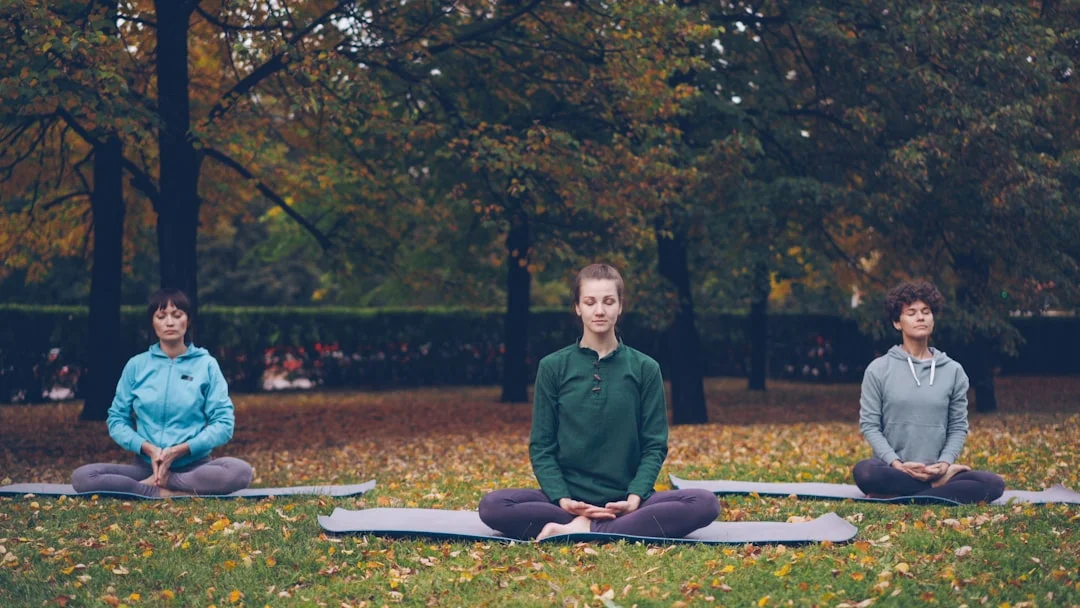
How the three components of self-compassion work together
The power of the model lies not in the individual elements, but in their interaction. Imagine a difficult situation: You’ve had an argument with someone close to you and are left feeling angry, hurt, and full of self-reproach. What happens when you activate all three components?
- Mindfulness first allows you to notice: “I’m feeling upset right now. There’s pain here.” You don’t fight against it, nor do you lose yourself in it.
- Shared humanity reminds you: “Everyone experiences arguments and the feeling of having disappointed someone. I’m not alone in this.”
- Self-kindness finally lets you talk to yourself as you would to a friend: “It was a difficult situation. You made mistakes too—and you can do better next time. That’s okay.”
This inner triad transforms how we treat ourselves. It replaces the vicious cycle of self-criticism, shame, and emotional exhaustion with a constructive, stable way of dealing with difficulties. Gilbert (2009) compares this process to the activation of the so-called care system in the brain—an evolutionarily rooted state of calm and security that is the prerequisite for genuine learning and openness.
What Science Says About the Effects of Self-Compassion
The body of research on self-compassion is now impressive. Neff (2003) developed not only the theoretical model but also the Self-Compassion Scale—a measurement tool that made it possible to study self-compassion in large-scale studies. Since then, hundreds of studies have been conducted, and the results paint a consistent picture.
People with higher levels of self-compassion report greater emotional well-being, greater life satisfaction, less anxiety, and fewer depressive symptoms. They deal with setbacks more constructively and are simultaneously more motivated to pursue personal goals. That sounds paradoxical—don’t you have to be critical of yourself to improve? Breines and Chen (2012) provide the convincing answer: No. In their experiments with college students, it was shown that a self-compassionate response to failure significantly increased motivation to learn and the willingness to improve—more so than self-criticism or neutral self-pity did.
Neff and Germer (2013) found, within the framework of the MSC program, that participants reported significant reductions in anxiety, depression, and emotional exhaustion after eight weeks of training, accompanied by an increase in mindfulness, positive affect, and general well-being. Particularly noteworthy: these effects remained stable even six months after the program’s completion.
Gilbert (2009) adds from clinical practice: In Compassion-Focused Therapy, which he developed for people with a high tendency toward shame and self-criticism, it has been shown that targeted compassion exercises activate the neurobiological system of calming—similar to the experience of care and security in early attachment relationships. In other words: Self-compassion calms our nervous system at a very basic, physical level.
Self-Compassion in Everyday Life: First Practical Steps
Theory is valuable—but self-compassion only takes effect in practice. Here are concrete approaches that can be directly derived from the three components and require no prior knowledge.
The Self-Compassion Break
Neff and Germer (2013) recommend a short exercise that can be used immediately in difficult moments. It consists of three steps corresponding to the three components: Tell yourself inwardly: “This is a moment of suffering” (mindfulness). Then: “Suffering is part of being human” (shared humanity). And finally: “May I offer myself kindness” (self-kindness). This pause lasts only a few minutes—and can fundamentally shift your inner attitude.
The Kind Letter to Yourself
In their research, Breines and Chen (2012) used a simple writing exercise: After a failure, participants wrote a letter to themselves from the perspective of an understanding, kind friend. The result was significantly increased motivation and a more constructive way of processing the mistake. You can try this yourself: After a difficult experience, write a letter to yourself—not to praise or excuse yourself, but to listen to yourself and offer understanding.
Physical gestures of care
Gilbert (2009) emphasizes how much physical gestures can influence our inner experience. Placing a hand on the heart or giving yourself a gentle hug activates physical calming responses. This may sound unusual—yet it is increasingly used in research and practice because it works. Our nervous system reacts to touch, even when we provide that touch to ourselves.
Letting Go of Self-Criticism: Why It’s So Hard—and How to Do It
Many people know intellectually that self-criticism is harmful to them—yet they still can’t stop it. This isn’t a failure, but a well-documented psychological phenomenon. Gilbert (2009) explains it through our evolutionary heritage: The human brain is wired to detect threats, avoid social rejection, and learn quickly from mistakes. Self-criticism was evolutionarily useful—it helped correct mistakes before they could have fatal consequences.
The problem: In our modern lives, we rely on the same system that once ensured survival within the group—for missed emails, unsatisfactory performance at work, or unhappy moments in relationships. The system isn’t malicious. It’s outdated.
Developing self-compassion therefore does not mean silencing the inner critic. It means cultivating a second voice—one that is warmer, wiser, and more long-term oriented. Neff (2003) describes this process as actively practicing a new inner attitude, similar to learning a skill. It takes time, repetition, and—ironically—self-compassion for the process itself. Even as we practice self-compassion, we will stumble. Even then, we must be kind to ourselves.
Self-Compassion and Mindfulness: An Inseparable Pair
Mindfulness and self-compassion are often mentioned in the same breath—and rightly so. Neff and Germer (2013) describe mindfulness as a necessary prerequisite for self-compassion: Those who do not recognize that they are suffering cannot care for themselves with kindness. At the same time, self-compassion adds an emotional warmth to the practice of mindfulness that mere observation alone does not provide.
While pure mindfulness teaches us to observe thoughts and feelings without judging them, self-compassion goes a step further: It says not only “I see that there is pain,” but also “And this pain deserves care.” It is this combination of clear perception and active kindness that forms the therapeutic core of Neff’s model.
In practical application, Neff and Germer (2013) recommend consciously combining both skills: Begin with a moment of mindfulness—pause, breathe, observe. Then consciously open the space for kindness—toward yourself, in this moment, just as it is.
Practice compassion with yourself
The Coaching Cards combine self-compassion with daily reflection impulses - gently and scientifically based.
Your daily companion for inner growth
With the 7zen app, you receive daily coaching impulses, guided breathing exercises and personal reflections - all based on your individual profile.
Is self-compassion the same as self-pity?
No - and this difference is crucial. Self-compassion isolates us, makes us sink into our own pain and reinforces the feeling that we are the only ones suffering. Self-compassion, on the other hand, acknowledges pain, connects it to the universal human experience of suffering and promotes a kind, constructive attitude. Kristin Neff (2003) explicitly emphasizes that self-compassion is the exact opposite of self-pity: it opens us up to others instead of closing us in on ourselves.
Does self-compassion make you lazy or complacent?
This is one of the most common fears - and it has been empirically disproven. Breines and Chen (2012) showed in several experiments that people who adopted a self-compassionate attitude after a failure were subsequently more motivated to improve than those who behaved self-critically. Self-compassion creates a secure emotional base from which real development is possible - without the paralyzing fear of failure that self-criticism creates.
Can I learn self-compassion, even if I never knew it?
Yes, absolutely. Neff and Germer (2013) developed the Mindful Self-Compassion (MSC) program for precisely this purpose: an eight-week training course that systematically helps people to develop a self-compassionate attitude - regardless of previous experience. According to research, even simple daily exercises such as writing a friendly letter to yourself or taking short breaks with inner kindness can have a measurable effect. Self-compassion is not a character trait, but a skill - and skills can be trained.
What are the three components of self-compassion according to Kristin Neff?
Kristin Neff (2003) defines self-compassion as an interplay of three elements: firstly, self-kindness - being kind and understanding towards oneself rather than judging oneself. Second, awareness of our common humanity - recognizing that suffering and failure are universal human experiences and do not separate us from others. And thirdly, mindfulness - the ability to clearly perceive difficult feelings without repressing them or getting lost in them. All three components are necessary and work together.
How are mindfulness and self-compassion connected?
Mindfulness is the foundation of self-compassion: without noticing that we are suffering, we cannot develop a kind response to it. At the same time, self-compassion adds an emotional dimension to mindfulness practice - it adds active warmth and caring to neutral observation. Neff and Germer (2013) recommend consciously combining both skills: Mindfulness creates the space, self-compassion fills this space with kindness.
For whom is self-compassion particularly important?
Self-compassion is universally helpful, but is particularly effective for people with pronounced self-criticism, perfectionism, a tendency to shame or emotional exhaustion. Paul Gilbert (2009) developed Compassion Focused Therapy specifically for people who suffer from intense inner self-condemnation - with remarkable clinical results. But self-compassion has also been shown to have positive effects on well-being and quality of life in everyday life, in the face of normal life difficulties and failures.
Self-compassion is neither a passing fad nor a self-help cliché. It is a well-established psychological concept backed by scientific research that can fundamentally transform our relationship with ourselves and with others. The three components identified by Kristin Neff—self-kindness, common humanity, and mindfulness—form a coherent model that has proven effective in both research and clinical practice. Whether through Neff and Germer’s MSC program, Gilbert’s Compassion-Focused Therapy, or simple daily exercises: there are many ways to cultivate this mindset.
The first step doesn’t have to be a big one. Here’s your prompt for today: Take five minutes after a small setback or a difficult moment in your day to write a short letter to yourself—from the perspective of a good friend. What would she say to you? What words would she use to support you in this moment? Read the letter aloud and notice what changes. Self-compassion begins right here—in this one small, courageous moment of kindness toward yourself.