Self-care beyond wellness: what really helps you
Self-care is more than bubble baths and smoothies. What real self-care means - and why it can change your life.
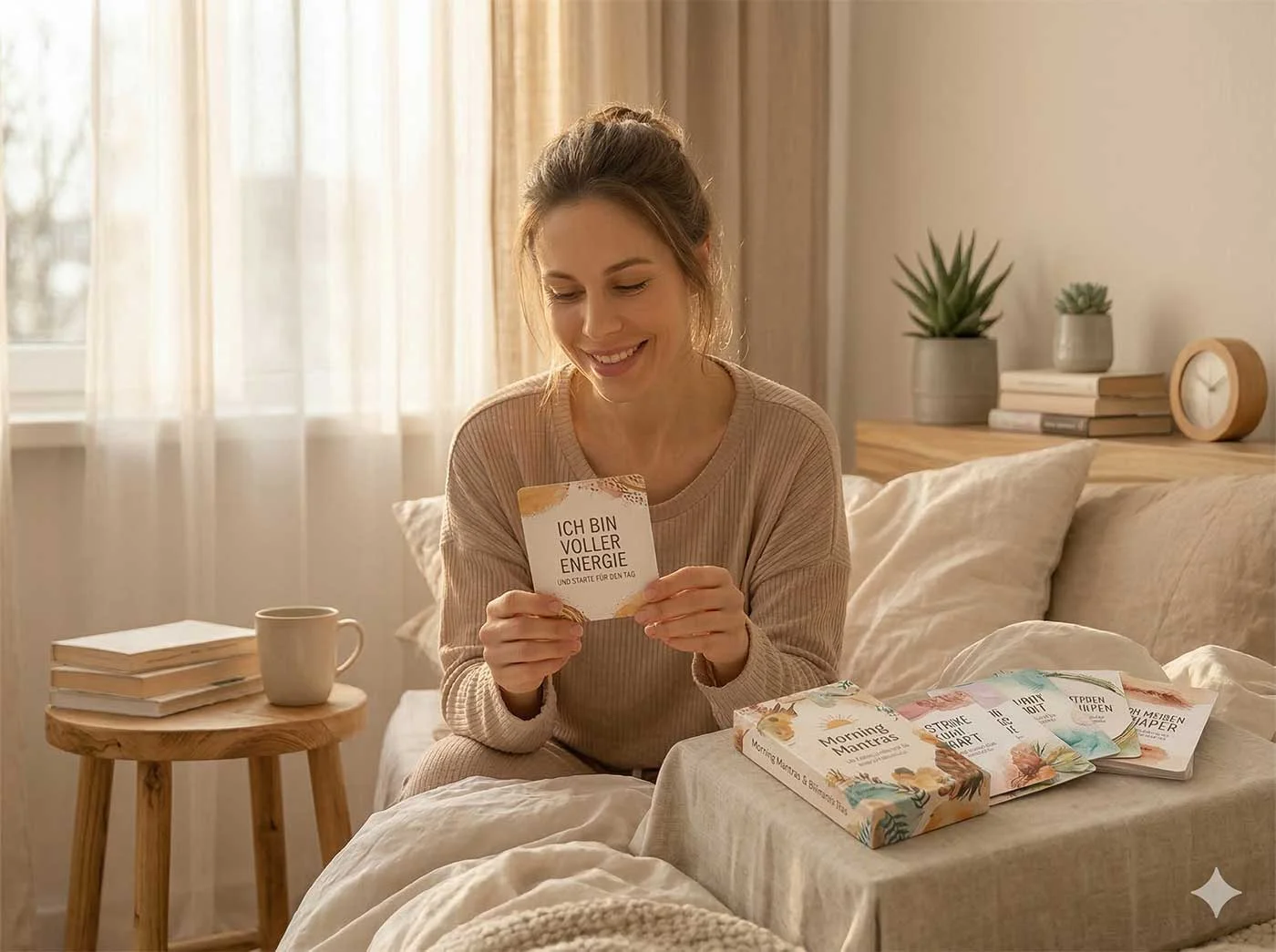
Self-care is on everyone’s lips. On social media, it appears as a stylish bathroom flat lay, a cup of steaming tea next to a notebook, or a morning jog at sunrise. It all sounds tempting—yet it’s merely the polished surface of a concept that is deeper, more complex, and more human than the wellness industry would have us believe. Those who understand and practice true self-care do far more than just treat themselves occasionally. They make a fundamental choice about their own lives. This article shows you what self-care really means from a psychological perspective, the scientific research behind it—and what you can actually do to ensure your self-care routine is more than just a nice intention.
Self-Care: More Than Just a Trend
The word itself sounds simple: taking care of oneself. But behind this simple term lies a history spanning decades—from medicine to the civil rights movement to modern psychology. As early as 1983, the World Health Organization (WHO) defined self-care as the ability of individuals, families, and communities to promote their own health, prevent illness, and manage health conditions—without necessarily relying on professional support. This understanding was fundamentally updated once again in the WHO Self-Care Framework (2019) and expanded to include psychosocial health.
Self-care is therefore not a luxury, but a basic skill. It encompasses the physical, emotional, social, and mental dimensions of well-being. Those who reduce it to face masks and wellness weekends miss the actual essence of it.

Self-Care as a Political Act – Audre Lorde’s Legacy
One of the most powerful voices on the topic of self-care comes not from psychology, but from literature and political activism. In her 1988 collection of essays, *A Burst of Light*, the American poet and civil rights activist Audre Lorde wrote the oft-quoted line: “Caring for myself is not self-indulgence, it is self-preservation, and that is an act of political warfare.”
Lorde, who was battling cancer at the time, framed self-care as an act of resistance—as a conscious decision to defy a society that systematically exhausts, overwhelms, and burns out certain people. This idea is more relevant today than ever. True self-care means taking your own needs seriously—not because it’s currently trendy, but because it is essential for a healthy, self-determined life.
What Psychology Really Means by Self-Care
In modern psychology, self-care is closely linked to the concept of psychological well-being. It is not about short-term mood boosters, but rather about sustainable strategies that enrich life on multiple levels. A central model here is psychologist Martin Seligman’s PERMA model, which describes five pillars of well-being: Positive Emotions, Engagement, Relationships, Meaning, and Accomplishment.
In 2016, Butler and Kern developed the so-called PERMA Profiler—a scientifically validated measurement tool that assesses how well people are positioned in these five areas. Their research clearly shows: well-being is measurable, learnable, and above all, shapeable. Self-care that takes all these dimensions into account is more effective than any single measure—no matter how relaxing it may be in the moment.
In concrete terms, this means: A self-care routine that focuses solely on relaxation falls short. Those who truly take good care of themselves also nurture their social relationships, find meaningful activities, experience competence and growth—and at the same time allow themselves to acknowledge unpleasant feelings rather than meditating them away.
Scientific background: Self-compassion according to Neff Self-compassion is not weakness or self-pity. It is the ability to be as kind to yourself as you would be to a good friend - even and especially in difficult moments. Kristin Neff (2003) was able to show in her groundbreaking research that people with high self-compassion suffer less from anxiety and depression, are more resilient to stress and have a more stable sense of self-worth - regardless of external successes or failures.
Self-Compassion: The Heart of True Self-Care
If there is one scientific finding that forms the foundation of genuine self-care, it is Kristin Neff’s research on self-compassion. Neff (2003) identifies three core components:
- Self-Kindness: not beating yourself up when things go wrong, but treating yourself with the same warmth you would show a good friend
- Common Humanity: the knowledge that suffering, mistakes, and shortcomings are part of the human experience—you are not alone in this
- Mindful Awareness: noticing difficult feelings without dramatizing or suppressing them
The Neff Self-Compassion Practices—including guided meditations, journaling exercises, and the so-called Self-Compassion Break—have been studied in numerous clinical trials for their effectiveness. The results are consistent: self-compassion reduces burnout, improves emotional regulation, and promotes stable inner well-being. It is thus one of the most powerful forms of self-care—free, available anytime, and without side effects.
The Five Dimensions of a True Self-Care Routine
An effective self-care routine is not a rigid sequence of rituals, but a dynamic system that takes various areas of life into account. Based on the WHO Self-Care Framework and insights from positive psychology, five dimensions can be distinguished:
- Physical: sufficient sleep, exercise, a nutritious diet, preventive medical care
- Emotional: Recognizing and expressing feelings, practicing self-compassion, setting boundaries
- Mental: mental stimulation, learning, creative activities, dealing with negative thought patterns
- Social: nurturing meaningful relationships, asking for help, experiencing community
- Spiritual (in the broadest sense): experiencing meaning, living by one’s values, staying connected to what truly matters
Those who practice self-care in only one of these dimensions will sooner or later realize that something is missing. The art lies in keeping all five areas in mind—not perfectly, but consciously.

Why We So Often Neglect Self-Care
If self-care is so important—why is it so hard for us? The answers are complex. A key factor is what psychologists call the self-neglect schema: deeply ingrained beliefs such as “I have to get everything done before I’m allowed to think of myself” or “People who take care of themselves are selfish.”
Added to this is the societal narrative of productivity at any cost. Resting is seen as laziness, setting boundaries as weakness, and expressing needs as an imposition. All of this creates an inner resistance to genuine self-care—even when we intellectually understand how important it is.
In her book *Self-Compassion: The Proven Power of Being Kind to Yourself*, Neff (2011) points out that many people mistakenly view self-criticism as a driver of performance and motivation. Yet research shows the opposite: persistent self-criticism increases stress, promotes procrastination, and undermines a sense of self-efficacy. Self-compassion is the more effective motivator.

Self-Care Psychology: What Research Teaches Us About Well-Being
Scientific research on well-being has made enormous strides over the past two decades. Positive psychology in particular—founded by Martin Seligman and Mihaly Csikszentmihalyi—has fundamentally transformed our understanding of what allows people to thrive.
With their PERMA Profiler, Butler and Kern (2016) validated a measurement tool that enables the identification of individual strengths and weaknesses in a well-being profile. Their data from international samples show that well-being does not arise from the absence of problems, but rather from the active cultivation of positive experiences, relationships, and meaning.
What does this mean for the psychology of self-care? Specifically, it means that instead of merely reducing stressors, we should also actively build up resources. This could be a regular activity that enables a flow experience, a relationship that nourishes us, or a clearly defined personal value that gives direction to our daily lives. These insights are actionable—and they impressively debunk the myth that self-care is self-indulgence.
Setting Boundaries as a Key Act of Self-Care
No article on genuine self-care can avoid a topic that makes many people uncomfortable: setting boundaries. The ability to say no—to overtime, to social obligations, to demands that exceed one’s own capacity—is one of the most effective forms of self-protection.
Boundaries are not walls. They are guideposts that clarify what is important to us and what we are willing to give. They arise not from aggression, but from self-knowledge. Those who know what they need can also communicate what they cannot give.
In therapeutic practice, it becomes clear time and again: people who are chronically exhausted and overwhelmed often haven’t set consistent boundaries—not because they didn’t want to, but because they never learned how or because they fear rejection. Setting boundaries is thus also an exercise in self-respect—and an indispensable part of any sustainable self-care routine.
Making Self-Care a Part of Your Daily Life – Without Striving for Perfection
One of the most common pitfalls when it comes to self-care is all-or-nothing thinking: Either you have a perfect morning routine with meditation, journaling, exercise, and a healthy breakfast—or you have nothing at all. This way of thinking is not only unrealistic, it’s also counterproductive.
Genuine, sustainable self-care comes from small, consistent actions—not from occasional wellness weekends. Research refers to these as micro-habits: tiny behavioral changes that, over time, add up to a new normal. A single deep breath before a difficult conversation. Five minutes of silence in the morning. An honest answer to the question: “How am I really feeling right now?”
The decisive factor isn’t the duration or intensity of an action, but its regularity and mindfulness. A self-care routine must fit who you are—not an ideal image you’ve seen on social media. Self-care is deeply personal. What works for you doesn’t have to be the same thing that helps your best friend.
Self-care and social responsibility – not a contradiction
A persistent misconception: Those who take care of themselves are shirking their responsibility toward others. The opposite is true. Only those who nurture their own resources have something to give. This is not selfish logic, but a systemic insight.
Audre Lorde’s concept of self-care as resistance points precisely in this direction: Those who sustain themselves—physically, emotionally, and mentally—remain capable of action. Those who burn out cannot help anyone. This insight applies equally to parents, caregivers, activists, leaders, and teachers.
Self-care is therefore not a rejection of community or shared responsibility. It is a prerequisite for them. A society in which all people can take good care of themselves is also a society in which greater compassion, greater resilience, and more constructive action are possible. This is not a utopia—it is a scientifically proven model of sustainable well-being.
Genuine self-care - every day
The Coaching Cards make self-care a daily practice - not a luxury, but a necessity.
Your daily companion for inner growth
With the 7zen app, you receive daily coaching impulses, guided breathing exercises and personal reflections - all based on your individual profile.
What is the difference between self-care and self-indulgence?
Self-care aims for sustainable well-being - it takes into account physical, emotional, mental and social needs and often requires uncomfortable decisions such as setting boundaries or acknowledging difficult feelings. Self-indulgence, on the other hand, seeks short-term comfort without addressing deeper needs. A bubble bath can certainly be part of self-care - but only if it is embedded in a broader context that also takes other dimensions of wellbeing into account.
How do I start a self-care routine when I don't have time?
The key is not more time, but more awareness. Start with small, concrete actions: five minutes of quiet breathing exercises in the morning, a conscious lunch without a screen, a short reflection in the evening. Researchers speak of so-called micro-habits - minimal habits that add up over time to form a sustainable system. More important than the duration is the regularity and the inner attitude with which you look after yourself.
Is self-compassion the same as self-pity?
No, and this difference is crucial. Kristin Neff (2003) clearly shows that self-pity tends to exaggerate problems, to lose oneself in a victim role and to isolate oneself from others. Self-compassion, on the other hand, means acknowledging one's own suffering with warmth, without dramatizing it - and at the same time knowing that failure and pain are part of the human experience. Self-compassion strengthens resilience and emotional stability, self-pity weakens them.
Can self-care also be learned in therapy?
Yes, and professional support is often exactly the right place for this. Many people have learned through early experiences to ignore their own needs or to dismiss them as unimportant. In psychotherapy - especially in approaches such as schema therapy, ACT (acceptance and commitment therapy) or MBSR (mindfulness-based stress reduction) - these patterns can be recognized and gradually changed. Learning self-care is a process, not a one-off decision.
Why does self-care sometimes feel wrong or selfish?
This feeling is widespread and often has cultural or familial roots. In many societies, selflessness is glorified as a virtue - especially among women. Anyone who has learned that their own needs are less important than those of others will initially experience self-care as breaking the rules. However, research clearly shows that people who take good care of themselves are more resilient, empathetic and helpful in the long term. The feeling of guilt is not a sign that self-care is wrong - it is a sign of how deeply held the opposite conviction is.
What does the PERMA model have to do with self-care?
Martin Seligman's PERMA model describes five pillars of wellbeing: positive emotions, engagement, relationships, meaning and experience of achievement. Butler and Kern (2016) have shown with the PERMA profiler that sustainable well-being must be actively cultivated in all these areas. A genuine self-care routine that only focuses on relaxation or personal hygiene does not take many of these dimensions into account. Self-care according to the PERMA approach therefore also means pursuing meaningful activities, actively shaping relationships and creating spaces for personal growth.
True self-care isn’t a checklist to be ticked off. It’s an attitude toward yourself—a decision to take your own needs seriously, every day, consciously, and without guilt. It encompasses your body, mind, emotions, and relationships. It requires self-awareness, self-compassion, and sometimes the courage to say no.
The good news: You don’t have to start from scratch. Today, think of a single small action you’d like to do every day for the next seven days—one that truly suits you. Not because it’s expected of you, but because you’re worth it. Because what Audre Lorde, Kristin Neff, and the WHO all agree on is this: Taking care of yourself is not a side issue. It is the foundation on which everything else rests.
Your prompt for today: Take five minutes and write down which of the five areas—physical, emotional, mental, social, and spiritual—you’re currently neglecting the most. And then ask yourself: What would be a small, concrete action you could take in that area tomorrow morning? Not perfect. Just honest.