The 36 channels in human design: understanding energy flows
What really connects the centers in your Human Design Chart? The 36 channels reveal how energy flows within you.
Imagine your body as a complex network of energy—with nodes connected to one another and pathways through which energy flows. This is exactly what the concept of Human Design channels describes. In the Human Design chart, the 36 channels connect two centers to one another, forming the central energy flows of your individual blueprint. This system, which Ra Uru Hu systematically developed and documented beginning in 1987, combines elements from Kabbalah, the I Ching, astrology, and modern genetics into a holistic model of self-awareness. Anyone who wants to understand how energy, drive, and character traits are connected cannot ignore the channels.
What are the 36 channels in Human Design?
In the Human Design System—as Ra Uru Hu described it in his seminal work The Rave I Ching (1991)—the channels form the connecting links between the nine energy centers (centers) in the so-called Bodygraph. Each channel connects exactly two centers and arises from the connection of two gates. These gates, in turn, correspond to the 64 hexagrams of the I Ching—the millennia-old Chinese oracle system, which represents one of the oldest surviving systems for describing human character patterns.
A channel is considered defined (i.e., activated) when both associated gates are occupied—either by the planetary positions at the time of birth or by the so-called design calculation, which sets the date 88 solar days before birth. If only one gate is occupied, it is referred to as an open channel or a so-called hanging gate. Defined channels indicate constant, reliable energy patterns; open areas, on the other hand, are susceptible to external influences.
The totality of defined channels forms a person’s definition type—that is, whether and how the various energy centers are interconnected. This is not esoteric mumbo jumbo, but a structured model for self-observation that many people find to be an accurate description of their inner world of experience.
The Roots of the Channels: Kabbalah, the I Ching, and Modern Synthesis
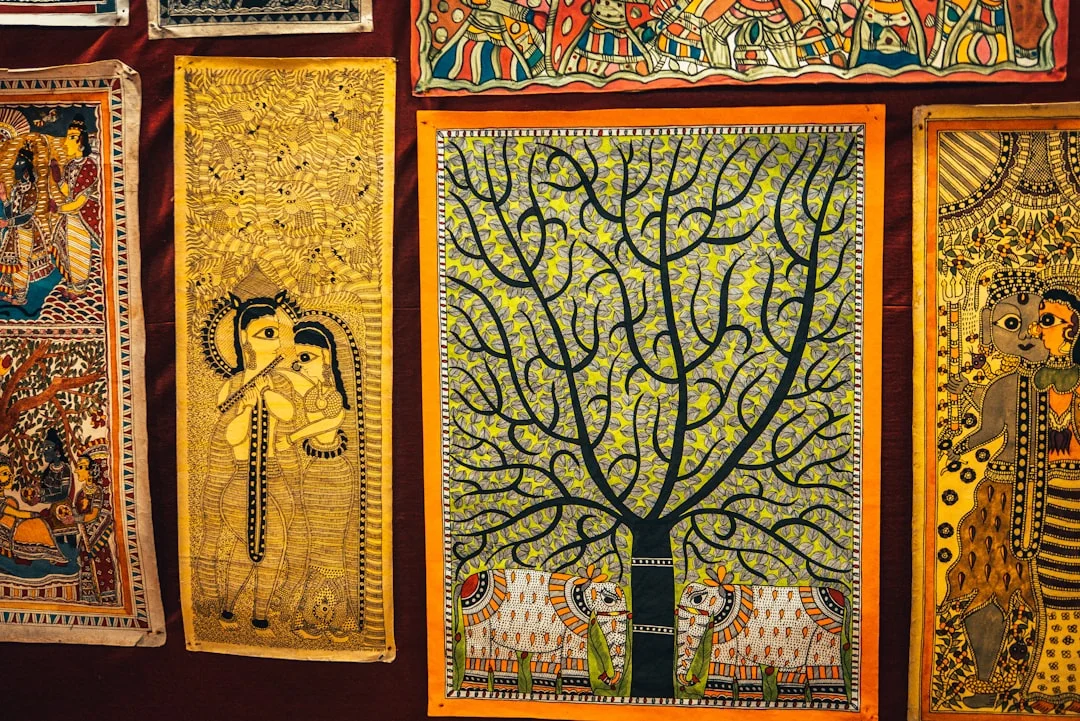
To truly understand the 36 channels, it is worth taking a look at their intellectual roots. In developing the Human Design System, Ra Uru Hu combined several traditional systems of knowledge. Of particular significance here is Kabbalah, specifically the Tree of Life (Etz Chayyim), a central symbol of Jewish mysticism. The Tree of Life depicts ten Sephiroth (nodes) and 22 paths connecting them. This structure served as a conceptual template for the network of centers and channels in the Bodygraph.
At the same time, the 64 Gates of Human Design are based on the 64 hexagrams of the I Ching, the Book of Changes, which has been used for over 3,000 years as a philosophical system for mapping human experience. Each hexagram describes a specific quality of energy or situation—and corresponds in the Human Design system to a specific Gate with characteristic properties.
Added to this are insights from modern genetics: The 64 codons of the human genetic code correspond structurally to the 64 hexagrams—a parallel that scientists such as biochemist and author Cassandra Vieten (2018) describe as remarkable in studies on holistic health systems, even though a causal connection has not been scientifically proven.
An Overview of the 36 Channels: Six Circuits as a System of Organization
To make the abundance of the 36 channels more manageable, Ra Uru Hu organizes them into so-called circuits. These circuits indicate which overarching theme or life energy a channel serves. There are three main circuits, which are in turn divided into sub-circuits:
- Individual Circuit: Channels associated with mutation, creativity, and one’s own unique expression. People with many defined channels in this area often bring something new into the world—not through social conformity, but through authentic being.
- Collective Circuit: This circuit is divided into the Logic Circuit (understanding through patterns and repetition) and the Abstract Circuit (experience and reflection). This is about passing on knowledge to the community.
- Tribal Circuit: Channels related to belonging, family, survival, and mutual support. They form the foundation of social bonds and material security.
This classification is not a rigid hierarchy, but rather a framework for orientation. In a real Human Design chart, channels from all three circuits can be defined—leading to a multi-layered, sometimes even seemingly contradictory inner dynamic, which, however, corresponds very well to the complexity of real personalities.
Scientific background: self-knowledge as a basis „Self-knowledge is the starting point of all wisdom“ - the Human Design System operationalizes this principle, which runs through many philosophical traditions, in a structural way. As early as the 1940s, psychologist Karen Horney pointed out that a deep understanding of one's own character structure forms the basis of personal development. The channels in Human Design offer a concrete descriptive model for precisely this: they make invisible energy patterns visible and therefore reflectable.
Selected channels and their significance for energy flows
Instead of superficially listing all 36 channels, it makes more sense to examine a few particularly well-known channels in greater detail to make the principle tangible:
Channel 34–20: The Channel of Charisma
This channel connects the sacral center (Gate 34, I Ching hexagram: The Power of the Great) with the throat center (Gate 20: Contemplation/Being in the Moment). Those who have defined this channel possess a natural, almost magnetic charisma—not because they are particularly loud, but because their being and their actions are immediately and directly connected. The energy expresses itself in the moment, without detours through thought.
Channel 47–64: The Channel of Abstraction
This channel connects the Head Center (Gate 64: Before Completion / Confusion) with the Ajna Center (Gate 47: Suppression / Insight). People with this defined channel process experiences in a deeply abstract, time-delayed manner. They have experiences and often only understand their meaning in retrospect—sometimes years later. This is not a deficit, but a valuable ability to find deeper meaning.
Channel 13–33: The Channel of the Wanderer
Here, the G-Center (Gate 13: Fellow Human / Openness to Secrets) connects with the Throat Center (Gate 33: Retreat). People with this channel are natural guardians of stories. They carry the collective memory within them, listen intuitively to others, and process what they hear—so they can share it at the right moment as a valuable contribution to the community.
Defined and Undefined Channels: What the Difference Means
A common misconception when working with the Human Design Chart is to view defined channels as “good” and undefined channels as “bad.” This is a fundamental misunderstanding. Defined channels describe areas of energy that are consistently and reliably active within a person—regardless of external influences. They reflect what someone reliably brings into the world.
Open or undefined areas, on the other hand, are not weaknesses. They indicate where a person is particularly receptive and capable of learning—where they can be influenced by others, but also where great wisdom can emerge. In her groundbreaking 2003 work on self-compassion research, researcher Kristin Neff demonstrated that recognizing and accepting one’s own “open areas”—that is, the more vulnerable aspects—is closely linked to psychological resilience and well-being. Applied to Human Design: Those who view their open channels not as flaws but as flexible learning fields can use them consciously and healthily.
Ra Uru Hu described in *The Definitive Book of Human Design* (published posthumously in 2011) that open centers and channels can be the actual sources of the “not-self”—that is, unconscious adaptive behavior. Becoming aware of this dynamic is a central step in Human Design practice.

Connections Between Centers: Why Channels Are More Than the Sum of Their Gates
A single gate has a specific quality—comparable to a sound. But only when two gates come together to form a channel does a complete connection between two centers emerge: a kind of melody that links both qualities and creates a new, distinct energy. These connections between centers are at the heart of Human Design analysis.
Particularly interesting are the so-called bridge channels: channels that connect two otherwise separate areas of definition in the Bodygraph—either through another person (in relationship analysis, also called a composite) or through a transiting planet. For example, when a person with separated definition areas meets someone whose defined gates precisely fill the gap, they often experience a strong sense of wholeness—a phenomenon that Ra Uru Hu described as electromagnetic attraction.
Psychologically, this can be explained by the concept of complementary attachment patterns, which Bowlby (1969) established in his attachment theory: People unconsciously seek relationships that complement their own psychological structure. Human Design gives this intuitive phenomenon a concrete, mappable form.
Human Design Channels in Everyday Life: Between Theory and Practical Experience
At this point, a legitimate question arises: What use is all of this in everyday life? The answer lies in awareness of one’s own energy patterns. Those who know that a certain channel is defined within them—for example, Channel 51–25 (the so-called Channel of Initiation, which connects the Heart Center and G-Center)—better understand why they regularly find themselves in extreme situations and emerge from them stronger.
Mia, our author from the editorial team, describes it this way: “When I first understood my chart and saw that channel 29–46 is defined—the channel of devotion, connecting the sacral and G-centers—a lot of things made sense. My tendency to throw myself completely into projects and people, sometimes forgetting my own energy in the process, was suddenly no longer a character flaw but a structural pattern with clear logic. That has significantly reduced my self-criticism.”
Such experiences are not scientific evidence, but they show how self-knowledge—regardless of the tool used—can lead to greater self-compassion and more conscious action. In her research on psychological well-being, psychologist Carol Ryff (1989) identified six core components, including self-acceptance and personal growth—precisely the areas that can be fostered through a deep understanding of one’s own energy patterns.
Common Misconceptions About the 36 Channels
Misinterpretations arise time and again within the growing Human Design community. Three particularly common misconceptions should be clearly addressed here:
- Misconception 1 — More defined channels mean more power: This is not true. Someone with many defined channels has a strong but also more fixed energy. Someone with few defined channels—a so-called Reflector—is extremely adaptable and sensitive to their surroundings. Both types have their own strengths.
- Misconception 2 — The channel determines destiny: Human Design is not a deterministic model. Ra Uru Hu always emphasized that the system offers guidance but does not describe inevitable life paths. Quantum physicist and consciousness researcher Amit Goswami (2004) put it aptly: Systems describe probabilities, not certainties.
- Misconception 3 — Human Design is astrology by another name: Although planetary positions are used to calculate the chart, the Human Design System differs structurally and significantly from classical astrology. It works with a different model of the body, different symbolism, and a different focus of application.
The 36 Channels as a Mirror: Self-Awareness Without the Pressure to Optimize
In our society, personal development is often confused with performance optimization. The Human Design System—and especially working with the channels—offers a different approach: not improving weaknesses, but acknowledging one’s own nature. Ra Uru Hu called this “living your design”—living according to one’s own blueprint.
This approach aligns remarkably well with what Deci and Ryan’s (2000) self-determination theory describes: genuine well-being arises not from conforming to external expectations, but from experiencing autonomy, competence, and relatedness. Those who trust their individual energy flows—that is, who follow their defined channels rather than suppressing them—live more autonomously and authentically.
This does not mean allowing oneself to be confined to categories. It means daring to take an honest look at how one functions—and in doing so, approaching both strengths and areas for growth with kindness. The channels in Human Design are a map, not a cage.
Your Human Design in detail
In the book Astro you will find a detailed analysis of your channels and centers - personally calculated and lovingly designed.
Your daily companion for inner growth
With the 7zen app, you receive daily coaching impulses, guided breathing exercises and personal reflections - all based on your individual profile.
How many channels can a person have defined?
Theoretically, zero to all 36 channels can be defined, although both extremes are very rare in practice. Most people have between three and twelve defined channels. Those who do not have a single defined channel are referred to as reflectors in human design - the rarest type (approx. 1% of the population). Important: The number of defined channels says nothing about the value or strength of a personality.
What does it mean if a channel is only half defined?
If only one of the two gates of a channel is activated by a planetary position, it is called a hanging gate. The channel is then open but not completely inactive - it indicates a latent energy that can be temporarily activated by other people or planetary transits. The hanging gate can exert a strong magnetic attraction to someone who has defined the missing gate.
Can channels change over the course of a lifetime?
The Human Design Chart itself - based on birth time and design calculation - remains constant for a lifetime. What changes are the so-called transit channels: the current positions of the planets activate different gates every day and can thus temporarily close new channels. This explains why people sometimes react very differently to themselves on certain days or in certain phases.
Is the Human Design System scientifically proven?
The Human Design System is not an empirically validated scientific model in the sense of clinical psychology or medicine. It is a synthetic self-awareness system that combines various traditional knowledge systems. Many people report that it accurately describes their self-perception - but this is subjective experience, not scientific proof. It is advisable to use Human Design as a tool for reflection, not as absolute truth.
How can I find out which channels are defined in my chart?
There are various free online calculators (e.g. Jovian Archive or mybodygraph.com) where you can create your own personal bodygraph. You will need your date of birth, exact time of birth and place of birth. In the finished chart, defined channels are visible as colored connecting lines between the centers - in contrast to the open channels, which are shown white or unfilled.
What is the difference between a channel and a gate in human design?
A gate is the smallest unit in the Human Design Chart and corresponds to one of the 64 I Ching hexagrams. Each of the nine energy centers has several gates. A channel is created when two gates from two different centers are both activated (occupied) and these centers are thereby connected to each other. A channel is therefore a complete energy connection, while a gate represents a single, potential quality.
The 36 channels in Human Design are far more than just an esoteric gimmick. They are a sophisticated system for describing individual energy patterns—born from the interplay of Kabbalah, I Ching wisdom, and modern systems theory. Those who take the time to explore their own energy flows in the Human Design Chart often find a surprisingly precise language for what they have long sensed within themselves.
The goal here is not perfect self-optimization, but a kinder, more curious relationship with oneself. For as Deci and Ryan (2000) demonstrate in their self-determination theory, people thrive not through pressure to conform, but through the authentic expression of their own nature.
Your action step for today: Create your free Human Design Chart on one of the platforms mentioned and take a look at which channels are highlighted in color on your Bodygraph. Choose a single channel—preferably the one that surprises you the most or piques your curiosity—and read its description. Then write three sentences in a notebook: Where do you recognize this energy flow in your daily life? Where does it contradict your previous self-perception? And what aspects of it would you like to embrace?