The 64 gates in human design: your genetic code
What do the I Ching, genetics and your personality have in common? The 64 gates in Human Design provide surprising answers.
Imagine if your personality weren’t a matter of chance—but rather a precisely encoded pattern composed of millennia-old wisdom, modern genetics, and cosmic influences. That is exactly what the Human Design system claims. At the heart of it are the 64 Gates in Human Design—also known as Human Design Gates—which are understood as a kind of genetic code that determines how you think, feel, communicate, and navigate the world. This article takes you on an in-depth journey through this fascinating concept: What lies behind the 64 Gates, where do they come from, and what can they actually reveal about you?
What are the 64 Gates in Human Design?
The 64 Human Design Gates are the smallest unit in the so-called Bodygraph—the central chart of the Human Design System. Each Gate corresponds to a specific energy, quality, or theme and is assigned to one of the nine energy centers (Centers) in the Bodygraph. Together, any two Gates that are connected form a so-called Channel—and Channels, in turn, connect the energy centers to one another.
What makes the number 64 so special? It is no coincidence. 64 is also the number of hexagrams in the I Ching, the Chinese Book of Changes, which has been used as a system of wisdom for over 3,000 years. Furthermore, the number 64 corresponds to the 64 codons in human DNA—those molecular building blocks that make up the genetic code of life. This structural correspondence is one of the reasons why Human Design is viewed by its followers not as mere esotericism, but as a synthetic system of knowledge that links various disciplines.
Ra Uru Hu, the founder of the Human Design System, claims to have received the system as an inner revelation in 1987 and subsequently developed it systematically. His Gate System is based on the direct application of the 64 I Ching hexagrams to the positions in the Body Chart—supplemented by elements from Kabbalah, astrology, and quantum physics.
The I Ching as the Root of the 64 Human Design Gates
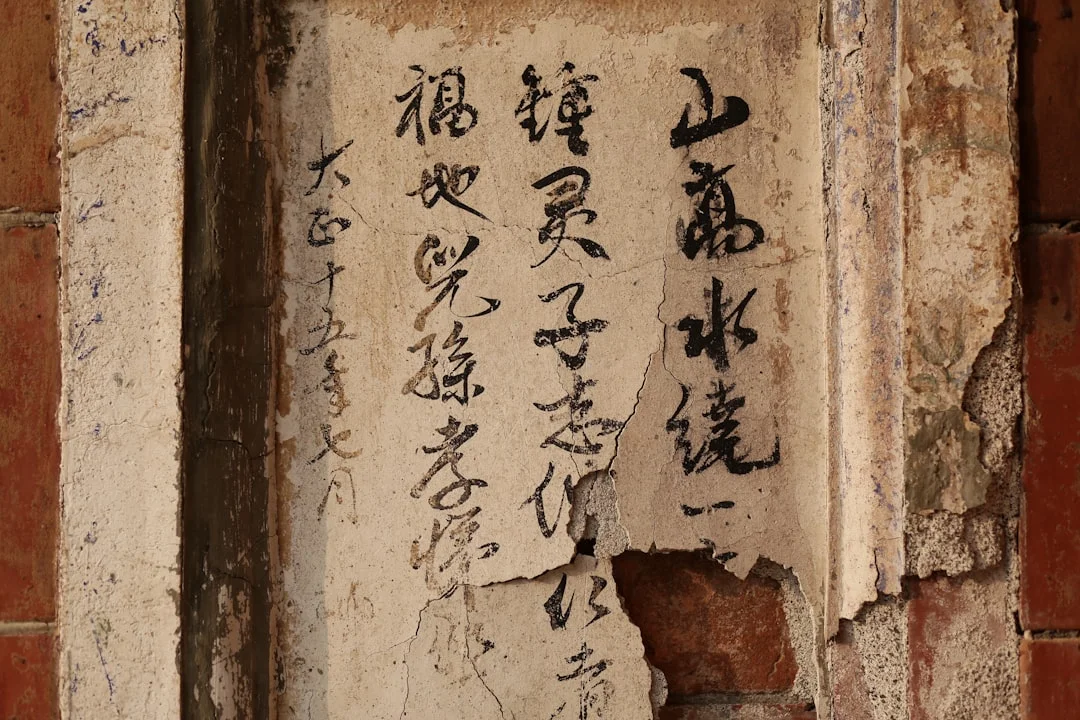
The I Ching—in English, “Book of Changes”—is considered one of the oldest books of wisdom still in use by humanity. Its 64 hexagrams are composed of six superimposed lines that are either broken (Yin) or unbroken (Yang). Each of these combinations describes a specific state of change, a quality of life, or an archetypal situation.
What Ra Uru Hu undertook was a structural transposition: he assigned a gate in the Body Graph to each of the 64 hexagrams. In doing so, he retained the deeper symbolic meaning of the hexagrams but translated them into a language that can be applied to the individual personality. Gate 1 in Human Design, for example, corresponds to the first hexagram of the I Ching—“The Creative”—and represents creative self-expression and originality.
This connection to the I Ching lends the Human Design Gates a cultural and philosophical depth that goes far beyond modern self-optimization thinking. Anyone who engages with the Gates simultaneously moves within the resonance field of a millennia-old understanding of human experience—that alone is a rewarding thought.
The Genetic Code: Where Human Design Meets Biology
From a scientific perspective, the parallel between the 64 Human Design Gates and the 64 genetic codons of DNA is initially a structural analogy—not a proven causal relationship. Nevertheless, it is remarkable and invites deeper reflection.
In molecular biology, DNA uses 64 codons to encode the information needed to produce proteins. Each codon consists of three bases (nucleotides) and represents a specific amino acid. From this perspective, the genetic code is indeed a kind of binary system—similar to the yin-yang lines of the I Ching.
Richard Rudd, a student of Ra Uru Hu and founder of the Gene Keys, explored this connection in depth in his book of the same name. In “The Gene Keys” (2009), Rudd describes each of the 64 keys as a three-part spectrum of shadow, gift, and siddhi—ranging from unconscious reaction through conscious potential to the highest expression of a quality. Rudd understands the 64 Gates as encoded information in consciousness that—similar to genes through epigenetics—can be unfolded or inhibited through inner work.
It is important to be honest here: The Gene Keys and the Human Design System are not scientifically verified biological theories. Those who use them do so as a symbolic tool for self-reflection—and in this capacity, they can be astonishingly effective, as many users report.
Core idea of the gate system „The 64 gates are not drawers - they are invitations to self-knowledge. Those who know their activated gates not only understand themselves better, but also why certain issues keep cropping up in their lives.“ - Based on Ra Uru Hu, founder of the Human Design System (1992)
How are gates activated in your personal body chart?
Not all 64 gates are active in your personal body chart—that would be like every note sounding simultaneously in a composition. Instead, certain gates are activated by the planetary positions at the time of your birth as well as 88 solar days before your birth (the so-called “design calculation”).
The calculation is based on two moments:
- Conscious Personality: The planetary positions at the moment of your birth — what you perceive about yourself.
- Unconscious nature: The planetary positions 88 solar days before your birth — qualities that others often see in you more than you do yourself.
Each planet activates a specific gate. This results in between 10 and 26 activated gates in an individual body graph. When two opposing gates of the same channel are activated simultaneously—whether by the same or different planetary positions—a defined channel emerges that connects the corresponding centers and describes a reliable, constant energy quality in your personality.
Activated gates without a connected counterpart are called hanging gates—they describe themes that are present in your life but do not flow as stable, constant energy. Instead, they can be particularly receptive to the energies of other people.
An Overview of the 64 Gates: Groups and Categories
The 64 Human Design Gates can be grouped according to various criteria. Most commonly, they are categorized by their energy centers. Here is a brief overview of selected Gates and their qualities:
- Gate 1 – The Creative: Creativity, originality, the power of self-expression.
- Gate 13 – The Listener: Empathy, keeping secrets, gathering human experiences.
- Gate 25 – Innocence: Universal love, acceptance of life, spiritual openness.
- Gate 48 – The Depth: Intuition, the fear of inadequacy, the pursuit of mastery.
- Gate 57 – The Gentle: Intuition in the moment, sensitivity, auditory perception.
In his Gen Keys system, Richard Rudd also assigns a shadow—an unconscious reaction pattern—to each of these gates, as well as a gift as conscious potential. Gate 48, for example, has the shadow “Inadequacy” and the gift “Depth.” This three-part structure makes the Gen Keys a particularly nuanced tool for self-reflection.
Gates, Channels, and Centers: Understanding Their Interplay
To truly understand the 64 Gates, it helps to view them in the context of the entire Bodygraph. The Bodygraph consists of nine energy centers connected by 36 channels. Each channel consists of two Gates—one at each end.
The nine centers roughly correspond in their location to the chakras of the yogic system, but they have specific functions in Human Design:
- Head Center & Ajna: Inspiration and mental processing (Gates of thoughts and concepts)
- Throat Center: Expression and Manifestation (Gates of Communication)
- G-Center: Identity, love, and direction (Gates of the Self)
- Heart Center: Willpower and ego (Gates of Values)
- Solar Plexus Center: Emotions and intuition (Gates of Feeling)
- Spleen: Health, Security, Instinct (Gates of Survival Intelligence)
- Sacral Center: Vitality and Sexuality (Gates of Reproduction and Work)
- Root Center: Pressure and Drive (Gates of Activation)
A gate alone is like the open end of a bridge—it holds potential, but the full energy only flows when both sides are connected. This image illustrates why people with connected channels constantly carry a certain energy within them, while people with open or dangling gates tend to experience this energy situationally or absorb it from the outside.
What the Gates Reveal About Your Strengths and Challenges
The activated Human Design Gates in your body graph do not describe fateful judgments—they are indicators of energetic themes that play a special role in your life. Activated gates indicate where you reliably have energy, what drives you, and where your natural strengths lie.
At the same time, they can point to challenges: A gate can manifest as a reactive pattern in its “low expression”—as Ra Uru Hu called it. Richard Rudd (2009) describes this mechanism in detail in The Gen Keys: According to this, every shadow is a conditioned reaction to fear or pressure—and simultaneously carries within it the seeds of its own gift.
In practical terms, this means: If you have activated Gate 26 (the Egoist Gate, theme: Influence and Persuasion), this can appear in its lower vibration as manipulation or exaggeration—but in its gift as charismatic persuasion and genuine care. The journey from one extreme to the other in Human Design is not a matter of willpower, but of self-knowledge and awareness.
This is an important point: Human Design—and the Gate system in particular—does not function as a justification for behavior (“That’s just how I am, Gate XY!”), but as an invitation to reflection. What patterns do you recognize? Which themes keep recurring? Which strengths are you not yet fully living out?
Human Design Gates in Everyday Life: Three Practical Examples
Theory is all well and good—but how do the 64 gates in Human Design actually play out in real life? Here are three examples that show how the gate system can be used in practice:
1. Communication and Relationships
Gate 12—the “Gate of Caution”—is located in the Throat Center and describes people who are very conscious about what they say and when they speak. Those who have this gate activated communicate best when the emotional wave is right—not on demand. In everyday professional life, this can mean that spontaneous presentations or unprepared meetings are more challenging than for others—while well-thought-out, prepared statements have all the more impact.
2. Creativity and Expression
Gate 3 — “The Difficulty at the Beginning” — represents the moment when order emerges from chaos. People with this gate often experience creative processes as initially confusing and unstructured — but it is precisely from this apparent disorder that something new emerges. Those who know this can approach their own creative process with more patience and confidence.
3. Decision-Making
Gate 62 — “The Prevalence of the Small” — represents attention to detail and trust in facts. People with this gate tend to make decisions based on concrete, verifiable information. This can be a strength—or lead to paralysis if too many details are gathered before a decision is made. Self-awareness of this can help you more consciously recognize the right moment to say, “Enough analysis—now act.”
A Critical Assessment: What Science Says
It would be disingenuous to write an article about the 64 Human Design Gates without also considering the critical perspective. Human Design is not a scientifically validated system in the sense of empirical research. To date, there are no controlled studies proving that birth-time-based body graphs make reliable and valid statements about personality.
What psychology, however, has well established: Self-reflection processes have been shown to have positive effects on well-being and self-efficacy. Tasha Eurich (2017) demonstrated in her research on self-perception that genuine inner clarity about one’s own values, patterns, and strengths leads to better decisions, healthier relationships, and greater life satisfaction. Human Design—and the Gate System in particular—can serve as a framework that guides this reflective process.
The situation is similar with the I Ching: Although it is not scientific divination, cognitive science research shows that symbolic systems can function as projection surfaces—they encourage the organization of one’s own thoughts and make unconscious beliefs visible (Singer & Kimbles, 2004). In this sense, the 64 Gates have genuine psychological value—regardless of whether one believes in their cosmic activation or not.
In short: Use the system as a mirror, not as an oracle. The most valuable question is not “Is this true?” but “What do I recognize in this that is true for me?”
How to Work with Your Gates: A Quick Introduction
Would you like to work specifically with the 64 Gates in Human Design? Then start with a free Body Chart, which you can create online (you’ll need your date of birth, time of birth, and place of birth). Next, see which Gates are activated in your Body Chart—that is, which ones appear in black or red.
A helpful starting point: Choose two or three activated gates and explore their meaning. Ask yourself the following questions:
- What themes do these gates describe—and do I recognize them in my life?
- Does the gate manifest more in its gift (empowering) or in its shadow (reactive)?
- In which situations does this pattern emerge most clearly?
For a deeper exploration, we recommend the book “Gene Keys” by Richard Rudd (2009), which offers a detailed contemplation for each of the 64 gates—poetic, profound, and thought-provoking. For a more structured introduction, the official Human Design resources from Ra Uru Hu’s “International Human Design School” are a reliable source.
Important: Don’t start by defining yourself through your Human Design. Start by exploring it. The difference is crucial—between “I am Gate 48” and “I notice that the theme of depth and inadequacy keeps coming up in my life—what does that have to tell me?”
Your Human Design in detail
In the book Astro you will find your activated goals and their meaning - calculated personally for you.
Your daily companion for inner growth
With the 7zen app, you receive daily coaching impulses, guided breathing exercises and personal reflections - all based on your individual profile.
What exactly are the 64 goals in Human Design?
The 64 gates are the smallest units in the body graph of the Human Design System. They correspond to the 64 hexagrams of the I Ching and are assigned to specific energy centers. Each gate describes a specific energy quality, theme or ability. Activated gates - i.e. those marked by planetary positions at the time of birth - are considered to be particularly formative patterns in a person's personality.
How many gates are activated in my body graph?
This depends on your individual birth data. On average, between 10 and 26 of the 64 gates are activated in a personal body graph. Activation is determined by the positions of the planets at the time of birth and 88 solar days before. Non-activated gates are not „worse“ - they merely describe areas where you experience energy more situationally or through other people.
What is the difference between a gate and a channel in human design?
A gate is a single unit at one end of a channel. Each of the 36 channels in the body graph connects two energy centers and consists of exactly two gates - one at each end. When both gates of a channel are activated, it is called a defined channel. This describes a constant, reliable energy quality in the personality. A single activated gate without its counterpart is called a „hanging gate“ - it is open and receptive to the energy of others.
Are the 64 Human Design goals scientifically proven?
Human Design as an overall system is not a scientifically validated system - there are no controlled studies that empirically prove its basic assumptions. The structural parallels to the 64 I-Ging hexagrams and the 64 genetic codons are interesting analogies, but not proven causal relationships. Nevertheless, the system can be valuable as a tool for self-reflection: Research on self-perception (Eurich, 2017, among others) shows that structured reflection processes can demonstrably increase well-being.
What is the difference between Human Design goals and Richard Rudd's Gen Keys?
Both systems use the same 64 keys - but with different depth and focus. Ra Uru Hu's Human Design focuses on the body graph as a whole: type, strategy, authority and the role of the gates within it. Richard Rudd's Gen Keys (2009) delve into each individual key as a tripartite journey from shadow to gift to the highest form of expression (Siddhi). The Gen Keys are more contemplative and used as a meditation path, while Human Design is more systemic and strategic.
How do I start exploring my activated gates?
First, create your body graph online for free - you will need your date of birth, exact time and place of birth. Then see which gates are activated and choose two or three that particularly appeal to you. Research their meaning: what do they describe and do you recognize the theme in your life? Helpful introductory reading is the „Gene Keys“ by Richard Rudd as well as official resources from the International Human Design School. It is important to use the system as a mirror for reflection - not as an unchangeable destiny.
The 64 Gates in Human Design are far more than an esoteric concept—they are an invitation to look at yourself with a curious eye. Whether or not you believe in cosmic activation through planetary alignments, the questions the system raises are universally human. What themes shape my life? What energy do I consistently bring with me? Where do I react out of fear rather than strength? The I Ching asked the same questions 3,000 years ago—Human Design presents them in a modern, visual system.
Your action step for today: Create your Body Chart for free and identify three activated Gates. Read their core themes and write a short journal entry about where you recognize these themes in your life. Not as a diagnosis—but as a conversation with yourself. Sometimes all it takes is a new mirror to see something that has always been there.