Feng Shui Color Theory: Which Color Goes With Which Element
Green for wood, red for fire, blue for water—Feng Shui color theory connects color, space, and well-being in a unique way.
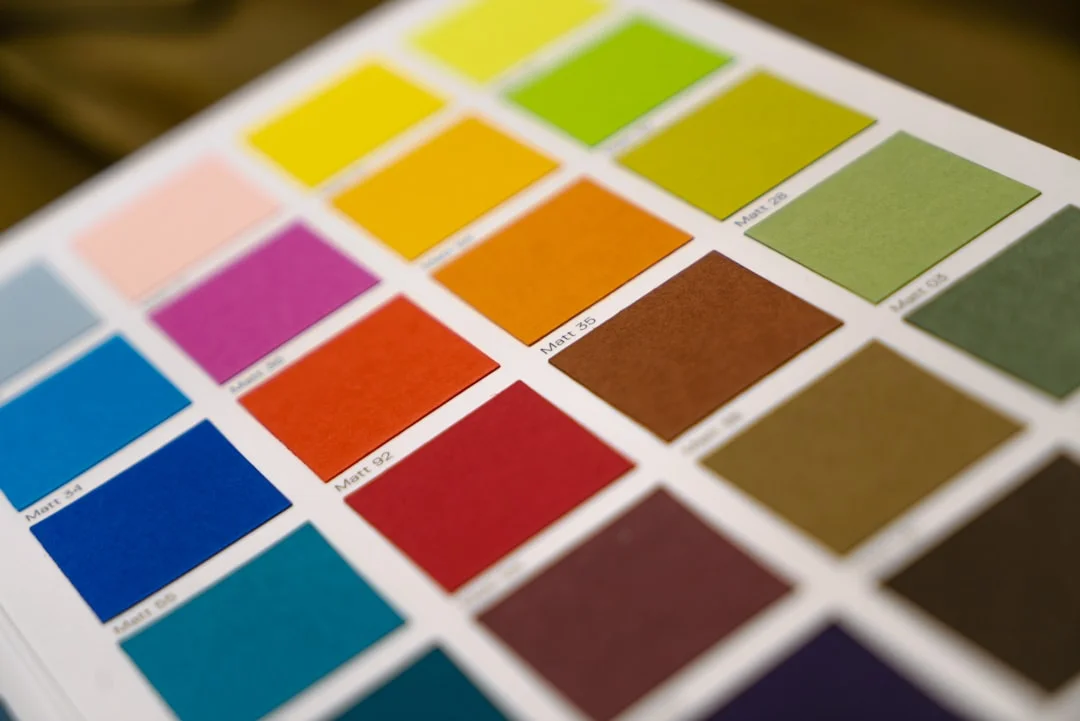
Have you ever walked into a room and immediately felt at ease—without being able to pinpoint exactly why? Or have you ever walked into an apartment and sensed that something wasn’t quite right, even though everything was neat and beautifully decorated? Feng Shui, the millennia-old Chinese philosophy of harmonizing space and energy, can provide a framework for explaining this. And a central tool of this philosophy is the Feng Shui color theory: the idea that colors don’t just decorate, but can also help shape the quality of a space. In this article, we’ll explore together how Feng Shui colors are assigned to the five elements, what role the cardinal directions play in this—and why your personal intuition might ultimately be the most important criterion of all.
What is the basis of the Feng Shui color theory?
The Feng Shui theory of color is not an arbitrary color system, but is embedded in a much broader worldview: that of the five elements. In classical Chinese thought, all of reality—seasons, organs, emotions, cardinal directions, materials, and even colors—is divided into five fundamental qualities: Wood, Fire, Earth, Metal, and Water. Each of these elements describes a specific energy or quality of movement, and each color is assigned to one of these qualities.
It’s important to understand that color is just one of five possible manifestations of an element. In addition to color, form, material, objects, and light can also embody an element. This means: A room can be fully designed according to Feng Shui principles even if you cannot or do not want to paint the walls—for example, through textiles, plants, furniture shapes, or materials. You can find more information on how to strengthen or weaken individual elements at /de/wissen/elemente-staerken-abschwaechen.
Research in environmental psychology suggests that colors can indeed influence our experience. For example, studies by Elliot and Maier (2014) suggested that colors can be linked to emotional reactions—though these links vary culturally and individually. This is what makes the Feng Shui approach interesting: it does not view color in isolation as an aesthetic tool, but rather as part of a larger context.
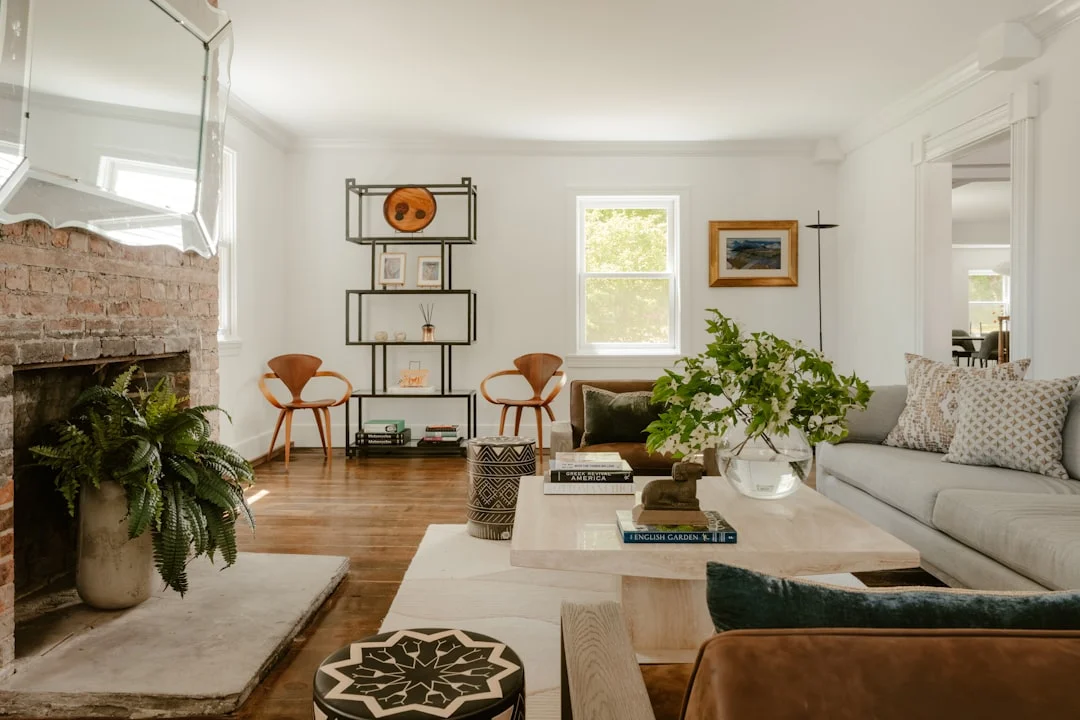
The Wood Element and Its Colors: Green, Turquoise, Light Blue-Green
The Wood element symbolizes growth, new beginnings, flexibility, and the energy of spring. It is the quality that can create a sense of vitality and freshness in a room. The colors associated with it are green, turquoise, and light blue-green—the very shades we associate with nature, vegetation, and fresh air.
Some people find green spaces particularly calming and invigorating at the same time. Research in the field of environmental psychology, such as the work by Kaplan and Kaplan on the so-called Attention Restoration Theory (1989), suggests that natural shades of green can help restore focused attention—an effect that might also be evident in interior spaces.
In Feng Shui, the Wood element is associated with the cardinal directions of east and southeast. A room or area facing in this direction could therefore benefit from shades of green—whether through a wall color chosen in accordance with Feng Shui principles, or through green pillows, curtains, plants, or wooden furniture with a natural grain.
The Element of Fire: Red, Orange, Pink, and Deep Purple
Fire represents movement, passion, warmth, and connection. It is the element of the south and the midday sun—expansive, radiant, and outward-facing. The colors of fire are red, orange, pink, and deep purple: all shades that can bring energy and presence to a room.
Red is particularly culturally charged—in China, it symbolizes happiness and joy, while in other cultures it can signify warning or passion. This clearly illustrates what Feng Shui itself acknowledges: the effect of color is always shaped by cultural and personal factors. A color that unsettles someone or that they simply don’t like may be the wrong choice for their own home—regardless of what the theory suggests.
In Feng Shui, the south is the direction associated with fire. Wall colors or accents in shades of red and orange could look particularly harmonious in a south-facing area. For many people, this is particularly well-suited for living and dining areas, where socializing and lively conversations are encouraged. In a bedroom, however, overly intense shades of red could make it difficult to fall asleep—this, too, is an experience shared by some people.
Pink and soft violet can represent a gentler version of fire: less stimulating, yet still warm and unifying. For anyone who wants to feel the energy of fire in a room without using intense wall colors, a bright red candleholder, an orange painting, or a deep purple pillow could be an atmospheric alternative.
The Earth Element: Yellow, Ochre, Beige, Sand Brown, and Terracotta
Earth represents stability, reliability, care, and a sense of security. The colors associated with the Earth element—yellow, ochre, beige, sandy brown, and terracotta—are those warm, earthy tones that many people intuitively associate with warmth and security.
In Feng Shui, the Earth element is associated with several cardinal directions: the southwest, the northeast, and the center of a room or house. The center of a floor plan, in particular, is considered the Earth area—the area that holds everything together. Warm earth tones there could help foster a sense of stability and grounding.
Research in the field of color psychology, such as that by Hemphill (1996), suggests that warm, muted colors are often associated with feelings of calm and security—although these reactions can vary greatly from person to person. In the context of Feng Shui, this aligns well with the description of the Earth element: it is less dynamic than Wood or Fire, but instead is nourishing and grounding.
If your walls are already white but you still want to incorporate Earth energy, you could use terracotta pottery, sand-brown textiles, a jute rug, or natural clay and ceramics—all of which embody the Earth element through materials and objects, without a single brushstroke.
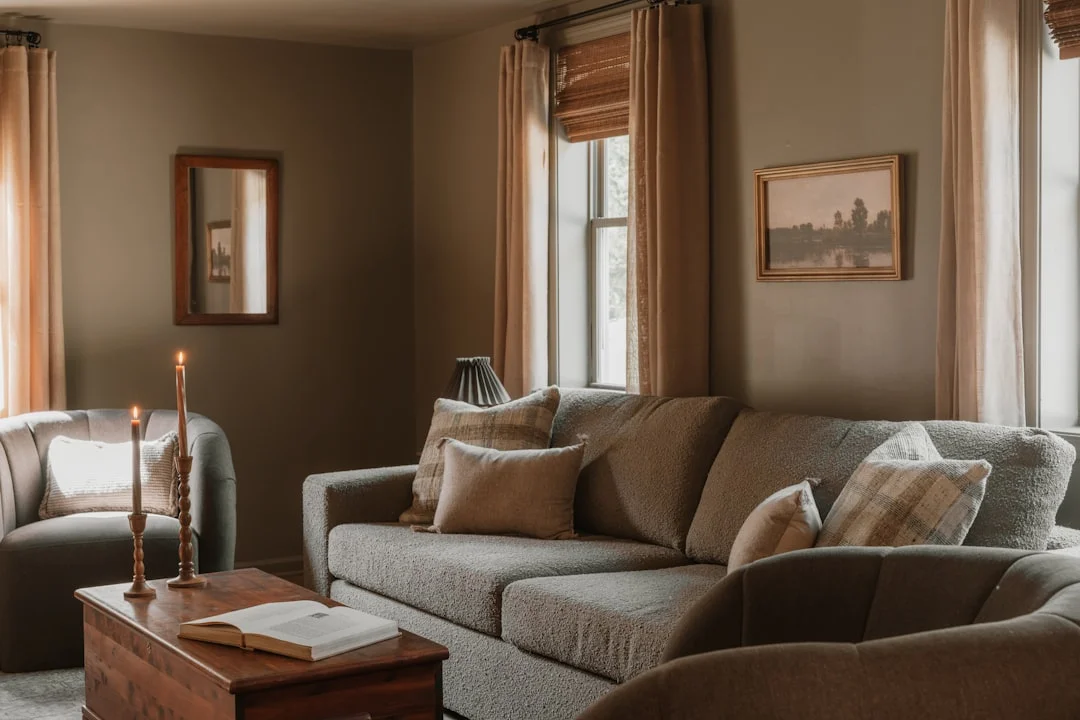
The Metal Element: White, Gray, Silver, Gold, and Metallic Tones
Metal stands for clarity, precision, focus, and perfection. It is the element that loves order and eliminates the superfluous. The associated colors—white, gray, silver, gold, and metallic tones—reflect these qualities: clear, pure, sometimes cool, but also elegant and timeless.
In Feng Shui, the cardinal directions of west and northwest are associated with the Metal element. A home office facing west could benefit from a crisp white or subtle shades of gray, as these colors can promote concentration and mental clarity. At the same time, too many metallic tones can make a room feel sterile—striking a balance with warmer elements can help.
Gold and silver as accent colors also bring Metal energy into a room—through lampshades, picture frames, doorknobs, or decorative objects. Especially in a northwest area, which in Feng Shui is often associated with support and helpful people, a gold or silver accent could be a harmonious addition.
Important to Know In Feng Shui, color is just one of five elements—along with shape, material, object, and light. This means that if you can’t or don’t want to paint your walls, you can still incorporate an element entirely through textiles, furniture shapes, and materials. No paintbrush needed.
The Element of Water: Blue, Black, and Very Dark Shades
Water flows, connects, deepens, and retreats inward. It is the element of stillness, reflection, and depth—but also of communication and flow. The associated colors are blue, black, and very dark shades: colors that can evoke depth and vastness.
In Feng Shui, the element of water is associated with the north. A space facing north—such as a hallway, a quiet study, or a meditation corner—could gain a special sense of calm and depth through shades of blue or dark accents.
Dark wall colors have long been avoided in Western interior design but have been experiencing a renaissance in recent years. And indeed, observations show that many people find deep blue or anthracite-colored rooms unexpectedly cozy and enveloping—which harmonizes well with the water element’s quality of being sheltering and protective.
Here, too, the rule applies: black as a wall color is a bold choice and not the right fit for everyone. Those who wish to incorporate Water energy without darkening the walls could use a deep-blue rug, a black pillow, an aquarium, or a water feature as a decorative element. The principle remains the same—the way it’s implemented is flexible.
Feng Shui Colors and Cardinal Directions: An Overview
The connection between Feng Shui colors and compass directions is one of the most practical tools of this discipline. If you know which direction a room or wall faces, you can determine which element is particularly prominent there—and which colors, shapes, or materials could enhance it:
- North → Water → Blue, black, very dark shades
- East & Southeast → Wood → Green, turquoise, light blue-green
- South → Fire → Red, Orange, Pink, Deep Violet
- Southwest & Northeast → Earth → Yellow, ochre, beige, sandy brown, terracotta
- West & Northwest → Metal → White, gray, silver, gold, metallic
- Center → Earth → Yellow, ochre, beige, sandy brown, terracotta
A practical first step could be to grab a compass—or use the compass app on your smartphone—and figure out which direction each room in your home faces. From there, you can develop a gentle sense of which elements may already be strongly or weakly represented in each area.
It’s important to emphasize: These associations are suggestions, not rules. Feng Shui isn’t a rigid set of rules that must be followed, but rather a framework that invites reflection. Many people find it helpful to play around with these ideas and observe what changes—if anything—in their experience.
Wall Color in Feng Shui: When Painting Isn't an Option
One of the most common questions people ask about wall color in Feng Shui is: What do I do if I’m renting and the walls have to stay white? The good news is: That’s not a problem—at least not from a Feng Shui perspective.
As mentioned earlier, color is just one of the five elements. The other four—shape, material, objects, and light—offer plenty of creative freedom. Here are a few ideas for incorporating elemental qualities without using color on the walls:
- Wood: Houseplants, wooden furniture with visible grain, rectangular shapes, fresh green accents in pillows or curtains
- Fire: Candles, warm lighting, triangular or tapered shapes, artwork with vibrant motifs
- Earth: Ceramics, natural stone surfaces, heavy materials, square shapes, earthy textiles
- Metal: Metallic surfaces, round and oval shapes, clean lines, bright light
- Water: Glass surfaces, irregular or curved shapes, dark textiles, water features
For more detailed ideas on how to strengthen or weaken individual elements, check out our article at /de/wissen/elemente-staerken-abschwaechen.
The Personal Impact of Color: Why Your Gut Feeling Matters
Feng Shui is not a science in the Western sense, and that’s not a flaw—it’s simply a different system of knowledge. What research can confirm, however, is that color perception is deeply individual and culturally shaped. What is considered soothing in one culture may have an unsettling effect in another. What one person finds elegant may seem cold to someone else.
In their research on color psychology, Elliot and Maier (2014) demonstrated that while colors can have real psychological effects, these are always shaped by prior experiences, cultural influences, and individual associations. This means: There is no universally “correct” color for a room.
Feng Shui recognizes this. If you love blue and feel safe and calm in a blue bedroom, then blue might be a very good choice for your bedroom—even if it’s actually associated with the water element and corresponds to the north. If red stresses you out, then red in your living room is probably not a good idea, no matter what the theory says.
A color you don’t like is always the wrong choice for your own home. That sounds simple—but it’s perhaps the most important principle you can take away from Feng Shui color theory. Your home should feel right to you. The theory is a tool to help you get there, not a rule.
Feng Shui Colors in Everyday Life: Gentle First Steps
If you’re curious about trying out the color-element associations in your everyday life, you could start with small, reversible experiments. Perhaps you’d like to simply observe at first: Which room in your home do you enjoy spending time in the most? What colors dominate there? Are there rooms where you feel less comfortable—and what’s different there in terms of color and atmosphere?
This kind of observation, without making any immediate changes, can already be revealing. Afterward, you could start with a single accent: a green plant in the east, a terracotta-colored pillow in the center of the living room, or a blue candle in the northern part of the hallway. Small steps can help you develop a sense of what feels harmonious in your space—and what doesn’t.
It’s not about creating the perfect Feng Shui home. It’s about becoming more mindful of the space you live in every day. And perhaps that’s the greatest benefit of Feng Shui color theory: not just following a formula, but cultivating a mindful relationship with your home.
Your action step for today: Take five minutes, walk through your apartment with a compass (or your smartphone), and note which cardinal direction each room faces. Then take a look at the colors already present there—and see if you intuitively notice a connection to what you’ve read in this article. No pressure, no changes needed. Just observe. Sometimes that can be the first and most beautiful step.
For a comprehensive analysis: On-site consultation
This article offers some guidelines for your own living space—and that’s a good place to start. However, a comprehensive Feng Shui analysis should be conducted by a trained consultant. It takes into account what a written guide cannot: the location of the house, the layout of the rooms, the actual cardinal directions in the floor plan, the surroundings, and the people who live there. In most regions, there are specialists available; consulting with one is particularly advisable when renovating, buying a home, or when the preferences of several people in the household cannot be reconciled.
Do I have to paint the walls to use Feng Shui colors?
No—that’s a common misconception. In Feng Shui, color is just one of five elements. In addition to color, shape, material, objects, and light can also embody an element. If you rent or don’t want to change the walls, you can fully incorporate elemental qualities through textiles, furniture, plants, ceramics, or lighting. You can find more information on this at /de/wissen/elemente-staerken-abschwaechen.
What if I don't like the color recommended for my room according to Feng Shui?
Then it’s probably not the right color for your room—at least not as the dominant color. Feng shui color theory is a guide, not a rule. The effect of color is always influenced by personal and cultural factors. A color you don’t like or that makes you feel uncomfortable cannot have a positive effect in your home. Your personal well-being takes precedence over any theory.
How do I figure out which direction my room faces?
The easiest way to do this is with a compass or the compass app on your smartphone. Stand in the center of the room and determine which direction the exterior wall or window faces. This direction indicates which element the room is associated with according to Feng Shui—and which colors, materials, and shapes might be harmonious there.
According to Feng Shui, what is the best color for the bedroom?
That depends on the bedroom’s orientation. If it faces north, muted shades of blue or dark accents might be a good fit (Water element). In the northwest or west, white and gray would be harmonious (Metal element). In general, Feng Shui recommends calmer, less intense colors for bedrooms—that is, muted earth tones, soft greens, or light neutrals rather than bold reds or oranges, which can have a stimulating rather than calming effect.
Can I combine multiple elements in a single room?
Yes—and that’s actually desirable. In Feng Shui, a balanced interplay of all five elements is considered harmonious. A room doesn’t have to be dedicated exclusively to one element. It’s often recommended to strengthen the element associated with the respective cardinal direction and to incorporate the other elements in a complementary way. For example, a combination of a shade of green (Wood), an earthy ceramic object (Earth), and a metallic accent (Metal) can create a very balanced effect.
Does Feng Shui have a scientific basis?
Feng Shui is not a science in the Western sense, but rather a traditional system of knowledge from Chinese culture. Some of its principles—such as the importance of color, interior design, and natural light for well-being—find at least partial parallels in environmental psychology and color psychology. Research such as that by Elliot and Maier (2014) or Kaplan and Kaplan (1989) suggests that colors and spatial qualities can influence our experience. This does not mean that every Feng Shui principle is empirically proven—but there are good reasons to explore the basic ideas, at least experimentally.