Eastern Group & Western Group: Your Auspicious Cardinal Directions
Which cardinal directions suit you best? Use your Qua number to find out whether you belong to the East or West group.
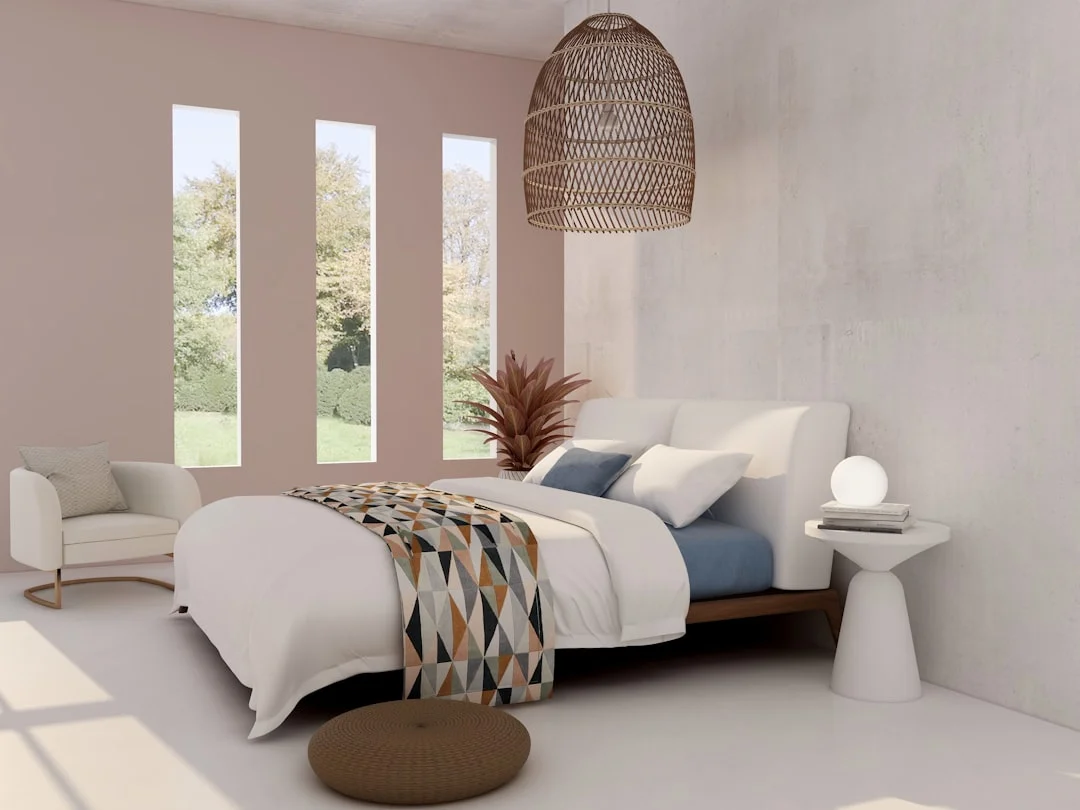
Have you ever wondered why some rooms just feel better than others—even though you might not have changed a thing? In Feng Shui, there’s an ancient answer to this that’s surprisingly specific: Not every direction suits every person equally well. The concept of the East Group and West Group divides all people into two categories and assigns each group four favorable compass directions in Feng Shui—and four that are less suitable for them. Does that sound abstract at first? Don’t worry. In this article, you’ll learn step by step how to calculate your personal Qua number, what it reveals about your orientation, and how you can apply this knowledge in a practical way—and with a healthy sense of proportion—in your everyday life.
What is the concept behind the East Group and West Group?
The concept of the East Group and West Group originates from classical Feng Shui and is part of the so-called Eight Mansions School (Chinese: Ba Zhai). This tradition assumes that every person has an individual, fundamental energetic orientation—similar to a personal compass that perceives certain directions in a space as more beneficial than others.
The basic idea is very simple: All nine possible Qua numbers—also spelled Gua numbers—can be divided into exactly two groups. People with Qua numbers 1, 3, 4, and 9 belong to the East Group. People with the Qua numbers 2, 6, 7, and 8 belong to the West group. The number 5 appears in the calculation but is not counted as a separate group: Men with a calculated 5 are assigned to number 2, and women to number 8—both thus end up in the West group.
Important to know: Neither group is better or more valuable than the other. It’s not about belonging to an elite or being at a disadvantage. Rather, the system describes a kind of inner compatibility—similar to how some people prefer to work in silence while others thrive in lively environments. Both are equally valuable; they’re just different.
Calculating Your Qua Number: How to Find Your Group
Calculating your Qua number and its directions is based on your year of birth—more specifically, on the Chinese solar calendar, which begins in February. So if you were born before February 4 or 5, use the previous year for the calculation.
Step-by-Step Calculation
- Step 1: Add all the digits of your birth year until you get a single-digit number. Example: 1987 → 1+9+8+7 = 25 → 2+5 = 7
- Step 2 for men: Subtract the result from 11. In the example: 11 − 7 = 4. The result is the Qua number.
- Step 2 for women: Add 4 to the result. In the example: 7 + 4 = 11 → 1 + 1 = 2. The result is the Qua number.
- Special Case 5: If the calculation yields a 5, the number 2 applies to men and the number 8 applies to women—both thus belong to the West group.
For people born after the year 2000, the formula changes slightly: Men subtract from 10 instead of 11, and women add 5 instead of 4—and then reduce the result to a single digit. The result is then assigned to the same groups.
With your calculated Qua number, you now know which group you belong to—and in the next step, you can find out which four cardinal directions might be particularly beneficial for you.
Qua-Zahl berechnen
Die Qua-Zahl (Ming Gua) wird aus Geburtsjahr und Geschlecht gebildet und ordnet vier guenstige und vier unguenstige Himmelsrichtungen zu. Massgeblich ist das chinesische Sonnenjahr, das mit Lichun Anfang Februar beginnt — wer im Januar geboren ist, zaehlt zum Vorjahr.
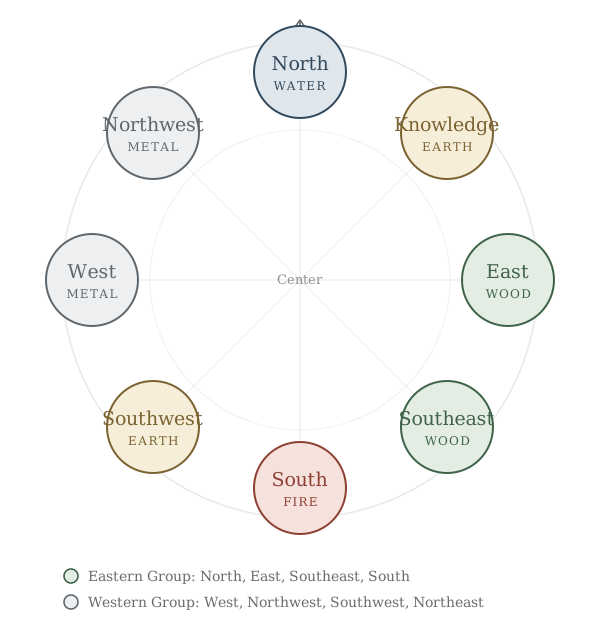
Die Zahlen 1, 3, 4 und 9 bilden die Ostgruppe mit den guenstigen Richtungen Norden, Osten, Suedosten und Sueden. Die Zahlen 2, 6, 7 und 8 bilden die Westgruppe mit Westen, Nordwesten, Suedwesten und Nordosten. Eine rechnerische 5 wird bei Maennern auf 2, bei Frauen auf 8 gelegt.
Deine Himmelsrichtungen
Jede Himmelsrichtung traegt ein Element und einen Bagua-Lebensbereich: Norden Wasser und Lebensweg, Nordosten Erde und Wissen, Osten Holz und Familie, Suedosten Holz und Wohlstand, Sueden Feuer und Anerkennung, Suedwesten Erde und Partnerschaft, Westen Metall und Kreativitaet, Nordwesten Metall und Unterstuetzung. Im Raster liegt Norden oben — so wird das Bagua ueber einen Grundriss gelegt.
Farben, Formen und Materialien
Jedes Element bringt eigene Traeger mit: Holz gruene und tuerkise Toene, senkrechte Formen, Holz, Textilien und Pflanzen. Feuer rote, orange und pinke Toene, spitze Formen, Kerzen, Leder und Licht. Erde gelbe, ockerfarbene und beige Toene, flache Formen, Keramik, Stein und Ton. Metall Weiss, Grau, Silber und Gold, runde Formen, Metall und Glas. Wasser Blau und Schwarz, wellige Formen, Wasser und Spiegel. Im naehrenden Zyklus staerkt Wasser das Holz, Holz das Feuer, Feuer die Erde, Erde das Metall und Metall das Wasser.
Im Alltag
Am Bett zeigt das Kopfende in eine der guenstigen Richtungen, die Tuer im Blick, aber nicht in ihrer Linie. Am Schreibtisch blickt man beim Sitzen in eine dieser Richtungen, mit fester Wand im Ruecken. Am Esstisch waehlt man den Sitzplatz entsprechend. Lassen sich Richtung und Kommandoposition nicht vereinbaren, hat traditionell die Kommandoposition Vorrang.
Der interaktive Rechner ergaenzt je Richtung das zugehoerige Element und den Bagua-Lebensbereich, dazu passende Farben, Formen und Materialien sowie einen Vergleich mit einer zweiten Person im Haushalt.
Dazu im Wissensbereich
- Ostgruppe & Westgruppe: deine günstigen Himmelsrichtungen
- Das Bagua: die acht Lebensbereiche im Raum
- Himmelsrichtungen im Feng Shui — und wie du richtig misst
- Die fünf Elemente im Feng Shui: Wu Xing und ihre Zyklen
- Feng-Shui-Farblehre: Welche Farbe zu welchem Element passt
- Die Kommandoposition für Bett und Schreibtisch
- Was Feng Shui nicht ist: eine ehrliche Einordnung
The Auspicious Directions for the East Group
If you belong to the East Group—that is, if your Qua number is 1, 3, 4, or 9—classical Feng Shui considers four cardinal directions to be particularly harmonious for you: north, east, southeast, and south. These directions are considered energetically compatible with your personal Qua number.
What does this mean in practice? Traditionally, Feng Shui recommends taking these directions into account when sleeping, working, and eating. Specifically, this could mean: When sleeping, your head faces north or south; when at your desk, your gaze is directed toward the east or southeast; and when eating, you sit so that you’re facing one of the four auspicious directions.
Some people who have tried these orientations report a sense of greater calm or concentration—it’s difficult to determine whether this is attributable to the compass direction itself or to the conscious arrangement of one’s own space. Perhaps it is precisely this combination of intention and attention that can make all the difference.
The Favorable Cardinal Directions for the West Group
If you belong to the West Group—with a Qua number of 2, 6, 7, or 8 (or a calculated 5)—then four other directions are considered particularly auspicious for you: West, Northwest, Southwest, and Northeast.
It’s interesting to note that these directions sometimes seem less “glamorous” in the collective consciousness than, say, south or east—but that’s a cultural projection, not an energetic fact. In Feng Shui, no direction is inherently better or worse; it’s always about the harmony between the person and the space.
For people in the West group, it may be worthwhile to position the desk so that your gaze falls toward the west or northwest, to orient the bed so that your head faces southwest or northeast, and to look in one of these four directions while eating. As always, these are suggestions to try out, not rules that must be strictly followed.

Space & Well-Being: What the Research Suggests Research in environmental psychology suggests that consciously designing one’s own space—regardless of the underlying method—can promote well-being and the ability to concentrate. As Kaplan & Kaplan (1989) demonstrated in their Attention Restoration Theory, people are sensitive to spatial stimuli and structures. Accordingly, consciously arranging one’s space according to an inner system can have a positive effect simply through the act of intention—regardless of whether one shares the metaphysical framework or not.
Sleeping Direction in Feng Shui: The Head as a Compass
Sleeping direction in Feng Shui is probably the best-known application of the East-West group system—and at the same time, the one that raises the most questions. This refers to the direction your head is facing when you’re lying in bed. In other words, it’s not the direction you’re looking as you fall asleep, but the direction your pillow is facing.
Why the head, of all things? In classical Feng Shui, the head is considered the most energetically sensitive part of the body—comparable to the north pole of a magnet. The idea is that this pole can be optimally supported through a favorable orientation while sleeping—the phase in which the body and mind are most capable of regeneration.
Whether you interpret this metaphysically or simply as a practical guide for arranging your bedroom: Many people report that simply giving conscious thought to the orientation of their bed has helped them perceive the room differently. Sometimes it’s the first step toward a bedroom that truly feels like a sanctuary.
So if you belong to the East group, you could try positioning your head toward the north, east, southeast, or south. As a member of the West group, west, northwest, southwest, or northeast would be the traditionally recommended options.
At the Desk and During Meals: Other Applications of the Qua Number
In Feng Shui, the auspicious direction isn’t just for sleeping. Traditionally, it’s applied to three main areas where people spend a lot of time or where important inner processes take place:
- At the desk: Here, the direction of your gaze is crucial—that is, the direction you’re looking when you work. If you belong to the East group, you could position your desk so that your gaze is directed toward the east or southeast. If you belong to the West group, you could explore facing west or northwest.
- In bed: As described above, this refers to the direction your head is facing—not the direction you’re looking when falling asleep.
- While eating: At the dining table, too, it’s traditionally recommended to face a favorable direction. This sounds very practical to implement in everyday life—simply turning your chair can be enough.
Of course, not all of these practices can be implemented simultaneously in everyday life—especially in apartments where the layout leaves little room for maneuver. And this is precisely where an important principle comes into play, one that deserves more attention in the next section.
Feng Shui with a Twist: When Your Apartment Doesn’t Play Along
Here’s an important point that many Feng Shui guides unfortunately overlook: In most homes, you can’t arrange everything exactly as you’d like. Doors, windows, radiators, and the building’s location—all of these factors impose limitations. And that’s perfectly normal. Feng Shui isn’t a checklist that has to be 100 percent checked off for it to “work.”
Traditional Feng Shui teachings recognize this—and have therefore established priorities. One of these is the so-called “command position” (also known as the “power position”): positioning your bed or desk so that you have a view of the door without lying or sitting directly in front of it, and ideally with a solid wall behind you. In many schools of Feng Shui, this positioning is considered more important than the mere direction of the compass.
Specifically, this means: If you have to choose between a favorable compass direction and the command position, tradition recommends giving priority to the command position. A bed in the “command position”—even if it doesn’t face the “perfect” direction—can contribute more to your well-being than a bed that faces north but has its back to the door. You can learn more about how the command position works and how to find it for your bed and desk in our detailed article at /de/wissen/kommandoposition-bett-schreibtisch.
Feng Shui, then, is about balance, not rigid rules. That’s what makes it human—and practical to apply, even in a small city apartment with slanted walls, fixed walls, and limited space.
What does science have to say about this?
Feng Shui as a system is not a scientific model in the Western sense. There are no controlled studies that would prove that aligning one’s environment according to the Qua number has measurable physiological effects. Anyone who claims otherwise is exaggerating.
What science has been able to show, however, is that consciously designing one’s own living space does indeed have an impact on well-being. Research in environmental psychology—such as that by Ulrich (1984), who showed that even a view of nature can aid recovery after surgery—suggests just how sensitively we humans respond to our physical surroundings.
Furthermore, studies on so-called “placement preference” suggest that a sense of control and overview within a space—essentially what defines the “command position”—may be associated with subjectively lower stress levels. Researchers such as Mehrabian & Russell (1974) have also shown in their theory of environmental emotions that spatial factors such as brightness, arrangement, and orientation can influence our emotional experience.
Feng Shui can perhaps best be understood as a millennia-old, culturally evolved practice that systematized intuition and observation—long before environmental psychology existed. Whether or not one shares its metaphysical framework is a decision each person can make for themselves. The practical core—consciously engaging with one’s own space—is valuable in and of itself.
The East Group and the West Group in Everyday Life: Where Do We Start?
You’ve calculated your Qua number, know which group you belong to, and are familiar with your four auspicious directions. What now? Here are a few ideas on how you could gently incorporate this knowledge into your daily life—without major moves or costly redecorating:
- Grab a compass: Many smartphones have a built-in compass app. Before you change anything, it might be worth simply checking how your bed and desk are actually oriented. Sometimes we’re surprised.
- Start small: Maybe the dining chair is the easiest place to start. You could try facing your favorable direction for a week—and see if you notice any difference.
- The bed as a medium-term project: If you’re planning to rearrange your bedroom anyway, you could take the direction you face when sleeping into account—always keeping in mind that the command position takes priority.
- Keep an eye on your desk: If you work from home, the direction you face at your desk could be a worthwhile experiment—especially if you already feel that something isn’t quite right about your workspace.
Remember: It’s not about turning everything upside down all at once. Feng shui as a practice thrives on observation—and on being mindful of your own space and your own experience within it.
Your daily companion for personal growth
With the 7zen app, you'll receive daily coaching tips, guided breathing exercises, and personal reflections—all based on your individual profile.
For a comprehensive analysis: On-site consultation
This article offers some guidelines for your own living space—and that’s a good place to start. However, a comprehensive Feng Shui analysis should be conducted by a trained consultant. It takes into account what a written guide cannot: the location of the house, the layout of the rooms, the actual compass directions in the floor plan, the surroundings, and the people who live there. In most regions, there are specialists available; consulting with one is particularly advisable when renovating, buying a home, or when the preferences of several people in the household cannot be reconciled.
How do I calculate my Qua number accurately?
The Qua number is determined based on your year of birth—more specifically, according to the Chinese solar calendar, which begins in early February. If you were born before February 4 or 5, use the previous year. Then add all the digits of the year until you get a single-digit number. Men subtract this number from 11 (or from 10 for birth years starting in 2000); women add 4 (or 5 for birth years starting in 2000) and reduce the result back to a single digit. If the result is 5, men use 2 and women use 8.
Is the East Group better than the West Group?
No—in Feng Shui, there is no superior group. Both groups have four favorable and four less favorable directions each; they are simply different. It’s always about the personal fit between a person and a space, not about a hierarchy. Every person brings their own fundamental energetic orientation, and both are equally valid.
What happens if I can't position my bed in a favorable direction?
This happens more often than you might think—and it’s perfectly fine. In such cases, the classic Feng Shui tradition recommends prioritizing the so-called “command position.” This means positioning the bed so that you have a clear view of the door and a solid wall behind you—even if the direction you’re facing isn’t ideal. You can find more on this in our article about the “command position” at /de/wissen/kommandoposition-bett-schreibtisch.
In Feng Shui, does the sleeping direction refer to the head or the feet?
In traditional Feng Shui, this always refers to the direction your head is facing—that is, the direction your pillow is pointing. So if your head is facing north while you sleep, that’s considered a north orientation, regardless of which direction you’re looking or where your feet are.
Do I need to view Feng Shui as a spiritual or religious practice in order to apply it?
Not at all. Many people use Feng Shui principles as a practical guide for interior design—without any metaphysical beliefs whatsoever. Research in environmental psychology suggests that conscious space design can promote well-being, regardless of cultural or spiritual context. So you can also try out the principles from a purely pragmatic perspective and see for yourself what feels right to you.
What if my partner belongs to the other group?
This is a very common situation—and not an insurmountable one. When two people with different Qua numbers share a bed or a room, Feng Shui generally recommends finding a compromise: Perhaps one person has a more favorable direction for sleeping, while the other pays closer attention to the commanding position or other elements of room design. Sometimes, looking at each person’s four favorable directions can reveal whether there is an overlap—this is rare, but possible.
Maybe tonight, before you go to sleep, you’d like to pause for a moment and ask yourself: Which way is my head actually pointing? And if you have a moment—open the compass app on your phone and just take a look. Not to change everything right away, but to start seeing your space with a curious eye. Sometimes, it’s precisely this small gesture of becoming more mindful that marks the beginning of something that—very slowly and in your own way—can start to feel good.