Feng Shui School of Form: The Four Animals and the Location of the House
Why do some places just feel right? The Feng Shui School of Form offers a timeless answer through the four animals.

Do you know that feeling of arriving somewhere and immediately sensing: “This feels right”? Your back feels secure, the view stretches far into the distance, and the air seems to have a different quality to it. What many dismiss as intuition might actually follow a pattern that’s thousands of years old—one that the Feng Shui school of form (Luan Tou in Chinese) described long before the compass and mathematical calculations came into use. In this article, we invite you to learn about this pattern: the Four Symbols, their significance for a home’s location, and how the same principle might already be at work in your favorite spot to sit.
What is the Form School of Feng Shui?
Most people know Feng Shui as a system involving a compass, numbers, and complicated calculations. Yet the oldest branch of this tradition does without any of that. The Form School—known in Chinese as Luan Tou, which can be loosely translated as “observation of the landscape”—is the older of the two main branches of Feng Shui. It focuses on what is visible: mountains, hills, valleys, waterways, landforms, and the way a building fits into this context.
While the younger Compass School works with cardinal directions, trigrams, and numerical grids, the Form School first asks: What is the layout of this place? What protects it? What opens up to it? In traditional practice, the Form School is given priority—it forms the foundation upon which compass-based methods can meaningfully build. According to classical understanding, a favorable compass orientation can hardly compensate for an unfavorable landscape location.
This is what makes the School of Form so accessible: You don’t need any specialized knowledge to understand its basic principles and apply them to your own surroundings.

The Four Feng Shui Animals: An Image of the Ideal Place
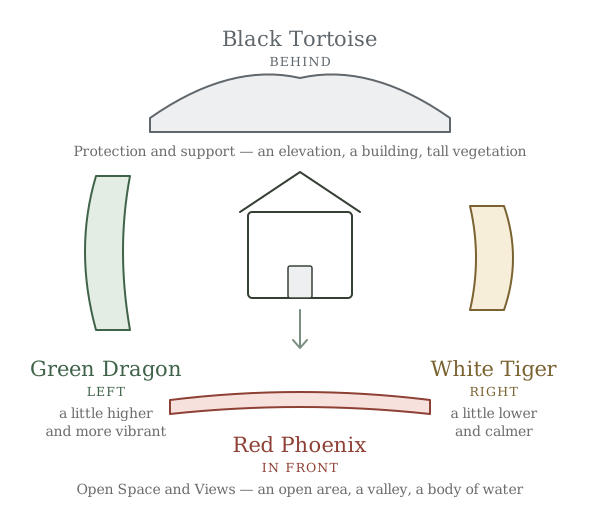
The most well-known image in the Form School is that of the Four Celestial Beasts: four symbolic figures that represent the four sides of an ideal place. Together, they envelop a space in such a way that it offers protection, expansiveness, and composure all at once. The four beasts are:
- Black Tortoise — at the back
- Red Phoenix — in front
- Green Dragon — on the left
- White Tiger — on the right
Perspective is crucial here: The sides are interpreted as if one were standing in the front door and looking outward. What lies to the left—that is, to the east, if the house faces south—is the Dragon side. What lies to the right is the Tiger side. This may sound unusual at first, but it follows a simple internal logic, which we’ll discuss in more detail shortly.
The Black Turtle: Support and Protection
Imagine sitting in a place and feeling as though you’re being supported from behind. Perhaps a hill, a mountaintop, a dense row of trees, or a high wall—something that provides you with a sense of security. This is exactly what the Black Tortoise represents in the Four Symbols of Feng Shui.
Traditionally, it represents an elevation behind the house: a hill, a mountain, or at least a section of terrain that is significantly higher. This elevation is meant to offer protection—from the wind, from the feeling of vulnerability, and from whatever might come from behind. There are interesting parallels in environmental psychology research: Studies suggest that people find places with a protective backdrop and an unobstructed view ahead significantly more pleasant than open or unprotected locations. Research in the field of what is known as prospect-refuge theory—developed by Jay Appleton (1975)—suggests that the human nervous system responds to precisely this combination of a clear view and cover. A place with a strong “turtle” element could therefore have an impact not only symbolically but also through direct experience.
Red Phoenix: Expansiveness and a View Ahead
The Phoenix embodies the space that opens up in front of the house. In classical design theory, it describes an open, lower-lying foreground—a wide valley, a plain, or a plaza over which the gaze can roam unimpeded. Ideally, there would also be a small hill or ridge in the distance: close enough to anchor the gaze, but far enough away to create a sense of expansiveness. This distant hill is sometimes described as the “footstool of the Phoenix.”
The neuropsychological reasons why openness in the foreground is so important can also be surmised: Research by Roger Ulrich (1984) suggests that looking out onto an open, structured landscape—with depth and the potential for movement—can reduce stress responses in the body. The idea of being able to get up and move at any time seems to signal a sense of security to the nervous system. So the phoenix may be more than just a symbol—it could be an ancient representation of something we physically feel when we position it correctly.
Green Dragon and White Tiger: The Protective Flanks
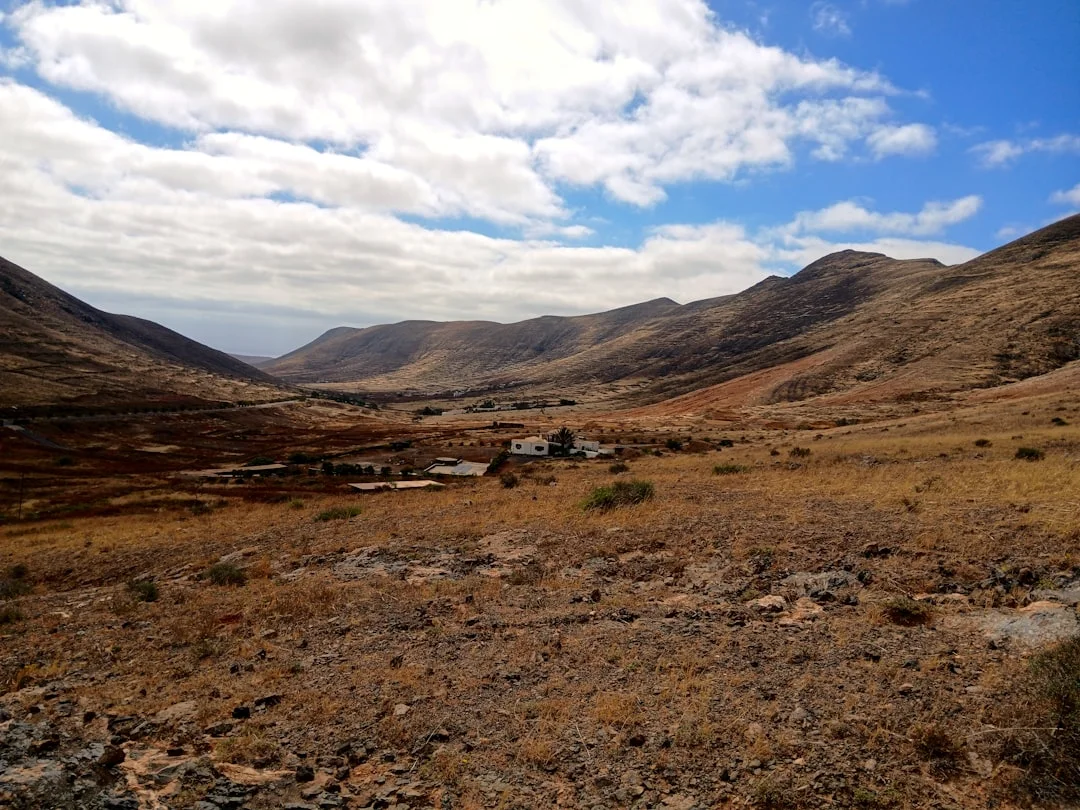
To the left and right of the house stand the Green Dragon and the White Tiger—the two flanks that give the site its composure. Ideally, both are conceived as gentle elevations: hilltops, forests, rows of trees, or neighboring buildings that provide lateral protection without overwhelming the view.
There is a subtle but significant distinction here: Traditionally, the Dragon side may be slightly higher than the Tiger side. The Dragon is considered a more yang, more active force—it may have a slightly stronger presence. The Tiger is quieter, more yin, and should not dominate. A house whose right flank significantly towers over the left could, according to this logic, become unbalanced.
And this is where the important direction of reading comes into play: left and right are determined as if you were standing in the front door and looking outward. So you stand with your back to the Tortoise, facing the Phoenix. What lies to your left is the Dragon side. What lies to the right is the tiger side. This perspective is clearly defined in classical literature—and it differs from how one would read a map, which is why it can be confusing at first.
A simple mnemonic image: the armchair
Traditional literature on the Form School of Feng Shui uses an elegant image to make the four animals tangible: the armchair or easy chair. Imagine you’re sitting in a comfortable armchair:
- The backrest is the Tortoise—it supports your back.
- The left armrest is the Dragon—slightly raised, active.
- The right armrest is the tiger—slightly lower, calmer.
- The footstool in front of you is the phoenix—lower down, at a slight distance.
This image not only makes the room layout immediately clear—it also shows why this configuration can be experienced as comfortable. A good armchair supports, embraces, and opens up at the same time. That is exactly what an ideally situated home should do.
Prospect-Refuge Theory & Form School Environmental psychology describes a fundamental human need through the so-called “prospect-refuge theory” (Appleton, 1975): We feel comfortable in places that offer us both a view (prospect) and shelter (refuge). The four animals of the Form School could be seen as millennia-old, cross-cultural wisdom that gave shape to precisely this pattern—long before there was a scientific term for it.
The Location of a House in Feng Shui: Why the School of Form Comes First
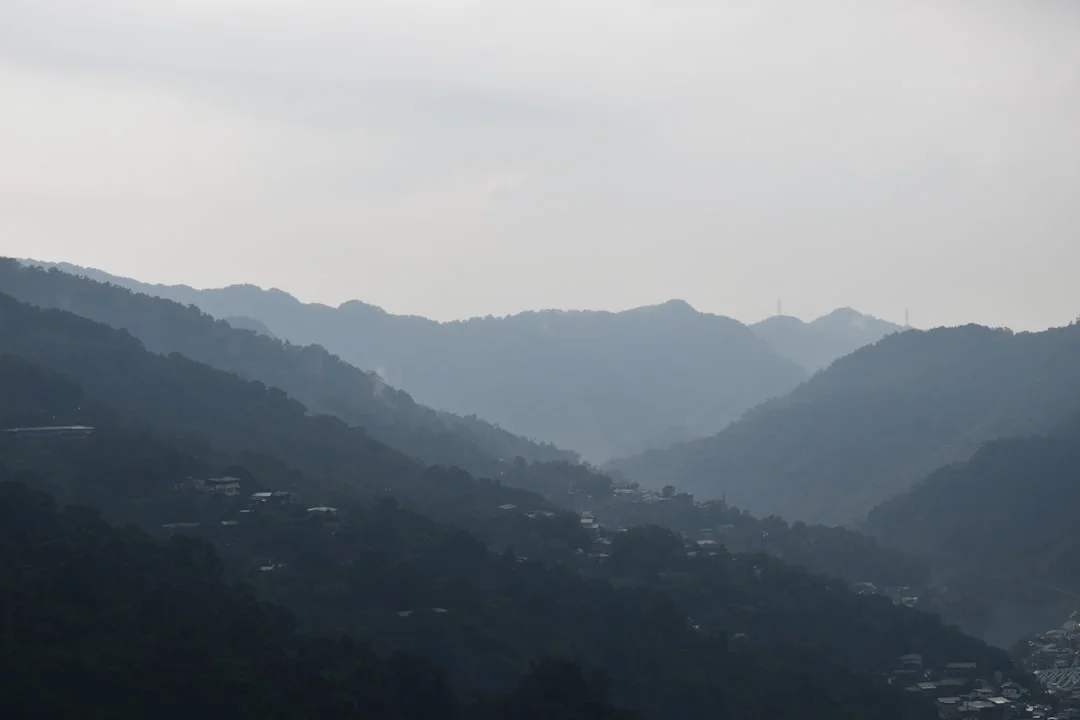
In the Western understanding of Feng Shui, people often ask first about cardinal directions, compass degrees, and numerical grids. The classical Chinese tradition takes a different view: the Form School is given priority. Only when the landscape’s form is correct—when the Tortoise, Phoenix, Dragon, and Tiger are in a recognizable relationship—are compass-based methods applied.
There is an inherent logic to this: According to traditional belief, a favorable compass orientation cannot compensate for the shortcomings inherent in a fundamentally unfavorable location. For example, if a house lacks protective backing, is constantly exposed to strong winds, or is overwhelmed by a dominant elevation, even the best compass orientation is of little use. In Feng Shui, the house’s location is therefore the foundation—and the Form School provides the tools to interpret this location.
This does not mean that compass-based methods are unimportant. But it does mean that a site assessment should sensibly begin with what is visible: What is the terrain like? What lies behind the house? What opens up in front? How do the flanks behave? These questions can be asked without specialized knowledge—and their answers can already reveal a great deal about why a place feels good or less than ideal.
The Pattern on a Small Scale: Your Seating Arrangement as Four Animals
The beauty of the School of Form is that its patterns aren’t limited to mountains and houses. The same principle can manifest on a smaller scale—and perhaps you’ve already noticed it in your everyday life.
Think of your favorite spot in a café, a restaurant, or a living room. If you have a choice: Do you tend to sit with your back to the wall? Facing the door or the window? Do many people instinctively avoid seats in the middle of the room, where their backs are exposed and unprotected? Research in environmental psychology suggests that these very preferences are widespread and may be related to what Appleton described as the need for a refuge.
The Ideal Seating Arrangement Based on the Four-Animal Pattern
A seat that follows the four-animal pattern might look like this:
- Turtle: A wall, a backrest, a shelf, or a room-dividing plant behind you—something that provides support.
- Phoenix: An unobstructed view ahead—toward the door, the window, or into the room. Do not sit facing the wall.
- Dragon (left): A slight lateral support on the left—a table, a plant, an armrest.
- Tiger (right): Something similar on the right, perhaps a bit more open or lower in height.
Some people find this seating arrangement significantly more comfortable—it helps them feel more focused, calmer, and more present. Whether this is due to symbolic patterns, environmental psychology, or simply good room layout may not be all that important in the end. In any case, it’s clear that many people experience it this way.
The Feng Shui School of Form in Contemporary Practice
Anyone buying, renting, or furnishing a home today rarely has the opportunity to fundamentally alter the property. But the School of Form can also be used as a framework for observation—as a kind of lens through which one can reinterpret a place.
Perhaps you’d like to try looking at where you live through this lens:
- What lies behind the house—is there a hill, a slope, or dense trees?
- What opens up in front—a street, a square, a garden, a sweeping view?
- How do the sides of the property lie—is there a sense of enclosure, or do the sides feel exposed?
- From the perspective of the front door, which side is the “dragon” side, and which is the “tiger” side?
Even small adjustments can sometimes make a big difference: a hedge at the back of the garden, a privacy screen where the “turtle” is missing, or deliberately keeping the front area open. The School of Form offers no guarantees and no magic formulas—but it can open your eyes to a different, perhaps more mindful perspective on your own surroundings.
It should also be noted that anyone wishing to delve deeper into classical Feng Shui will find that the School of Form is always assessed first in the practice of traditional masters. The Compass School builds upon it—not the other way around. This lends significance to the observation of forms and locations, a significance that is sometimes underestimated in Western Feng Shui.
What Science Might Say About It
Feng Shui is not a science in the Western sense—and it doesn’t have to be. But it would be too simplistic to dismiss its principles as mere folklore. Interestingly, connections can certainly be drawn between some of the core ideas of the Form School and current research.
Jay Appleton’s (1975) “prospect-refuge theory,” mentioned earlier, describes how deeply rooted the human need for a sense of overview and shelter is—a pattern that can be explained in evolutionary terms. Studies in the field of environmental psychology, such as those by Rachel and Stephen Kaplan (1989), suggest that certain landscape features—openness, structure, depth, but also protective elements—can positively influence well-being. Their so-called “attention restoration theory” suggests that places with these features could help alleviate cognitive exhaustion.
Roger Ulrich (1984) demonstrated in a widely cited study that simply looking out a hospital window at a tree—as opposed to a brick wall—was associated with shorter recovery times and reduced use of pain medication. This, too, is a kind of “phoenix perspective”: openness and nature in the foreground instead of an oppressive wall.
Of course, this research does not prove that Feng Shui “works”—but it does suggest that the school’s fundamental intuition regarding how we relate to our surroundings is by no means implausible. Perhaps people a thousand years ago recognized through careful observation what science is now seeking to understand by other means.
For a comprehensive analysis: On-site consultation
This article offers some guidelines for your own living space—and that’s a good place to start. However, a comprehensive Feng Shui analysis should be conducted by a trained consultant. It takes into account factors that a written guide cannot: the location of the house, the layout of the rooms, the actual cardinal directions in the floor plan, the surroundings, and the people who live there. In most regions, there are qualified professionals available; consulting with one is particularly advisable when renovating, buying a home, or when the preferences of several people in the household cannot be reconciled.
What is the difference between the Form School and the Compass School in Feng Shui?
The Form School—known in Chinese as Luan Tou—is the older of the two main schools and operates without a compass or calculations. It assesses the visible landscape: mountains, valleys, elevations, watercourses, and the house’s location within them. The Compass School supplements this assessment with cardinal directions, trigrams, and numerical grids. In classical practice, the Form School is evaluated first—it forms the foundation upon which compass-based methods are built.
How do I determine which side is the dragon side and which is the tiger side?
The pages are read as if you were standing in the front door and looking out—that is, with your back to the tortoise and facing the phoenix. What lies to your left is the Dragon side (green dragon). What lies to your right is the Tiger side (white tiger). This reading direction is clearly defined in classical literature and may be confusing at first because it differs from a map view.
What if my house doesn't have any of the ideal features—no hill in the back, no open space in front?
Very few places fully meet the ideal model—and that’s perfectly normal. The School of Form offers a framework for observation, not a checklist that must be perfectly checked off. Sometimes missing elements can be symbolically added: a hedge or a tree as a tortoise on the back, keeping the front area clear as a phoenix space, and side plantings as dragon and tiger arms. Small adjustments can sometimes change the feel of a place—without the need for major structural changes.
Does the four-animal pattern also apply indoors?
Yes, this pattern can certainly be applied to interior spaces. The classic example is a seating area: a wall or solid structure behind you (Turtle), an unobstructed view forward toward the door or window (Phoenix), and slight lateral support on the left and right (Dragon and Tiger). Many people find such a seating arrangement more comfortable and conducive to concentration—whether this is due to the symbolic pattern or to environmental psychological factors remains an open question. In any case, it is evident that this preference is widespread.
Do I have to believe in Feng Shui for it to work?
That’s a great question, and the honest answer is: it’s unclear. The School of Form can be interpreted as a cultural system, an aesthetic practice, or applied environmental psychology—depending on one’s own perspective. Some people experience changes in their surroundings as meaningful, even without viewing Feng Shui as a system that works in a literal sense. It might be helpful to view the School of Form as an invitation: to become more mindful of one’s surroundings and to ask whether and how they might contribute to one’s well-being.
What does it mean when the tiger side is stronger than the dragon side?
Traditionally, the Dragon side (the left side when looking outward) is considered the more yang, more active flank—it may be slightly higher than the Tiger side. If the Tiger side clearly dominates, this is viewed in classical Feng Shui as a potential imbalance. In practice, this could mean slightly strengthening the Dragon side with plants, structures, or other elements—or at least consciously noticing how the two sides relate to one another.
The Form School of Feng Shui is perhaps the oldest known system that asks the question: How does this place fit into its surroundings? And: How can we feel at home here? The four animals—the black tortoise, the red phoenix, the green dragon, and the white tiger—bring this question to life. It’s not a rigid set of rules, but an invitation to observe.
Perhaps today you’d like to pause for a moment—at your desk, on your favorite park bench, or on your front porch—and ask: What is my tortoise? What is my phoenix? How do the flanks feel? Sometimes that one conscious glance is enough to experience a place in a whole new way. And who knows—maybe you’ve been sitting in the perfect chair all along, without even realizing it.