The Bagua: The Eight Areas of Life in a Space
What the Bagua is, how to apply the map to your apartment, and what the eight areas of life reveal about your space.
Imagine if your home weren’t just a silent backdrop, but a living mirror—a space divided into eight distinct qualities, each with its own energy and meaning. This is exactly what the Bagua describes: one of the central tools of classical Feng Shui, which assigns each area of a room to one of the eight areas of life. The north represents one’s life path, the south represents recognition, and the southwest represents partnership. Sound abstract? Perhaps. But for many people, it can be surprisingly moving when they place the Bagua map over their apartment for the first time—and suddenly begin to sense connections between space and life that they hadn’t seen before.
This article aims to introduce you to the Bagua in a clear and down-to-earth way: What lies behind this ancient model? Which cardinal direction represents which area of life? And how could you apply the Bagua chart specifically to your own home? Let’s explore this together—with curiosity, an open mind, and without any esoteric gibberish.
What Is the Bagua? A New Look at an Ancient Model
The word “Bagua” comes from Chinese and literally means “eight symbols” or “eight trigrams.” It describes an ancient symbol deeply rooted in Chinese thought: an octagon whose eight sides represent eight fundamental forces that permeate life and the cosmos. These eight trigrams are originally described in the I Ching—the Book of Changes—one of China’s oldest philosophical texts, whose origins researchers estimate to be over three thousand years old.
In classical Feng Shui, the Bagua was applied as a framework for orienting spaces, properties, and buildings. The idea behind it: Each of the eight cardinal directions embodies a specific quality—an energy that resonates with a particular theme in life. North is associated with the element of water and the themes of career and life path. South is associated with the element of Fire and the themes of reputation and recognition. Each direction, each element, and each area of life together form a holistic picture that—according to the traditional view—can help one perceive and design a living space more consciously.
It’s important to understand that the Bagua is not a scientific measuring instrument in the Western sense. It is a philosophical interpretive model rooted in a different worldview. Those who use it would do well to view it as an invitation to reflection—not as a guarantee of specific results.
The Eight Trigrams and Their Origins
Each of the eight trigrams of the Bagua consists of three lines, which can be either solid (Yang) or broken (Yin). The combination of these lines creates eight different patterns—each representing a principle: Heaven, Earth, Thunder, Wind, Water, Fire, Mountain, and Lake. These trigrams are not arbitrary symbols; rather, they have been developed and refined over centuries within Chinese philosophical, medical, and astrological thought.
In the context of Feng Shui, the trigrams were assigned to the eight cardinal directions—a connection that makes it possible to divide any room or house into eight zones using a compass. This assignment forms the basis of the classical Bagua map, as used in the Compass School of Feng Shui.
The fact that people have been thinking in these categories for millennia is remarkable in itself. Research on symbolic spatial perception—such as that conducted in environmental psychology—suggests that the way we interpret and structure our space can indeed influence our well-being. For example, studies by Ulrich (1984) on the therapeutic effects of designed environments showed that spatial qualities can help shape our inner state—although the Bagua itself was, of course, not the subject of this research.
Placing the Bagua Chart Over the Apartment: The Compass Method
The classic way to align the Bagua chart with an apartment follows the measured cardinal directions—this is known as the compass method or Luo Pan method. It may sound technical at first, but it’s easy to do once you know a few basic steps.
Step 1: Get the floor plan
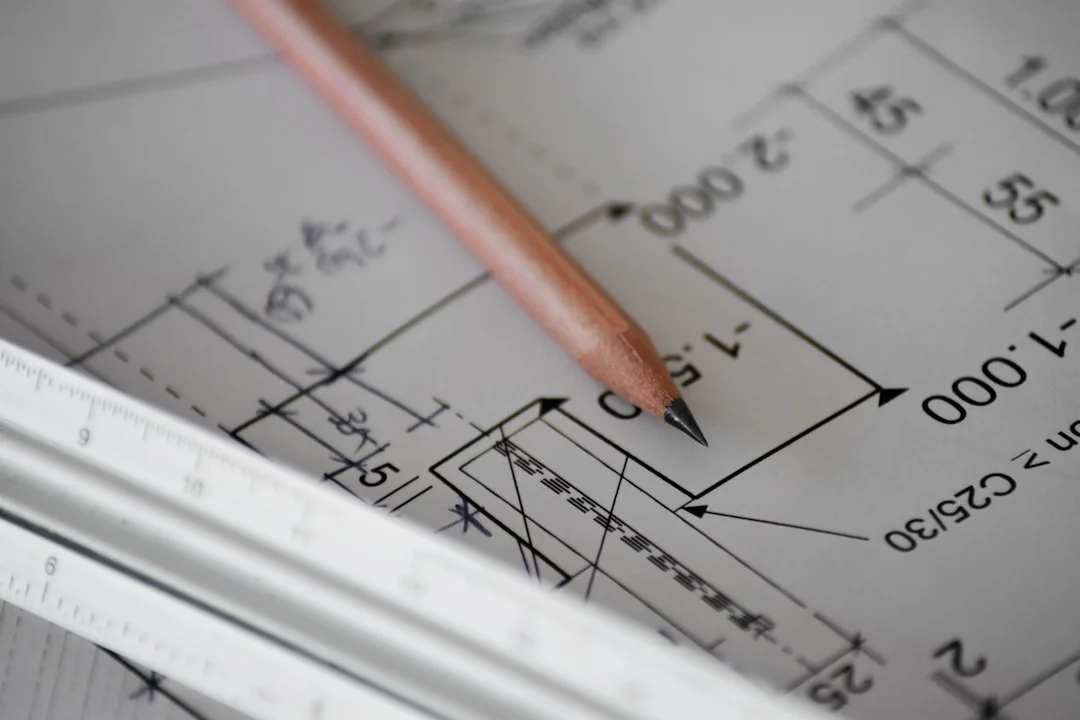
It’s best to draw a floor plan of your apartment or house—as true to scale as possible. If you have the architectural blueprint, that’s ideal. Otherwise, a hand-drawn sketch with approximate proportions will suffice.
Step 2: Determine the cardinal directions
Using a regular compass—or the compass app on your smartphone—determine where north is in your home. To do this, stand in the center of your home if possible, or use a sturdy exterior wall as a reference point. Be sure to keep a safe distance from metal objects or electronic devices that could interfere with the measurement.
Step 3: Overlay the Bagua on the floor plan
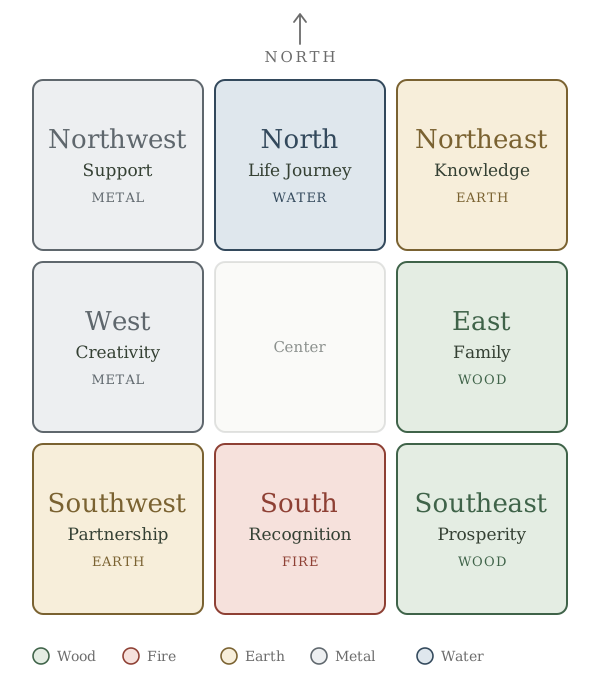
Now divide your floor plan—mentally or using a template—into nine sections: eight directional sections plus the center. These nine sections correspond to the cardinal directions. The area of your home facing north corresponds to the Feng Shui sector of career and life path. The southeastern part relates to prosperity—and so on.
This method requires some practice and patience, but for many people it can be a real “aha” moment: Suddenly, every corner of the room takes on a new layer of meaning.
Space and Well-Being: What the Research Suggests Environmental psychologists such as Roger Ulrich have shown in studies that the conscious design of spaces can influence subjective well-being—not because spaces have magical powers, but because they subtly shape our perception, mood, and behavior. In this sense, the Bagua could be seen as an invitation to view one’s own space with a new awareness.
An Overview of the Nine Feng Shui Areas
Here are all nine sectors of the Bagua map with their traditional assignments according to the compass method—as a guide, not a rule:
- North — Career and Life Path (Element: Water): This sector is traditionally associated with one’s professional path, the flow of life, and the question of where one is headed. Water as an element embodies fluidity, depth, and adaptability.
- Northeast — Knowledge and Self-Awareness (Element: Earth): This sector is about learning, inner development, and deepening insights. Earth represents grounding and stability.
- East — Family and Health (Element: Wood): The eastern sector is associated with family relationships, roots, and physical well-being. Wood represents growth and vitality.
- Southeast — Prosperity (Element: Wood): Traditionally, this area represents material and immaterial abundance—that is, not only financial wealth but also gratitude and a sense of abundance. The term “prosperity” is deliberately chosen here; in some other sources, one reads about a “wealth corner,” which, however, oversimplifies and narrows the tradition.
- South — Reputation and Recognition (Element: Fire): The southern area resonates with how one is perceived by others, with one’s reputation, and with the question of what one stands for. Fire symbolizes visibility, passion, and radiance.
- Southwest — Partnership and Receptivity (Element: Earth): Romantic relationships, partnerships of all kinds, and the quality of giving and receiving are the themes of this area.
- West — Children and Creativity (Element: Metal): This area is about creative expression, joy, and—both literally and figuratively—what you bring into the world. Metal symbolizes clarity and precision.
- Northwest — Helpful People and Travel (Element: Metal): This area represents life’s network: mentors, supporters, but also the vastness of the world and travel.
- Center — Tai Chi, the Center (Element: Earth): The center is the heart of the Bagua. It connects all the other areas and represents balance, health, and the ability to center oneself.

A Brief Note on the Three-Door Method (BTB)
Anyone who has been studying Feng Shui for a while will sooner or later come across a second, very widespread method: the so-called Three-Door Method, also known as the BTB Method (from Black Sect Tantric Buddhism, a Western-influenced school of Feng Shui). In this method, the Bagua is not aligned with the compass but is always placed starting from the front door—regardless of which direction the door faces.
This sounds practical and is more accessible to many beginners. Nevertheless, it’s important to clearly point out this deviation: The BTB method is not compatible with the classical compass school of Feng Shui—and it cannot be combined with more advanced concepts such as the Qua number (the personal energy number) or the Flying Stars (a dynamic, time-based Feng Shui analysis). So, anyone who wants to delve deeper into classical Feng Shui practice might want to work with the Compass Method from the start—so that later expansions can build on a solid foundation.
Both methods have their followers, and some people find the Three-Door Method very helpful. As a magazine, however, we want to be transparent: When we refer to the Bagua map in this article, we are consistently referring to the compass-based version based on measured cardinal directions.
How Feng Shui Areas Might Relate to Life
At this point, a legitimate question might arise: Why should it make a difference whether the northeast area of my apartment contains books or a jumble of unused items? Or to put it another way: What does this space have to do with my life?
The Bagua doesn’t answer this question with scientific precision—nor does it claim to. What it offers is a symbolic language: an invitation to interpret space as a mirror of one’s inner state. If the area for relationships in the southwest is permanently used as a storage space for unresolved issues—could that be a clue worth exploring? Not as a cause-and-effect assertion, but as a question.
Environmental psychology provides some interesting food for thought here: Research by Kaplan & Kaplan (1989) on the so-called Attention Restoration Theory suggests that our environment can either tie up or release cognitive and emotional resources. Clutter, visual overload, and a lack of structure in rooms could—as various follow-up studies suggest—increase subjective stress levels. Conversely, a thoughtfully designed, calm environment can help people feel more clear-headed and refreshed.
In this sense, the Bagua could serve as a practical tool for reflection: Which areas of my home are well-maintained, and which are neglected? What aspects of my life might be reflected in this? The answers are deeply personal—and there is no single “right” answer.
The Center: Tai Chi as the Heart of the Bagua
In the nine-field structure of Bagua, the center plays a special role. It is called Tai Chi—not to be confused with the physical exercise of the same name, even though the two terms are related. In Bagua, Tai Chi refers to the point of balance, the axis around which all other areas unfold.
The element of the center is Earth—the same element that also appears in the northeast, southwest, and the center itself. In the Chinese theory of the Five Elements, Earth represents stability, centering, and the ability to nourish and connect. In the classical Feng Shui tradition, the center of a home is a particularly sensitive area: It should be as unobstructed, bright, and open as possible—not cluttered, heavily burdened, or permanently blocked.
For many people, it can be enlightening to consciously observe what is located at the geographical center of their home. Is it a bright, open space? A passageway? A stairwell? A cluttered room? This is not a judgment—but an invitation to observe.
The Bagua and Personal Development: A Potential Bridge
What makes Bagua interesting for people interested in personal development? Perhaps it’s this unique combination: an ancient, structured system of interpretation meets the human tendency toward self-reflection. The Bagua gently encourages you to see your living space through a different lens—and, in doing so, sometimes yourself as well.
Self-awareness and reflection are considered significant factors for personal growth in modern psychology. In her groundbreaking research on the practice of self-compassion, Neff (2003) described how important it is to approach oneself with a benevolent, curious attitude—without immediate judgment. This very attitude could also be helpful when working with the Bagua: not as self-criticism (“My career sector is a mess—no wonder nothing’s working out!”), but as gentle curiosity (“What might this space be trying to show me?”).
Some people report that becoming aware of the eight areas of life has helped them more clearly identify issues in their lives that they had previously only sensed vaguely. Not because the Bagua works magic—but because tools that provide structure can support our thinking and feeling. That’s a human strength: we think in images, categories, and metaphors. The Bagua offers us exactly that.
Practical Tips: What to Consider in Each Area
If you’re curious and would like to apply the Bagua map to your home, here are some gentle questions you could ask yourself about the different areas—as a starting point, not as a checklist:
- Career/North: How does this area feel? Does energy flow freely through it—are there flowing elements (water, mirrors, dark tones)—or does it feel heavy and oppressive?
- Wealth/Southeast: Is this area well-maintained and inviting, or does it end up being a dumping ground for things you don’t know where to put?
- Partnership/Southwest: Are there elements here that embody the themes of connection and togetherness for you? Or does it feel lonely and barren?
- Creativity/West: Is this a space where you can play, experiment, and create? Is there room for self-expression?
- Knowledge/Northeast: Do you find space here to reflect, read, and pause?
These questions aren’t instructions. They’re invitations. What you make of them is entirely up to you—and that’s perhaps the most beautiful thing about this practice: it belongs to you.
If you notice that certain topics affect you emotionally or weigh on you in ways that go beyond normal reflection, a conversation with a professional—whether through counseling, coaching, or therapy—could be a valuable addition. The Bagua is no substitute for professional support, but it can sometimes serve as a first step toward taking a closer look.
For a comprehensive analysis: On-site consultation
This article offers some guidelines for your own living space—and that’s a good place to start. However, a comprehensive Feng Shui analysis should be conducted by a trained consultant. It takes into account factors that a written guide cannot: the location of the house, the layout of the rooms, the actual cardinal directions in the floor plan, the surroundings, and the people who live there. In most regions, there are specialists available; consulting with one is particularly advisable when renovating, buying a home, or when the preferences of several people in the household cannot be reconciled.
Calculate Your Qua Number
Your birth year and gender determine your personal Qua number—and with it, the four cardinal directions that are traditionally considered auspicious for you. You can determine them directly using the calculator. The calculation takes place in your browser; your date of birth is neither transmitted nor stored.
What is the difference between Bagua and a Bagua chart?
The Bagua refers to the philosophical eight-field model from Chinese tradition—that is, the concept itself, consisting of eight trigrams and eight areas of life, plus the center. The Bagua chart is the practical application of this model: a graphic template that you place over the floor plan of your apartment to see which area of your home corresponds to which aspect of life. Both terms are often used interchangeably in everyday language, although strictly speaking, they refer to different things.
Do I have to believe in Feng Shui for the Bagua to be useful?
Not necessarily. Many people who use Bagua see it less as a spiritual system and more as a tool for reflection—a structured way to look at their own space and life issues with fresh eyes. The question isn’t so much whether Bagua is “true,” but whether it helps you engage more mindfully with your home. Research on mindful interior design suggests that the way we perceive and design our space can influence our well-being—regardless of the Bagua itself.
Which method is the right one: the compass or the three-door method?
That depends on what you plan to do with the Bagua. The classic compass method, based on measured cardinal directions, is rooted in traditional Feng Shui practice and can be combined with more advanced concepts such as the Qua number or the Flying Stars. The Western Three-Door Method (BTB) is more beginner-friendly but isn’t compatible with these classical systems. If you want to delve deeper, it may make sense to work with the compass method from the start.
What should I do if my apartment has an irregular layout and some areas are missing?
Irregular floor plans are actually a topic of their own in Feng Shui. If an area is missing from the floor plan—for example, because the apartment is L-shaped—this is referred to as a “missing area.” In practice, there are various approaches to addressing this, such as through symbolic additions outside the home (patio, balcony, garden) or through the deliberate design of adjacent areas. This is a topic where a personalized consultation with an experienced Feng Shui practitioner can be more valuable than general rules.
Can I also apply the Bagua to a single room?
Yes, that’s generally possible. Many people apply the Bagua chart to both the entire apartment and individual rooms—such as the bedroom or the home office. With the compass method, you also use the actual cardinal directions as your guide here. In this way, even a single room can be divided into nine sectors, each with its own symbolic meaning.
What does it mean when there is disorder in the realm of prosperity?
In traditional Feng Shui, clutter in any area is seen as an indication of stagnant energy—not as the cause of external problems, but as a possible reflection of inner issues. In the wealth sector (southeast), this might mean asking yourself how you personally feel about topics such as abundance, gratitude, and financial security. Tidying up and arranging this area can be a symbolic act—a way to bring inner clarity to the outside world. No guarantees can be made, but many people find such conscious gestures meaningful and encouraging.
The Bagua is neither a magic formula nor a promise. It is an interpretive model that has evolved over millennia and can help you view your space—and perhaps yourself—in a new light. The eight life sectors of the Bagua map offer a structure that invites you to look, feel, and reflect. Whether you use this to make concrete changes to your space or simply walk through your home with greater mindfulness—both can be valuable.
If you’d like to take a first step today, it could look like this: Take your compass (or your smartphone), stand in the center of your home, and figure out which way is north. Then—perhaps with a simple sketch—map the nine sectors onto your floor plan. And then just see what you notice. No pressure, no obligation. Just curiosity.