Qi and Poison Arrows: How Energy Flows Through Spaces
What Feng Shui Teaches Us About Perceiving Space—and Why Sharp Edges, Crowded Corners, and Long Hallways Might Affect Our Well-Being.
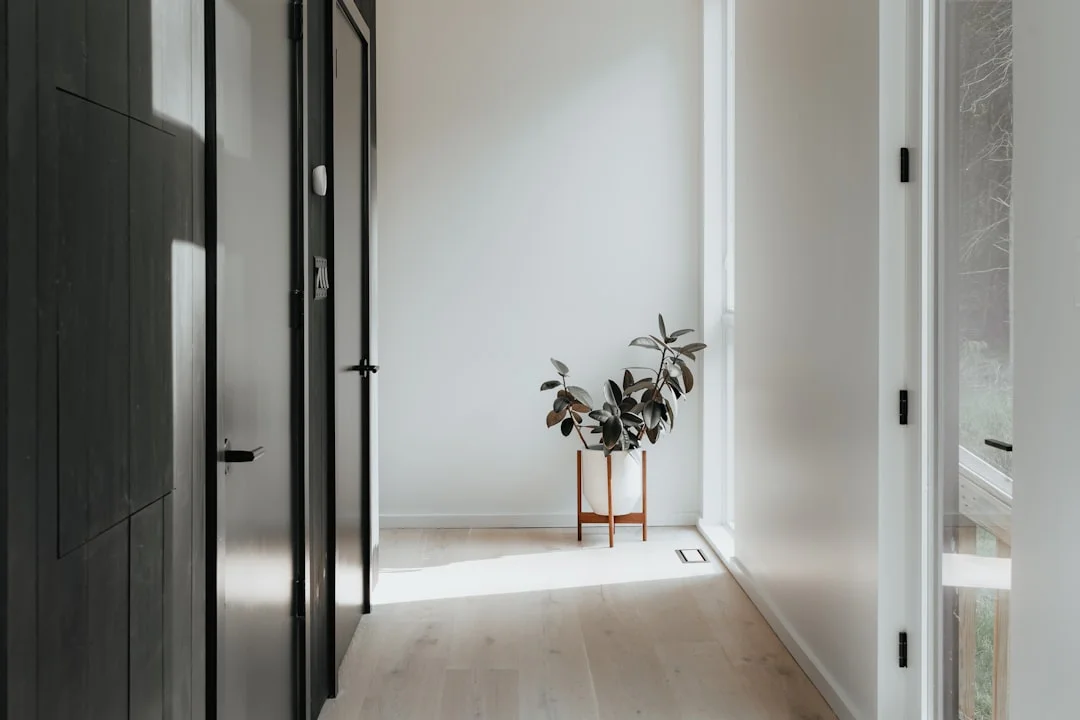
You walk into a room and immediately sense that something isn’t quite right—without being able to pinpoint exactly what it is. Or you come home, and a certain room just doesn’t appeal to you, even though it looks bright and tidy. Many people are familiar with this quiet unease, yet we rarely look for the cause in the arrangement of furniture, the direction of edges, or the way light and air flow through a room. This is exactly where the concept of Qi Feng Shui comes in—a millennia-old Chinese philosophy of space that describes how energy flows through our living spaces, where it gets stuck, and where it moves too quickly. In this article, we’ll explore what lies behind the terms Qi, Sha Qi, and “poison arrows,” what environmental psychology has to say about them, and what simple changes might be possible in our daily lives.
What is Qi—and why does it play a role in Feng Shui?
The word Qi (sometimes spelled Chi) can best be translated as life energy or life force—a concept that plays a central role in Chinese philosophy, Traditional Chinese Medicine, and, of course, Feng Shui. In the context of spaces, Qi does not describe a mystical substance, but rather a quality of movement: How does something move through a space? Air, light, gazes, bodies—all of these have a dynamic quality, and this dynamic can influence our experience.
In Feng Shui, a distinction is made primarily between two qualities: Sheng Qi refers to energy that flows gently and in curves—similar to a meandering stream winding its way through a landscape. Sheng Qi is considered beneficial, nourishing, and soothing. In contrast, Sha Qi (also Shar Chi) is the energy created by sharp edges, straight lines, and abrupt changes in direction, and is perceived as disruptive or stressful. The goal of Feng Shui is to invite Sheng Qi and mitigate Sha Qi—not through magical rituals, but through conscious design choices.
From an environmental psychology perspective, this isn’t so far-fetched: Research suggests that people react to their spatial environment, often without realizing it. In a widely cited study, Ulrich (1984) demonstrated that even a view of a natural, undulating landscape can positively influence well-being—compared to a view of hard, geometric structures. Kaplan & Kaplan (1989), with their Attention Restoration Theory, coined the concept that soft, natural forms are less tiring to focused attention than sharp, artificial structures. That sounds like science—and at the same time is strikingly reminiscent of what Feng Shui has been describing for centuries.
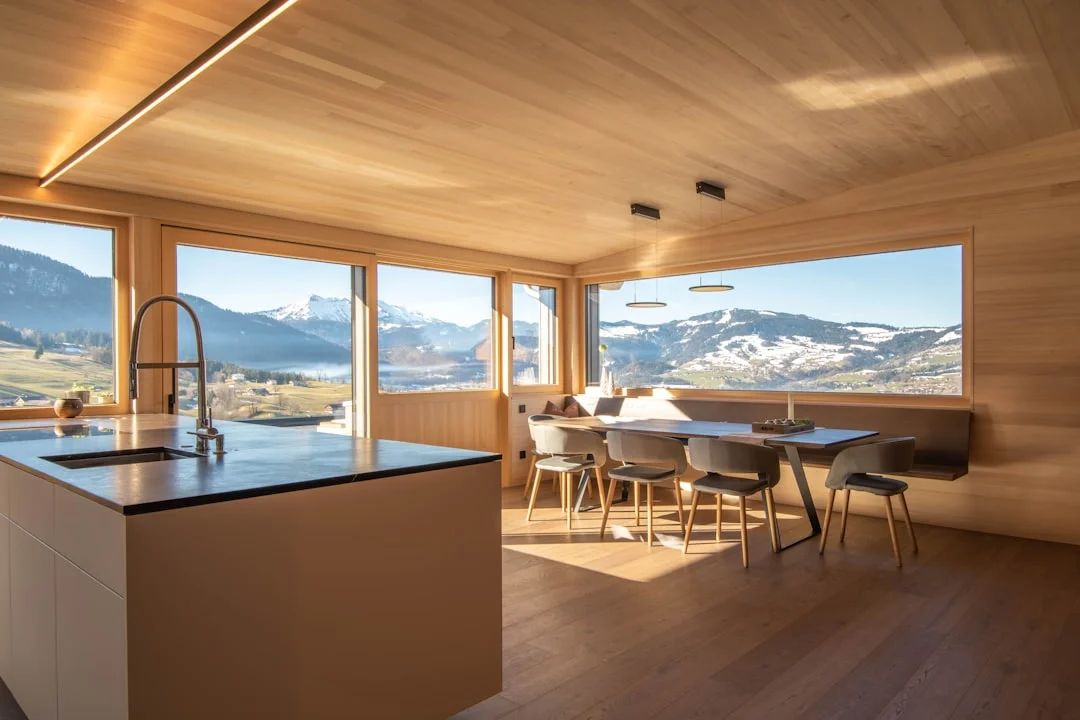
Sheng Qi: When Energy Flows Gently Through Spaces
Imagine walking into a room where the furniture is arranged so that your gaze is gently guided from one object to the next. There are no abrupt obstructions, no corners pointing directly at your seat, no sharp edges of furniture jutting out into the room. Air can circulate, light falls evenly, and you find your way through the room intuitively, without having to navigate around obstacles. This is Sheng Qi—or at least the spatial condition under which many people speak of such Qi.
According to traditional teachings, Sheng Qi moves gently and in curves—never in a long, straight line that shoots through the room like an arrow. Round tables, smooth transitions, plants with curving leaves, rugs that define zones: All of these elements can help support this calm flow. Some people report that they find it easier to relax in such spaces and feel less tense—whether this is due to Qi or to well-thought-out interior design may not even be the crucial question.
Stagnant Qi: Crowded Corners and Hidden Nooks
In addition to the gently flowing Sheng Qi, there is another quality considered problematic in Feng Shui: stagnant Qi. It arises where energy—or, in everyday terms: air, light, movement, and attention—simply cannot reach. The classic spots for this are cluttered corners, the space behind doors, dark storage closets, or areas under the bed that fill up with boxes, old magazines, and things that are no longer used.
Anyone familiar with such nooks in their home may have noticed that they tend to avoid them—and that this avoidance itself could be a sign. Stagnant qi essentially describes the opposite of vitality: areas that fall out of our awareness, are ignored, and consequently fill up with things that should have been sorted out long ago.
The most obvious solution, therefore, is not a Feng Shui specialty: tidying up and decluttering. Rooms that are less cluttered are easier to ventilate, clean, and illuminate. Attention can flow more freely. Research in environmental psychology suggests that clutter ties up cognitive resources and can act as a subliminal stressor (McMains & Kastner, 2011). Feng Shui describes the same thing—just in different words. So before considering crystals, wind chimes, or mirrors, consistently clearing out corners and freeing up forgotten nooks might be a sensible first step.
Qi That Moves Too Fast: When Energy Races Instead of Flowing
In Feng Shui, it’s not just stagnation that’s considered unfavorable—the opposite can also be problematic. Qi that moves too fast shoots straight through rooms without slowing down or dispersing. The classic example of this is a long hallway, through which air and line-of-sight rush like through a tube. This phenomenon is even more evident when the front door is aligned directly with a window across from it: energy enters, encounters no resistance, and leaves the room immediately—without really dispersing.
In everyday life, many people experience this unconsciously: a long, narrow hallway with no breaks can feel uncomfortable—like a wind tunnel, somehow restless. Anyone who has ever lived in such a space might confirm that moving through it feels different than moving through a hallway with a sideboard, a plant, or a small piece of furniture that slows the gaze and structures the space.
The Feng Shui solution here is not to block energy, but to slow it down and redirect it. A rug that defines a zone, a plant that gently breaks up the line of sight, or a piece of furniture that creates a natural gathering area—all of these can help ensure that qi spreads throughout the room instead of rushing right through it.
Sha Qi and Poison Arrows in Feng Shui: The Effects of Sharp Edges
Sha Qi—literally meaning “killing energy”—sounds dramatic, but viewed objectively, it is simply a descriptive term for energy that is directed and sharp rather than soft and curved. In the context of rooms, Sha Qi arises primarily in places where sharp edges or acute angles point directly at a person who regularly spends time in a specific spot.
The most common sources of Sha Qi indoors are: open shelf edges pointing toward the bed or seating area; room corners that jut abruptly into the space; sloped ceilings under which one sleeps or works; and furniture edges that point directly into one’s preferred living area at eye level. Outdoors, this applies to poles aligned directly with the entrance, streets that run straight toward a house, or the edges of a neighbor’s building that point sharply at one’s own facade.
The so-called “poison arrows” in Feng Shui refer precisely to these sources of Sha Qi that are directed at a single point. Here, too, it’s worth taking a look at environmental psychology: Research on visual perception suggests that pointed objects directed at us can trigger a subtle alarm response—our visual system processes “pointing at me” differently than “pointing away from me” (Bar & Neta, 2006). This doesn’t mean that an open shelf makes you sick. But it could explain why some people sleep worse under a sloped ceiling or can never really relax in a certain armchair.
Environmental Psychology & Visual Perception Research in environmental psychology suggests that pointed shapes directed at us can trigger a subtle visual alarm response—while curved, soft shapes tend to be perceived as soothing. Bar & Neta (2006) showed that people consistently rated pointed objects as more threatening than round ones—a reflex that may be deeply ingrained in our perception.
Neutralizing Feng Shui Corners: Practical, Low-Effort Solutions
If you notice areas in your home that might feel like Sha Qi or “poison arrows”—such as sharp edges pointing toward your favorite spot, corners that jut abruptly into the room, or places where you never really feel at ease—there are a few simple ways to change them. Feng Shui explicitly recommends slowing things down rather than blocking them, and redirecting rather than stopping them.
Round off or cover sharp edges
The simplest solution is to either physically soften sharp edges or remove them from your direct line of sight. A plant placed in front of an open corner shelf takes the sharpness out of the edge—not because it magically absorbs energy, but because the eye now first encounters the curving leaves and only then perceives the straight line behind them. The same applies to room corners: A floor lamp, a plant pot, or a small seat in the corner can visually soften the angle.
Gently Interrupting Lines of Sight
Straight lines that run from the front door to the window on the opposite side can be interrupted by a folding screen, a piece of furniture, or a rug. The goal isn’t to block the path, but to give the line of sight—and thus the flow through the room—a gentle curve. A room divider shelf that doesn’t reach the ceiling can also be helpful here: It structures the space without separating it.
Sloped Ceilings and Sleeping Areas
Sleeping areas under sloped ceilings are a particularly common topic in Feng Shui. Many people do indeed report that they sleep differently under a sloped ceiling—more restlessly, more heavily, and less refreshed. Whether this is due to the room’s geometry, reduced air circulation, or a subtle feeling of confinement is difficult to pinpoint. One option would be to reposition the bed so that it is not directly beneath the lowest point of the slant. Alternatively, canopies or bed canopies can visually balance the perceived ceiling height.
Order as a Foundation
Before any of these measures can take effect, it’s worth—as already mentioned—consistently decluttering. Cluttered rooms offer no room for gentle movement—neither for the eyes, nor for air, nor for one’s own attention. In this case, less can truly be more—not as a sacrifice, but as an invitation for the space to breathe again.
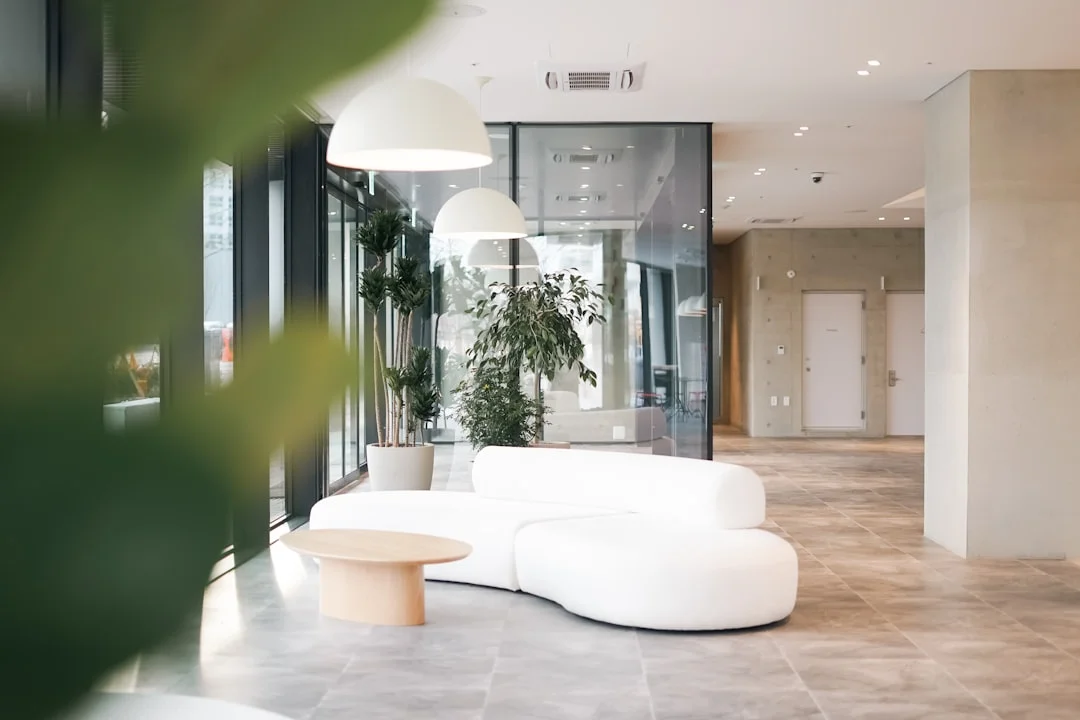
External Sha Qi: When Poison Arrows Come from the Surroundings
Feng Shui isn’t limited to interior design—what’s known as “external Sha” refers to poison arrows directed at your home from the surrounding environment. The most common examples: a power pole pointing directly at the front door; a straight road leading straight toward the house; or the sharp edge of a neighboring building aligned directly with a window or the entrance.
Naturally, your options for action are more limited here—no one can move the power pole. What you can do is train your own perception: If, upon entering your home, you unconsciously direct your gaze toward something unpleasant, even a small change in the entryway could help. A screen of plants, a different path leading to the entrance, a wind chime, or a lantern that diverts the gaze—such elements can gently redirect your focus without having to alter the structure of the surroundings.
It’s less about defense and more about directing your attention: What do you see when you come home? What greets your gaze? Feng Shui encourages you to consciously ask these questions—and to take the answers seriously.
Energy Flow in Your Home: How to See Your Space with Fresh Eyes
A practical introduction to Feng Shui is what’s known as “observing with fresh eyes”: You enter your home as if you were seeing it for the first time, and notice where your gaze goes first, where it lingers, and where it feels uncomfortable. This mindful observation isn’t rocket science—it’s a form of self-awareness that many people have lost touch with in their daily lives.
Some people gain surprising insights this way: The office chair where back problems have never gone away is positioned with its back to the door—a classic Feng Shui taboo, but one that also makes sense from an ergonomic and psychological perspective. We can’t see what’s happening behind us; this creates a subtle sense of vigilance that can make it difficult to relax. In his research on environmental psychology, Gifford (2007) described how spatial arrangements can influence our experience of stress—including whether or not we can see the entire room at a glance.
The Feng Shui recommendation—sit so that you have the door in view but are not directly in the line of sight from the door—aligns surprisingly well with what environmental psychology describes as the “Prospect-Refuge Theory” (Appleton, 1975): People feel comfortable when they have a good overview (Prospect) and feel protected (Refuge) at the same time. With your back to the wall and your gaze toward the door—that’s Feng Shui and evolutionary psychology rolled into one.
Feng Shui and Science: Building a Cautious Bridge
It would be dishonest to claim that Feng Shui, as a comprehensive system, is scientifically proven—it is not. There are no studies that have proven Qi to be a measurable physical quantity, and the effectiveness of certain Feng Shui practices has not yet been convincingly demonstrated in controlled studies. However, this should not lead us to dismiss everything out of hand.
What research actually shows is this: Our physical environment influences our experience—subtly, but real. Clutter can increase cognitive load (McMains & Kastner, 2011). Natural, curved shapes are consistently perceived as more pleasant than geometric, sharp ones (Kaplan & Kaplan, 1989). Pointed objects directed at us can trigger a subtle alarm response (Bar & Neta, 2006). The ability to take in a room at a glance can promote well-being (Appleton, 1975).
All of these are scientifically supported findings—and they sound like a sober description of what Feng Shui has been expressing in poetic language for centuries. Perhaps Feng Shui is a kind of folk wisdom that has preserved implicit knowledge about interior design within a cultural framework—without using the language of modern science, but based on similar observations.
So, those who practice Feng Shui do not have to believe in qi as a cosmic force. It can also be understood as a creative thinking tool: an invitation to perceive one’s own space more consciously, to recognize blockages, to soften sharp edges, and to allow energy—whether literally or figuratively—to flow more gently through one’s home.
For a comprehensive analysis: On-site consultation
This article offers some guidelines for your own living space—and that’s a good place to start. However, a comprehensive Feng Shui analysis should be conducted by a trained consultant. It takes into account factors that a written guide cannot: the location of the house, the layout of the rooms, the actual compass directions in the floor plan, the surroundings, and the people who live there. In most regions, there are specialists available; consulting with one is particularly advisable when renovating, buying a home, or when the preferences of several people in the household cannot be reconciled.
Do I have to believe in Qi to benefit from Feng Shui?
No, that’s not necessary. Feng shui can also be understood as a practical design principle without adopting its spiritual framework. Many of the recommendations—decluttering, softening sharp edges, and ensuring a clear view of the room—can also be understood purely from the perspective of environmental psychology. Anyone who feels more comfortable when their desk faces the door or when cluttered corners are cleared out may benefit from this, regardless of whether they accept “qi” as a concept or not.
What are the most common sources of "poison arrows" in Feng Shui?
Indoors, open shelf edges facing a bed or seating area, as well as room corners, sloped ceilings, and furniture edges, are considered classic sources of Sha Qi. Outdoors, these include streets that run directly toward the house, utility poles directly in front of the entrance, or the edges of neighboring buildings that are sharply aligned with one’s own facade. The perception of these “poison arrows” varies from person to person—some people are more sensitive to them than others.
How do I neutralize poison darts in my apartment?
The most important measures are: removing sharp edges from the direct line of sight by using plants or other soft objects, gently interrupting lines of sight (for example, with a folding screen or a room divider), and rearranging furniture so that sharp edges no longer point directly at favorite gathering spots. The goal here is not to block energy, but to redirect and slow it down. As a first step, it’s always a good idea to declutter cluttered corners and keep forgotten nooks clear.
Why does a long, straight hallway often feel uncomfortable?
In Feng Shui, this is described as “too fast” Qi: energy—which includes air, the gaze, and movement—shoots straight through the room without dispersing. From an environmental psychology perspective, this could be related to a lack of visual anchor points that slow down and guide the gaze. A sideboard, a plant, or a rug that defines zones can help mitigate this feeling—not by blocking the flow, but by gently structuring the space.
Is stagnant qi the same as disharmony?
Not quite, but there is a close connection. In Feng Shui, stagnant qi refers to areas where there is no movement, no light, and no attention—places that fall out of our awareness. Clutter and cramped corners are common causes, because they hinder the circulation of air and light and lead to certain areas being avoided. Decluttering is therefore often the first and most effective step before other measures can take effect.
Can Feng Shui improve my sleep?
Feng Shui cannot cure or treat sleep problems, and this article is not a substitute for professional advice or therapy for sleep disorders. What might be helpful: choose a sleeping position where you can see the door but are not lying directly in line with it; mitigating sloping ceilings above the bed by rearranging furniture or using visual tricks; and clearing cluttered corners from the bedroom. Some people report that such changes have positively influenced their subjective experience of sleep—whether there is a causal link cannot be said with certainty on an individual basis.
Feng Shui is neither a panacea nor a magical system—but it could be a valuable invitation to look at your own living space with more mindful eyes. Where does energy flow gently and nourishingly? Where does it stagnate because corners are cluttered and forgotten? Where does it rush so quickly down a long hallway that it never has a chance to spread out? And where do sharp edges point directly at the very spot where you actually want to relax?
You don’t have to be a Feng Shui expert to do this. You could simply start inhabiting your space instead of just living in it—mindfully, curiously, without pressure. The first step could be as simple as clearing out a corner, rearranging a shelf, or placing a plant in front of an edge that has been making you feel unconsciously uncomfortable every morning. Maybe tonight you’d like to simply walk through your apartment—slowly, with fresh eyes—and notice where your gaze feels at ease and where it lingers. That could be the beginning of something.