What Is Feng Shui? The Basics of Chinese Spatial Theory
Feng Shui is more than just an interior design trend—discover the millennia-old Chinese philosophy of space, energy, and alignment.
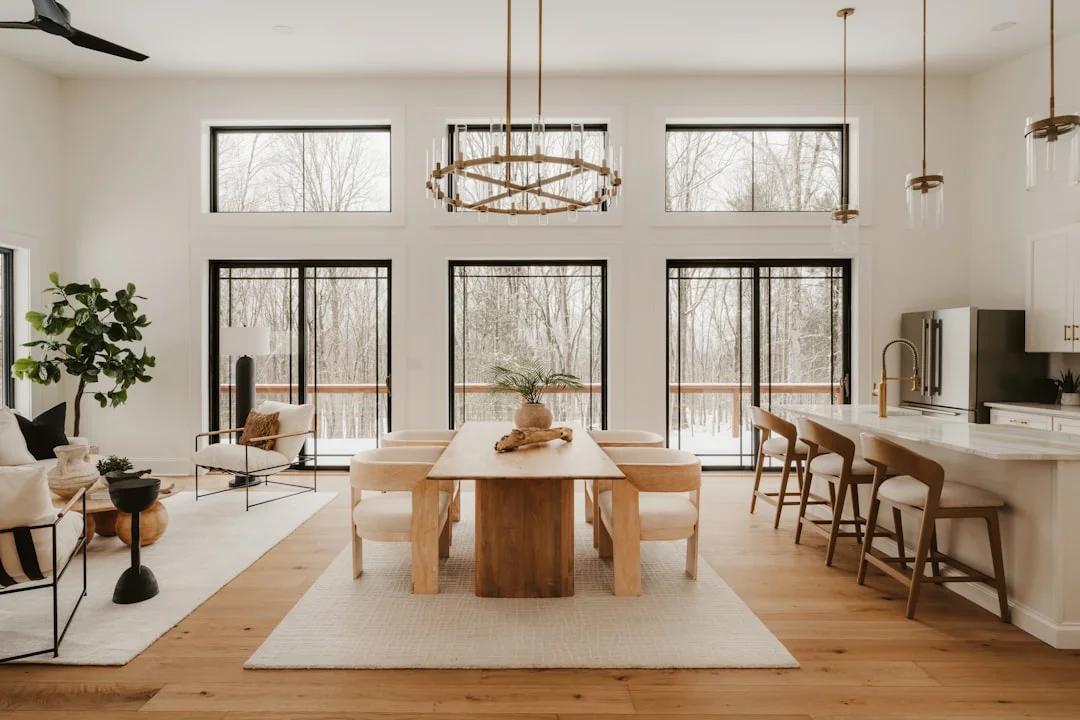
Perhaps you’ve walked into a room and immediately sensed that something wasn’t quite right—or, conversely, walked into a room where you felt at ease and calm right away, without being able to say exactly why. It is precisely this feeling—this exploration of the invisible relationship between people and space—that lies at the heart of Feng Shui. But what exactly is Feng Shui—and where does this philosophy come from, one that has guided people in shaping their lives for millennia? This article takes you on a calm, honest journey through the basics of Chinese spatial philosophy—without promises that no one can keep, and without a judgmental tone.
What is Feng Shui? The Meaning Behind the Name
Feng Shui—pronounced roughly like “Fung Schwei”—is composed of two Chinese characters: Fēng means wind, and Shuǐ means water. In Chinese culture, wind and water are two of the most fundamental forces of nature—omnipresent, formative, unstoppable, and yet invisible in their actual effects. This imagery already offers a first clue as to what Feng Shui is all about: the invisible that permeates and influences everything visible.
At its core, Feng Shui is a Chinese philosophy dating back over 3,000 years that explores the interaction between people, spaces, and their natural environment. It asks: How is a place oriented? What shapes surround it? How does energy—in a figurative sense—flow through a space? The central concept here is qi (also spelled chi), a concept of life energy or vital force that has played a significant role in Chinese philosophy and medicine for centuries.
It is important to be honest from the outset: Qi cannot yet be measured or proven using scientific methods. Feng Shui is not a science in the modern sense—nor does it aspire to be one. It is a cultural tradition and worldview that emerged within a completely different framework of thought. This in no way diminishes its value for people who experience it as a meaningful practice.
Why Feng Shui Is Part of 7zen
7zen is based on a simple idea: be who you are. This includes the assumption that the inner and outer worlds are connected—that what surrounds you affects you, and that what goes on inside you is also reflected in how you live.
This interdependence is precisely what Feng Shui is all about. It views space not as a backdrop, but as a counterpart, and it works with what occurs naturally in the world: light and air, water and wood, stone and metal. A harmonious external environment can therefore potentially touch on inner issues—not as a cure and not at the push of a button, but because one is connected to the other.
Here’s an analogy: If you run regularly, eat well, and work on your inner attitude, you’ll become a good runner—no shoe can change that. But with the right shoes, running is easier. Feng Shui is roughly that: not the training, but the shoes. It doesn’t replace anything you’re already doing for yourself—it can accompany it.
This is not a guarantee of results. It’s the mindset from which we approach this topic.

The Story: From Burial Ground to Living Room
The roots of Feng Shui go back a long way—and they are surprisingly down-to-earth. The oldest known applications of this practice were not for interior design, but for choosing burial sites. In Chinese tradition, the proper location of a grave was crucial to ensuring that the ancestors could rest in peace and that the living could benefit from their blessings. Mountains provided protection from cold northern winds; nearby flowing water was considered auspicious; and an unobstructed view to the south was seen as ideal.
Over time, this way of thinking extended to the selection of homes, villages, and cities. Where should a house be built? How should it be oriented? Which landscape features offer protection, and which pose a threat? These questions were systematized and passed down—from generation to generation, from masters to students. Feng Shui evolved into a complex tradition with its own technical terminology, its own tools, and various schools, some of which emphasize different aspects.
Some people find it reassuring to know that this teaching did not arise out of thin air, but from millennia of observing nature—even if the conclusions drawn from it have not been verified using modern scientific methods.
The Core Concept: What Does Qi Mean in Feng Shui?
Anyone studying the basics of Feng Shui cannot avoid the term “Qi.” In Chinese philosophy, Qi is the all-pervading life force—it flows through the human body (hence its role in Traditional Chinese Medicine), but also through landscapes, buildings, and rooms. Feng Shui is essentially about promoting, directing, and harmonizing the Qi in an environment.
Qi—according to this concept—can flow well or poorly. A long, straight corridor through which Qi races too quickly is considered unfavorable. A cluttered, dark room where qi stagnates is considered unfavorable as well. The goal is an even, gentle flow—much like a river that meanders calmly and clearly through a landscape, rather than rushing wildly and uncontrollably or seeping away into a swamp.
For people rooted in philosophical or spiritual traditions, this image can be very vivid and meaningful. For others, it sounds abstract at first. Both reactions are perfectly fine. There is currently no scientific evidence that qi exists in a physical sense or is measurable—and an honest approach to the subject should acknowledge this. At the same time, many people report that consciously arranging their spaces according to Feng Shui principles has a positive effect on their subjective well-being. Whether this is due to Qi, aesthetic factors, the order itself, or something else is difficult to determine.
Tradition Meets Environmental Psychology Feng Shui is a system based on experience, not a natural science—and that is precisely where its value lies. Research in environmental psychology suggests that space, light, order, and nature can indeed influence our well-being. As Ulrich (1984) demonstrated in a widely acclaimed study, even simply looking at natural environments can promote subjective well-being. Feng Shui might therefore be, at least in part, on the right track intuitively—even if its specific explanations cannot be scientifically verified.
The Two Major Schools: Form and Compass
Over the course of Feng Shui’s more than three-thousand-year history, various schools and movements have developed. For a basic understanding, two main schools are particularly relevant, as they continue to shape the practice to this day: the Form School and the Compass School.
The Form School (Luan Tou): Reading the Landscape
The Form School is considered the older of the two main schools. Its Chinese name, Luan Tou, can be roughly translated as “dragon head” or “peak form”—a reference to its roots in the observation of the landscape. The focus is on the visible forms of the surroundings: mountains, hills, valleys, river courses, but also building shapes, street layouts, and spatial proportions.
The Form School operates without a compass. It analyzes whether a location is well-protected, whether it is surrounded by nourishing water, and whether the forms of the surroundings appear harmonious or threatening. Traditionally, a location was considered particularly auspicious if it was protected from behind by a hill or mountain, flanked on both sides by lower hills, and had a wide, open expanse of water stretching out in front—the classic image of the so-called “auspicious location” in Chinese tradition.
The Compass School (Li Qi): Measurement and Calculation
The more recent Compass School, known in Chinese as Li Qi (which means “principle of energy”), likely developed during the Tang and Song dynasties (7th–13th centuries). It relies on precise directional measurements and a special Chinese compass, the Luo Pan. Key tools include, among others:
- The Kua number (also known as the Gua number): an individual number based on year of birth and gender, intended to determine auspicious compass directions for a person
- The Bagua: an octagonal diagram consisting of eight trigrams that assigns various areas of life (relationships, career, health, wealth, etc.) to specific compass directions and areas within a space
- The Flying Stars (Xuan Kong Fei Xing): a complex system that combines a building’s orientation with its year of construction to create a kind of energy map of the house
In modern practice, the Form School and the Compass School are often combined. Traditionally, however, the Form School takes precedence: a favorable compass orientation is of little use if the external form of the location is fundamentally unfavorable. The Compass School refines and clarifies—the Form School lays the foundation.
Feng Shui Basics: What Is the Bagua?
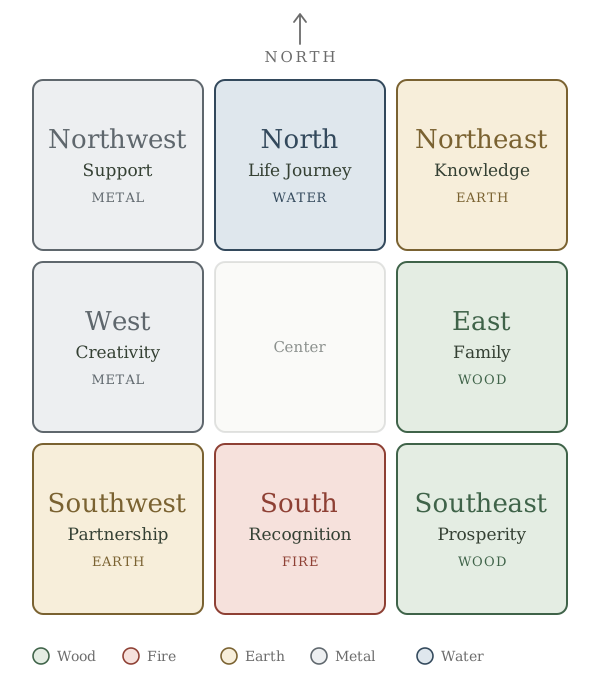
The Bagua is one of the best-known symbols of Feng Shui and features prominently in many introductory texts. Literally, it means “eight trigrams”—it is an octagonal or square diagram that defines eight sectors, each associated with an aspect of life, a cardinal direction, an element, a color, and other qualities.
The eight sectors of the Bagua encompass topics such as career and life path, knowledge and self-development, family and health, wealth and abundance, fame and reputation, love and partnership, children and creativity, as well as helpful people and travel. The ninth sector in the center represents the center—earth, stability, and health as a unifying force.
In practice, the Bagua is superimposed onto the floor plan of a room or apartment to determine which areas correspond to which aspects of life. There, according to Feng Shui principles, one can then purposefully add accents: specific colors, plants, symbols, or simply more order and care. Whether this actually influences the aforementioned areas of life cannot be measured—but for many people, the practice can be a meaningful way to design their living space more consciously and intentionally.
The Five Elements in Feng Shui
Closely linked to Feng Shui is the Chinese system of the five elements (Wu Xing): wood, fire, earth, metal, and water. In Chinese philosophy, these five principles describe fundamental qualities of energy and change—they are understood less as concrete substances and more as patterns of movement or phases of Qi.
Each element has typical characteristics, colors, shapes, and associations:
- Wood: Growth, new beginnings, vitality—embodied by shades of green, slender shapes, and plants
- Fire: Expression, passion, transformation—embodied by red and orange tones, candles, light
- Earth: Stability, nurturing, grounding — embodied by earthy brown tones, ceramics, flat shapes
- Metal: Clarity, precision, letting go — embodied by white and metallic tones, round shapes
- Water: Flow, depth, reflection — embodied by dark blue and black tones, curved shapes, aquariums
The elements are in dynamic relationships with one another: they can either nourish one another (the so-called “nourishing cycle”) or weaken one another (the “controlling cycle”). In Feng Shui consultations, analysts often assess which elements predominate or are lacking in a room and strive to establish a balance. Here, too, it is important to note that this is a traditional interpretation, not a scientific description.
Feng Shui Today: Between Tradition, Design, and Well-being
In Western countries, Feng Shui has been gaining attention since the 1980s—partly as a serious way of life, partly as a source of inspiration for interior design and spatial layout, and, unfortunately, partly as a commercial fad with oversimplified promises. The spectrum ranges from profound traditional practice to self-help guides that recommend hanging a mirror to double one’s luck.
As with many traditions that originated in one cultural and spiritual context and were then transplanted into another, the essence is sometimes lost in the process. Authentic Feng Shui is complex, context-dependent, and requires careful analysis—it is not a quick fix for a better life.
At the same time, there are certainly points of overlap between Feng Shui principles and modern research—though one should not overstate this connection. Environmental psychology has been studying how spaces influence human experience for decades. As early as the 1980s, Kaplan & Kaplan demonstrated in their Attention Restoration Theory that natural environments and certain spatial qualities—such as expansiveness, coherence, and mystery—can positively influence human well-being and attention. This aligns, at least in spirit, with some Feng Shui concepts—even if the theoretical framework is entirely different.
Research on the effects of order and disorder (e.g., Vohs et al., 2013) suggests that tidy environments may be associated with certain cognitive and emotional states—a finding that resonates, at least to some extent, with Feng Shui’s emphasis on order and the free flow of space. However, this does not mean that Feng Shui as a system has thereby been scientifically validated.
What Feng Shui Can Do—and What It Can't
Anyone interested in Feng Shui would do well to have clear expectations. Feng Shui is a millennia-old Chinese tradition that offers a specific perspective on the world and the human living environment. This perspective can inspire, open up new perspectives, and encourage people to design their own living spaces more mindfully.
What Feng Shui is not, however, and what it cannot do:
- There is no scientific evidence that Feng Shui practices directly improve specific areas of life, such as careers or relationships
- Feng Shui is no substitute for professional advice—whether in medical, psychological, or financial matters
- A mirror or a plant will not change one’s life circumstances unless further steps are taken
- Feng Shui is not a panacea and should not be marketed or understood as such
What many people who seriously engage with Feng Shui find valuable is something else: an invitation to be mindful in how they interact with their own space. The question of whether a space feels good, whether it is tidy and well-maintained, whether it receives light and air, whether it reflects one’s own values and desires—these questions are meaningful regardless of Feng Shui. Feng Shui offers a specific vocabulary and a system of interpretation that can be helpful and meaningful to some people.
Understanding Feng Shui as Cultural Heritage
It is worth appreciating Feng Shui for what it originally was: a part of China’s cultural and spiritual heritage, embedded in a worldview in which humans, nature, and the cosmos were considered inseparably connected. In this way of thinking, it goes without saying that a house is considered not only in terms of its functionality but also in relation to its surroundings, its orientation, and its energetic character.
This holistic perspective stands in interesting contrast to Western modernism, which for a long time viewed spaces primarily in functional terms. The fact that terms such as “feel-good atmosphere,” “indoor climate,” or “biophilic design” are increasingly appearing in architecture and interior design today may indicate that the sense of the quality of space runs deeper than was long thought—even if the frameworks for explaining it vary greatly.
Treating Feng Shui with respect also means not appropriating it or trivializing it. For those who wish to engage with it seriously, it can be helpful to explore its cultural and philosophical context—including Taoist philosophy, the concept of yin and yang, and the Chinese view of nature. This restores the depth to the teachings that is often lost in superficial portrayals.
A First Step: Feng Shui as an Invitation to Reflect on Your Space
You don’t have to become a Feng Shui expert or own a Luo Pan to benefit from this tradition. Perhaps you’d like to start by taking a fresh look at your own living space:
How does the space where you spend most of your time feel? Does enough natural light come in? Are there corners that are neglected, cluttered, or dark? Does the entryway feel inviting—to you, when you come home? Are there things in your rooms that you don’t like, but that somehow never seem to go away?
These questions have to do with Feng Shui—but at the same time, they’re fundamentally human. Spaces where we feel at ease, where order reigns and beauty is evident, can—as many observations suggest—subtly support our well-being. Feng Shui offers a rich, millennia-old language for this experience. Whether you use it as a tradition, as inspiration, or as a philosophical framework is entirely up to you.
Your daily companion for personal growth
With the 7zen app, you'll receive daily coaching tips, guided breathing exercises, and personal reflections—all based on your individual profile.
For a comprehensive analysis: On-site consultation
This article offers some guidelines for your own living space—and that’s a good place to start. However, a comprehensive Feng Shui analysis should be conducted by a trained consultant. It takes into account factors that a written guide cannot: the location of the house, the layout of the rooms, the actual cardinal directions in the floor plan, the surroundings, and the people who live there. In most regions, there are specialists available; consulting with one is particularly advisable when renovating, buying a home, or when the directions preferred by several people in the household are incompatible.
Calculate Your Qua Number
Your birth year and gender determine your personal Qua number—and with it, the four cardinal directions traditionally considered auspicious for you. You can determine them directly using the calculator. The calculation runs in your browser; your date of birth is neither transmitted nor stored.
Is Feng Shui scientifically proven?
No — Feng Shui is a Chinese tradition dating back over 3,000 years that largely defies scientific verification. The central concept of Qi cannot yet be measured or verified using scientific instruments. There are no controlled studies that would prove that Feng Shui practices improve specific areas of life. At the same time, environmental psychology suggests that space, light, order, and nature can influence human well-being—this touches on some Feng Shui principles but does not validate the system as a whole.
What is the difference between the Form School and the Compass School?
The Form School (Luan Tou) is the older of the two main schools and analyzes visible forms—landscapes, mountains, waterways, and building shapes—without using a compass. The Compass School (Li Qi) is newer and works with precise cardinal directions, the individual Kua number, the Bagua, and systems such as the Flying Stars. In modern practice, both schools are often combined, with the Form School traditionally considered the foundation.
What exactly does "Qi" mean in Feng Shui?
In Chinese philosophy, qi (also spelled chi) is the concept of an all-pervading life energy or life force. In Feng Shui, it refers to the energy that flows through spaces, landscapes, and buildings. The goal is a harmonious flow of this energy—neither too fast nor stagnant. Qi is not a physically measurable quantity—it is a philosophical concept within a specific worldview.
Do I have to believe in Feng Shui for it to help me?
That’s a very personal question. Some people find that consciously arranging their living spaces according to Feng Shui principles is helpful and meaningful, even without fully sharing the underlying worldview. Others find a spiritual home in the tradition. Still others simply value Feng Shui as a source of inspiration for a more aesthetically pleasing and thoughtfully designed living environment. There is no right or wrong way to approach it—as long as you have clear and realistic expectations.
How old is Feng Shui, really?
The roots of Feng Shui date back more than 3,000 years. Its earliest applications were used to select burial sites—people sought to find the best possible location for their ancestors’ final resting places. Over the centuries, particularly during the Tang and Song dynasties (7th–13th centuries), the tradition continued to evolve and was applied to living spaces, villages, and cities. This also gave rise to more complex systems, such as the Compass School.
Is there such a thing as reputable Feng Shui consulting—and how can I recognize it?
Yes, there are people who have studied Feng Shui seriously and in depth and offer traditional consultations. Reputable consultants will not make miraculous promises, but will speak transparently about the limitations and cultural context of the practice. They won’t sell overpriced items or make claims of healing. A good sign is when a professional clearly distinguishes between what tradition says and what is scientifically proven.
Feng Shui isn’t a one-size-fits-all solution—but it is a fascinating invitation. An invitation to see your living space not merely as a backdrop, but as a living part of your everyday life. Maybe you’d like to start today: Walk through a room in your home and ask yourself honestly—how does it feel? What would make it just a little bit more welcoming, brighter, or calmer? Sometimes it’s the simplest changes that shift something within us. And whether you call that Feng Shui or simply mindful living—that’s entirely up to you.