Feng Shui: The Language of Spaces—A Comprehensive Overview
What Feng Shui really is, how Bagua, the Qua number, and the five elements interact—and why this topic is part of 7zen.
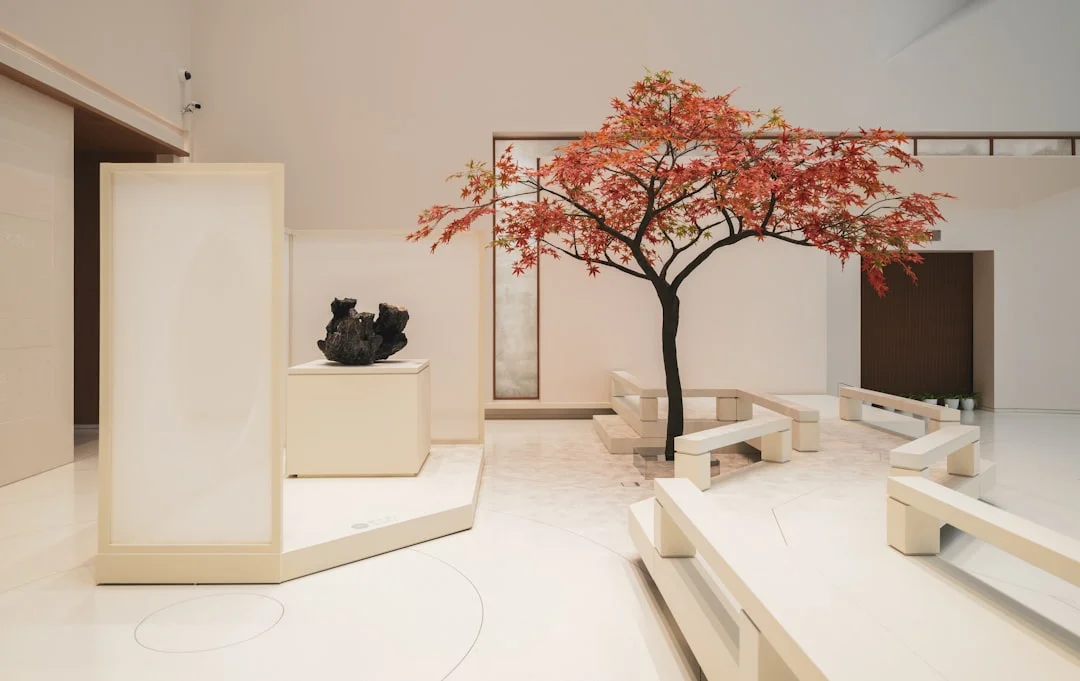
There are spaces where you immediately feel at ease. And there are spaces where—without being able to say exactly why—you never quite feel comfortable. Feng Shui is an attempt to put this experience into words. A very ancient language, born of centuries of observation: How does air flow through a valley? Where does water collect? How does light fall into a room at a certain time of day? What happens to people who live in a particular place for a long time?
This article is our comprehensive overview—a tour of the entire field. We’ll touch on what defines Feng Shui: the five elements and their cycles, the Bagua with its eight life areas, the personal Qua number, the command position, the School of Forms, and the temporal dimension of the Flying Stars. 7zen has a separate in-depth article on each of these topics—here, you’ll first get the big picture.
Why Feng Shui Is Part of 7zen
7zen stands for a single idea: Be who you are. That sounds simple, but in reality it’s a decision renewed every day—a choice for clarity, for mindfulness, and for what truly resonates with you. In astrology, we encounter this idea in natal chart analysis: the ascendant, the Moon’s position, the houses—they all describe the energies inherent in a person and how they can engage with them.
Feng Shui approaches this from a different angle but arrives at the same conclusion. It is based on the assumption that the inner and outer worlds are interconnected: what surrounds us has an effect on us. And what’s going on inside us is reflected in how we live—which corners we neglect, which rooms we avoid, and which places give us energy.
To illustrate this interdependence, we have a metaphor that aptly describes the nature of the home: Someone who runs regularly, eats well, and works on their inner attitude will become a good runner—no shoe can change that. But with the right shoes, running is easier. Feng Shui is roughly this: not the training, but the shoes. It doesn’t replace anything a person is already doing for themselves—it can complement it.
This is not a guarantee of results, but rather the mindset from which we approach this topic.
Feng Shui Basics: An Art of Observation Dating Back Millennia
The term Feng Shui is composed of the words for wind and water. Both are forces that cannot be held onto—and yet they shape everything they encounter. That alone says a lot about the system’s fundamental philosophy: It is not about possessing or controlling energy, but about maintaining a harmonious relationship with it.
Historically, Feng Shui developed as a science of location—initially for burial sites, and later for homes and cities. People observed which locations fostered prosperity, health, and harmony, and distilled rules from these observations. Today, there are primarily two major schools: the Form School (Luan Tou), which focuses on the visible shape of terrain, buildings, and spaces, and the Compass School, which incorporates cardinal directions, numbers, and time cycles. At 7zen, we work with the classical Compass method—not with the so-called Three-Door method, which leaves out the cardinal directions.
In astrology, we recognize a similar fundamental tension: The birth chart reveals the predisposition—but the transit calendar, showing the current planetary positions, reveals the moment. Feng Shui takes a similar approach: There is an unchanging fundamental structure of a place and a changing temporal dimension. Together, they provide the complete picture.
The Five Elements (Wu Xing) and Their Cycles
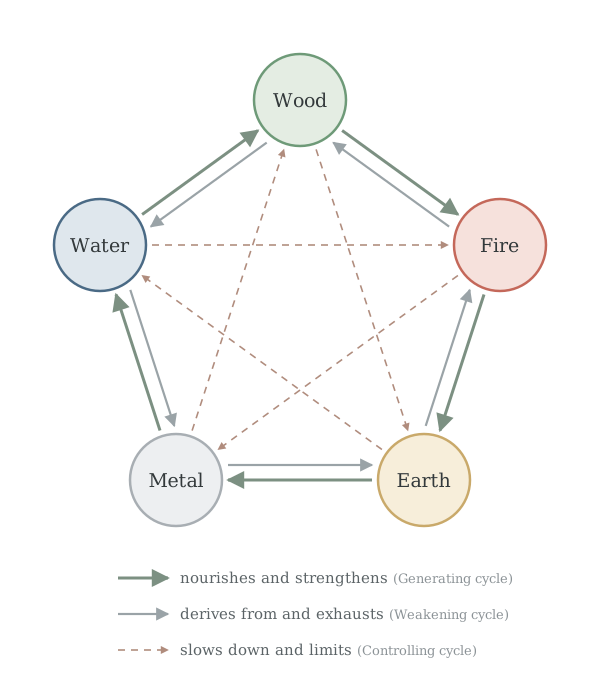
At the heart of Chinese natural philosophy are five phases of transformation, known in Feng Shui as Wu Xing: Wood, Fire, Earth, Metal, and Water. They do not describe fixed substances, but rather qualities of movement—phases of an eternal flow that manifests equally in nature, the body, and space.
There are three fundamental cycles among the five elements:
- The Nourishing Cycle (Sheng): Wood nourishes Fire, Fire nourishes Earth, Earth nourishes Metal, Metal nourishes Water, Water nourishes Wood. A sequence that grows and supports.
- The draining cycle: The opposite of the nourishing flow—each element drains the energy of the one that precedes it.
- The controlling cycle (Ke): Wood controls Earth, Earth controls Water, Water controls Fire, Fire controls Metal, Metal controls Wood. A force that limits and regulates.
For interior design, this means: If one element dominates too strongly in a space—such as too much fire energy from sharp shapes and intense colors—an element from the controlling cycle can have a balancing effect. Those familiar with astrology recognize this logic: Too much unchanneled Mars energy burns itself out. A favorable aspect from Saturn can bring structure to what would otherwise shoot off in all directions.
We describe in detail how to recognize and apply the five elements in a space in our in-depth article on Wu Xing in Feng Shui.
7zen's Stance "Feng Shui is not the art of making a room beautiful. It is the art of bringing a room to life—so that it suits the person who lives in it."
The Bagua: Eight Directions, Eight Areas of Life
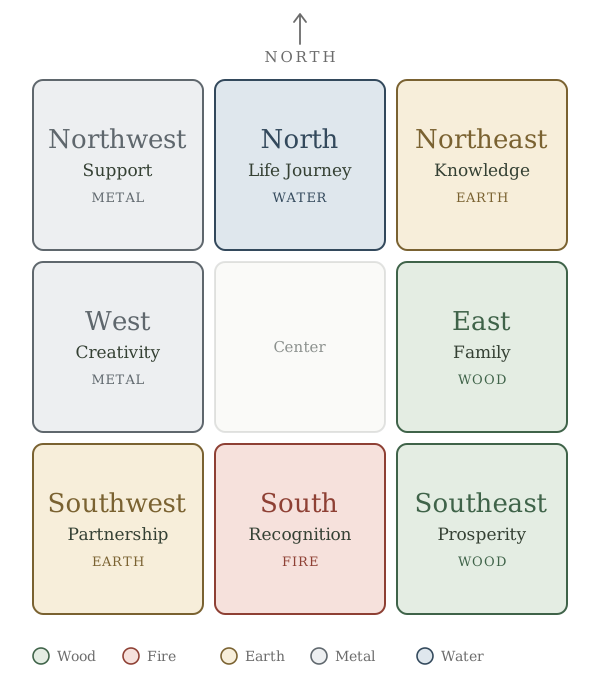
The Bagua is perhaps the best-known tool in Feng Shui—and at the same time one of the most commonly oversimplified. At its core, it is an eight-part orientation grid that assigns an area of life to each of the eight cardinal directions. When superimposed on the floor plan of a house or apartment, it shows which areas of the building are connected to which aspects of life.
The eight areas include, among others: career and life path (North), relationships and partnership (Southwest), family and roots (East), wealth and resources (Southeast), fame and visibility (South), creativity and offspring (West), knowledge and inner development (Northeast), and supportive people and travel (Northwest). Health serves as the connecting center.
Important: At 7zen, we use the classic compass method. This means that the Bagua is superimposed on the floor plan based on the actual cardinal directions—not relative to the front door, as is customary with the Three-Door Method. This requires a compass or a reliable north orientation of the floor plan.
Astrologically, the Bagua could be compared to the house system: there, too, a circular field is divided into twelve (here, eight) areas of life, each of which represents specific themes. The difference: In a horoscope, the planets show what is currently moving within these fields. In the Bagua, it is the Qi—the life energy that is influenced by location, shape, and time.
Our in-depth article on the Bagua explains each of the eight areas in detail and shows how you can apply it to your own floor plan.
The Qua Number: Your Personal Compass Direction in Feng Shui
Feng Shui isn’t just about the space—it also takes into account the person who lives there. The central tool for this is the Qua number (also called the Kua number), a number between 1 and 9 calculated from the year of birth, which indicates which compass directions may be favorable or unfavorable for a person.
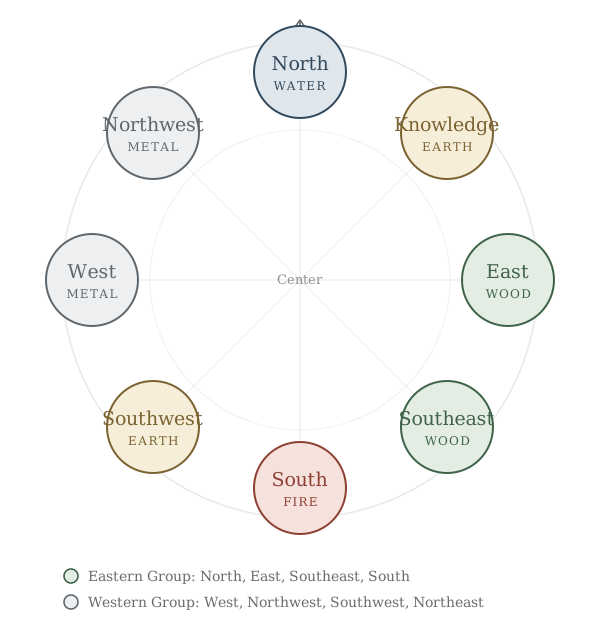
The Qua number determines whether a person belongs to the East group (numbers 1, 3, 4, 9) or the West group (numbers 2, 5, 6, 7, 8). Each group has four favorable and four less favorable compass directions—for sleeping orientation, work orientation, seating position while eating, and more.
One detail that is often overlooked: The calculation of the Qua number is not based on January 1, but rather on the start of the Chinese solar year, which begins with Lichun—the astronomical start of spring—and usually falls around February 4. So anyone born between January 1 and February 4 uses the previous year’s date.
This also has an astrological parallel: In Vedic astrology, the solar year does not follow the Gregorian calendar; rather, the sun’s entry into Aries marks a new beginning. Systems that observe nature are guided by nature itself—not by the administrative calendar.
Our in-depth article on the Qua number and the cardinal directions in Feng Shui explains how to calculate your Qua number and what it might mean for your daily life.
Qua-Zahl berechnen
Die Qua-Zahl (Ming Gua) wird aus Geburtsjahr und Geschlecht gebildet und ordnet vier guenstige und vier unguenstige Himmelsrichtungen zu. Massgeblich ist das chinesische Sonnenjahr, das mit Lichun Anfang Februar beginnt — wer im Januar geboren ist, zaehlt zum Vorjahr.
Die Zahlen 1, 3, 4 und 9 bilden die Ostgruppe mit den guenstigen Richtungen Norden, Osten, Suedosten und Sueden. Die Zahlen 2, 6, 7 und 8 bilden die Westgruppe mit Westen, Nordwesten, Suedwesten und Nordosten. Eine rechnerische 5 wird bei Maennern auf 2, bei Frauen auf 8 gelegt.
Deine Himmelsrichtungen
Jede Himmelsrichtung traegt ein Element und einen Bagua-Lebensbereich: Norden Wasser und Lebensweg, Nordosten Erde und Wissen, Osten Holz und Familie, Suedosten Holz und Wohlstand, Sueden Feuer und Anerkennung, Suedwesten Erde und Partnerschaft, Westen Metall und Kreativitaet, Nordwesten Metall und Unterstuetzung. Im Raster liegt Norden oben — so wird das Bagua ueber einen Grundriss gelegt.
Farben, Formen und Materialien
Jedes Element bringt eigene Traeger mit: Holz gruene und tuerkise Toene, senkrechte Formen, Holz, Textilien und Pflanzen. Feuer rote, orange und pinke Toene, spitze Formen, Kerzen, Leder und Licht. Erde gelbe, ockerfarbene und beige Toene, flache Formen, Keramik, Stein und Ton. Metall Weiss, Grau, Silber und Gold, runde Formen, Metall und Glas. Wasser Blau und Schwarz, wellige Formen, Wasser und Spiegel. Im naehrenden Zyklus staerkt Wasser das Holz, Holz das Feuer, Feuer die Erde, Erde das Metall und Metall das Wasser.
Im Alltag
Am Bett zeigt das Kopfende in eine der guenstigen Richtungen, die Tuer im Blick, aber nicht in ihrer Linie. Am Schreibtisch blickt man beim Sitzen in eine dieser Richtungen, mit fester Wand im Ruecken. Am Esstisch waehlt man den Sitzplatz entsprechend. Lassen sich Richtung und Kommandoposition nicht vereinbaren, hat traditionell die Kommandoposition Vorrang.
Der interaktive Rechner ergaenzt je Richtung das zugehoerige Element und den Bagua-Lebensbereich, dazu passende Farben, Formen und Materialien sowie einen Vergleich mit einer zweiten Person im Haushalt.
Dazu im Wissensbereich
- Ostgruppe & Westgruppe: deine günstigen Himmelsrichtungen
- Das Bagua: die acht Lebensbereiche im Raum
- Himmelsrichtungen im Feng Shui — und wie du richtig misst
- Die fünf Elemente im Feng Shui: Wu Xing und ihre Zyklen
- Feng-Shui-Farblehre: Welche Farbe zu welchem Element passt
- Die Kommandoposition für Bett und Schreibtisch
- Was Feng Shui nicht ist: eine ehrliche Einordnung
The Command Position: Qi and Poison Arrows in Everyday Life
Of all Feng Shui concepts, the command position is perhaps the most straightforward. It can still be applied today—without a compass, without calculations, with just a single glance around the room.
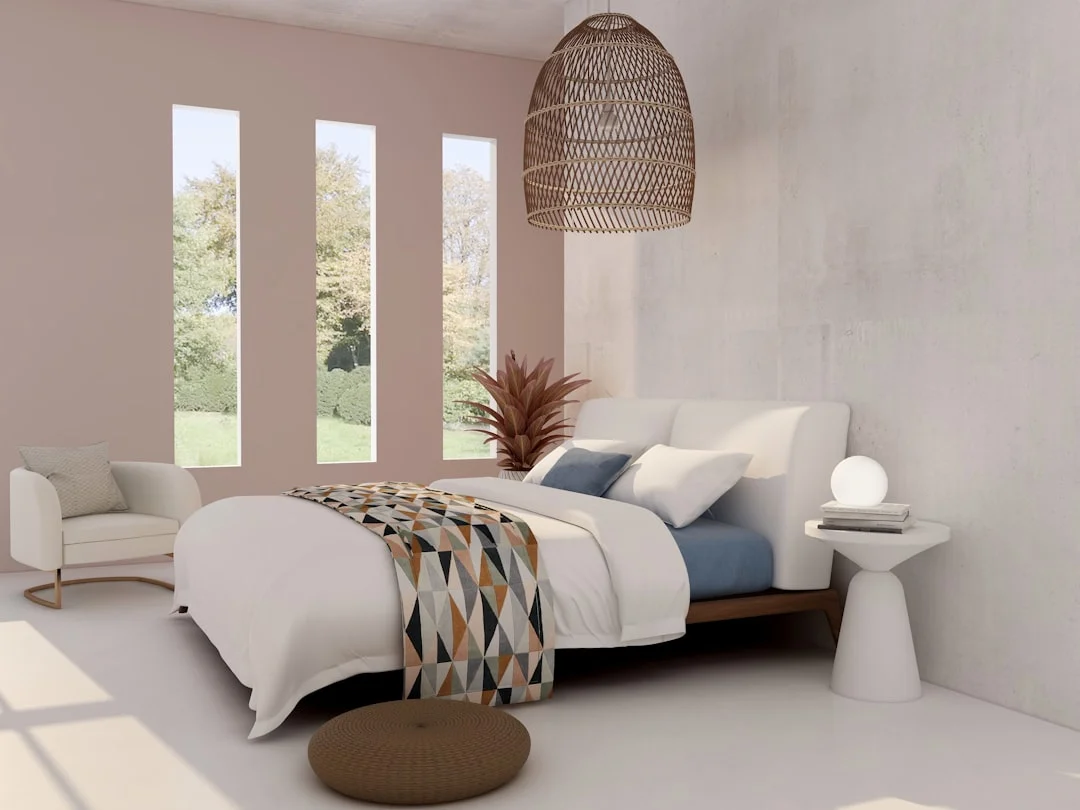
The principle: The bed and desk should be positioned so that you can see them from the door without standing directly across from them. Your back is protected by a wall, and your view is unobstructed. This position is called the command position—and at its core, it describes a sense of security and control that many people instinctively seek.
The opposite of this is a bed with the head facing the door, or a desk with its back to the entrance. Observation suggests that in this situation, the nervous system has a harder time finding rest—it remains in a sort of background alertness.
Closely related to this is the concept of “poison arrows” (Sha Qi or Xie Qi): sharp edges, straight paths leading directly toward sleeping or working areas, and intense sources of noise or light. Qi—the life energy in Feng Shui—ideally flows in waves and evenly. Anything that stirs it up or slows it down is called Sha.
In astrology, we know something similar: hard aspects like squares and oppositions act as areas of tension that can stir up energy. There, too, the question isn’t whether to avoid them, but how to consciously deal with them.
You can find more about the command position, the flow of Qi, and poison arrows in our in-depth article on this topic.
The School of Forms and the Four Animals: The Context of a Place
Before compass directions, numbers, and cycles come into play, Feng Shui poses a more fundamental question: What is the layout of this location? What surrounds it? What protects it, and what opens it up?
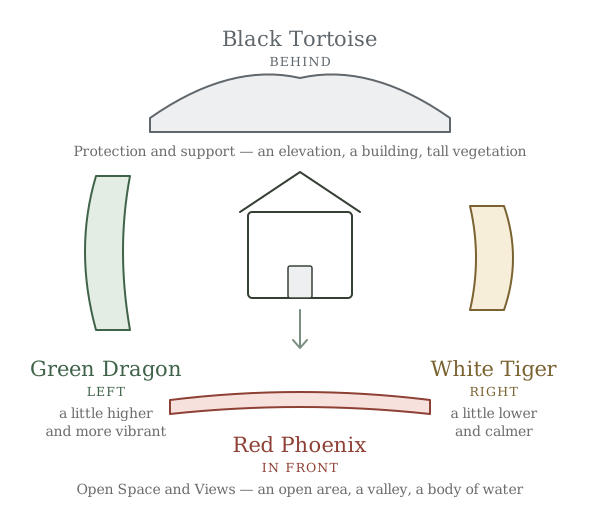
The Form School (Luan Tou) is the oldest branch of Feng Shui. It works with visible features—landforms, watercourses, buildings, and winds. Its best-known tool is the image of the four animals, which describes an ideal landscape:
- The Black Tortoise in the north: a protective back—a hill, a taller building, or a solid wall.
- The Red Phoenix in the south: an open view ahead, as low and wide as possible.
- The Green Dragon in the east: a gentle, slightly higher boundary—a tree, a hedge, a building.
- The White Tiger in the west: a slightly lower but equally supportive boundary.
This concept can be applied to cities, plots of land, and houses. Even indoors, one can ask: What protects my back? What opens up before me? Where is there a lack of support, where is there a lack of openness?
Astrologically, this is reminiscent of the concept of axes in the horoscope: Ascendant and Descendant, Imum Coeli and Medium Coeli—four points that provide orientation in the space of life.
You can find a separate article on the School of Forms and the four animals in our Feng Shui series.
The Temporal Dimension: Flying Stars (Xuan Kong Fei Xing)
Feng Shui is not a static system. It incorporates a temporal dimension—which is described by the Flying Stars (Xuan Kong Fei Xing). This method overlays the Bagua with a temporal grid of nine numbers that move through the cardinal directions in fixed cycles—much like planets move through the signs of the zodiac.
We are currently in what is known as the 9th Era, which began in 2024 and will last for about 20 years. With this shift, the areas of a home that receive a particularly large amount of favorable energy—and those that temporarily receive less—change. Anyone familiar with their horoscope knows: not all Saturn transits are the same. The same influence manifests differently depending on one’s personal chart, life stage, and the activated house.
The Flying Stars are among the more complex aspects of Feng Shui and require precise knowledge of the floor plan, the building’s construction period, and the current annual and monthly stars. We’re only touching on the topic here—you can find the detailed article on this in our series on Xuan Kong Fei Xing and the time cycles in Feng Shui.
An Honest Assessment: What Feng Shui Is—and What It Doesn’t Replace
Feng Shui is a system based on experience, not a measurement method. What it describes cannot be expressed in millivolts or units of concentration—and that is not a shortcoming, but a defining characteristic. The same applies to astrology: No one can use a measuring device to determine how a Venus conjunction in a natal chart affects one’s ability to form relationships. And yet, for millennia, people have reported observable patterns.
Feng Shui is no substitute for professional advice—whether in health, legal, or financial matters. And a blog post simply isn’t enough for a comprehensive Feng Shui analysis. A trained Feng Shui consultation on-site takes into account the location, floor plan, surroundings, period of construction, and the people living in the house as a whole. That level of depth goes beyond what we can provide here.
What we can offer: an introduction that takes the system seriously for what it truly is. No “lucky corners,” no color tips from glossy magazines, no promises. Instead, a system that understands spaces as part of life—and asks how they might be designed to suit the people who live in them.
Astrologically speaking, this is perhaps most like a well-read horoscope: It doesn’t tell you what will happen. But it can show which energies are at work right now—and how you might deal with them more consciously.
Our tip to get started: Choose an area of your home where you spend the most time—and really take a close look at it. How does the light fall? Where does the air feel stagnant? Can you see the door? These questions cost nothing—and they sometimes reveal more than any analysis.
What exactly is Feng Shui—and where does it come from?
Feng Shui is a millennia-old Chinese philosophy of space that examines how the location, shape, and orientation of a place can affect the people living there. The term literally means “wind and water”—two forces that shape everything without being bound by anything. The system emerged from long-term observation of terrain, waterways, light patterns, and wind. There are various schools of thought; at 7zen, we work with the classical compass school.
What is the difference between the Compass School and the Three-Door Method?
The Compass School applies the Bagua to the floor plan based on the actual cardinal directions—for this, you need a compass or a reliable north orientation. The Three-Door Method (also known as the BTB School), on the other hand, is based on the location relative to the front door, regardless of the cardinal direction. At 7zen, we use the compass method because it takes a location’s geographic position into account.
How do I calculate my Qua number in Feng Shui?
The Qua number is calculated based on the year of birth—but not as of January 1, rather as of Lichun, the astronomical beginning of spring around February 4. So anyone born before February 4 uses the previous year’s date. The result determines whether you belong to the East or West group—and which cardinal directions might be favorable for sleep, work, and daily life. We explain the exact calculation and its significance in our in-depth article on the Qua number.
Can I apply Feng Shui on my own, or do I need a consultation?
Simple principles such as the command position or the basic orientation of the Bagua can be applied on your own—and can already bring about changes in how a space feels. For a comprehensive analysis that takes into account the year of construction, floor plan, personal Gua number, and the current Flying Stars, it is recommended to consult a trained Feng Shui consultant in person. She can identify interactions that cannot be conveyed through text alone.
What does Feng Shui have to do with astrology?
Both systems assume that human beings do not exist in isolation, but within a field of reference—be it the heavens and planets, or space and the cardinal directions. Both work with cycles, polarities, and elements. And neither is intended as a matter of fate, but rather as a guide: They reveal which energies might be at work at any given moment—and leave people free to choose how they respond to them.
Is Feng Shui scientifically proven?
Feng Shui is a system based on experience, not a measurement method. What it describes—the interplay of space, direction, time, and people—cannot be measured in a standardized way. That does not make it any less worthy of serious consideration: systems based on experience draw on observations made over very long periods of time. Those seeking a rational framework can view Feng Shui as an invitation to become more mindful of their own living space—which makes sense even without metaphysical beliefs.